Introduction & Synopsis
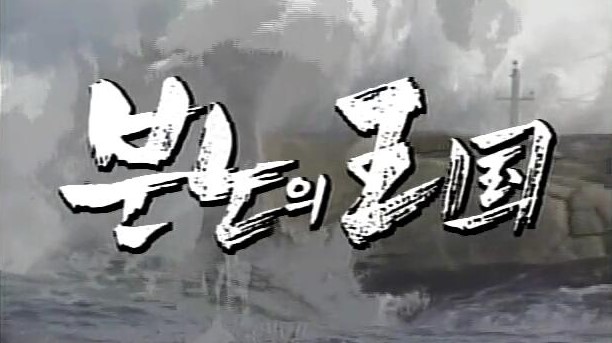
Imagine a modern K-drama proposing a plot where a descendant of a historical Korean royal family attempts to assassinate the head of state of a neighboring country. It would be unthinkable. Yet, in 1992, this was the electrifying premise of Kingdom of Anger (분노의 왕국), a miniseries that remains one of the most audacious and politically charged productions in Korean television history. The story follows Lee Ha-yeon (Byun Young-hoon), the last known descendant of the Joseon Dynasty, who lives a quiet life until the weight of his lineage and his nation’s painful history compels him to undertake a dangerous mission: to assassinate the Emperor of Japan. Caught in his world of historical grievance and modern conspiracy is Jae-kyung (Kim Hee-ae), a woman who becomes entangled in his perilous quest. Produced by MBC, this drama wasn’t just entertainment; it was a televised roar of unresolved historical anger.
The Unspoken History on Screen
To understand the seismic impact of Kingdom of Anger, one must look at the socio-political climate of early 1990s South Korea. The nation had only recently emerged from decades of military dictatorship, and a new era of democratic expression was dawning. This newfound freedom allowed creators to explore subjects that were previously taboo, chief among them the raw wounds of the Japanese colonial period (1910-1945). For many Koreans, the Japanese Emperor was not a distant monarch but the ultimate symbol of the oppression that systematically tried to erase Korean culture, language, and identity.
The drama masterfully channels the deep-seated Korean sentiment known as Han (한), a complex feeling of unresolved grief, injustice, and resentment. The protagonist’s quest is a fictional manifestation of a collective desire for catharsis and retribution. By framing the narrative around the “last royal descendant,” the story elevates a personal revenge plot into a symbolic act of reclaiming national dignity, making it a powerful, albeit deeply controversial, national allegory.
A Narrative Fueled by Grievance
Without revealing key plot points, the storytelling in Kingdom of Anger is less a simple thriller and more a tense character study steeped in historical sorrow. The narrative deliberately contrasts the protagonist’s heavy burden of the past with the fast-paced, modern world of the 1990s. The drama explores profound questions of identity: Is one defined by their bloodline? Can the crimes of the past ever be truly avenged, and at what personal cost? The script avoids presenting its hero as a one-dimensional fanatic. Instead, it portrays him as a tormented figure, wrestling with the ghost of a fallen kingdom and the moral implications of his mission. This psychological depth, combined with the high-stakes political intrigue, creates a compelling and emotionally resonant viewing experience.
The Pulse of the Time: A Diplomatic Incident
Upon its broadcast, the reaction to Kingdom of Anger was immediate and explosive. It didn’t just top viewership charts; it became a national talking point. The provocative premise was seen by many as a bold and cathartic expression of historical truth. However, its depiction of an assassination plot against the symbolic head of Japan sparked a real-world diplomatic controversy. The Japanese government reportedly lodged informal complaints, and the series became a hot-button issue, demonstrating the unique power of television to influence public sentiment and even international relations. The show’s legacy is defined by this incredible stir, cementing its place as a drama that dared to say the quiet part out loud.
Cast Spotlight: A Tragic Hero and a Resilient Star
The drama’s power was anchored by its two lead performances. The late Byun Young-hoon delivered a career-defining performance as the tormented prince, Lee Ha-yeon. He perfectly embodied the character’s mix of aristocratic grace, simmering rage, and profound sadness. It was a role that showcased his immense potential, making his untimely death shortly after his career took off a great tragedy for the industry. His portrayal remains an unforgettable portrait of a man haunted by history.
Starring opposite him, Kim Hee-ae, already a celebrated actress, brought her signature intelligence and emotional depth to the role of Jae-kyung. She provided the crucial human anchor to the story, navigating the treacherous political landscape while grounding the epic plot in relatable emotion. Her performance ensured the drama was not just a political statement but also a poignant human story.
Global Viewing Guide
Finding this 1992 classic with subtitles can be a challenge, but dedicated fans of Korean television history have a few avenues to explore:
- MBC Official Channels: The most likely place to find clips or full episodes is on official MBC-managed YouTube channels, such as “옛날 드라마 : MBC 레전드 드라마” (MBC Legend Drama), which archives classic content. Subtitle availability may vary.
- Wavve: For viewers in Korea, the drama is available on the domestic streaming platform Wavve, which houses a vast library of classic MBC shows.
Final Verdict
Kingdom of Anger is more than just a vintage K-drama; it is a crucial cultural artifact. It represents a moment in time when South Korean media, empowered by new freedoms, confronted its most painful history head-on. For viewers interested in the roots of Hallyu and the power of storytelling to shape national identity, this series is essential viewing. It is a brave, unforgettable, and profoundly Korean story that demonstrates just how powerful television can be.

The KCulture Editorial Team is dedicated to providing deep insights and accurate information about the vibrant world of Korean culture.