Korean Traditional Dance: A Living Heritage of Grace, Spirituality, and Storytelling
Korean traditional dance is one of the most expressive forms of Korean cultural heritage, blending elegance, symbolism, music, and storytelling. The two major categories are court dance, which developed within royal palaces, and folk dance, which emerged from the lives, beliefs, and celebrations of ordinary people. Today, visitors and culture enthusiasts can still experience these performances throughout Korea at dedicated theaters, cultural centers, and seasonal festivals.
For travelers and culture lovers curious about Korea beyond K-pop and K-dramas, traditional dance offers a fascinating window into the nation’s history, philosophy, spirituality, and artistic identity. This guide explores the origins of Korean traditional dance, the differences between court and folk traditions, famous dance forms such as Buchaechum, Seungmu, and Talchum, and where you can watch performances in Korea today.
- What Is Korean Traditional Dance?
- Court Dance vs. Folk Dance
- Famous Korean Traditional Dances
- The Cultural Meaning Behind Korean Dance
- Where to Watch Traditional Dance Performances in Korea
- Tips for Visitors Interested in Traditional Dance
- Frequently Asked Questions
- Explore More Korean Traditional Culture
What Is Korean Traditional Dance?
Korean traditional dance has evolved over centuries through influences from royal ceremonies, Buddhism, shamanistic rituals, agricultural festivals, and community celebrations. Unlike many Western dance traditions that emphasize technical virtuosity, Korean dance often focuses on controlled movement, flowing lines, inner emotion, and harmony between stillness and motion.
A distinctive characteristic is the use of curved movements. Dancers create elegant arcs with their sleeves, fans, or costumes, producing a visual beauty that reflects traditional Korean aesthetics. Even slow movements can convey profound emotional depth.
📌 Local Note: Many Korean traditional dances are accompanied by live traditional music known as “gugak” (국악). Understanding the music greatly enhances the viewing experience.
If you would like to learn more about traditional Korean music, see Guide to Korean Traditional Folk Music & Where to Hear It.
Court Dance vs. Folk Dance
The most important distinction in Korean traditional dance is between court dance and folk dance.
| Category | Court Dance (Jeongjae) | Folk Dance (Minsokmu) |
|---|---|---|
| Origin | Royal palaces and state ceremonies | Villages, markets, religious rituals, festivals |
| Purpose | Celebrate royal authority and ceremonial events | Entertainment, community celebration, satire, spiritual expression |
| Style | Refined, formal, symmetrical | Energetic, emotional, expressive |
| Costumes | Luxurious royal garments | Regional and practical traditional clothing |
| Music | Elegant court music | Folk music and percussion |
| Atmosphere | Dignified and restrained | Dynamic and often humorous |
Royal Elegance: Court Dance
Court dances, known collectively as Jeongjae (정재), were performed during royal banquets, diplomatic receptions, and important palace ceremonies. Every movement followed strict rules and symbolism. Dancers often moved in coordinated formations designed to emphasize balance, order, and harmony.
Many court dances remain preserved today through Korea’s system of Important Intangible Cultural Heritage. below is Chunaengjeon (Dance of the Spring Nightingale), a royal court dance (jeongjae) created in 1828—the 28th year of King Sunjo’s reign during the late Joseon Dynasty—by Crown Prince Hyomyeong to celebrate the birthday of his mother, Queen Sunwon
Human Emotion: Folk Dance
Folk dances emerged from everyday life. Farmers celebrated harvests through dance, Buddhist monks expressed spiritual devotion through movement, and performers entertained villagers through humor and social satire.
Compared with court dance, folk dance feels more spontaneous and emotionally direct. Audiences often find these performances easier to connect with because they reflect universal themes such as joy, hardship, faith, and community.
Famous Korean Traditional Dances
Buchaechum (부채춤) – The Fan Dance
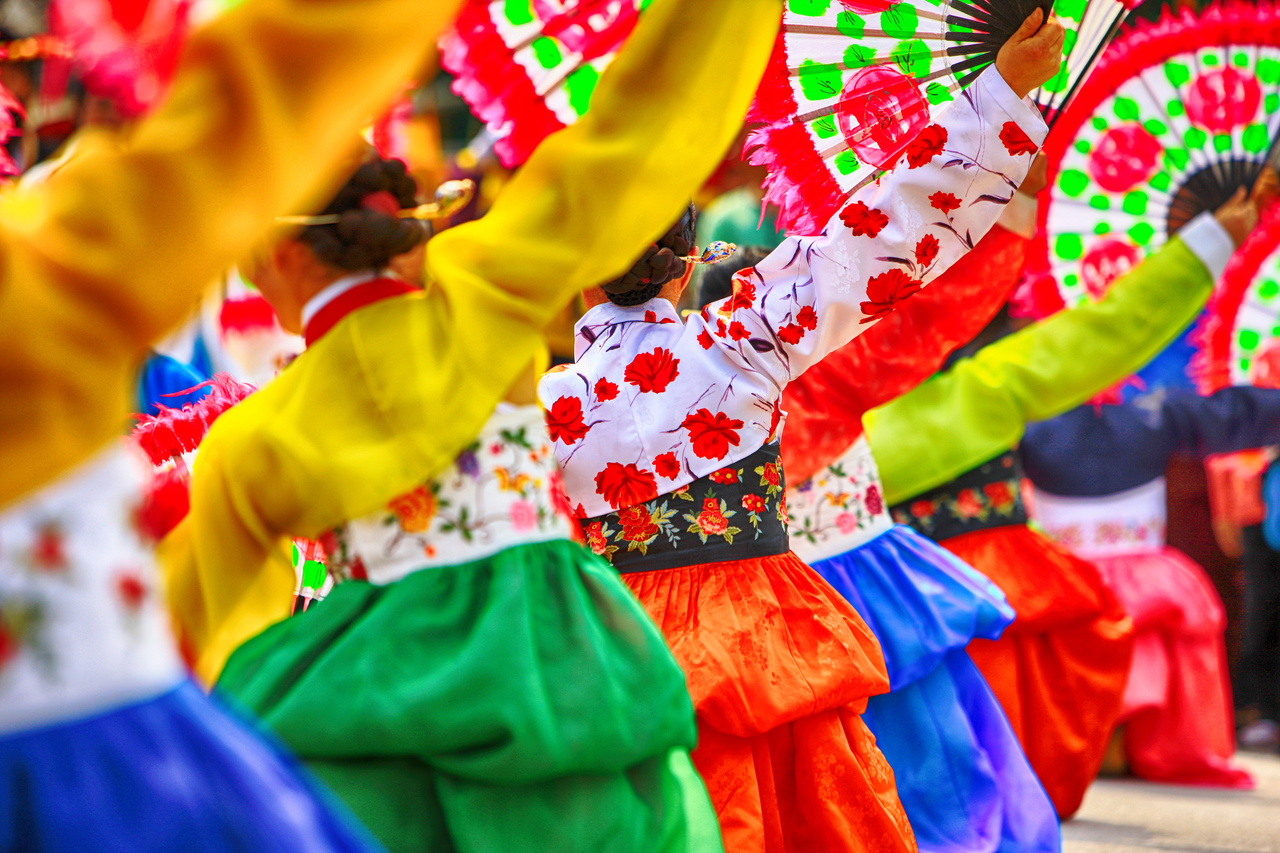
Buchaechum is perhaps the most internationally recognized Korean traditional dance. Developed in its modern form during the twentieth century, it combines traditional aesthetics with theatrical choreography.
Dancers dressed in brilliant hanbok carry large peony-painted fans and create magnificent flowing formations. As the fans open and close in perfect synchronization, they form blooming flowers, fluttering butterflies, rolling sea waves, and other natural motifs. The sheer elegance of these sweeping curves has made Buchaechum one of the most recognizable symbols of Korean performing arts around the world.
Its graceful curves beautifully embody the elegance often associated with Korean art.
Seungmu (승무) – The Monk’s Dance
Designated as an Important Intangible Cultural Heritage of Korea, Seungmu is widely considered one of the highest achievements of Korean performing arts. Originally influenced by Buddhist rituals, the dance combines extraordinary technical skill with deep emotional expression. The performer wears flowing white robes with exceptionally long sleeves, moving between moments of stillness and sudden bursts of energy. The climactic drum sequence symbolizes the tension between earthly desires and spiritual enlightenment, creating a uniquely Korean artistic and philosophical experience.
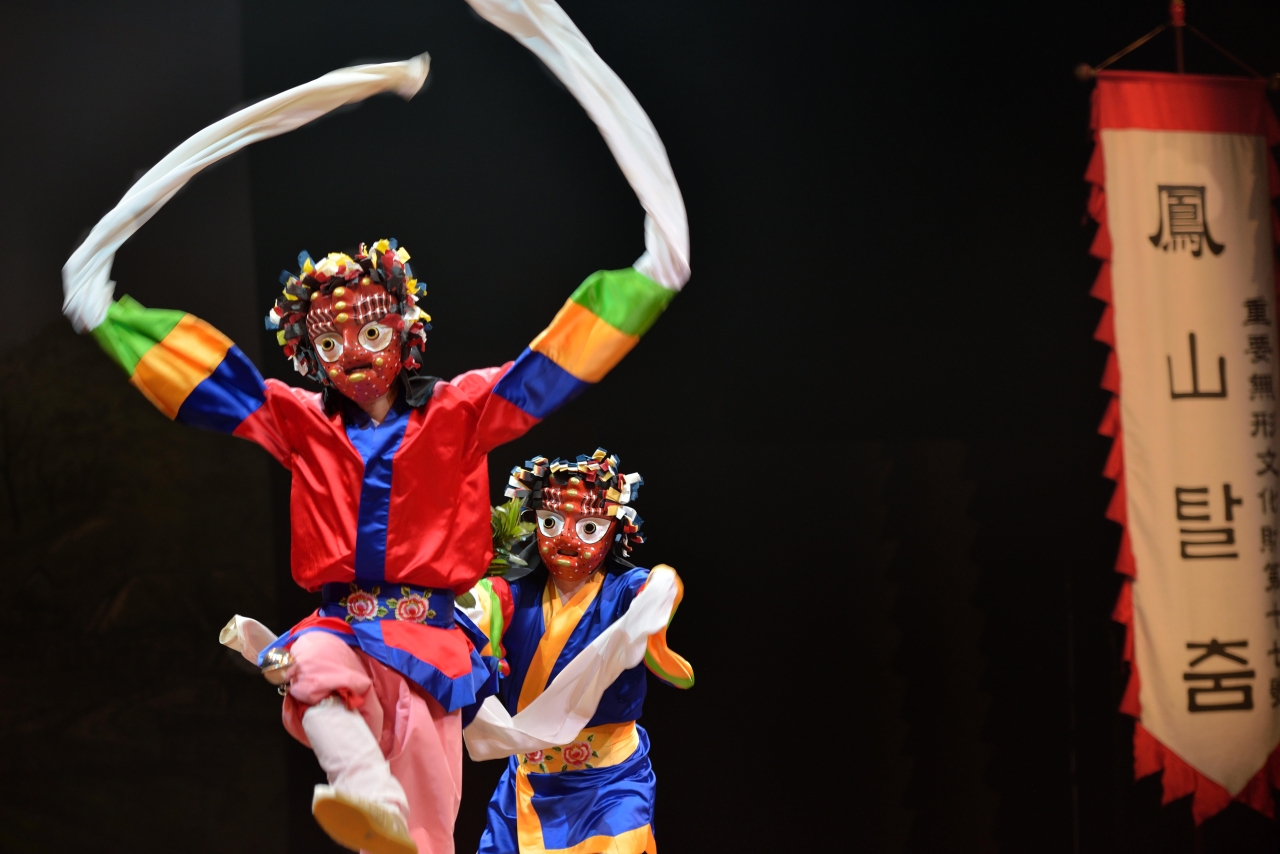
Talchum (탈춤) – The Mask Dance Drama
Performers wear colorful masks portraying familiar social archetypes such as corrupt aristocrats, arrogant officials, clever servants, and wandering monks. Historically, Talchum gave ordinary people a rare opportunity to criticize social inequality and authority through humor and satire. Its combination of dance, theater, music, and audience interaction continues to make it one of Korea’s most engaging traditional performance forms.
Bongsan Talchum is one of the most famous surviving forms and continues to be performed at cultural events and heritage festivals.
💡 Pro Tip: Even if you do not understand Korean, Talchum performances are highly visual and easy to follow thanks to exaggerated movements, masks, and comedic acting.
The Cultural Meaning Behind Korean Dance
Korean traditional dance is not merely entertainment. It reflects important cultural values that have shaped Korean society for centuries.
- Harmony: Balance between movement and stillness.
- Respect for Nature: Many movements imitate natural forms such as waves, clouds, and flowers.
- Community: Folk dances often encourage participation and collective celebration.
- Spirituality: Buddhist and shamanistic influences appear throughout many dance traditions.
- Resilience: The ability to transform hardship into beauty and artistic expression.
These themes also appear in many other traditional Korean art forms, including painting, calligraphy, music, and architecture.
Where to Watch Traditional Dance Performances in Korea
Visitors interested in experiencing authentic Korean traditional dance have several excellent options.
National Theater of Korea (국립극장)
Located on the slopes of Namsan Mountain in Seoul, the National Theater regularly hosts performances by the National Dance Company of Korea. Programs range from faithful recreations of traditional works to contemporary interpretations inspired by Korean heritage.
National Gugak Center (국립국악원)
The National Gugak Center in Seoul is one of the best places to experience traditional music and dance together. Regular performances often include court dances, folk dances, and heritage preservation programs.
Jeongdong Theater (정동극장)
Located near Deoksugung Palace (덕수궁), Jeongdong Theater specializes in visually engaging productions inspired by Korean traditional performing arts. Its performances are particularly popular among international visitors because they combine traditional dance, music, and storytelling in an accessible format.
Korea House (한국의집)
Korea House offers cultural performances specifically designed for international visitors. Traditional dance is often presented alongside music, cuisine, and demonstrations of Korean cultural arts.
Regional Festivals
Many local festivals feature traditional dance performances, especially during spring and autumn. Festivals dedicated to mask dance traditions often provide opportunities to see Talchum in a more authentic community setting.
📌 Local Note: If you are planning to visit the National Gugak Center, look for the regular Saturday Performance of Korean Music and Dance. Ticket prices are typically very affordable compared to the artistic quality of the performances, making it one of the best cultural experiences available in Seoul.
Tips for Visitors Interested in Traditional Dance
- Watch at least one court dance and one folk dance performance to appreciate their differences.
- Attend performances with live musicians whenever possible.
- Read a brief introduction before the show to understand the symbolism.
- Visit museums or palace complexes beforehand to gain historical context.
- Consider attending seasonal cultural festivals outside Seoul for a more local atmosphere.
Frequently Asked Questions
Do I need to understand Korean to enjoy traditional dance performances?
No. Traditional Korean dance relies heavily on visual storytelling, music, rhythm, costumes, and emotional expression. Even visitors with no Korean language ability can fully appreciate performances such as Buchaechum and Seungmu.
Is audience participation allowed?
It depends on the performance. Court dances are generally viewed in respectful silence, while folk traditions such as Talchum often encourage audience interaction and enthusiastic responses.
Explore More Korean Traditional Culture
If Korean traditional dance has sparked your interest, these related cultural topics offer additional insight into Korea’s artistic heritage:
- Guide to Korean Traditional Folk Music & Where to Hear It
- The Art Inside Korean Won Banknotes
- Traditional Korean Calligraphy: Hanja to Hangul Evolution
Traditional Korean dance remains a living art form rather than a museum piece. Whether expressed through the elegance of court choreography, the spiritual depth of Seungmu, the visual beauty of Buchaechum, or the humor of Talchum, these performances continue to connect modern audiences with centuries of Korean history and creativity.
Korean Culture portal KCulture.com

Founder of Kculture.com and MA in Political Science. He shares deep academic and local insights to provide an authentic perspective on Korean history and society.