Hello, K-Culture Explorers! I’m Min, your local expert here in South Korea, and I’m ready to take you on a culinary journey to the most authentic and beloved dining table in Korea: the Jipbap(집밥) table.
As someone who is not only a passionate home cook but also holds Korean Cuisine, Pastry, and Bakery certifications, I’ve had the pleasure of tasting diverse foods around the world. But honestly? Nothing compares to the balanced, deeply satisfying, and unbelievably healthy experience of Korean food. At the center of it all is Jipbap.
Are you ready to discover why this “humble” home meal is the true foundation of K-Food culture and why it’s trending even among busy Koreans? Let’s dive in!

What Exactly is Jipbap? The Korean Answer to Comfort Food
If you ask any Korean, Jipbap (집밥) literally translates to “home-cooked rice” or “meal prepared at home.” It represents the everyday, non-special-occasion food that families prepare and eat together. You might also hear the term Gajeongsik (가정식), which means “family-style meal.”
It’s more than just a dish; it’s a culinary philosophy rooted in balance, seasonal ingredients, and the warmth of a family kitchen. Forget the dazzling street food or the BBQ spectacle for a moment—Jipbap is where the real soul of Korean cuisine resides.
The Irresistible Charm: Features & Health Benefits of Jipbap
The basic structure of Jipbap is beautifully simple yet infinitely complex: Bap (Rice) + Guk (Soup) + Banchan (Side Dishes).
1. A Rainbow of Banchan (Side Dishes)
The true magic of Jipbap lies in its side dishes. These are not mere garnishes! They change endlessly with the seasons and regional specialties. The variety ensures a high intake of diverse nutrients.
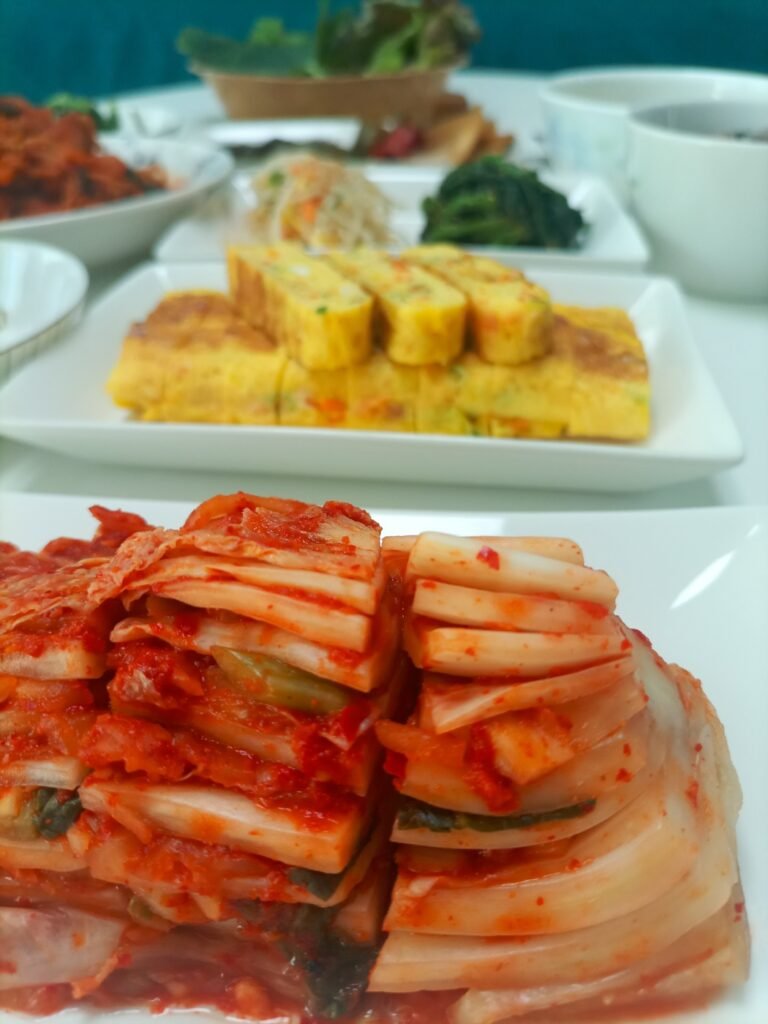
- Kimchi: The national staple. As a fermented food, it’s packed with beneficial bacteria for gut health. And trust me, every family has their perfect recipe!
- Namul (Seasoned Vegetables): These often feature blanched or sautéed fresh greens and roots, providing essential vitamins and minerals. Think of them as Mother Nature’s nutrient-packed gems!
- Jangajji (Pickles): Similar to Western pickles, these preserved vegetables (like onions or perilla leaves) offer a tangy, refreshing counterpoint to the meal.
2. The Health and Heritage Factor
Jipbap is undeniably a health powerhouse. Because of the emphasis on vegetables, fermented foods, and diverse cooking methods (blanching, steaming, stir-frying, heavy frying), you are getting a meal rich in fiber, vitamins, and low in saturated fats.
This culinary wisdom has been passed down for generations. Each home often guards its own family secrets and seasoning know-how (or Son-mat, literally “hand taste”)—making a bowl of Jipbap a uniquely personal and historical experience.
Deconstructing the Trio: The Essential Components of Jipbap
Let’s break down the core elements you’ll find on almost every Jipbap table:
1. Bap (Rice) 🍚
- What it is: Grains (usually rice, barley, beans, etc.) boiled with water.
- The Staple: When Koreans say “Bap,” they generally mean white rice.
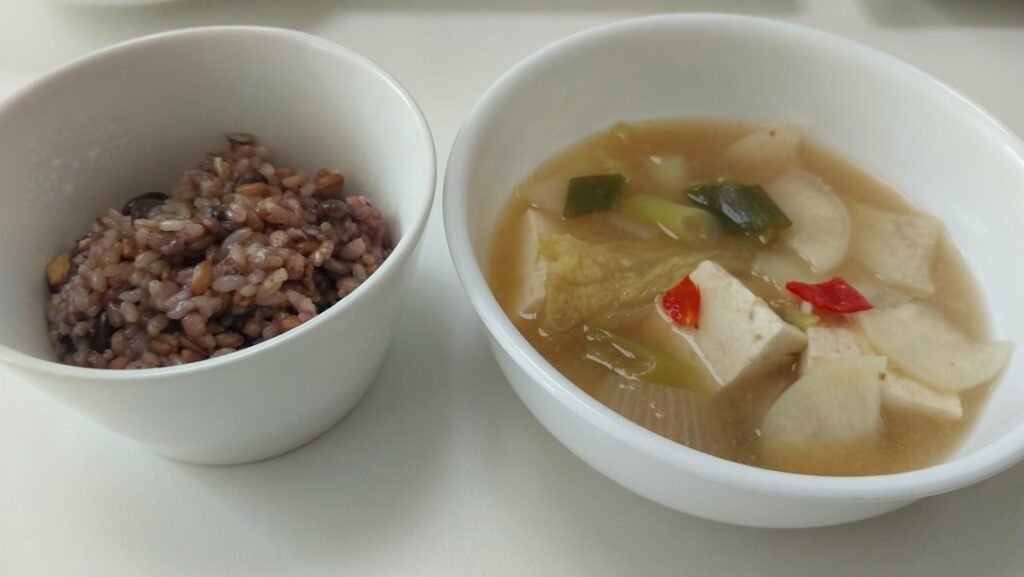
- Variety is the Spice: I personally adore Japgokbap (mixed-grain rice)—a blend of white rice, brown rice, black rice, barley, and various beans. It adds texture, color, and a huge boost of fiber!
2. Guk (Soup) 🥣
- What it is: The Korean equivalent of a Western soup, though usually lighter and less creamy. It’s a collective term for dishes made by boiling vegetables, meat, or fish in a large amount of water, seasoned with soy sauce, soybean paste (Doenjang), or salt.
- Always a Comfort: From simple Kongnamul Guk (Soybean Sprout Soup) to rich Sogogi Mu Guk (Beef and Radish Soup), it provides warmth and hydration, perfectly complementing the rice.
3. Banchan (Side Dishes) 🥢
- What it is: All the accompanying dishes eaten with Bap.
- Serving Style: While Bap and Guk are served individually, Banchan are traditionally placed in the center of the table and shared. However, with modern concerns about hygiene and the rise of single-person households, individual serving bowls for Banchan are becoming increasingly common!
- Infinite Variety: My kitchen alone probably cycles through dozens of Banchan recipes!
- Modern Trend Alert! Did you know that over 8 million households in Korea (more than 35% of all households as of 2025!) are now single-person homes? For busy singles or those who just lack the time (or talent 😉) to cook dozens of Banchan, Banchan-gage (Side Dish Stores) are a lifesaver! You can find them in traditional markets, supermarkets, and even convenience stores now!
📸 My Jipbap Table: A Taste of Home (Local Expert Insight!)
I quickly snapped a photo of my recent Jipbap spread for you! I whipped up a few fresh items and brought out some of our latest preserves. Since I know my way around a kitchen, here’s a quick breakdown of my personal Jipbap today:
| Component | Dish Name & Korean Name | Description (Certified Cook’s Take!) |
| Bap | Japgokbap (잡곡밥) | My blend includes 17 different grains: white rice, brown rice, black rice, sweet rice, barley, millet, sorghum, and various beans (like Seoritae). The mix is key for flavor and texture! |
| Guk | Baechu Doenjang Guk (배추된장국) | A deeply comforting soup made with Napa cabbage, radish, potatoes, onions, and tofu, all seasoned with a savory Doenjang (Korean fermented soybean paste). |
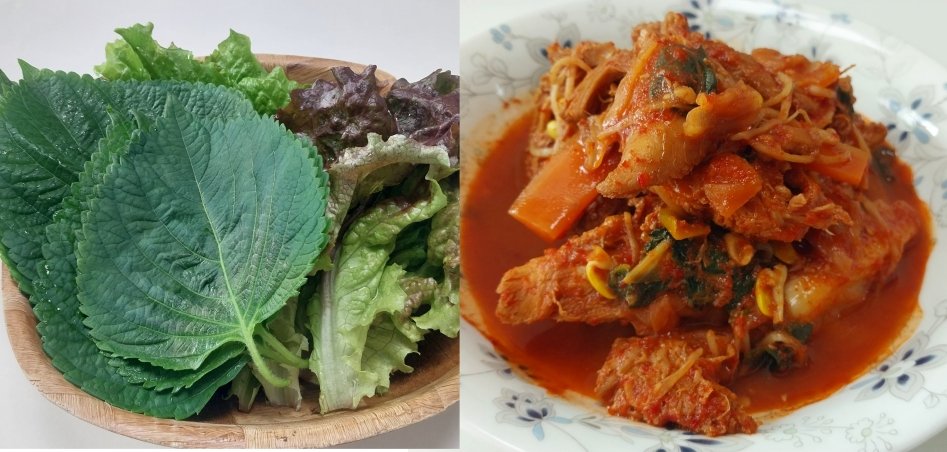
| Main | Dakgalbi with Ssam (닭갈비, 쌈) | Spicy, stir-fried chicken and vegetables. This is a flavorful main dish that is amazing when wrapped in a fresh leaf of lettuce (Sangchu) or perilla leaf (Kkaennip). |
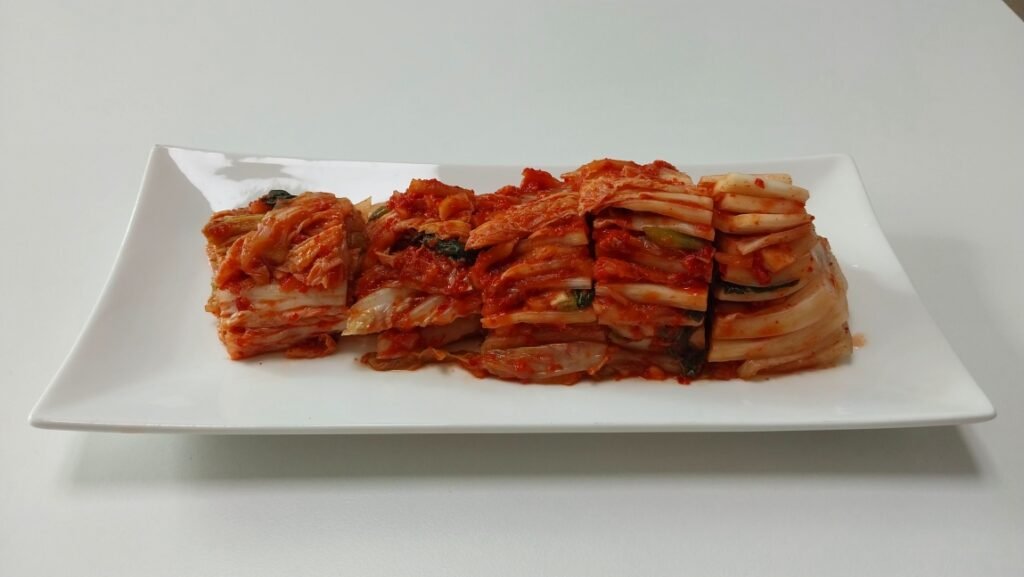
| Signature Banchan | Gimjang Kimchi (김장 김치) | The star! This is the large batch of Kimchi we made on November 16th—a huge annual event called Gimjang! I love mine nicely fermented and sour (Shin-kimchi)—perfect for digestion and flavor! |
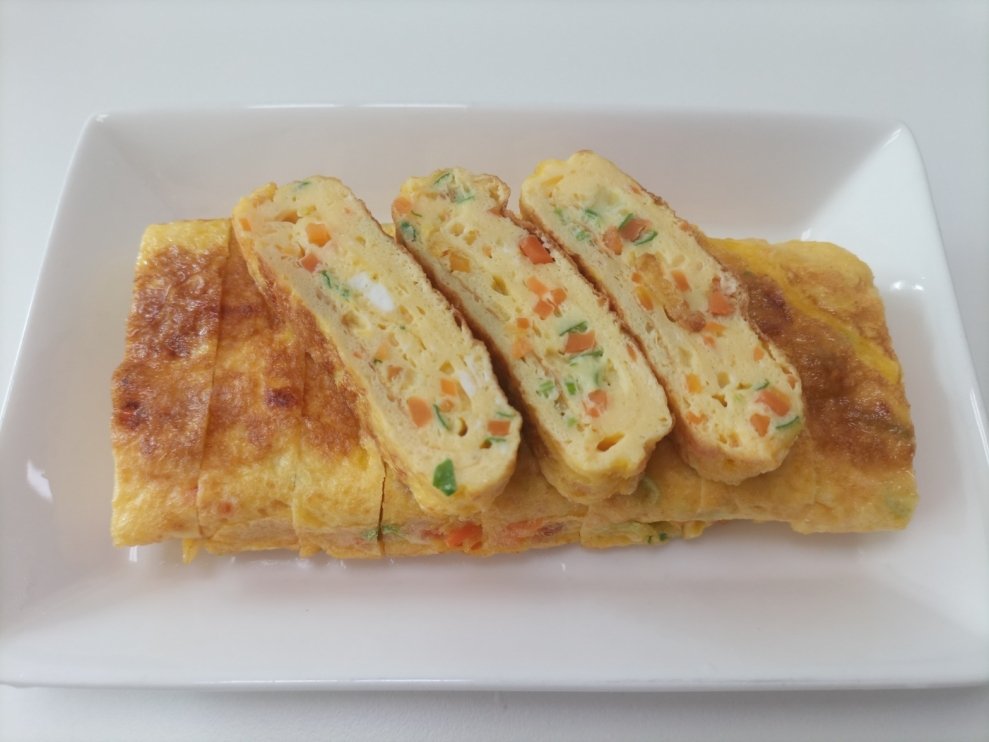
| Egg Banchan | Gyeran-mari (계란 말이) | A fluffy rolled omelet made with finely diced carrots and scallions. Simple, colorful, and a perennial favorite! |
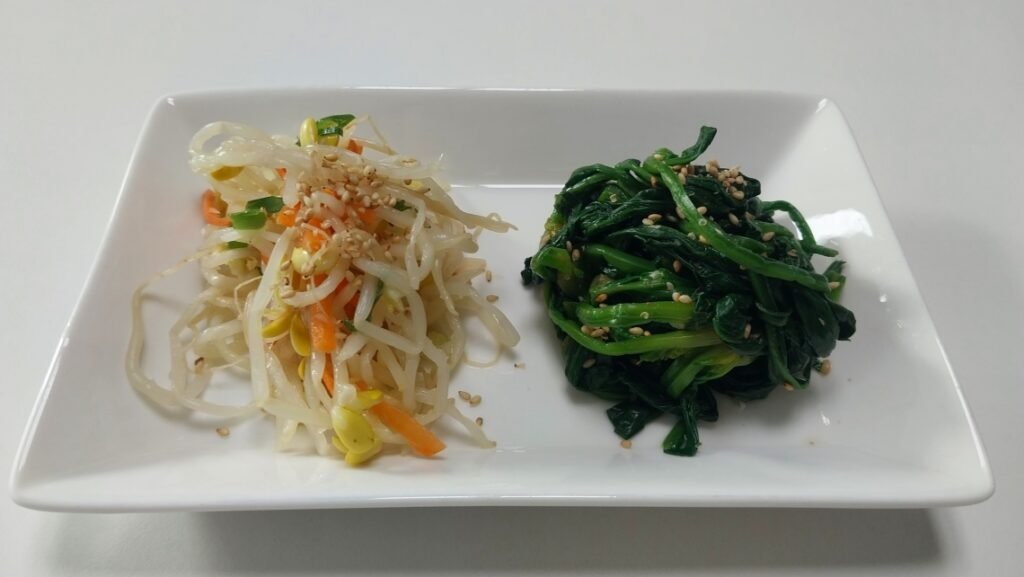
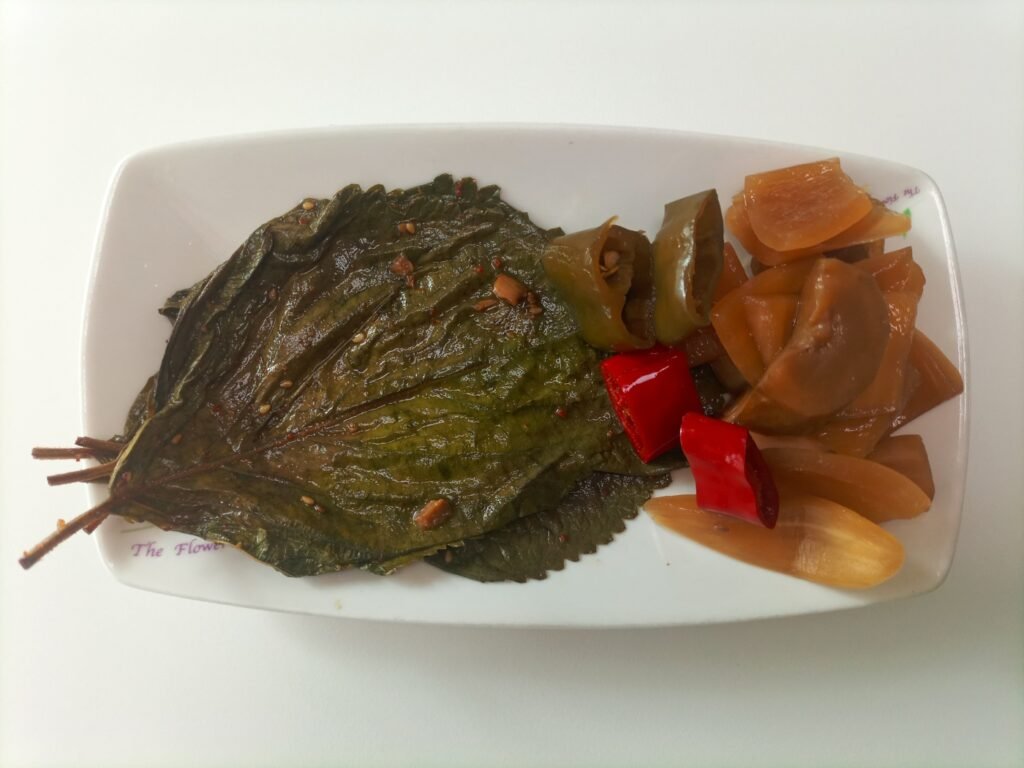
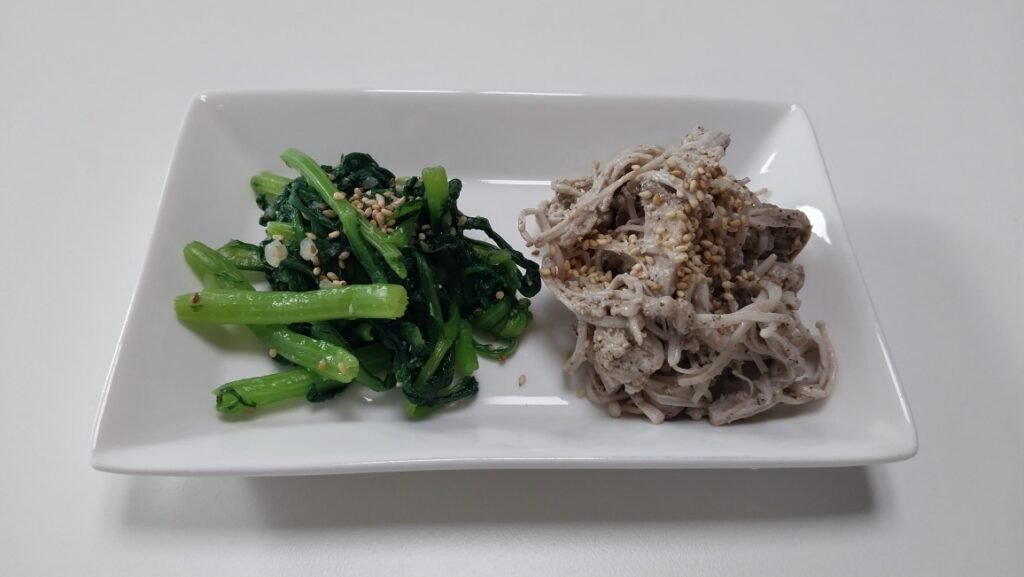
| Namul(나물) & Jangajji(장아찌) | Various | Kongnamul Muchim (Seasoned bean sprouts), Sigeumchi Namul (Soy sauce-seasoned spinach), Ssukgat Namul (Crown Daisy seasoned with salt), and Beoseot Deulkkae Muchim (Mushroom seasoned with perilla seed powder). For pickles, we had Kkaennip Jangajji (Perilla leaf in seasoned soy sauce) and Yangpa Jangajji (Onion and chili pickles—the Korean version of a tangy pickle!). |
🗺️ Your Gateway to Jipbap: Discovering Baekban Restaurants
If you’re visiting Korea and want to experience this home-style magic without knocking on a local’s door, seek out a Baekban restaurant!
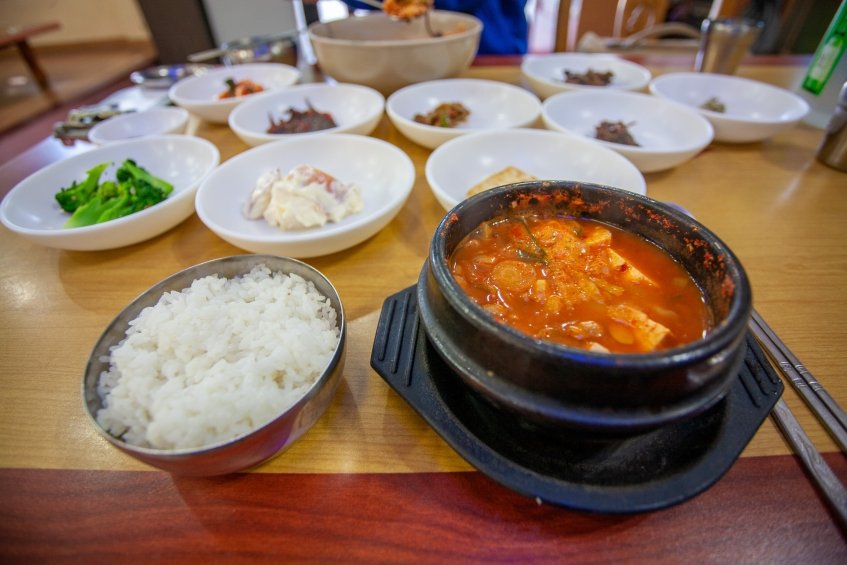
- What is Baekban? Literally meaning “white rice,” Baekban refers to a full Korean table set that typically includes a bowl of rice, a soup/stew, and many side dishes (Banchan)—often served on a single large tray.
- Affordable and Authentic: Baekban is generally very affordable and offers a fantastic opportunity to indirectly experience Jipbap and taste a wide variety of Banchan all at once!
- Specialty Baekban: These restaurants often feature a main dish, hence names like Bulgogi Baekban, Jeyuk Baekban, or Kimchi Jjigae Baekban.
- The Next Level: If you add more courses and fancier, more extravagant dishes, Baekban evolves into the more expensive Hanjeongsik (Full-Course Korean Meal).
Don’t miss the chance to grab a Baekban while you are here! It’s an immersion into the true heart of Korean food.
You try searching for “BaekBan” on YouTube. You’ll find a wide variety of restaurants offering homemade-style food. I highly recommend checking out one you like.

A certified Korean chef and baker. Min shares authentic tastes of Korea, from hidden local gems to traditional recipes and everyday lifestyle.