Annyeonghaseyo! Hello! As a local Korean, I can tell you that the convenience store, or pyeon-ui-jeom (편의점), is far more than just a retail shop—it’s a microcosm of Korean society. If you’ve seen K-dramas, you might view it as a romantic backdrop. But for us locals, it’s a daily sanctuary. I vividly remember my university days: sitting under a plastic parasol on a humid summer night, sharing a spicy cup of ramen and a bottle of soju with friends. That specific mix of cool night air, hot soup, and deep conversation is a core memory for many Koreans.
You might think you know convenience stores, but the Korean version is a different beast entirely. It’s where technology meets tradition, where Michelin-level chefs collaborate on $4 lunch boxes, and where the lonely find comfort. As your Local Expert, I’m going to take you on a Deep Dive into the true culture of the pyeon-ui-jeom—from the hiking rituals of the older generation to the high-tech lunch trends of modern office workers. Get ready to explore the ultimate Local Pick.
- More Than a Store: The Psychology of the Pyeon-ui-jeom
- The Romantic Reality: Parasol Nights and Ramen
- Daily Rituals: Hiking Fuel and Office Lunches
- The Culinary Deep Dive: Beyond Basic Snacks
- Smart Shopping: 1+1 Deals and Apps
- Why This is the Solo Traveler’s Ultimate Refuge
More Than a Store: The Psychology of the Pyeon-ui-jeom
To understand the Korean convenience store, you have to understand the concept of Hon-bap (eating alone). In a society that traditionally values communal dining, the rise of the convenience store has provided a safe, non-judgmental space for the growing number of single-person households and busy individuals.
The lights of a GS25 or CU are always on, acting as a beacon of safety in every neighborhood. Whether it’s 2 PM or 3 AM, the store offers the same level of hospitality. It is a “Third Place”—not home, not work, but a reliable space in between where anyone can take a breath.
The Romantic Reality: Parasol Nights and Ramen
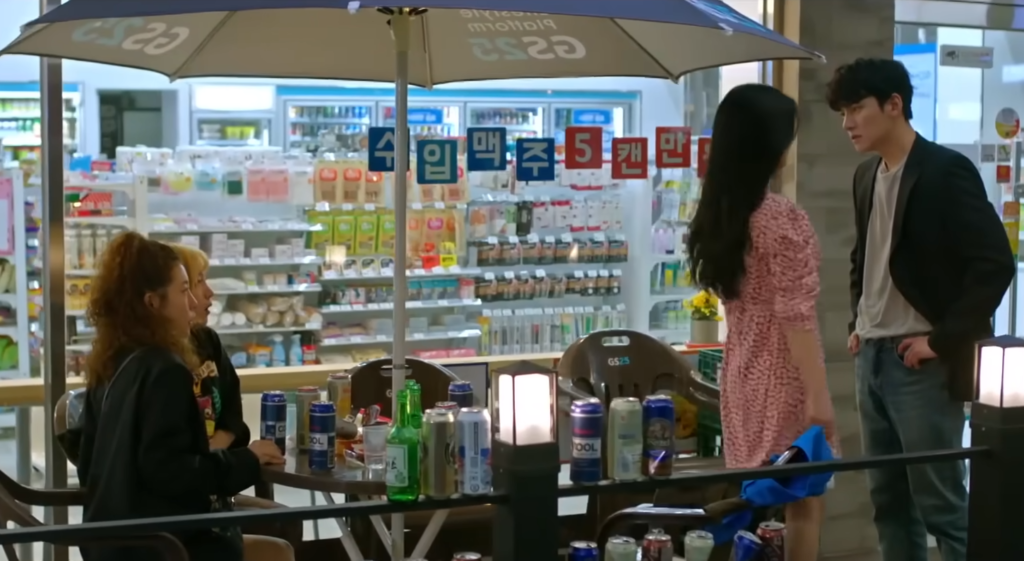
This is the scene most travelers dream of, and yes, it is very real. While downtown stores in Gangnam or Myeongdong might lack space, venture just slightly into residential alleys or university districts, and you will find them: the plastic tables and chairs under a colorful parasol (red, blue, or green).
The “Four-Season” Patio
These seats aren’t just for eating; they are social hubs. Summer Nights: You’ll see neighbors drinking cold canned beer (maekju) with dried squid or shrimp crackers. This is often called a “pyeon-maek” (convenience store beer) gathering. The Vibe: There is a specific charm to sitting on a plastic chair, hearing the buzz of cicadas, and slurping hot ramen. It’s unpretentious and deeply authentic. As a student, this was our “pub” when we were short on cash, and those memories are precious.
📌 Local Note: If you use the outdoor tables, it is basic etiquette to clear your own trash. Koreans are very strict about recycling, so please separate your liquids, plastics, and paper into the designated bins inside or outside the store.
Daily Rituals: Hiking Fuel and Office Lunches
The convenience store is intricately woven into the specific hobbies and routines of Korean life. It serves as the starting line for many daily adventures.
The Hiker’s Pit Stop (Deungsan Culture)
Hiking is a national obsession in Korea. On weekends, near the entrances of major mountains like Bukhansan or Gwanaksan, the local convenience stores are packed. The ritual is precise: 1. Water: Usually frozen bottled water in summer to melt as you climb. 2. Kimbap: The “Triangle Kimbap” or a full roll. It’s portable carbs. 3. Sugar: A chocolate bar or Yeoyang-gang (sweet red bean jelly bar) for an energy spike. Eating a convenience store kimbap at the summit of a mountain while overlooking Seoul is a flavor that money can’t buy.
The “Smart” Office Lunch
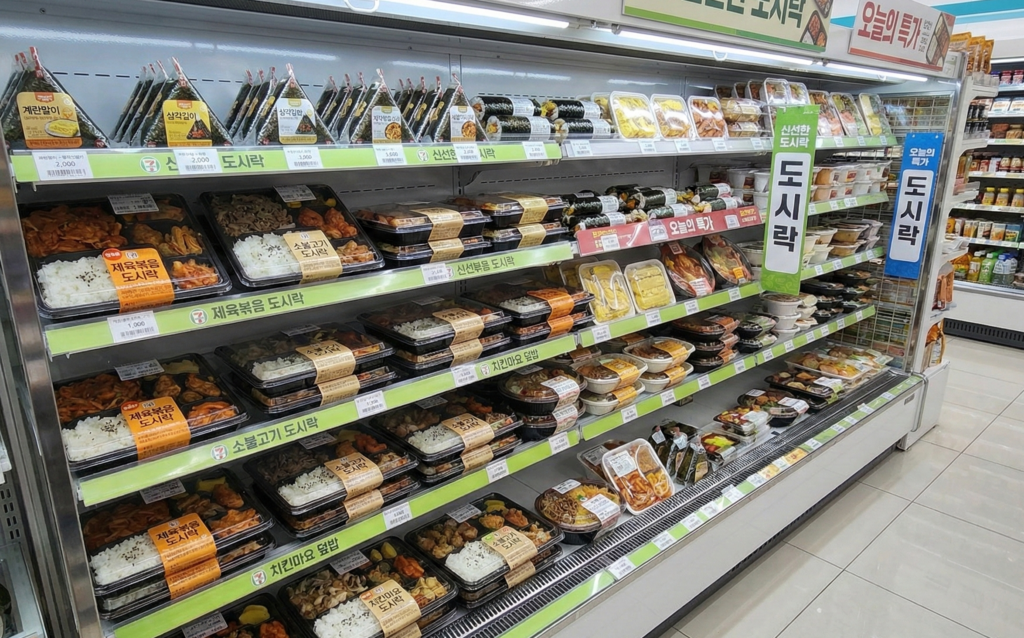
For the jikjangin (office workers), the convenience store lunch has evolved. It’s no longer about “saving money” because you have to; it’s about “smart consumption.” The Park Picnic: Instead of eating at their desks, many workers buy a premium dosirak (lunch box)—loaded with grilled eel, pork cutlet, or seasonal namul (greens)—and take it to a nearby park bench or the Cheonggyecheon Stream. Quality over Quantity: Modern dosirak are nutritionally balanced. It allows workers to enjoy 30 minutes of sunshine and silence before returning to the office grind.
The Culinary Deep Dive: Beyond Basic Snacks
Let’s move past the basics. If you want to impress a local or truly satisfy your palate, look for these advanced items.
The “Hangang Ramen” Machine
You may have seen foil bowls on induction cookers. This is not just boiling water; it’s a science. The machines at parks (especially along the Han River) are programmed to cook the ramen for exactly the right amount of time with the perfect water ratio. The result is noodles that are chewier and soup that is richer than anything you can make at home. Adding a raw egg (sold separately) halfway through is the pro move.
Seasonal Specialties
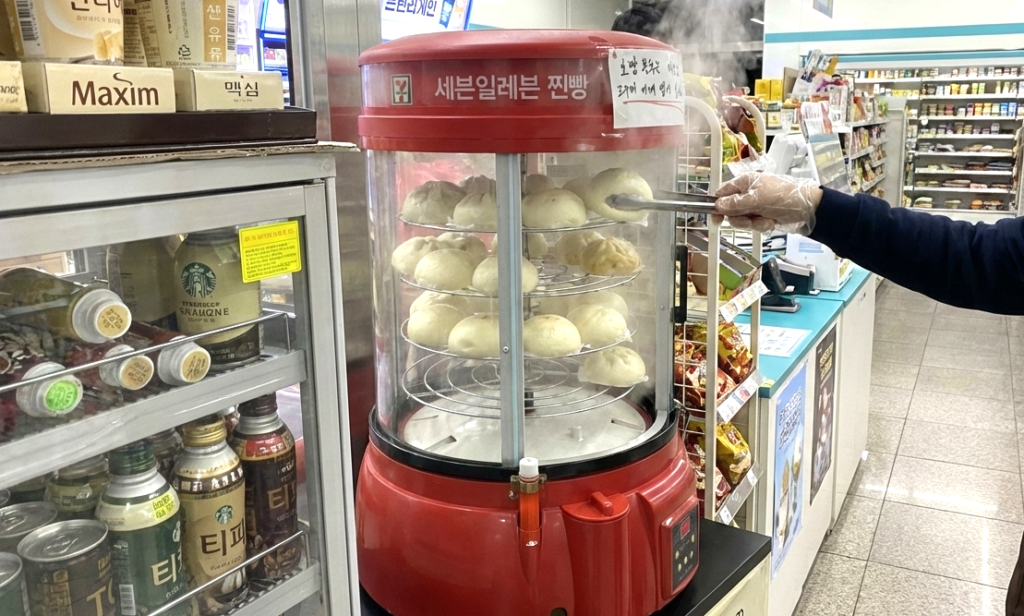
Korean convenience stores track the seasons perfectly: Winter: Look for the steamer cabinets near the counter. They hold Hoppang (steamed buns filled with red bean or pizza toppings) and roasted sweet potatoes (Gun-goguma). The smell alone warms you up. Summer: The “Ice Cup” freezers dominate. You buy a cup of ice (approx. 700 KRW) and choose a pouch drink—hazelnut coffee, peach iced tea, or green grape ade.
Smart Shopping: 1+1 Deals and Apps
If you walk into a store and pick just any item, you are missing out. We locals scan the tags for “1+1” (Buy one, get one free) or “2+1” signs. These rotate monthly. It’s the best way to try new drinks or snacks without risk.
Furthermore, tech-savvy locals use the store’s apps (like ‘Pocket CU’ or ‘My GS’) to check inventory. Is that viral “Dubai Chocolate” or the famous “Cream Bread” in stock? We check the app before we walk out the door. That is the level of dedication we have to our snacks!
Why This is the Solo Traveler’s Ultimate Refuge
Korea is incredibly safe, but traveling alone in a foreign country can be daunting. The convenience store is your anchor. It offers:
- No Language Barrier: Most things are self-service.
- Access to Cash: The Global ATMs are reliable.
- T-Money Reloads: Essential for subways and buses.
But mostly, it offers a vibe. Sitting under that parasol, peeling the wrapper off a triangle kimbap, and watching the neighborhood grandmother chat with the store clerk—that is where you find the Real Korea. It’s a place of connection disguised as a retail store. Watch the video below from Breanna Quan. She will also be an excellent guide to Korean convenience stores.
Korean Culture portal KCulture.com
Join the mailing service and add to your favorites.

Founder of Kculture.com and MA in Political Science. He shares deep academic and local insights to provide an authentic perspective on Korean history and society.