🍚 The Heart of Hansik: Why Koreans Love Their Broth
Imagine the biting Korean winter, the air crisp and freezing, maybe even dipping into the minuses! What’s the best way to battle that chill? A piping hot, savory bowl of Korean broth, of course!
Korean cuisine, or Hansik, is built around the concept of “Bap and Guk” (rice and soup/broth). Just as you mentioned, even our beloved Jipbap (home-cooked meal) starts here. But our broths are more than just side dishes; they are essential comfort food, a source of nutrition, and even tied to specific celebrations. (Who doesn’t love Miyeokguk (Seaweed Soup) on their birthday? It’s mandatory!)
While globally, you might group them all under “soup” or “stew,” in Korea, these four categories—Guk, Tang, Jjigae, and Jeongol—describe a distinct culinary experience based on ingredients, cooking method, and the ratio of liquid to solids. Don’t worry, even though people joke that “If it’s served boiling, it’s Jjigae; if you boil it at the table, it’s Jeongol,” we can do better than that!
🍲 Demystifying the Four Broths
Let’s look at the beautiful differences that make each category shine.
1. Guk (국): The Everyday Essential Soup
The Vibe: Simple, clear, and companionable. Guk is the most basic and frequent type of Korean soup, often served alongside rice as part of a meal. Think of it as a light, delicate soup.
- Characteristics:
- Broth: High liquid-to-solid ratio. Relatively clear and lightly seasoned.
- Cooking: Typically simmered for a shorter time compared to Tang.
- Taste: Clean, refreshing, and mild, intended to complement the main dish and rice.
- Must-Try Examples:
| Guk Name | Description (You can almost smell it!) |
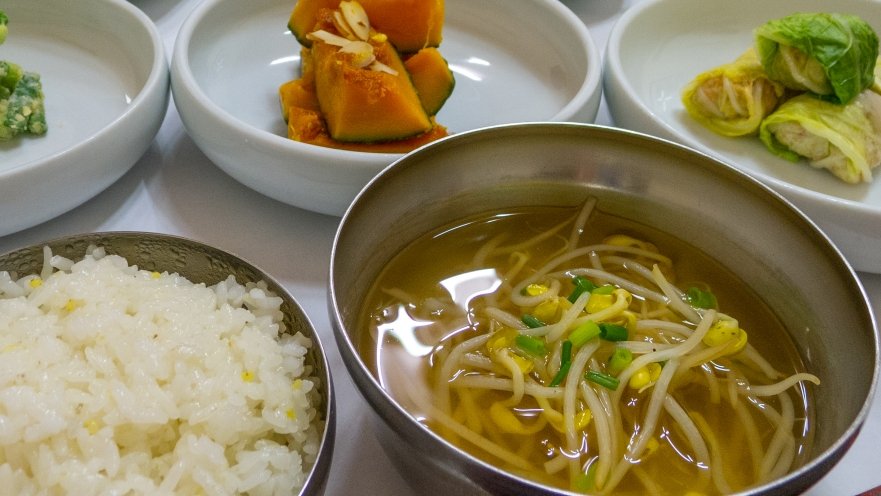
| Kongnamul Guk (콩나물국) | The ultimate hangover cure! A beautifully clear anchovy broth, starring crunchy bean sprouts. It’s incredibly refreshing and simple, often seasoned just with a pinch of salt and a hint of garlic. It’s the taste of Korean home cooking at its purest. |
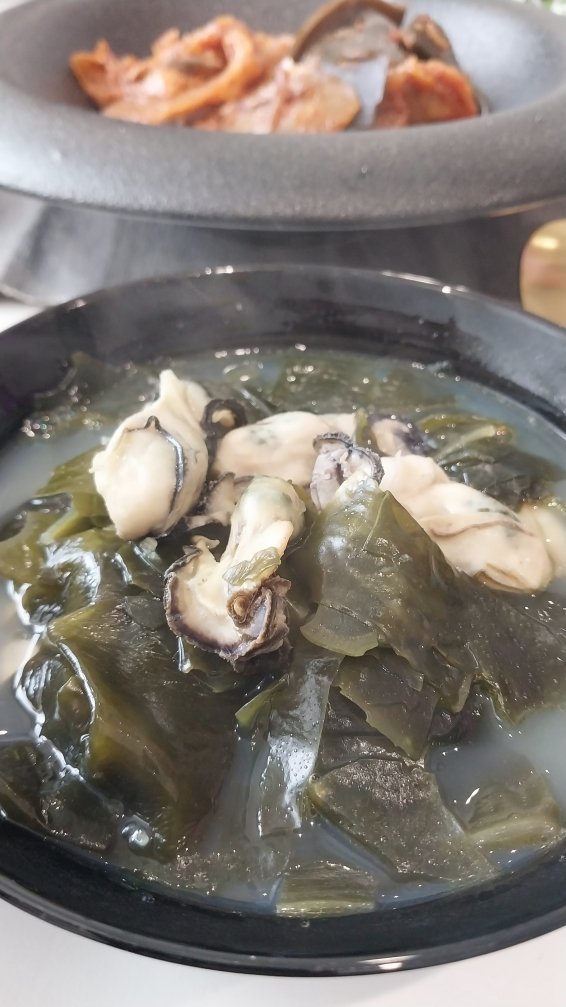
| Miyeok Guk (미역국) | Seaweed soup. It’s traditionally eaten by mothers after childbirth and on birthdays to honor the mother. The savory, deep-green seaweed is simmered with a bit of beef or seafood in a clear broth seasoned with soy sauce. It has a uniquely deep, comforting oceanic flavor. |
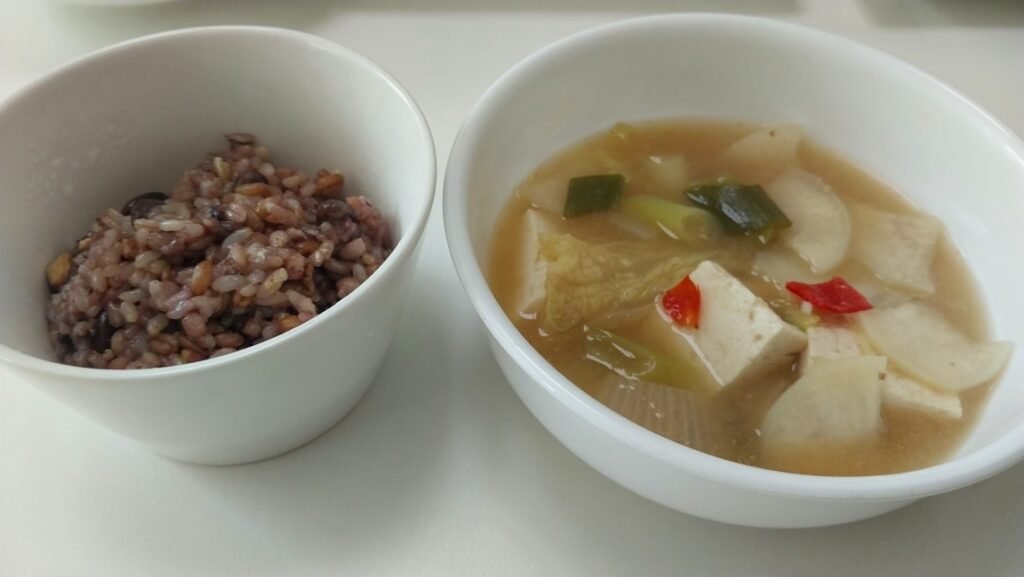
| Doenjang Guk (된장국) | Often called Korean Miso Soup. A simple version of the fermented soybean paste broth, loaded with scallions, potato, and a whisper of tofu. It’s light, earthy, and the perfect start to any meal. |
2. Tang (탕): The Concentrated, Hearty Soup
The Vibe: Rich, complex, and deeply savory. Tang can be thought of as a concentrated soup or an elevated Guk. It often takes more time to cook and is generally heavier and more substantial. Fun fact: Tang is often considered a more formal term for Guk.
- Characteristics:
- Broth: Lower liquid-to-solid ratio than Guk, with a much richer, deeper, and more concentrated flavor.
- Cooking: Often slow-cooked for hours to extract maximum flavor and nutrition (e.g., bone broth).
- Presentation: Typically served in an individual, sizzling earthenware pot (ttukbaegi), making it piping hot till the very last spoonful.
- Must-Try Examples:
| Tang Name | Description (My absolute favorite!) |
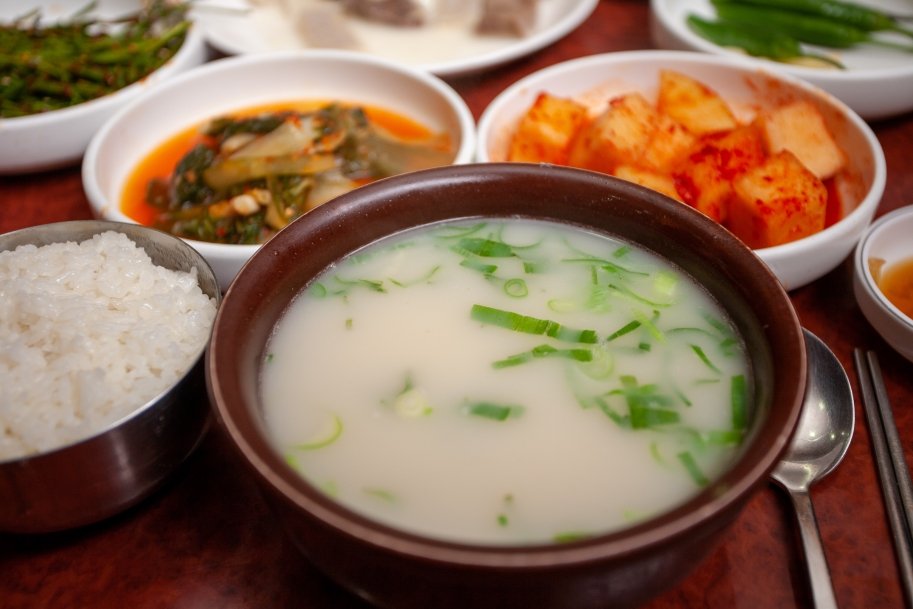
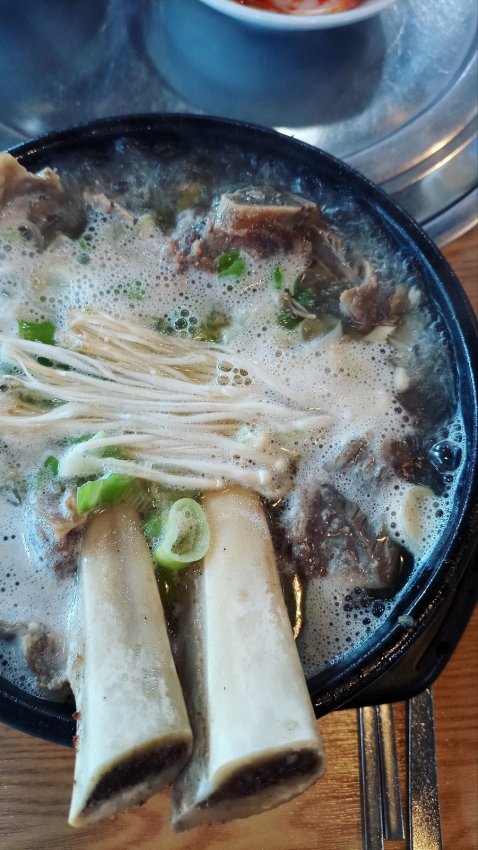
| Seolleongtang (설렁탕) | Beef Bone Soup. After simmering beef leg bones for literally hours (sometimes days!), the broth turns a milky white. It has a very mild, buttery flavor and is usually served with thinly sliced beef and somen noodles. You season it yourself with salt, pepper, and chopped scallions! It’s what I crave on the coldest days. |
| Galbitang (갈비탕) | Short Rib Soup. This is the royal feast of soups. Tender beef short ribs are simmered in a clear, clean beef broth with radish, and sometimes glass noodles. The meat falls right off the bone. It’s often served at weddings or special family gatherings. |
| Yukgaejang (육개장) | Spicy Shredded Beef Soup. A fiery red, intensely flavorful soup made with slow-cooked shredded beef, fernbrake (gosari), bean sprouts, and scallions. It’s seasoned with chili powder and garlic, giving it a smoky, spicy kick that is both warming and addictive. |
3. Jjigae (찌개): The Spicy, Dense Stew
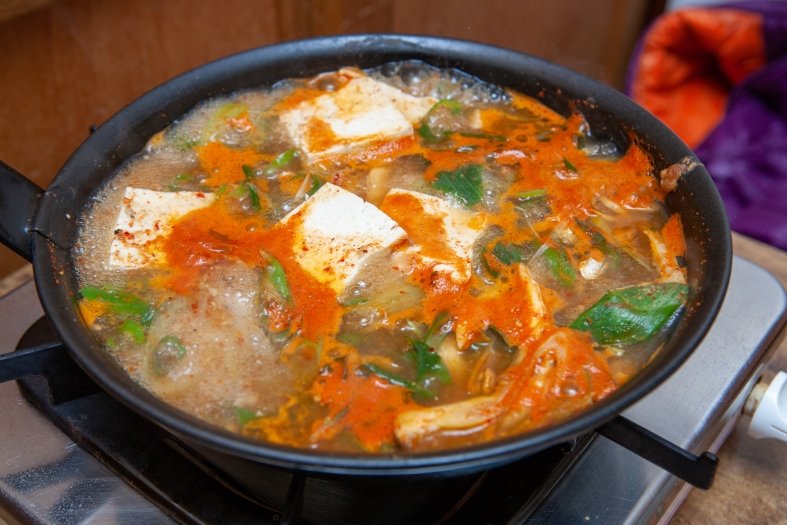
The Vibe: Bold, communal (or individual), and the superstar of the Korean dining table. Jjigae is best described as a stew—thicker, spicier, and much more intensely flavored than Guk or Tang.
- Characteristics:
- Broth: The lowest liquid-to-solid ratio. Very little liquid, often barely covering the ingredients.
- Flavor: Heavily seasoned, usually with Gochujang (chili paste), Doenjang (fermented soybean paste), or Kimchi, making the flavor profile much more aggressive and salty/spicy.
- Serving: Typically served boiling hot in a small ttukbaegi, often shared or consumed individually with a bowl of rice.
- Must-Try Examples:
| Jjigae Name | Description (The heart of Korean tables!) |
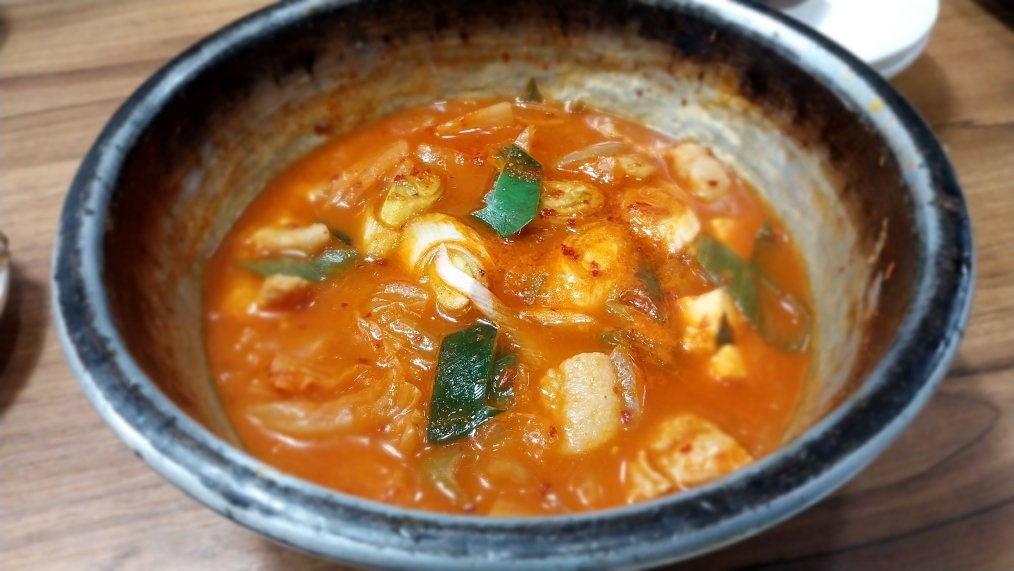
| Kimchi Jjigae (김치찌개) | The iconic Korean stew. Perfectly fermented, sour kimchi is boiled with pork (or tuna), soft tofu, and sometimes scallions in a deep, spicy, and sour broth. The taste is a beautiful balance of savory, spicy, and tangy. Everyone’s mom has the best recipe! |
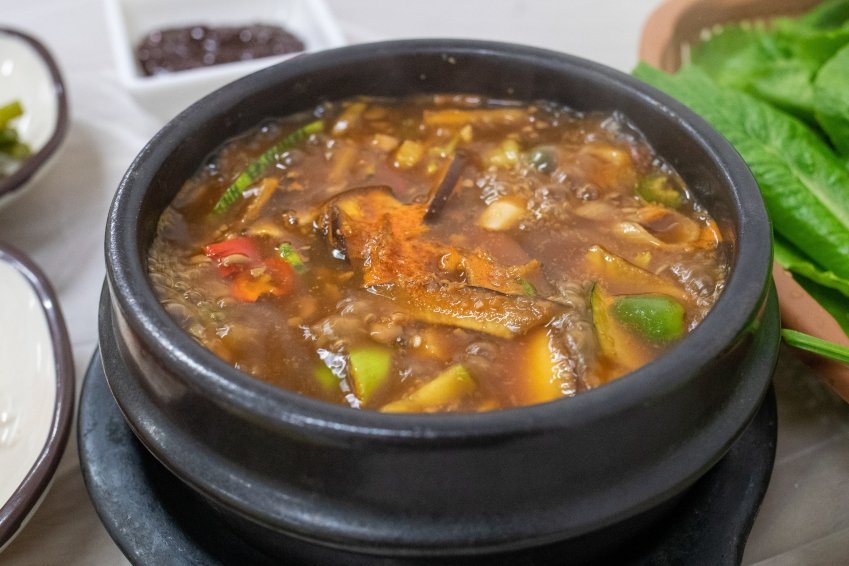
| Doenjang Jjigae (된장찌개) | Fermented Soybean Paste Stew. Unlike the light Doenjang Guk, this is dense, rich, and earthy. It features an amazing combination of zucchini, potatoes, onions, mushrooms, and often clam or beef, all bathing in a richly flavored Doenjang broth. It’s the quintessential Korean home flavor. |
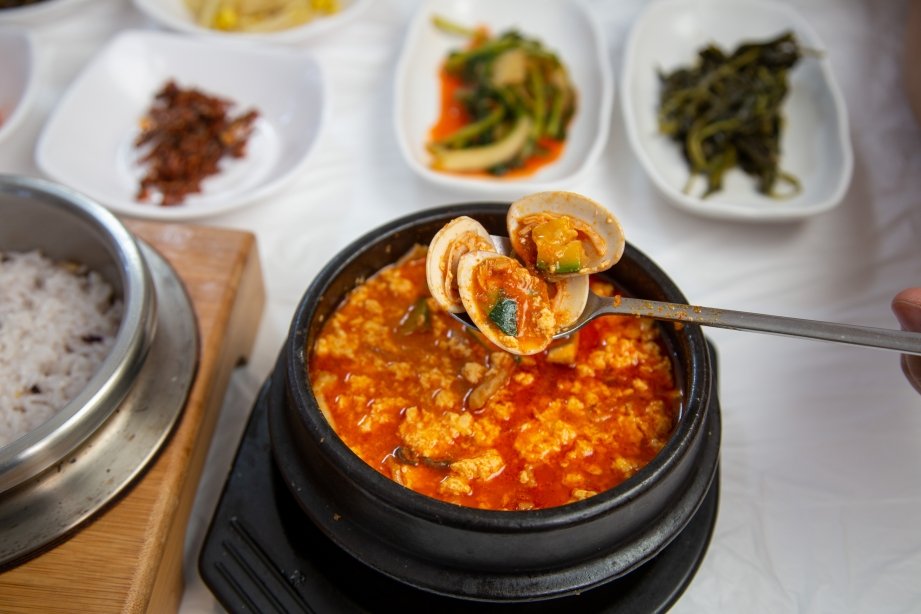
| Sundubu Jjigae (순두부찌개) | Soft Tofu Stew. This is a wonderfully jiggly and comforting stew, usually made spicy with chili oil, featuring impossibly soft, silken tofu, egg, and seafood (or beef). It’s so smooth, it almost melts on your tongue. |

4. Jeongol (전골): The Tabletop Hot Pot Casserole
The Vibe: Elegant, communal, and interactive. Jeongol is the ultimate shared dining experience, similar to a hot pot or a light casserole that you cook right at your table! It requires more beautiful presentation than Jjigae and is often saved for gatherings.
- Characteristics:
- Presentation: Ingredients (meat, seafood, vegetables, mushrooms) are artfully arranged in a beautiful, shallow brass or iron pot (jeongol naembi).
- Cooking: The broth (often a lighter stock) is poured over the ingredients, and the entire dish is cooked on a burner placed in the center of the dining table.
- Experience: It’s an active, conversational meal where you eat and cook simultaneously, dipping fresh, cooked ingredients into a sauce.
- Must-Try Examples:
| Jeongol Name | Description (The party starter!) |
| Bulgogi Jeongol (불고기전골) | Marinated Beef Hot Pot. Thin slices of sweet and savory Bulgogi are arranged with glass noodles, assorted mushrooms (like Enoki and Shiitake), and green onions. The simmering sweet broth gives off an incredibly mouthwatering aroma as it cooks right in front of you. It’s an easy win for anyone new to K-Food. |
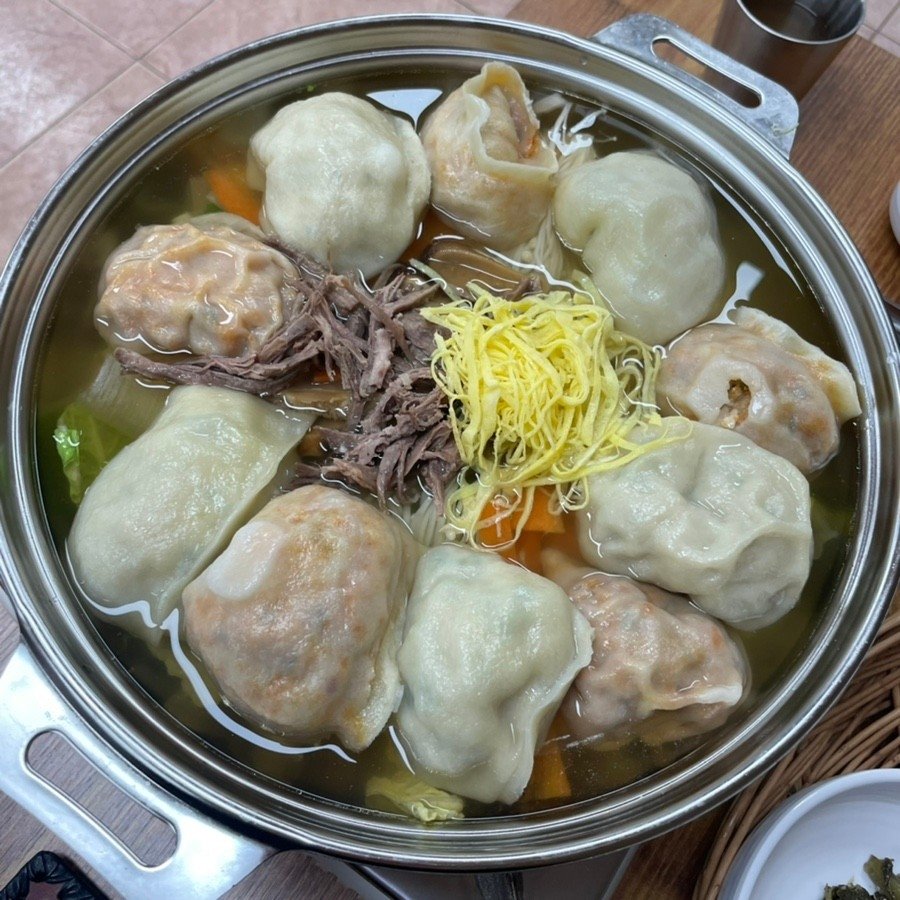
| Mandu Jeongol (만두전골) | Dumpling Hot Pot. A gorgeous array of handmade Korean dumplings (Mandu) alongside fresh vegetables and often thin slices of beef, all simmered in a light, clear, yet savory broth. The dumplings plump up beautifully as they cook, making it the perfect sharing meal for a cool evening. |
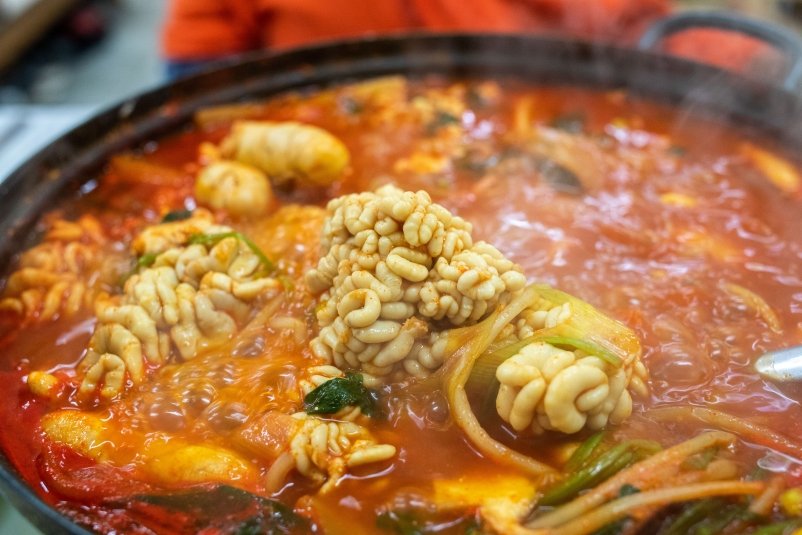
| Gopchang Jeongol (곱창전골) | Beef Intestine Hot Pot. Don’t let the name scare you! This is a deeply loved specialty. The chewy, flavorful beef intestines are simmered in a spicy, rich broth with plenty of vegetables. It’s intensely savory, a bit spicy, and has a unique, satisfying texture. |
✨ The Key Differences: A Quick Summary
To keep it simple and friendly for those quick-scan readers, here is the essential takeaway:
| Category | Typical Volume (Liquid-to-Solid) | Flavor Profile | Cooking Method/Serving | English Equivalent (Conceptual) |
| Guk (국) | High (Mostly Liquid) | Light, Clean, Mild | Short simmer, individual serving (side) | Light Soup |
| Tang (탕) | Medium (More Solids) | Rich, Deep, Concentrated | Long simmer, individual ttukbaegi (main) | Concentrated Soup/Hearty Broth |
| Jjigae (찌개) | Low (Mostly Solids) | Intense, Bold, Spicy/Salty | Short simmer, often in a ttukbaegi (main/side) | Stew |
| Jeongol (전골) | Medium (Balanced) | Clean, Savory, Balanced | Cooked at the table in a wide pot (communal) | Hot Pot/Casserole |
👩🏻🍳 My Local Expert Tip
As your friendly local expert (and someone who loves to cook!), I can tell you that the true difference often lies in the intent.
- Guk is served to sip with your rice and cleanse your palate.
- Tang is your all-in-one meal, often focused on one star ingredient (like beef bone in Seolleongtang).
- Jjigae is the flavor bomb that makes your rice taste amazing and cuts through the richness of other side dishes.
- Jeongol is for celebrating and sharing a moment with friends as you watch the broth bubble and the ingredients come to life!
Next time you see these names on a menu, you’ll be able to order like a true K-Food connoisseur! Isn’t that exciting?

A certified Korean chef and baker. Min shares authentic tastes of Korea, from hidden local gems to traditional recipes and everyday lifestyle.