Ever wondered why South Korea is so obsessed with education? The roots of this intense scholarly passion trace back centuries to the Seowon, elegant Neo-Confucian academies that served as the intellectual and spiritual heart of the Joseon Dynasty. In this guide, I’ll take you through these UNESCO World Heritage sites, exploring their unique architectural harmony with nature, their role in shaping the modern Korean “education fever,” and the best locations you can visit today to experience the serene life of a traditional scholar.
- The Soul of Joseon Scholarship: What is a Seowon?
- UNESCO World Heritage: The 9 Representative Seowon
- Architectural Philosophy: Harmony Between Man and Nature
- The Legacy of Learning: From Seonbi to Modern Students
- Top Picks: Seowon You Must Visit
- Essential Travel Tips for Visitors
The Soul of Joseon Scholarship: What is a Seowon?
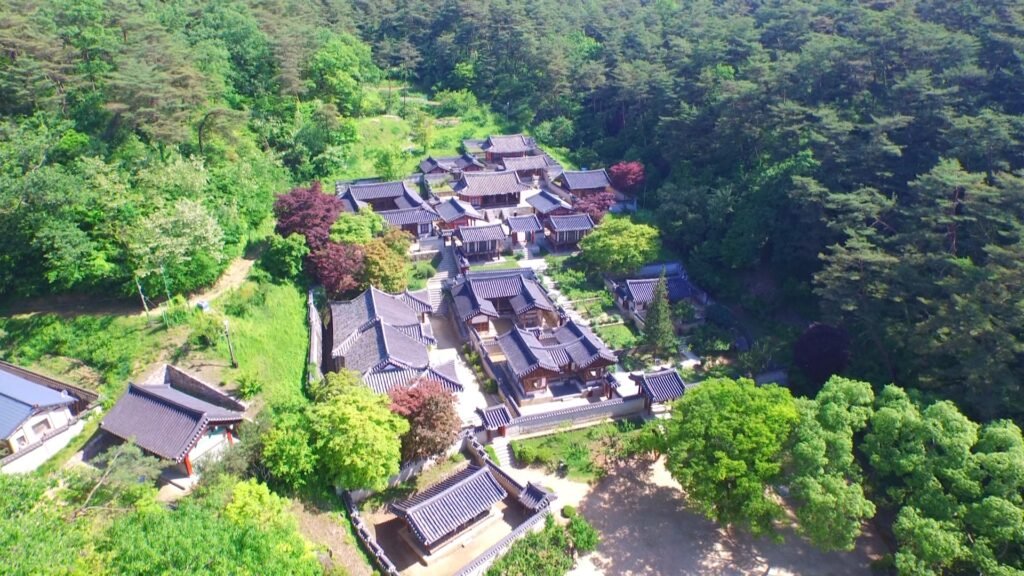
When you walk into a Seowon, the first thing you notice isn’t the grandeur of the buildings, but the silence. Living in Korea, I’ve found that while palaces show off royal power and temples offer religious solace, Seowon offer something different: an atmosphere of deep, focused thought. Established during the Joseon Dynasty (1392–1910), Seowon were private Neo-Confucian academies that combined two vital functions—education and veneration.
To understand Seowon, you must understand who studied there. They were the Seonbi—local scholars who were the intellectual elite of their time. A Seonbi wasn’t just a student; the term refers to a person of virtue who pursued knowledge not for personal wealth, but to achieve moral perfection and fulfill their social responsibility. They lived lives of modesty, prioritizing integrity over material gain.
While the state operated government-run schools like Sungkyunkwan (the national university in the capital) and Hyanggyo (provincial public schools), the Seowon were independent. This private nature allowed them to focus more deeply on specific philosophical debates and local scholarship, making them the true breeding grounds for Korea’s intellectual diversity.
UNESCO World Heritage: The 9 Representative Seowon
In 2019, nine Seowon were collectively designated as a UNESCO World Heritage site. These specific academies were chosen because they perfectly preserve the essence of Korean Neo-Confucianism and its architectural evolution. Each site carries a unique story of a famous scholar and a specific regional legacy.
| Seowon Name | Location | Key Features & Historical Figure |
|---|---|---|
| Sosu Seowon | Yeongju, Gyeongsangbuk-do | The first-ever Seowon (est. 1543). Honors An Hyang, the scholar who introduced Neo-Confucianism to Korea. |
| Namgye Seowon | Hamyang, Gyeongsangnam-do | The second oldest; established the standard architectural layout for all future academies. |
| Oksan Seowon | Gyeongju, Gyeongsangbuk-do | Honors Yi Eon-jeok. Famous for its massive library collection and proximity to UNESCO villages. |
| Dosan Seowon | Andong, Gyeongsangbuk-do | The “Ivy League” of Joseon. Honors Yi Hwang (Toegye), the most celebrated philosopher of the era. |
| Piryam Seowon | Jangseong, Jeollanam-do | Honors Kim In-hu. Known for its beautiful architectural balance and Honam region influence. |
| Dodong Seowon | Dalseong, Daegu | Honors Kim Goeng-pil. Features a stunning 400-year-old Ginkgo tree and intricate wall decorations. |
| Byeongsan Seowon | Andong, Gyeongsangbuk-do | Honors Ryu Seong-ryong. Widely considered the most architecturally beautiful Seowon in Korea. |
| Museong Seowon | Jeongeup, Jeollabuk-do | Honors Choe Chi-won. Unique for being located in the middle of a village, symbolizing community bond. |
| Donam Seowon | Nonsan, Chungcheongnam-do | Honors Kim Jang-saeng. A center for the study of “Ye” (Confucian Rituals and Etiquette). |
Architectural Philosophy: Harmony Between Man and Nature
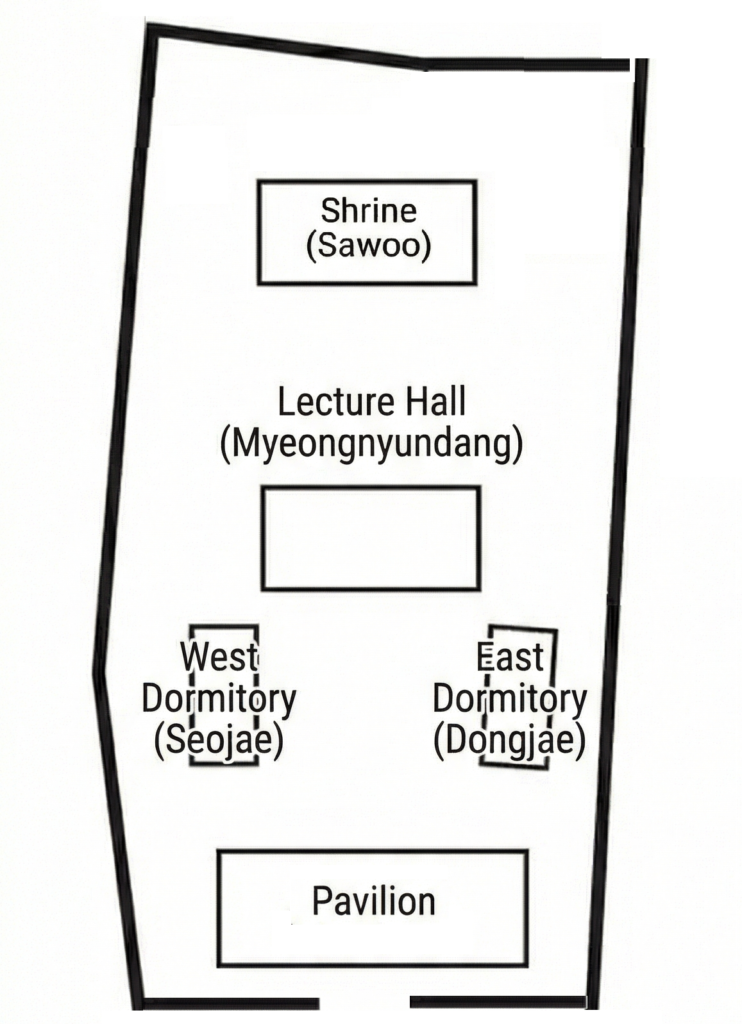
The layout of a Seowon isn’t accidental; it’s a physical manifestation of Confucian hierarchy and harmony. Most Seowon follow a “Front School, Back Shrine” (Jeon-hak-hu-myo) arrangement. This means the learning spaces are located in the lower, front section, while the sacred spaces for ancestral rites are positioned on higher ground at the back.
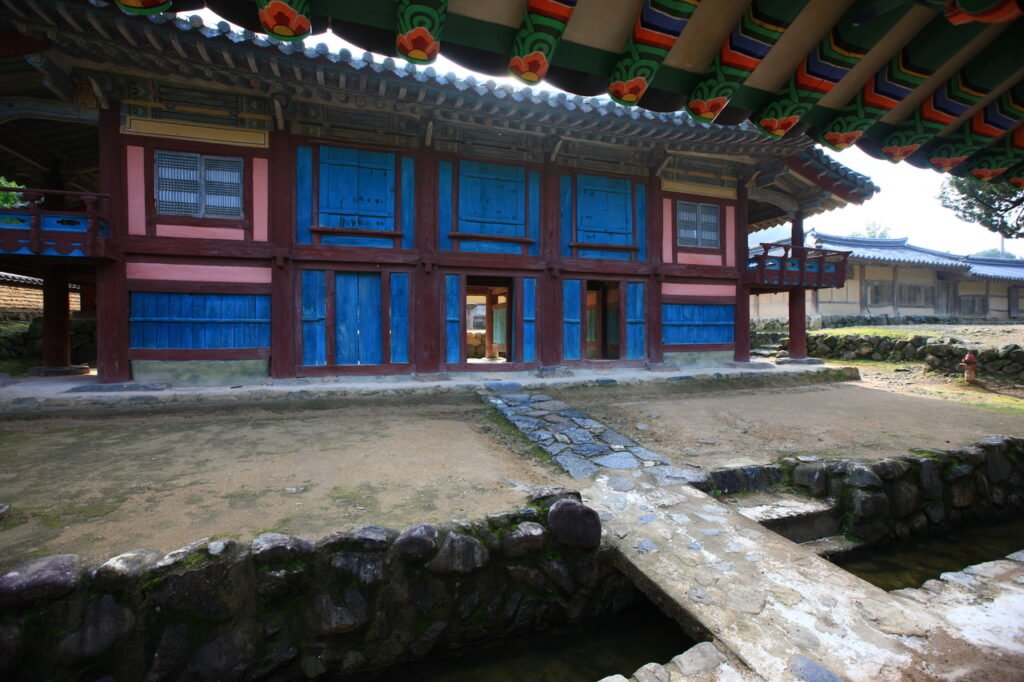
- Myeongnyundang (The Lecture Hall): This is the heart of the academy where scholars gathered to listen to lectures. It’s usually open and breezy, designed to keep the mind sharp.
- Dongjae & Seojae (Dormitories): Located on either side of the lecture hall, these were the living quarters. Senior students usually occupied the East (Dongjae), while juniors stayed in the West (Seojae).
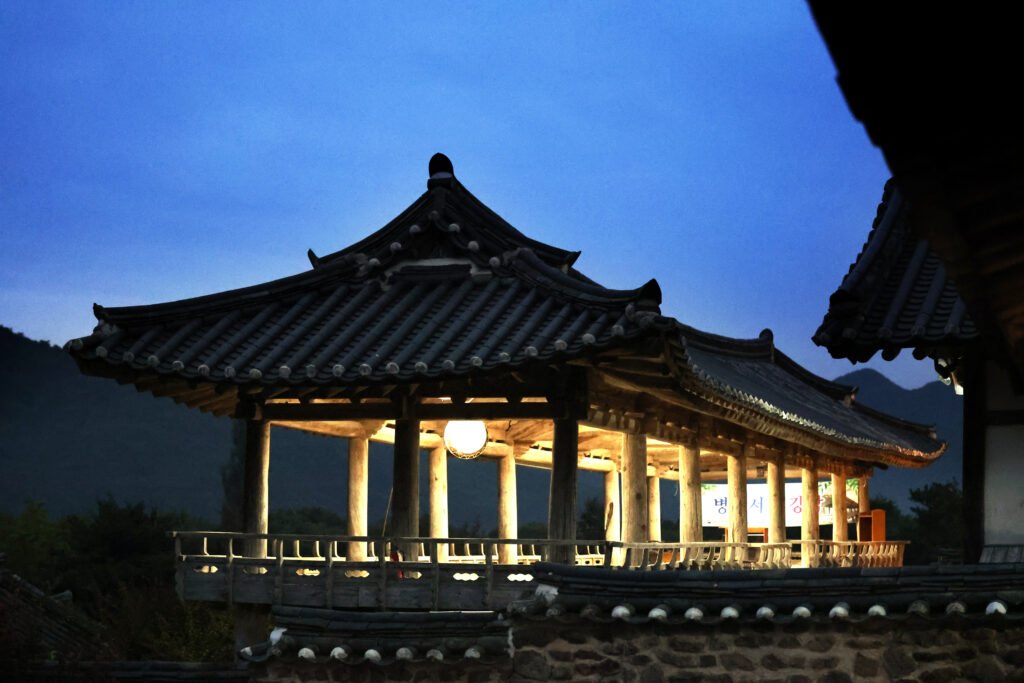
- The Pavilion (Nugak): Many Seowon feature a grand pavilion at the entrance, like the famous Mandaeru at Byeongsan Seowon. These weren’t just for looking at—they were “borrowed scenery” (Uigyeong), where scholars would sit to admire nature, write poetry, and find inspiration.
- The Shrine (Sawoo): This is the most sacred area, usually closed to the public except during ritual ceremonies. It holds the spirit tablets of the “Masters”—renowned Neo-Confucian philosophers like Yi Hwang or Yi Goeng-pil—and sometimes their most distinguished disciples. The enshrinement here is deeply symbolic; it validates the academy’s intellectual lineage. By performing rites here, scholars weren’t praying to a deity, but expressing gratitude and promising to uphold the master’s moral teachings. It represents the continuity of wisdom across generations.
📌 Local Note: You’ll notice massive Ginkgo trees in almost every Seowon. This isn’t just for decoration. Confucius is said to have taught his disciples under a Ginkgo tree, making it a symbol of scholarly pursuit. To understand more about this fascinating connection, check out Korea’s Golden Secret: The Ginkgo Tree’s History and Spirit.
The Legacy of Learning: From Seonbi to Modern Students
You might look at the modern education system in Korea—the intense pressure of the CSAT and the drive for top universities—and wonder if it has any link to these peaceful wooden pavilions. While it would be a stretch to say modern exam-prep culture is the same as the Seonbi’s philosophical pursuit, there is a clear historical lineage in how Koreans value education.
In the Joseon era, education was the primary path for “Ip-sin-yang-myeong”—the concept of rising in the world to achieve success and bring honor to one’s family. For centuries, being a scholar was the highest social status one could achieve. This deeply ingrained belief that education is the ultimate tool for social mobility and contributing to society remains the driving force behind Korea’s modern “education fever.”
Scholars often note that while the goals of education have become more pragmatic today, the fundamental respect for learning and the social prestige attached to it are direct inheritances from the Seowon tradition. The Confucian value of self-discipline remains the “Hidden Code” of Korean life. For a deeper look into how these ancient values still dominate modern dramas and daily life, I highly recommend reading Confucianism: The Hidden Code of Klifestyle.
Top Picks: Seowon You Must Visit
If you only have time to visit one or two, here are my personal recommendations based on beauty and accessibility:
1. Byeongsan Seowon (Andong)
If you want to understand “architectural harmony,” this is the place. The Mandaeru Pavilion is a masterpiece. It has no walls, just pillars that frame the Nakdonggang River and the surrounding mountains like a panoramic landscape painting. It’s breathtaking during the summer when the crepe myrtle trees are in full bloom.
2. Dosan Seowon (Andong)
This was the home of Yi Hwang, the man on the 1,000 KRW bill. It feels like a small village of wisdom. The location is tucked away in a valley, and the view of the Nakdong River winding around the site is serene. It’s the ultimate destination for anyone interested in the intellectual history of Korea.
3. Oksan Seowon (Gyeongju)
Located near the UNESCO Yangdong Folk Village, this Seowon is perfect for a day trip from Gyeongju. The stream running right in front of the academy is a popular spot to sit and reflect, just as the scholars did hundreds of years ago.
Essential Travel Tips for Visitors
Visiting a Seowon is a bit different from visiting a palace in Seoul. Here’s what you need to know:
- Transportation: Most Seowon are in rural areas. While buses exist, they are infrequent. If you are in Andong or Gyeongju, I recommend taking a taxi or using a “City Tour Bus” service to save time.
- Respect the Space: Remember that the shrine area is sacred. Speak in low voices and avoid stepping over the thresholds (the raised wooden steps) of the shrine gates.
- The Best Season: Late October to early November is magical because of the golden Ginkgo leaves. Alternatively, July and August are beautiful for the pink crepe myrtles at Byeongsan Seowon.
- Experience Programs: Some Seowon, like Oksan or Dosan, offer tea ceremony programs or “Seonbi Experience” stays. Check the local tourism websites of Andong or Gyeongju before you go!
Korean Culture portal KCulture.com
Join the mailing service and add to your favorites.

Founder of Kculture.com and MA in Political Science. He shares deep academic and local insights to provide an authentic perspective on Korean history and society.