
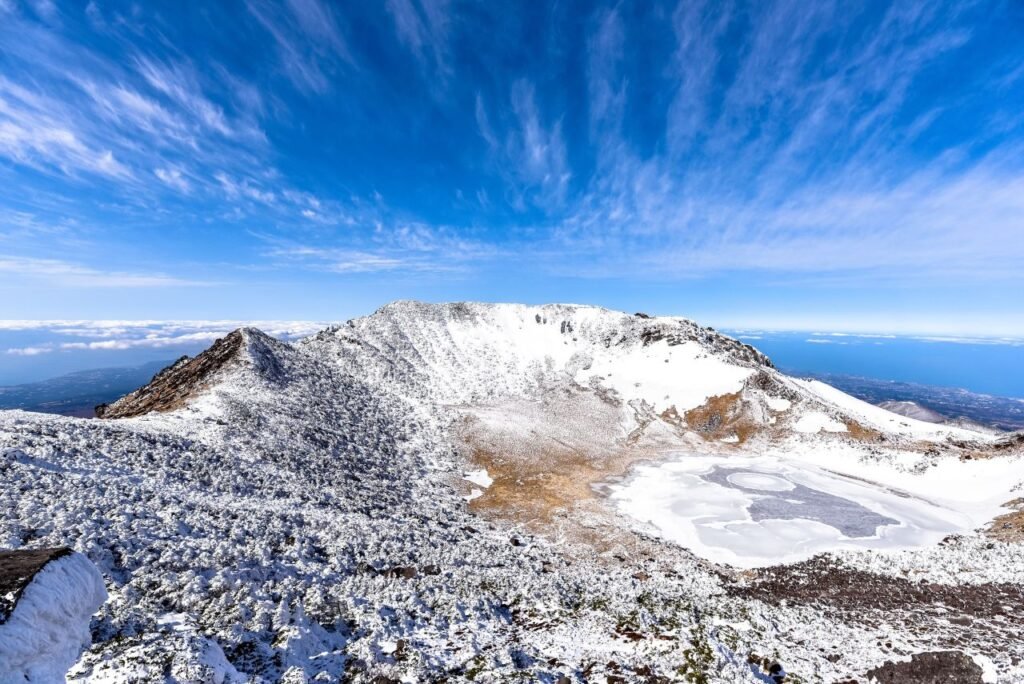
I can tell you that standing atop Hallasan, the highest peak in South Korea, is a rite of passage for anyone visiting Jeju Island. In 2026, the mountain remains as majestic as ever, but reaching the summit now requires a bit more planning than a simple early wake-up call. To make your journey seamless, this guide covers the essential reservation process, the best trails for your fitness level, and the seasonal secrets that only locals know. (Please refer to ‘Hiking in Korea: The Complete Guide for Foreign Travelers‘ for a comprehensive guide to hiking in Korea.)
- Securing Your Spot: 2026 Reservation Guide & Hurdles
- Strict Cut-off Times: Detailed Seasonal Passage Rules
- Trail Comparison: Summit vs. Scenic Routes
- Logistics & Transport: How to Get to the Trailheads
- Mountain Dining: Shelter Services and Environmental Rules
- Essential Packing List: Gear for Every Season
- Claiming Your Glory: 2026 Summit Certificate Process
Securing Your Spot: 2026 Reservation Guide & Hurdles
The most important thing to know is that you cannot simply show up. To protect the environment, the Hallasan National Park Reservation System (https://visithalla.jeju.go.kr) limits daily hikers. Reservations open at 9:00 AM KST on the 1st of every month for the following month. In 2026, this remains a “speed war,” especially for winter snow views and autumn leaves.
For international hikers, a key hurdle is authentication. If you don’t have a Korean phone number, use the ‘Email Verification’ option. Crucially, check your spam folder as verification emails are often filtered there, causing you to lose your booking window. You must bring your original passport (or a clear photo/copy) to match your QR code at the entrance. Transferring or selling QR codes is strictly prohibited; if caught, you will face a one-year ban from the mountain.
⚠️ No-Show Penalty:
– 1st-time offense: Banned from reservations for 3 months.
– 2nd-time offense: Banned from reservations for 1 year.
If your plans change, you must cancel at least one day in advance to avoid these penalties.
Strict Cut-off Times: Detailed Seasonal Passage Rules
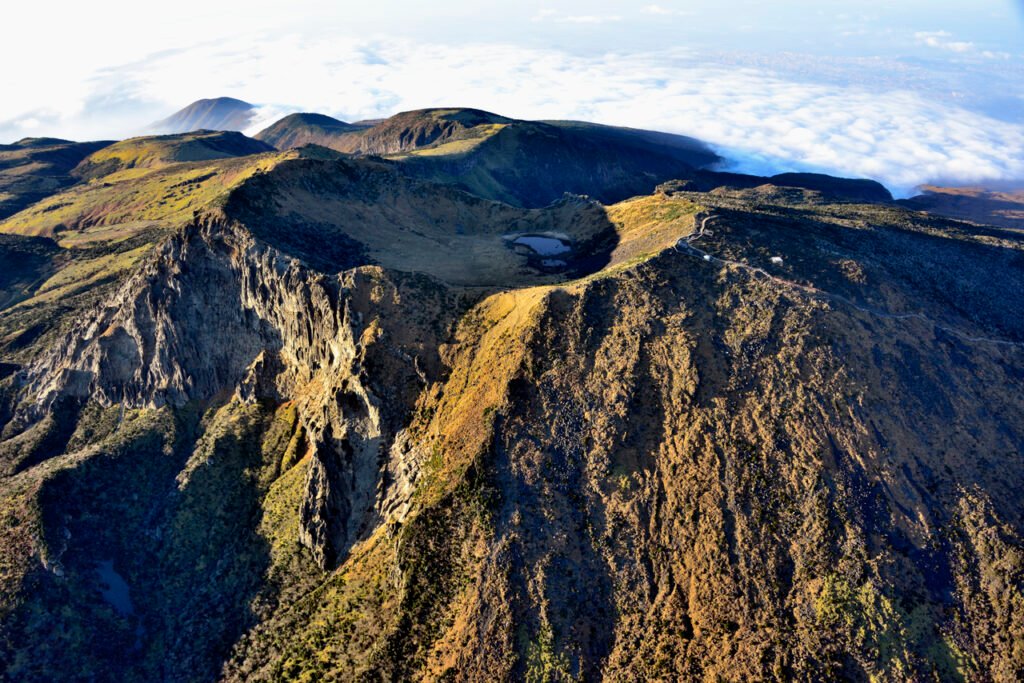
Hallasan enforces strict times to ensure everyone descends before dark. Rangers are very strict about these limits; if you arrive even one minute late at a checkpoint, you will be barred from the summit. Below is the comprehensive 2026 schedule for each trail and season.
| Season | Entry Starts | Seongpanak (Jindallaebat Shelter) | Gwaneumsa (Samgakbong Shelter) | Summit Descent Start |
|---|---|---|---|---|
| Winter (Nov, Dec, Jan, Feb) | 06:00 | Pass by 12:00 | Pass by 12:00 | From 13:30 |
| Spring/Autumn (Mar, Apr, Sep, Oct) | 05:30 | Pass by 12:30 | Pass by 12:30 | From 14:00 |
| Summer (May, Jun, Jul, Aug) | 05:00 | Pass by 13:00 | Pass by 13:00 | From 14:30 |
Trail Comparison: Summit vs. Scenic Routes
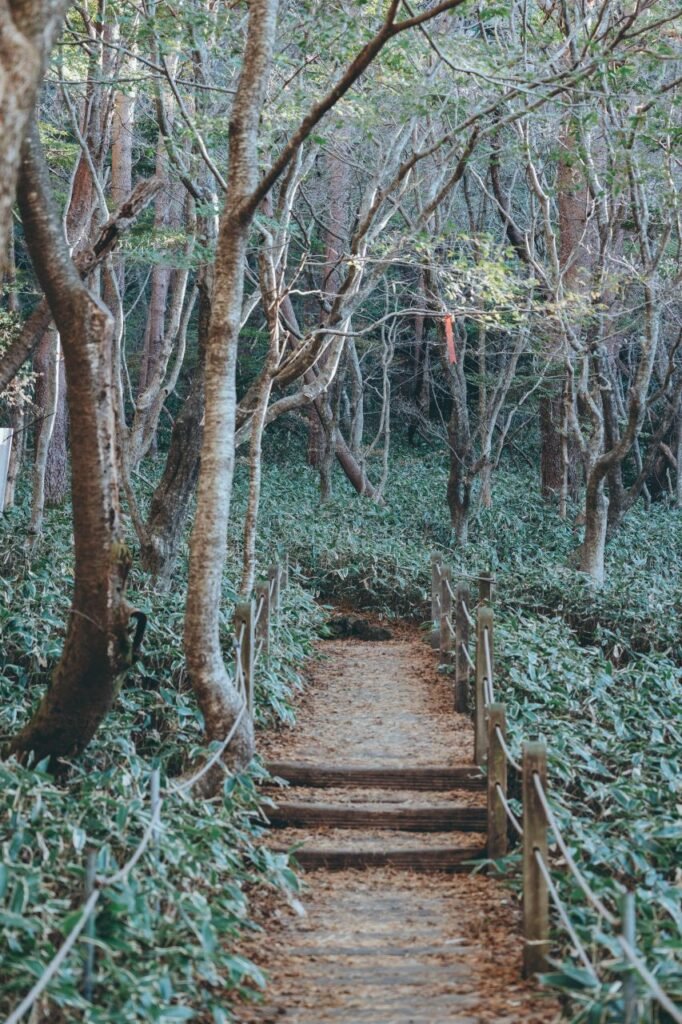
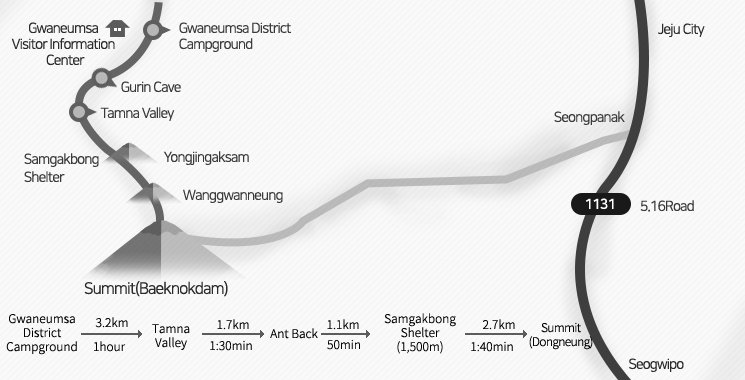
Understanding which trail leads to the peak is vital. Only two trails allow you to reach Baengnokdam (the summit). These require a permit and a full day of stamina. Other trails offer beautiful views but end at the mountain’s high-altitude plains without summit access.
1. Primary Summit Routes (Reservation Mandatory)
| Trail Name | Distance (One-way) | Duration (One-way) | Difficulty | Key Characteristics |
|---|---|---|---|---|
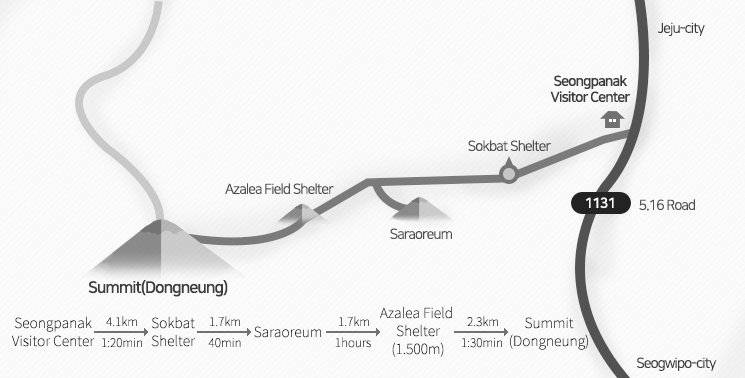
| Seongpanak | 9.6 km | 4.5 – 5 hours | Moderate | The most popular summit route. Long but has a gradual forest incline. Easier on the knees but less scenic until the end. |
| Gwaneumsa | 8.7 km | 5 hours | Difficult | The “Pro” route. Includes steep stairs and dramatic valleys. Extremely scenic but requires high physical endurance. |
2. Auxiliary Scenic Routes (No Summit Access)
| Trail Name | Distance (One-way) | Duration (One-way) | Difficulty | Key Characteristics |
|---|---|---|---|---|
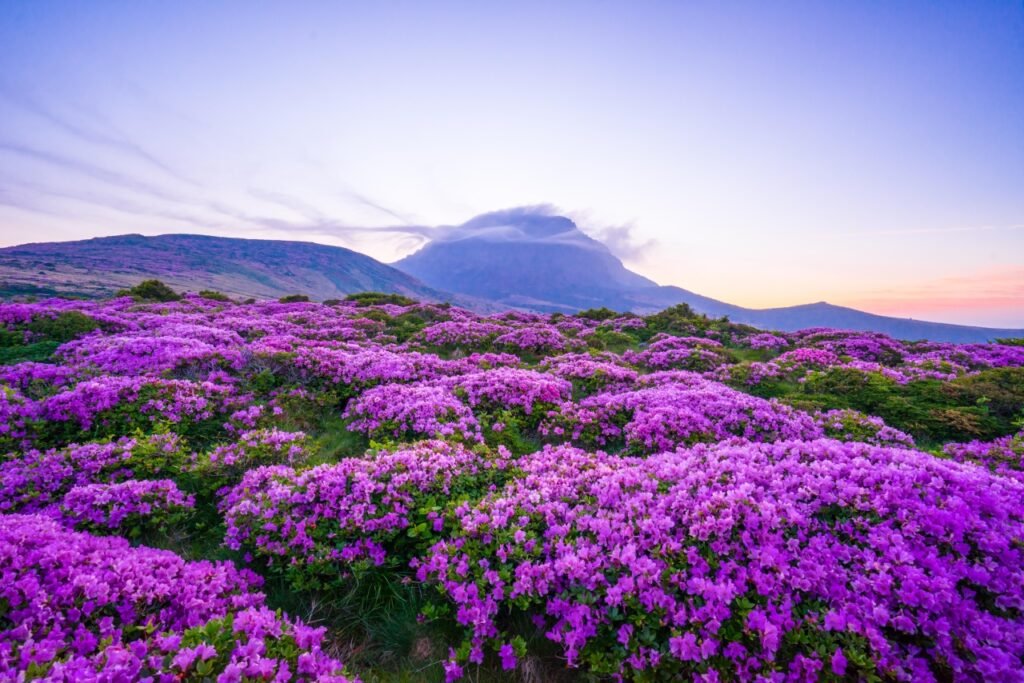
| Yeongsil | 3.7 km | 1.5 – 2 hours | Easy-Moderate | Ends at Witseoreum. Famous for royal azaleas (May-June) and dramatic rock formations. Best reward for least effort. |
| Eorimok | 4.7 km | 2.5 hours | Moderate | Ends at Witseoreum. Features lush forests and views of volcanic cones (Oreums). Great for a shorter nature walk. |
Logistics & Transport: How to Get to the Trailheads
Getting to the trailhead on time is half the battle. Public transport in Jeju is efficient, but taxis are often the preferred choice for hikers aiming for a 6:00 AM start. Here is how to navigate the 2026 transport options.
1. To Seongpanak Trailhead (Most Accessible)
This trailhead is located on the 516 Road, connecting Jeju City and Seogwipo.
- Bus (Recommended): Take Bus 281 (Jeju Terminal ↔ Seogwipo Terminal). It runs every 15–20 minutes. The first bus leaves around 06:00 AM.
- Express Bus: Use Bus 181 for a direct connection from the Airport.
- Taxi: Approximately 30–40 minutes from Jeju City (20,000 – 25,000 KRW).
- Parking: Extremely limited. Lots often fill by 7:00 AM. If full, you must park at ‘Jeju International University’ and take a bus.
2. To Gwaneumsa Trailhead (Steep Route)
Located closer to Jeju City but slightly harder to reach by bus.
- Bus: Bus 475 is the only line that enters the trailhead. You must transfer at the ‘Jeju National University’ entrance.
- Taxi (Highly Recommended): This is the most popular way for this route. It takes 20–25 minutes from Jeju City (~15,000 KRW). Taxis are usually waiting at the entrance for your descent as well.
3. To Yeongsil & Eorimok (1100 Road)
These trails are on the scenic 1100 Road.
- Bus: Take Bus 240. It leaves Jeju Terminal roughly every hour starting from 06:30 AM.
- Warning for Yeongsil: The bus drops you at the ‘Ticket Office.’ You must walk an additional 2.5km (40 mins) to reach the ‘Yeongsil Rest Area’ where the hike actually starts. During peak seasons, shuttle taxis often operate this gap.
💡 Local Pro Tip: If you plan on Traversing (up Seongpanak, down Gwaneumsa), do not bring a car. Use KakaoTaxi or Uber/Ut to reach the entrance. Many guesthouses in Jeju City also offer free 6:00 AM shuttles and gear rentals for their guests.
Mountain Dining: Shelter Services and Environmental Rules
Since 2018, the tradition of eating Ramyeon at mountain shelters has changed. Due to labor strikes and the severe environmental impact of broth waste, high-altitude shelters like Witseoreum and Jindallaebat have completely stopped selling food, water, and Ramyeon. You must be 100% self-sufficient and bring your own kimbap or lunch boxes.
If you decide to bring your own Ramyeon and a thermos of hot water, you must follow strict environmental rules. Dumping Ramyeon broth on the mountain is strictly forbidden as it causes irreversible damage to the soil and water quality. You must either drink all the broth or pour the leftovers into a personal bottle to carry back down. Rangers actively monitor for violations to preserve the ecosystem.
Essential Packing List: Gear for Every Season
Preparation is key to a safe trek. Use this checklist to ensure you haven’t forgotten the essentials for your 2026 adventure.
| Item | Importance | Notes |
|---|---|---|
| Water (1.5L – 2L) | Critical | No water is sold anywhere on the trails. |
| Crampons (Ice-spikes) | Winter Mandatory | Required from late Nov to March; entry denied without them. |
| Passport & QR Code | Mandatory | Necessary for ID verification at the trailhead. |
| Personal Trash Bag | Critical | You must carry out all waste, including Ramyeon remains. |
| Energy Snacks | High | Chocolate or nuts to maintain energy during the 9-hour hike. |
Claiming Your Glory: 2026 Summit Certificate Process
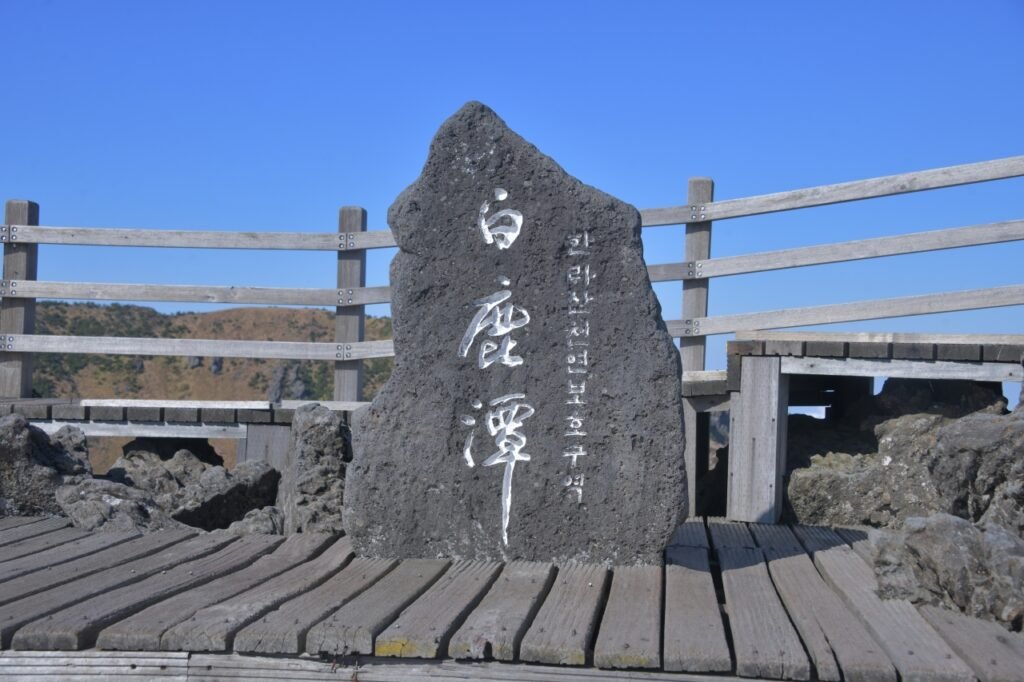
To prove you conquered the peak, you can apply for an official certificate. Once you reach the Baengnokdam summit, take a photo with the stone. Crucially, your phone’s GPS (Location Services) must be turned ON, as the system verifies the coordinates within 1km of the peak.
To get your certificate, follow these steps:
- Visit the official Hallasan National Park Website.
- Upload your GPS-verified photo and enter your reservation details.
- Pay the 1,000 KRW fee via the online portal.
- After your descent, use the automated kiosks at the Seongpanak or Gwaneumsa trailhead offices to print your physical certificate.
Korean Culture portal KCulture.com
Join the mailing service and add to your favorites.

Founder of Kculture.com and MA in Political Science. He shares deep academic and local insights to provide an authentic perspective on Korean history and society.