If the 1970s were a time of acoustic resistance, the 1980s were the years South Korea truly “blossomed.” This was the decade of the “Miracle on the Han River,” where rapid economic growth transformed the country into a modern powerhouse. With more money in people’s pockets and the arrival of Color TV, the music industry exploded.
This was the era of the “Ballad Kings,” the birth of “City Pop,” and a monumental moment in 1988 that changed Korea’s global standing forever.
1. The 1988 Seoul Olympics: Korea’s “Coming Out” Party
In 1988, the eyes of the world were on Seoul. For the first time, South Korea was no longer seen as a war-torn nation, but as a vibrant, high-tech democracy.
- “Hand in Hand” (손에 손잡고): The official Olympic anthem, performed by the group Koreana, became a global smash hit, reaching #1 in several European countries. It was the first time a song associated with Korea achieved such massive international scale.
- The Cultural Shift: The Olympics brought a wave of “Westernization.” Fast food, global fashion, and international music trends flooded the streets of Seoul. This “openness” created the perfect environment for the experimental music that would follow in the 90s.
2. The Golden Age of Sentimental Ballads
While the world was dancing to disco, Koreans were falling in love with the “Poetic Ballad.” This wasn’t just slow music; it was sophisticated, orchestrated pop with deeply literary lyrics.
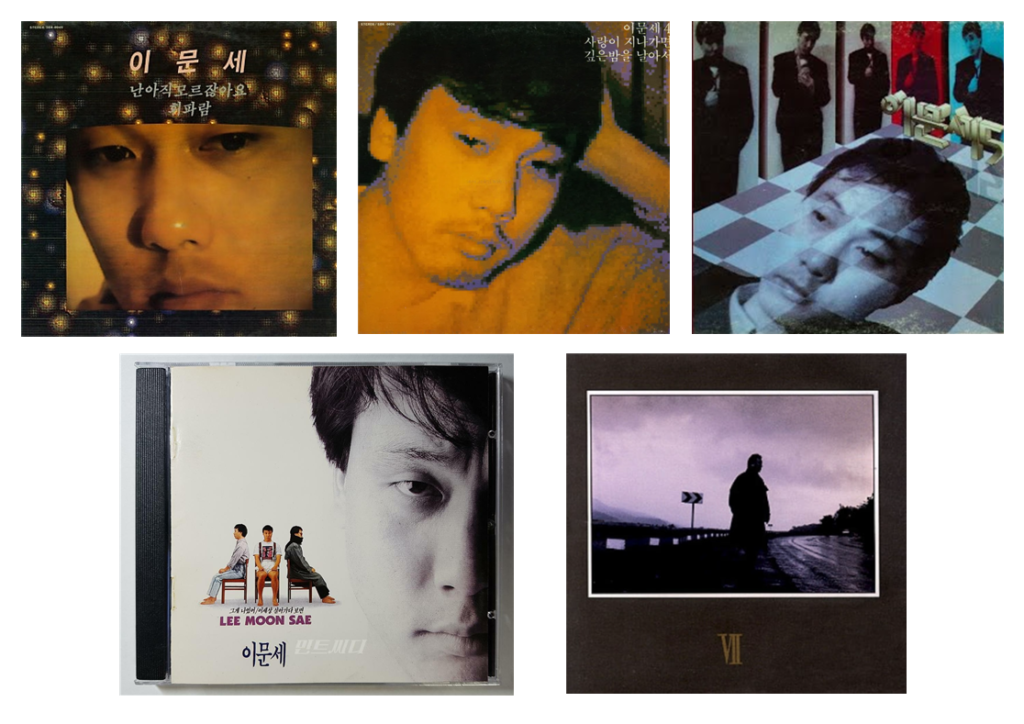
- Lee Moon-sae & Lee Young-hoon: This legendary partnership is not a performing duo but a defining singer–composer collaboration. Lee Moon-sae is a solo vocalist whose warm, gentle voice came to symbolize the 1980s, while Lee Young-hoon is the songwriter-composer behind many of his most iconic songs. Lee Young-hoon’s refined, often classical-leaning compositions, combined with Lee Moon-sae’s comforting delivery, produced timeless classics such as “Gwanghwamun Sonata” and “Old Love,” which are still widely covered by K-pop artists today.
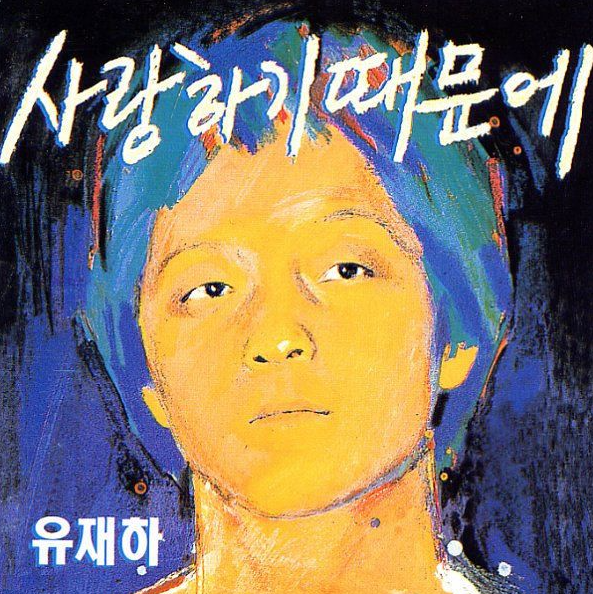
- Yoo Jae-ha: The Tragic Genius: In 1987, a young musician named Yoo Jae-ha released one album, Because I Love You. He died in a car accident just months later at age 25. His album, which blended jazz, classical, and pop, revolutionized Korean music theory. To this day, the “Yoo Jae-ha Music Contest” is where many top K-pop vocalists and songwriters get their start.
- Byeon Jin-seob: The first “multi-million seller” of the ballad era, known as the “Prince of Ballads” before the term became a staple in the industry.
3. The Birth of “Dance-Pop” and the First Boy Bands
As the 80s progressed, the youth wanted to move. Influenced by New Edition and New Kids on the Block, the first “Dance Idols” began to appear.
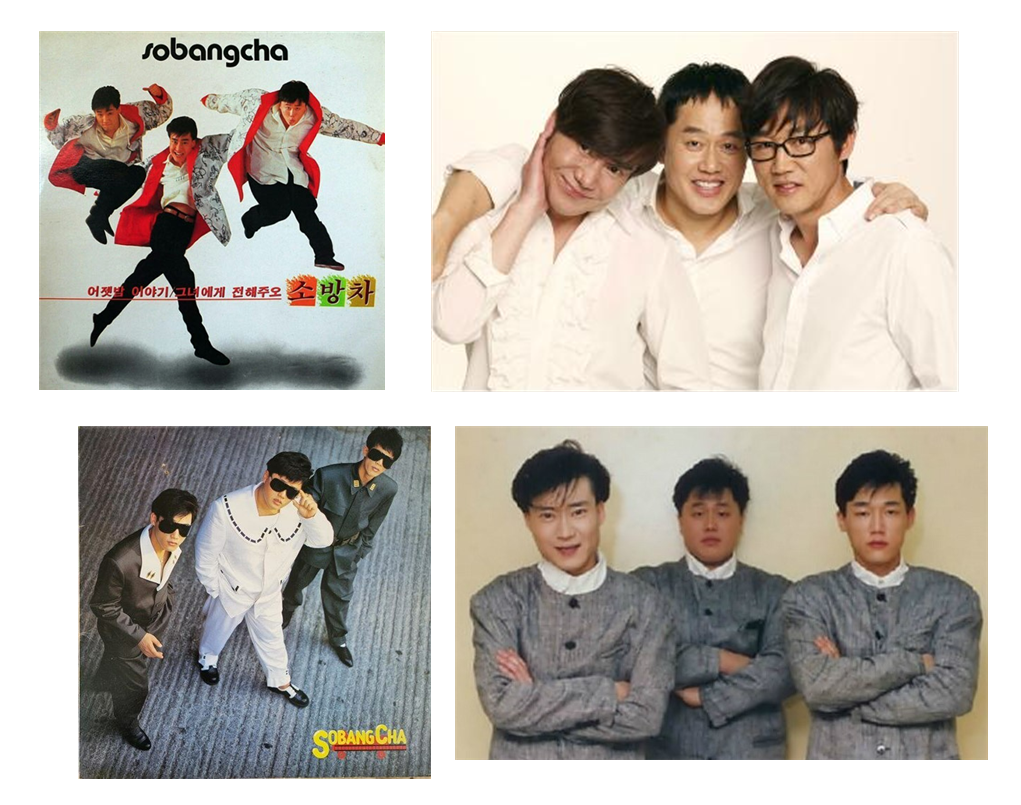
- Sobangcha (Fire Truck): Clad in matching outfits and performing acrobatic “tumbling” moves, Sobangcha was the true ancestor of the modern K-pop boy group. They proved that synchronized dancing and “visual concepts” were the future of entertainment.
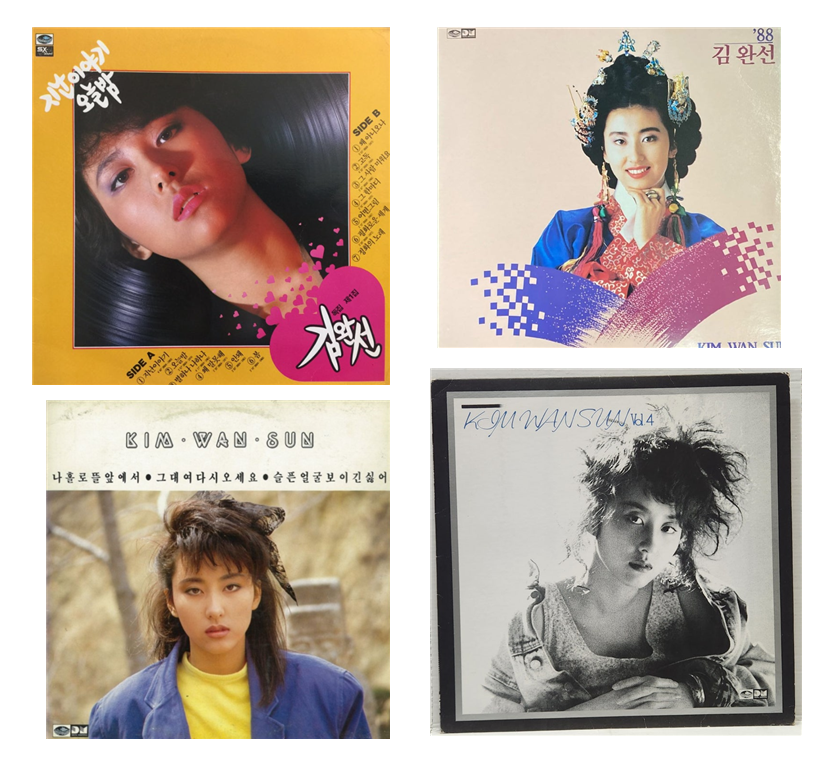
- Kim Wan-sun: The Korean Madonna: She was the first female “dancing diva.” Her charismatic gaze and edgy fashion broke the mold of the “innocent” female singer, paving the way for future icons like Lee Hyori and BoA.
- Park Nam-jung: Known as the “Korean Michael Jackson,” his “L-dance” (drawing an L with his fingers) was the first “point dance” to go viral across Korean schoolyards.
4. Tech & Industry: The “Million Seller” Era and Cassettes
- The Boom of Recording Studios: With the economy booming, high-end recording equipment flowed into Korea. The sound quality of 80s albums rivaled that of Japanese and Western pop.
- “Gilboard” Charts: I mentioned this in the summary, but the 80s were the peak of “Street-Billboard.” Illegal cassette stalls on every street corner acted as a real-time chart. If your song was playing on the street, you were a star.
- Fandom Evolution: This was the era of “Radio Culture.” Fans would wait for hours to record their favorite songs onto blank tapes, and “Fan Letters” became the primary way to communicate with stars.
5. City Pop: The Aesthetic of a Rising Seoul
Influenced by Japanese City Pop and Western AOR (Adult Oriented Rock), a chic, urban sound emerged in late-80s Seoul. Artists like Light and Salt and Kim Hyun-chul created music that felt like driving through the neon lights of Gangnam at night. This “Vibe” has seen a massive resurgence in 2024-2026 among Gen Z fans who crave 80s nostalgia.
Summary of the 1980s – Early 90s
| Category | Key Figures / Events |
| Major Event | 1988 Seoul Olympics (“Hand in Hand”) |
| Dominant Genre | Sophisticated Ballads / Early Dance-Pop / City Pop |
| The Icons | Lee Moon-sae, Yoo Jae-ha, Kim Wan-sun, Sobangcha |
| Key Medium | Color TV / Cassette Tapes / FM Radio |
Kyoung’s Local Insight: > If you want to impress a Korean person, mention Yoo Jae-ha. Even though he only released one album, he is considered the “Musician of Musicians.” His influence is so deep that many Koreans consider his music to be the “DNA of the Korean Soul.” It’s the perfect music for a rainy day in Seoul.
But as the 80s closed, a new sound was whispering in the underground clubs of Itaewon. Hip-hop was coming. And in 1992, three boys would change the country forever.
💡 Go to related article
- The Grand Odyssey of K-Pop: A Century of Rhythm, Resilience, and Revolution
- Chapter 1: The Colonial Roots & The Soul of Trot – Where K-Pop’s Heartbeat Began
- Chapter 2: The US 8th Army Era & The Kim Sisters – The Neon Lights of a New Frontier
- Chapter 3: The “Jeans and Guitars” Revolution – Youth, Resistance, and the King (1970s – 1980s)
- Chapter 5: The Seo Taiji Revolution & the 1st Generation Idols – The Big Bang of Modern K-Pop (1990s – Early 2000s)
- Chapter 6: The Hook Song Era & Hallyu 2.0 – When K-Pop Became a Digital Virus (Mid-2000s – Early 2010s)
- Chapter 7: The Global Domination – 3rd Generation & the Social Media Revolution (2012 – 2017)
- Chapter 8: The Digital Natives – 4th Generation & The Performance Revolution (2018 – 2022)
- Chapter 9: The 5th Generation – The Era of Naturalism & Hyper-Globalization (2023 – Present)
- Chapter 10: The Future of K-Pop – Beyond the Stage and Into the Multiverse (2030 & Beyond)

A lifestyle writer covering K-beauty, fashion, and art. Kyoung shares honest insights on K-pop and smart shopping, capturing the vibrant trends of modern Korea.