
Are you planning a winter trip to South Korea and wondering if there are any flowers to see in the freezing cold? While most of the country’s flora goes dormant, the southern regions burst into vibrant shades of red and pink thanks to the resilient camellia flower, known locally as Dongbaek-kkot. From late November through the following April, these blossoms transform the southern coastline and islands into a floral paradise. In this guide, I will share local insights on the different varieties of Korean camellias, their deep cultural meaning, and the best places to visit—including highly accessible spots like Busan—to ensure your winter journey is full of color.
- Understanding Korean Camellias and Their Varieties
- Cultural Significance: The Flower That Falls Whole
- Best Camellia Destinations by Region: Local Picks
- Regional Blooming and Variety Schedule
- Essential Tips for Your Winter Flower Tour
Understanding Korean Camellias and Their Varieties
The camellia season in Korea is long and follows a geographical progression. It typically begins in late autumn in the southernmost islands like Jeju and moves northward toward the mainland as winter turns into spring. This staggered blooming allows visitors to enjoy these flowers for nearly half the year if they know where to go.
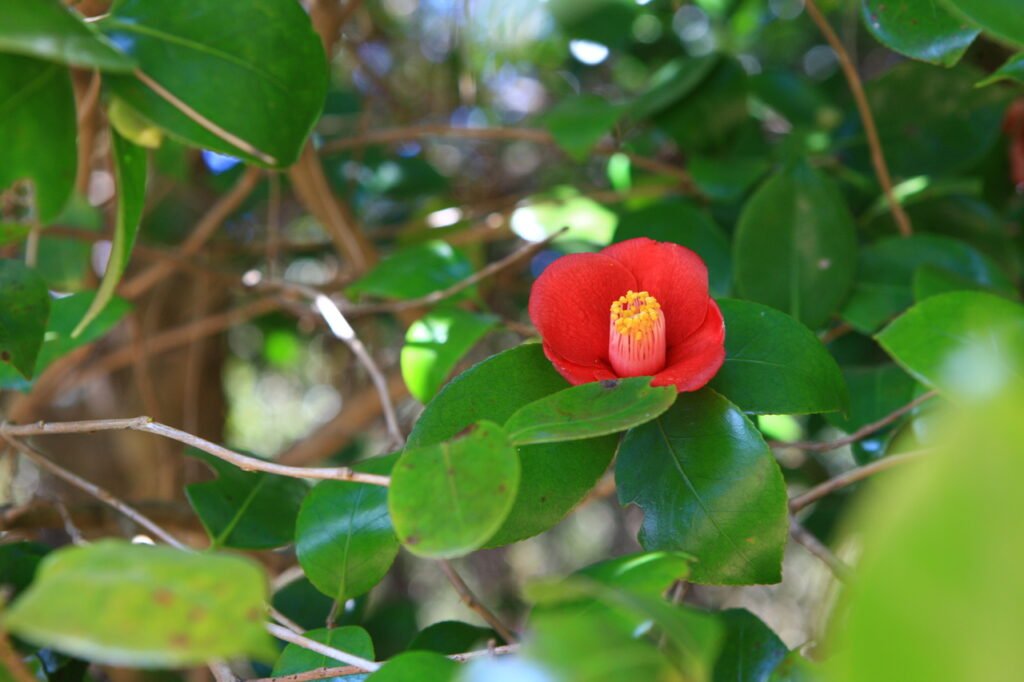
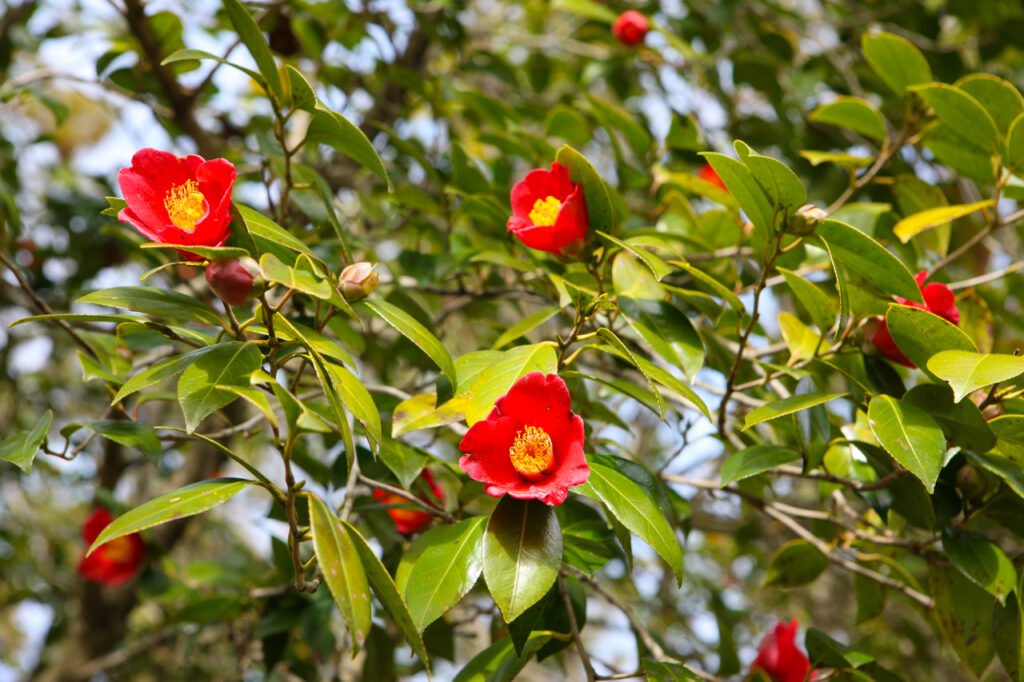
When exploring, it is important to distinguish between the two main types found in Korea. The first is the Native Korean Camellia (Camellia japonica). While its scientific name contains “japonica”—a result of European botanists first documenting the species via Japan—this flower is an indigenous native of the Korean peninsula and was not introduced from abroad. The second is the Sasanqua, often called Aegi-dongbaek (baby camellia) in Korea, which was introduced from Japan and is prized for its early blooming and flamboyant petals.
| Feature | Aegi-dongbaek (Sasanqua) | Native Korean Camellia (Dongbaek) |
|---|---|---|
| Origin | Introduced (Japan) | Indigenous (Native to Korea) |
| Peak Period | November – January (Early) | January – April (Late Winter to Spring) |
| Flower Shape | Petals spread wide and flat | Elegant, cup-like half-open shape |
| Falling Style | Petals scatter individually | The entire flower head drops at once |
Cultural Significance: The Flower That Falls Whole
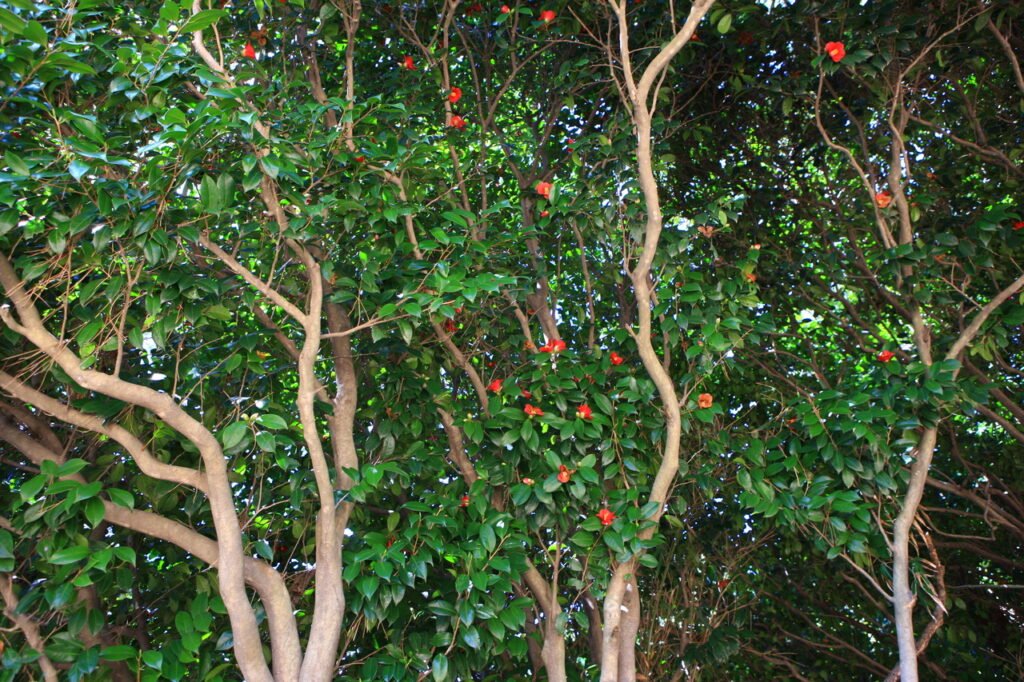
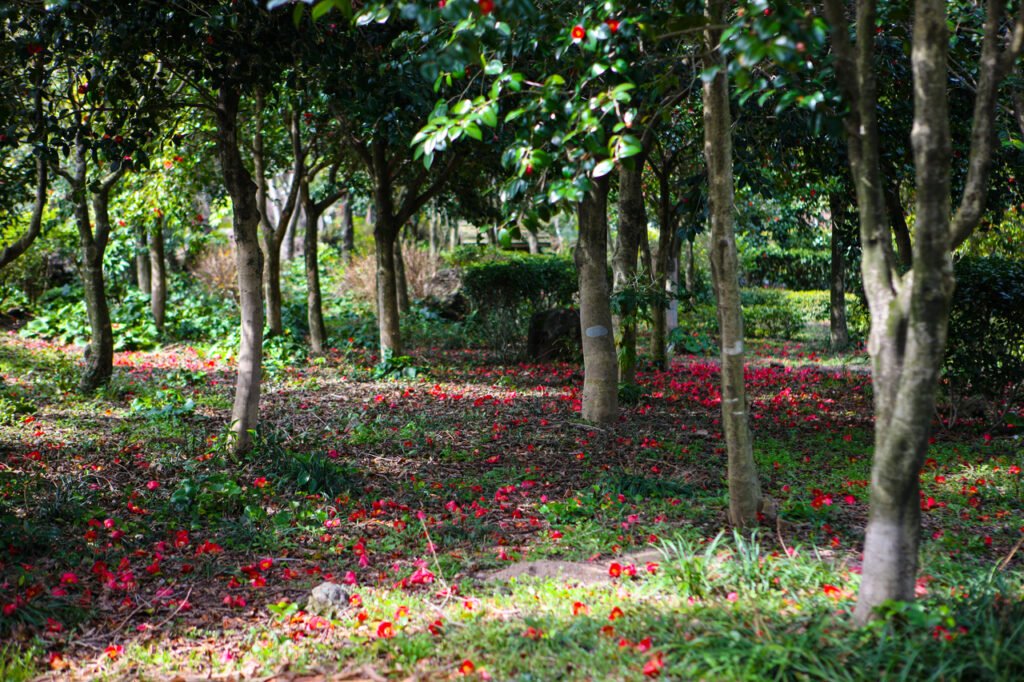
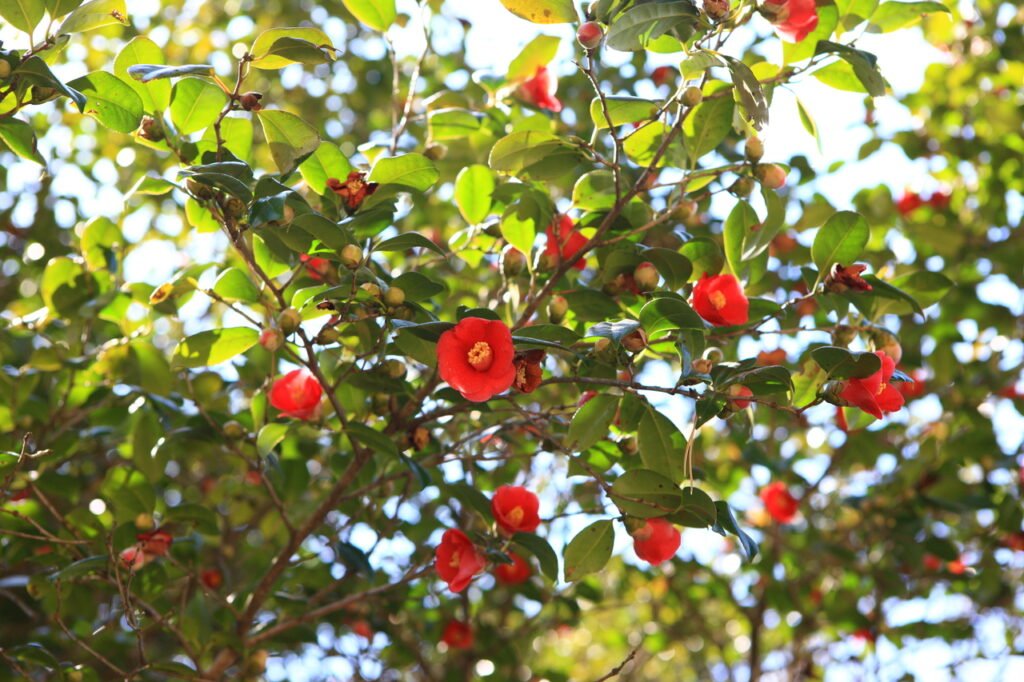
To Koreans, the camellia is more than just a pretty plant; it is a symbol of integrity and undying love. One of the most poetic features of the native Korean camellia is the way it “dies.” Unlike most flowers that wither and lose their petals one by one, the native camellia drops its entire blossom while it is still in full, vibrant bloom. This dramatic sight of red flowers scattered across the dark earth or white snow is deeply cherished by Koreans, symbolizing a love that remains whole even in death.
Historically, camellias have appeared in traditional literature and art as a symbol of “faithfulness” and “waiting.” Because the leaves remain green and the flowers bloom even in the snow, it represents the strong spirit of the Korean people who persevere through hardships. Walking through a forest where the ground is carpeted with these intact red blossoms is considered one of the most romantic and contemplative experiences of the Korean winter.
Best Camellia Destinations by Region: Local Picks
Jeju Island: The Early Winter Hub
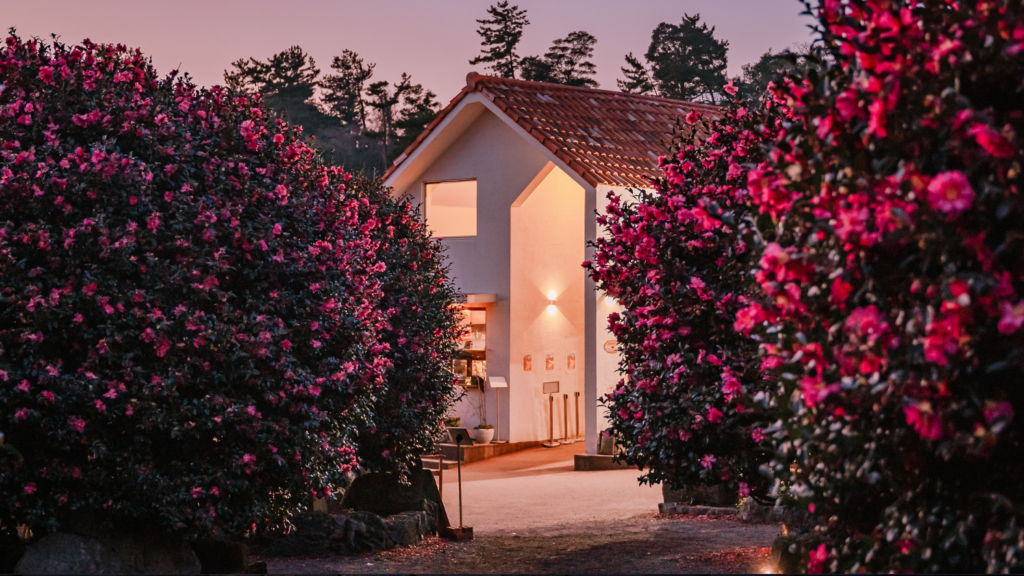
Jeju is the first place to welcome the camellia season. Camellia Hill (166, Byeongak-ro, Andeok-myeon, Seogwipo-si) and Hueree Natural Park (256, Sillye-dongro, Namwon-eup, Seogwipo-si) are famous for their vast collections of early-blooming Aegi-dongbaek. For those seeking the native variety, Dongbaek Forest in Wimi-ri (927, Wimi-ri, Namwon-eup, Seogwipo-si) offers stunning landscapes of neatly pruned trees that bloom later into the winter.
Busan: Urban Access and Coastal Beauty
For international tourists, Busan offers the easiest access to camellias. Dongbaekseom Island (78, Dongbaek-ro, Haeundae-gu, Busan) is located right next to the famous Haeundae Beach. The island is named after the flowers that cover its walking paths. It is a perfect spot for those who want to see beautiful blossoms without traveling far from the city center. You can walk the coastal trail and see the red flowers set against the backdrop of the deep blue East Sea.
Yeosu: The Island of Red Carpets
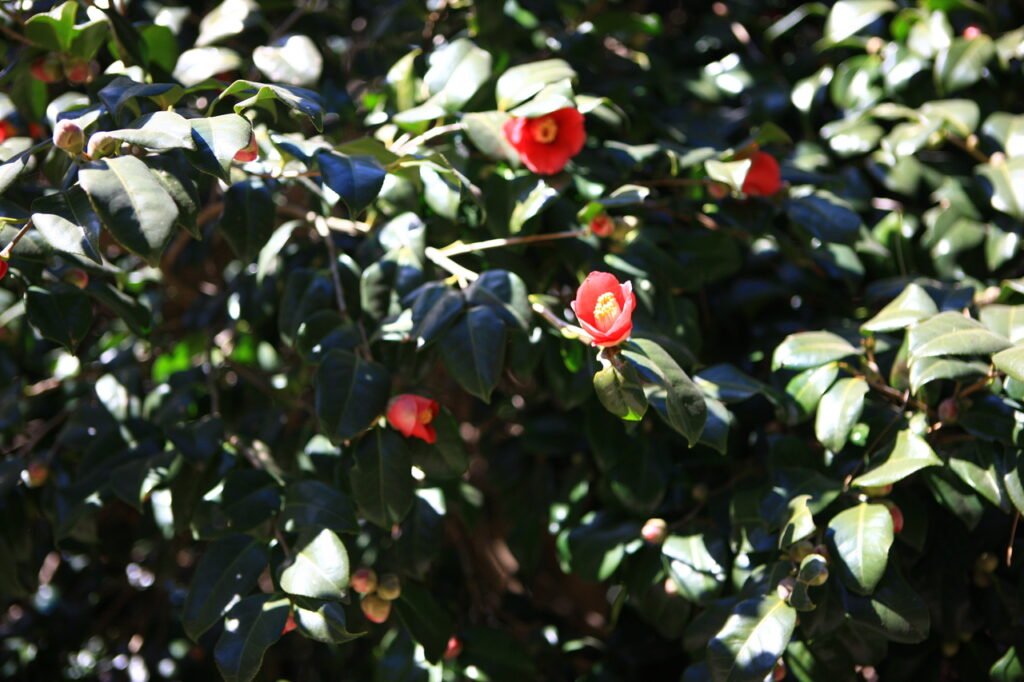
Odongdo Island (1-11, Sujeong-dong, Yeosu-si, Jeollanam-do) is perhaps the most iconic destination for native Korean camellias. The entire island is a natural forest where the trees create a thick canopy. In late February and March, the walking paths become a natural “red carpet” as the blossoms drop whole onto the ground. It is the best place to witness the “three blooms” of the camellia: on the tree, on the ground, and in your heart.
Other Notable Locations
- Tongyeong Jangsado Sea Park: A stunning island park famous for its camellia tunnels and scenic views, often featured in popular K-dramas (1, Jangsado-gil, Hansan-myeon, Tongyeong-si, Gyeongsangnam-do).
- Geoje Jisimdo Island: Known as “Camellia Island,” this wild forest offers a primitive and natural atmosphere (1, Jisimdo-gil, Irun-myeon, Geoje-si, Gyeongsangnam-do).
- Seocheon Maryang-ri Camellia Forest: A protected natural monument at the northern limit of the camellia’s habitat, blooming as late as April (1, Maryang-ri, Seocheon-gun, Chungcheongnam-do).
- Gochang Seonunsa Temple: Famous for the ancient camellia grove behind the temple that creates a majestic spring scene (250, Seonunsa-ro, Asan-myeon, Gochang-gun, Jeollabuk-do).
- Gangjin Baekryunsa Temple: Home to over 7,000 native camellia trees, offering a serene and spiritual environment (145, Baengnyeonsa-gil, Doam-myeon, 강진-gun, Jeollanam-do).
Regional Blooming and Variety Schedule
| Region | Key Locations | Primary Variety | Peak Season |
|---|---|---|---|
| Jeju Island | Camellia Hill, Hueree | Sasanqua (Aegi-dongbaek) | Dec ~ Early Jan |
| Jeju Island | Dongbaek Forest (Wimi) | Native & Sasanqua | Jan ~ Feb |
| Busan | Dongbaekseom Island | Native Korean Camellia | Feb ~ March |
| Yeosu/Geoje/Tongyeong | Odongdo, Jisimdo, Jangsado | Native Korean Camellia | March |
| West Coast | Maryang-ri, Seonunsa | Native Korean Camellia | Late March ~ April |
Essential Tips for Your Winter Flower Tour
📌 Local Note: When visiting native forests like Odongdo, look for the “heart” shapes that local hikers often create on the ground using the fallen whole blossoms. It’s a common way for visitors to share the beauty with the next person on the trail!
- Layer Up: Southern coastal regions like Busan and Yeosu are windier than inland cities. Even if it’s sunny, the sea breeze can be piercing.
- Check the Ground: The true beauty of the native Dongbaek is found on the floor. Don’t just look up; the “second bloom” on the earth is what makes Korean camellia forests unique.
- Photography: Early morning light filtered through the thick evergreen leaves of the camellia trees provides the best contrast for the deep red flowers.
Exploring these hidden winter gems will give you a completely different perspective on Korea’s natural beauty. If you’re interested in more local travel ideas, check out our guide on Top 20 Korean Festivals Every Traveler Should See.
FAQ
Is the native Korean camellia the same as the Japanese one?
While they share the same scientific name Camellia japonica due to historical naming conventions in Europe, the Korean camellia is an indigenous plant that has grown naturally on the peninsula for thousands of years. It has a distinct cultural identity in Korea, especially regarding its cup-like shape and the way it falls whole.
When is the best time to see the “red carpet” effect?
The best time to see fallen flowers is usually from late February to mid-March in places like Yeosu and Busan. This is when the native blossoms have fully peaked and begun to drop while still appearing fresh and vibrant on the ground.
Korean Culture portal KCulture.com

Founder of Kculture.com and MA in Political Science. He shares deep academic and local insights to provide an authentic perspective on Korean history and society.