Looking for a healthy lifestyle that doesn’t sacrifice flavor? Vegan Korean food (K-Vegan) combines centuries of tradition with modern wellness, offering vibrant, nutrient-dense meals that satisfy every craving. In this guide, I’ll share why Korea is a hidden paradise for plant-based lovers and give you seven detailed recipes to start your journey.
Hi there, fellow foodies! I’m Min, writing to you from the heart of Korea. As someone who holds certifications in Korean cooking and baking, I’ve spent countless hours in the kitchen obsessing over the perfect balance of fermentation and seasoning. Lately, I’ve noticed a huge shift: the world is falling in love with “Vegan Hansik” (Korean food), and honestly, it’s about time!
Whether you’re a long-time vegan or a “flexitarian” looking for some excitement, you’ve come to the right place. Let’s dive into the delicious world of plant-based K-culture!
1. The Magic of K-Vegan: Where Health Meets Heritage
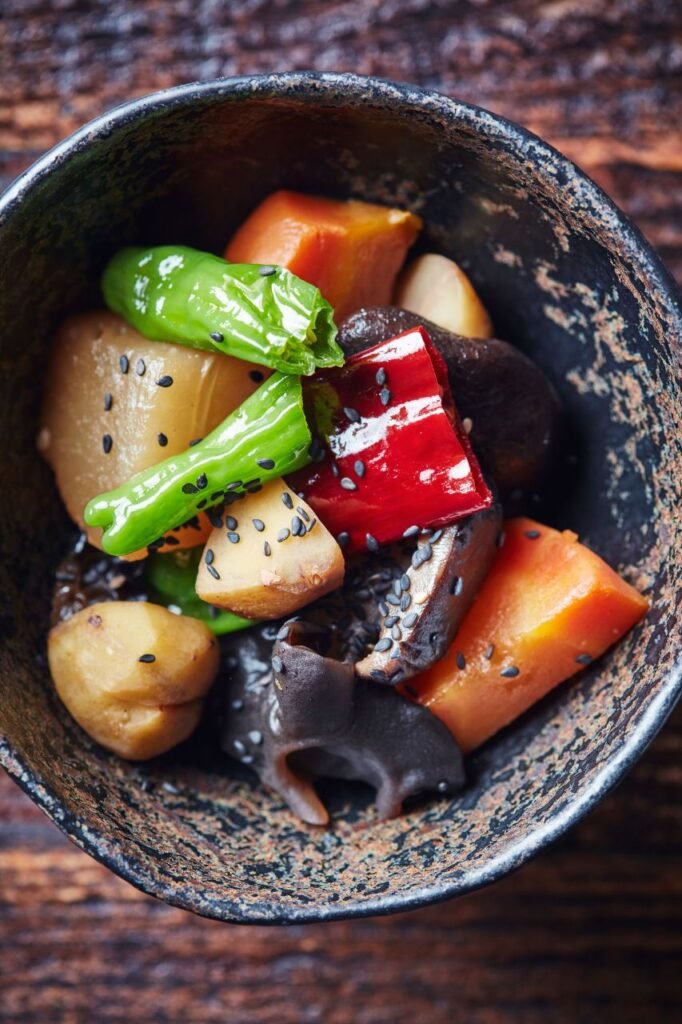
Did you know that traditional Korean cuisine is inherently plant-forward? Long before “veganism” became a global buzzword, Koreans were perfecting the art of Sachal Eumsik (Temple Food).
Why is it so special?
- The Power of Fermentation: Ingredients like Doenjang (soybean paste) and Gochujang (red chili paste) aren’t just flavor bombs; they are probiotic powerhouses that boost gut health.
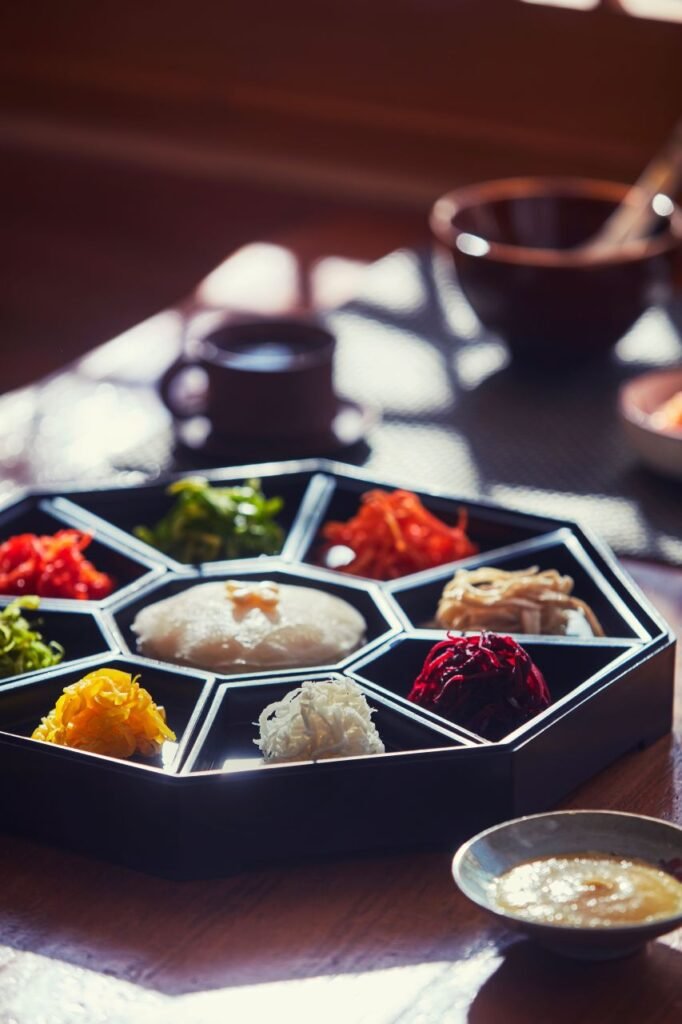
- Balance of Five Colors: We follow the Obangsaek principle—incorporating white, black, red, yellow, and green ingredients—to ensure a full spectrum of vitamins.
2. A World of Variety: Types of Vegan Korean Food
Korean cuisine is so much more than just BBQ! Our plant-based options generally fall into three categories:
- Temple Food: Pure, minimalist cooking without the “five pungent vegetables” (garlic, green onions, etc.), focusing on the natural taste of mountain herbs.
- Namul (Seasoned Vegetables): Blanched or sautéed greens seasoned with toasted sesame oil and salt.
- Modern K-Vegan: Creative twists on classics, like using mushrooms or soy protein to replace meat in fried chicken or stews.
3. Seven Must-Try One-Bowl Vegan Korean Recipes (Detailed Guide)
I’ve broken down these favorites so you can cook like a local expert, even if it’s your first time trying Hansik!
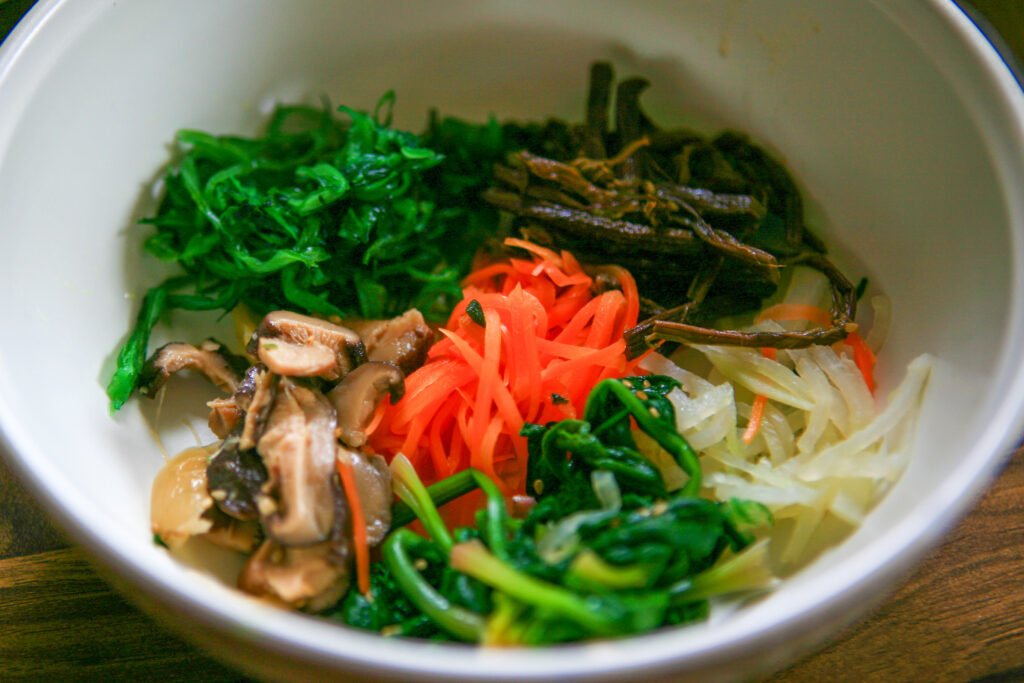
① Bibimbap (The Rainbow Mixed Rice Bowl)
- Ingredients: Steamed rice, spinach, bean sprouts, carrots, shiitake mushrooms, zucchini, Gochujang (ensure it’s vegan), sesame oil, toasted sesame seeds.
- How to Cook:
- Prep the Veggies: Blanch spinach and bean sprouts separately in boiling water for 1 min, then squeeze out water and season with a pinch of salt and sesame oil.
- Sauté: Thinly slice carrots, zucchini, and mushrooms. Sauté each separately with a little oil and salt until tender.
- Assemble: Place rice in a bowl, arrange the colorful vegetables on top in a circle.
- Finish: Add a big spoonful of Gochujang in the center, drizzle with plenty of sesame oil, and mix vigorously before eating!
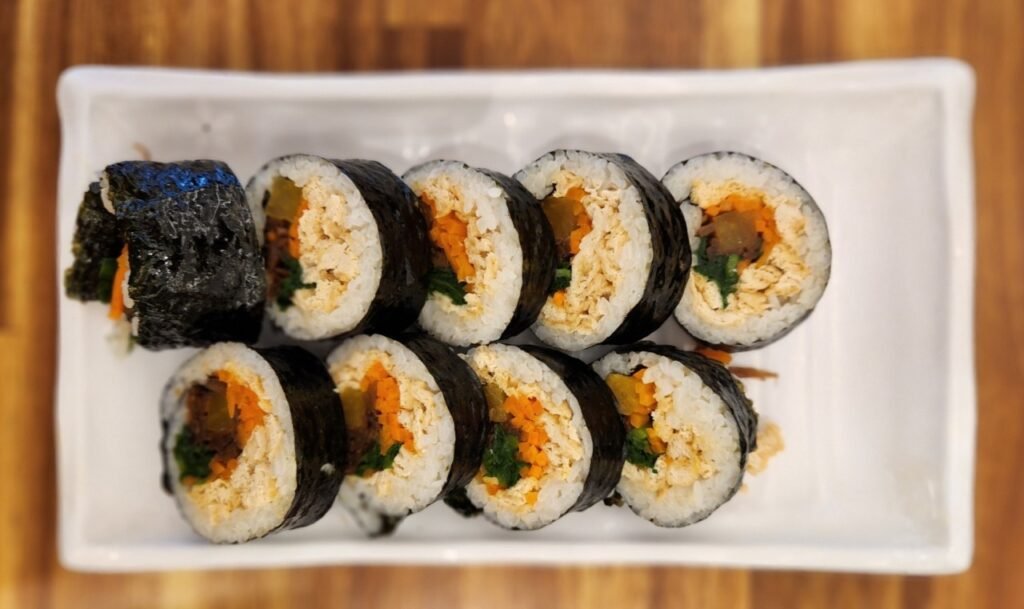
② Gimbap (Plant-Based Seaweed Rolls)
- Ingredients: Dried seaweed sheets (Gim), seasoned rice (salt + sesame oil), pickled yellow radish (Danmuji), braised burdock root, carrots, cucumber, fried tofu (Yubu).
- How to Cook:
- Prep Fillings: Julienne carrots and sauté briefly. Slice cucumber and tofu into long, thin strips.
- Roll: Place a seaweed sheet on a bamboo mat. Spread a thin layer of rice, leaving 2cm at the top.
- Layer: Place all ingredients across the middle of the rice.
- Roll & Slice: Roll tightly from the bottom. Rub a little sesame oil on the outside and slice into bite-sized rounds.
③ Sundubu-jjigae (Spicy Soft Tofu Stew)
- Ingredients: 1 pack soft tofu, 2 cups veggie broth (kelp + mushroom), onion, zucchini, green onion, Gochugaru (red pepper flakes), soy sauce, minced garlic.
- How to Cook:
- Make Chili Oil: In a small pot, sauté minced garlic, chopped onions, and 2 tbsp Gochugaru with 1 tbsp oil on low heat until the oil turns red.
- Simmer: Pour in the veggie broth and add zucchini. Bring to a boil.
- Tofu Time: Gently scoop the soft tofu into the boiling broth. Season with soy sauce to taste.
- Serve: Let it bubble for 3-5 mins and garnish with chopped green onions.
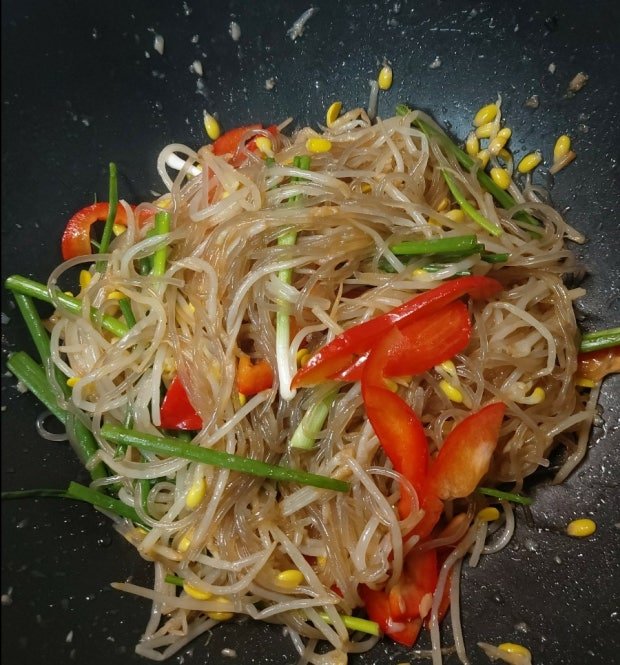
④ Kongnamul Japchae (Crunchy Glass Noodles)
- Ingredients: Sweet potato starch noodles, bean sprouts (Kongnamul), bell peppers, onions, wood ear mushrooms, soy sauce, sugar, sesame oil.
- How to Cook:
- Noodles: Boil noodles for 7 mins, rinse in cold water, and drain.
- Veggies: Blanch bean sprouts for 3 mins. Sauté sliced onions, peppers, and mushrooms with a pinch of salt.
- The Mix: In a large bowl, combine noodles and all veggies.
- Season: Add 3 tbsp soy sauce, 1 tbsp sugar, and 2 tbsp sesame oil. Toss everything together by hand (wear a glove!) to coat evenly.
⑤ Vegan Tteokbokki (Spicy Rice Cakes)
- Ingredients: Cylindrical rice cakes, veggie broth, Gochujang, Gochugaru, sugar (or maple syrup), soy sauce, cabbage, green onions.
- How to Cook:
- Broth Base: In a shallow pan, bring 2 cups of veggie broth to a boil.
- Sauce: Dissolve 2 tbsp Gochujang, 1 tbsp Gochugaru, 1 tbsp soy sauce, and 1 tbsp sugar into the broth.
- Simmer: Add rice cakes and sliced cabbage. Cook over medium heat, stirring constantly so the cakes don’t stick.
- Thicken: Once the sauce thickens and the rice cakes are soft/chewy (about 5-10 mins), top with green onions and serve.
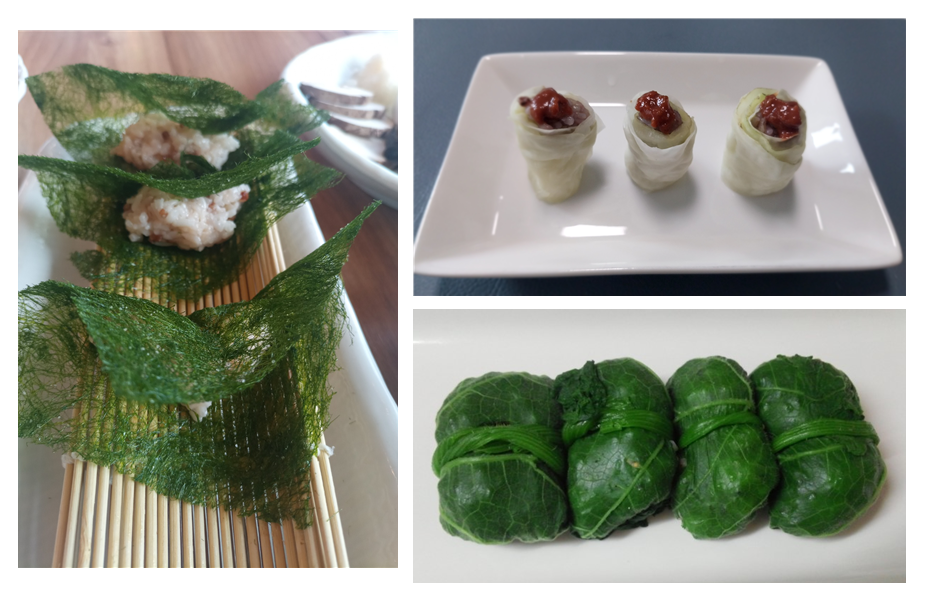
⑥ Ssambap (Fresh Green Leaf Wraps)
- Ingredients: Steamed cabbage leaves, pumpkin leaves, or fresh lettuce; steamed rice; Ssamjang (mix 2 tbsp Doenjang + 1 tbsp Gochujang + 1 tsp minced garlic + 1 tsp syrup).
- How to Cook:
- Steam: Lightly steam cabbage or pumpkin leaves until soft but still slightly firm.
- Make the Sauce: Whisk the Ssamjang ingredients together in a small bowl. (This is the flavor heart of the dish!)
- Assemble: Place a leaf in your palm, add a spoonful of rice, and a small dollop of Ssamjang.
- The Bite: Fold the leaf into a small pouch and eat it in one go for the full flavor explosion!
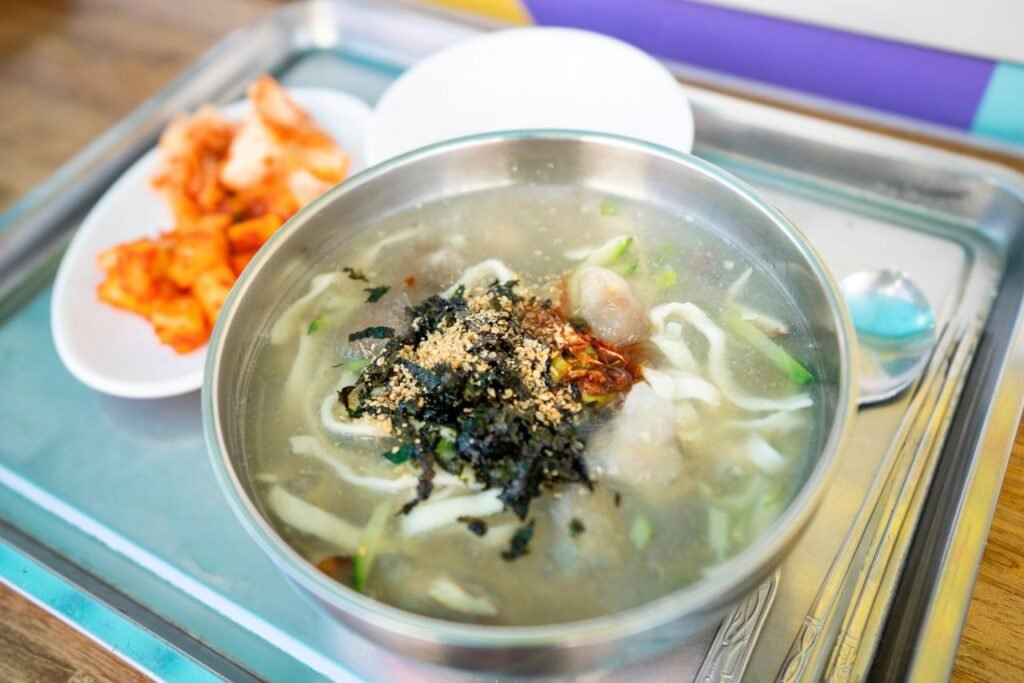
⑦ Gamja Ongsimi Kalguksu (Chewy Potato Ball Noodle Soup)
- Ingredients: 2 large potatoes, Kalguksu (knife-cut) noodles, zucchini, shiitake mushrooms, veggie broth, salt, minced garlic.
- How to Cook:
- Ongsimi: Grate potatoes and squeeze out the liquid through a cloth. Let the liquid sit for 10 mins, then discard the water but keep the settled starch. Mix the potato pulp with the starch and a pinch of salt. Roll into small balls.
- Boil Broth: Bring veggie broth to a boil with sliced mushrooms and zucchini.
- Cook: Add the noodles and the potato balls (Ongsimi) to the broth.
- Season: Cook until the balls float and noodles are tender. Season with salt and garlic. It’s incredibly chewy and comforting!
4. The Future of Vegan Korean Food: A Green Revolution
The future looks incredibly bright—and green! With K-Content (K-Dramas and K-Pop) reaching every corner of the globe, the interest in what Koreans eat has never been higher.
- Global Export: In 2025, Korea’s agricultural and food exports hit a record high, with vegan-certified Kimchi and plant-based Mandu (dumplings) leading the charge in North America and Europe.
- Tech Meets Tradition: We are seeing a rise in “Food-Tech” startups in Seoul developing high-quality plant-based Bulgogi that even my meat-loving friends can’t distinguish from the real thing!
Vegan Hansik isn’t just a trend; it’s a lifestyle that respects the earth while nourishing the body. I truly believe that as more people discover the depth of Korean flavors, “K-Vegan” will become a staple in kitchens worldwide.

A certified Korean chef and baker. Min shares authentic tastes of Korea, from hidden local gems to traditional recipes and everyday lifestyle.