
As BTS prepares to release their highly anticipated new album featuring the soul-stirring track “Arirang,” fans worldwide are diving deep into the meaning behind this iconic melody. Arirang is not just a song; it is the unofficial national anthem of Korea, representing the “Han” (sorrow) and resilience of the Korean people for over a thousand years. Defined by UNESCO as a masterpiece of the oral and intangible heritage of humanity, Arirang serves as the definitive cultural DNA that connects every Korean, regardless of where they live.
- The Roots of Arirang: Understanding the Meaning and Etymology
- A Journey Through Time: The Historical Evolution of Arirang
- Scholarly Perspectives: Key Theories and Historical Records
- The Three Pillars of Arirang: Regional Variations
- From Tradition to Global Icon: Arirang in the Age of BTS
The Roots of Arirang: Understanding the Meaning and Etymology
If you have ever listened to the lyrics “Arirang, Arirang, Arariyo,” you might wonder what these words actually mean. Interestingly, there is no single, definitive translation for “Arirang.” Instead, it is a lyrical vessel into which Koreans pour their deepest emotions. Living in Korea, I often hear it described as a “song of the soul” that transcends literal definitions.
The most widely accepted modern interpretation suggests that “Ari” (아리) comes from an ancient Korean word meaning “beautiful” or “bright,” and “Rang” (랑) refers to a “dear person” or “groom.” Thus, Arirang essentially translates to “My Beautiful Dear.” However, the beauty of the song lies in its open structure; anyone can add their own lyrics to reflect their personal joys or sorrows while keeping the iconic refrain intact.
(Below is a scene from the movie ‘Seopyonje’ where they sing Jindo Arirang.)
A Journey Through Time: The Historical Evolution of Arirang
The history of Arirang is a mirror of the Korean Peninsula’s history itself. It began as simple work songs sung by farmers and evolved into a symbol of national identity during times of crisis. During the late 19th century, when King Gojong’s father, Heungseon Daewongun, was rebuilding Gyeongbokgung Palace, laborers from across the country gathered in Seoul. They shared their regional versions of Arirang, leading to the birth of “Seoul Arirang,” which became the standard version many recognize today.
The song took on a profound political meaning during the Japanese colonial period. In 1926, the film Arirang by Na Woon-gyu transformed the song into a national anthem of resistance. It became a way for Koreans to express their yearning for independence without alerting censors, cementing its status as a symbol of the Korean spirit.
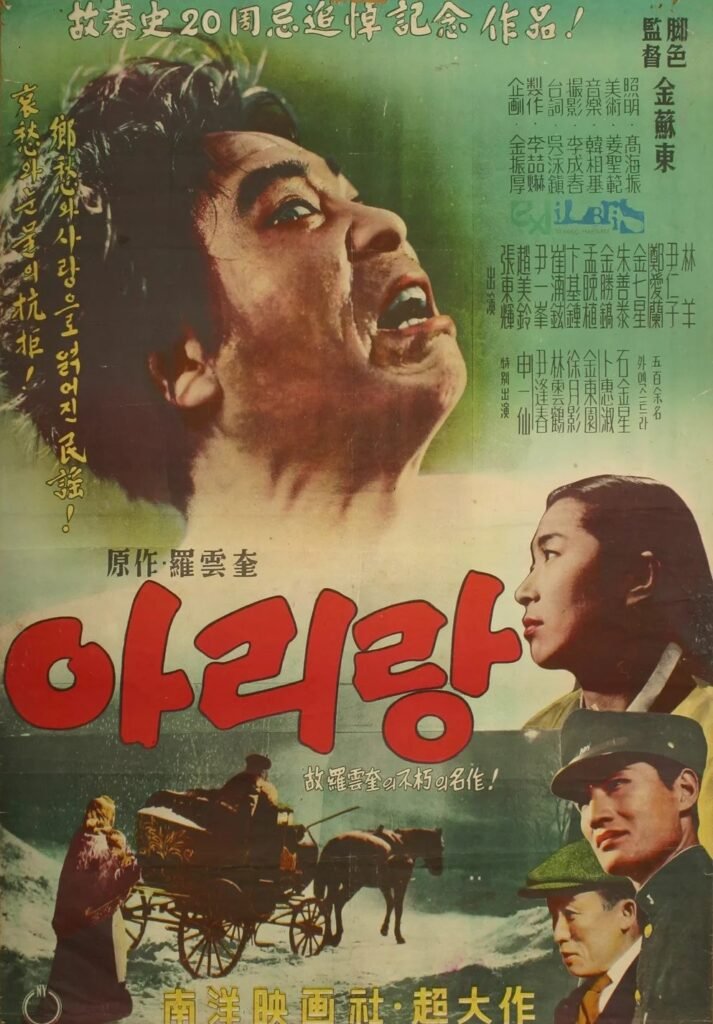
Scholarly Perspectives: Key Theories and Historical Records
To understand Arirang’s depth, we must look at the academic discourse provided by Korean historians and linguists. Several prominent theories explain its origins based on historical documents.
Prominent Academic Theories
| Theory Name | Key Concept | Historical Context |
|---|---|---|
| Ari-ryeong (阿里嶺) | The Great Pass | Proposed by scholars Yang Ju-dong and Yang Jae-yeon, suggesting “Ari” means big/bright and “Rang” refers to a mountain pass (Ryeong). |
| Ari-rang (我離娘) | Parting from a Loved One | A Chinese-character-based theory meaning “I am leaving my lady,” often linked to the forced labor during the Gyeongbokgung reconstruction. |
| Lady Aryeong (閼英) | Royal Praise | Scholar Kwon Sang-ro argued it originated from praises for Lady Aryeong, the first queen of the Silla Kingdom. |
Historical records also validate its long-standing presence. Homer Hulbert, an American missionary, was the first to transcribe Arirang into Western musical notation in 1896. He famously noted in The Korean Repository that “Arirang is to Koreans what rice is to them,” highlighting that it was already a fundamental part of daily life over a century ago.
The Three Pillars of Arirang: Regional Variations
While the melody might sound similar to the untrained ear, there are hundreds of variations of Arirang. The “Big Three” are the most famous, each reflecting the geography and temperament of its region. The YouTube videos below feature Jeongseon Arirang, Miryang Arirang, and Jindo Arirang, in order from top to bottom.
- Jeongseon Arirang (Gangwon Province): The oldest form. It features a slow, mournful “Menari” rhythm that mimics the deep valleys and high mountains of the eastern region.
- Jindo Arirang (Jeolla Province): Known for its sophisticated vocal techniques and “Yukjabaegi” style. It is both sorrowful and joyful, embodying the artistic flair of the southwest.
- Miryang Arirang (Gyeongsang Province): Fast-paced and cheerful. It reflects the energetic and brave spirit of the people in the southeast.
From Tradition to Global Icon: Arirang in the Age of BTS
Today, Arirang is undergoing a massive revival thanks to global K-pop icons like BTS. By integrating Arirang into their performances, BTS is not just singing a folk song; they are inviting the “ARMY” to explore the very foundation of Korean culture. This “Global Arirang” transcends borders, acting as a bridge for the Korean diaspora in Central Asia (Koryo-saram) and fans across the globe.
💡 Local Note: If you visit Korea, you will hear Arirang in unexpected places—from subway arrival melodies to major sporting events. It is the ultimate song of unity, used whenever South and North Korea march together under a single flag.
Whether it is the haunting traditional flute (daegeum) version or a high-energy K-pop remix, Arirang remains the heartbeat of Korea. It proves that a melody born from the sorrow of the past can become a song of hope for the future.
(Below is Song So-hee’s performance of Miryang Arirang, infused with a modern sensibility.)
FAQ
Why is Arirang often called the song of “Han”?
“Han” is a uniquely Korean emotion representing deep sorrow, resentment, and the strength to overcome it. Arirang’s lyrics often talk about being left behind or crossing difficult mountain passes, which serves as a metaphor for the hardships Koreans have faced throughout history.
Is Arirang the official national anthem of South Korea?
No, the official national anthem is “Aegukga.” However, Arirang is considered the “unofficial” national anthem because it is more widely sung by the public and serves as a cultural symbol of the entire Korean ethnic group, including North Korea and overseas communities.
Are there any Korean dramas that feature Arirang?
Yes, Arirang is frequently featured in Korean dramas to symbolize the nation’s spirit and deep emotions. You can hear its touching melody in “The Last Empress” during a powerful performance, and its essence is woven into the soundtracks of hits like “Crash Landing on You” and “Mr. Sunshine.” These dramas use Arirang not just as a song, but as a cultural bridge connecting Korea’s historical “Han” (sorrow) with modern storytelling.
Korean Culture portal KCulture.com

Founder of Kculture.com and MA in Political Science. He shares deep academic and local insights to provide an authentic perspective on Korean history and society.