Over the past nine chapters, we’ve traveled from the tear-soaked Trot of the 1930s to the lo-fi, easy-listening vibes of 2026. Now, it’s time to look into the crystal ball. In the industry here in Seoul, we no longer ask, “How big can K-Pop get?” Instead, we ask, “What is K-Pop when it has no boundaries?”
As we move toward 2030, K-Pop is evolving from a music genre into a Total Lifestyle Ecosystem. Here is what the future holds.
1. The “K-System” Without Borders: The Rise of “K-Local”
The biggest shift we will see by 2030 is the complete de-coupling of K-Pop from Korean ethnicity.
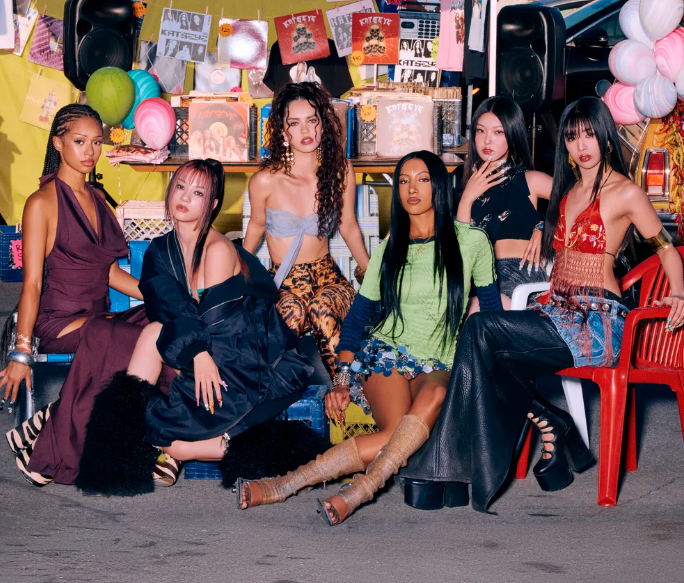
- “Made by Korea”: Following the path of KATSEYE and VCHA, we will see groups based in London, Mexico City, and Lagos that are 100% local in membership but 100% “K-Pop” in their training, production, and fan-engagement style.
- Global Standard: K-Pop will become the “Hollywood” of the music world—a centralized system of excellence that any artist from any country can plug into to achieve global stardom.
2. The AI & Human Symbiosis: “Hyper-Personalization”
By 2030, the relationship between an idol and a fan will be transformed by generative AI.
- 1-on-1 Multilingual Interaction: Imagine your “bias” calling you by name and wishing you a happy birthday in your native language, powered by an AI voice and video engine that captures their exact personality. This “Hyper-personalization” will make the bond between idols and fans deeper than ever before.
- AI-Generated Content: Fans will be able to use official AI tools provided by agencies to create their own “Dream Collaborations”—mixing and matching voices and styles to create personalized tracks, with royalties shared via blockchain.
3. The Immersive Concert: Haptics and the Metaverse
The days of just “watching” a concert through a screen are over.
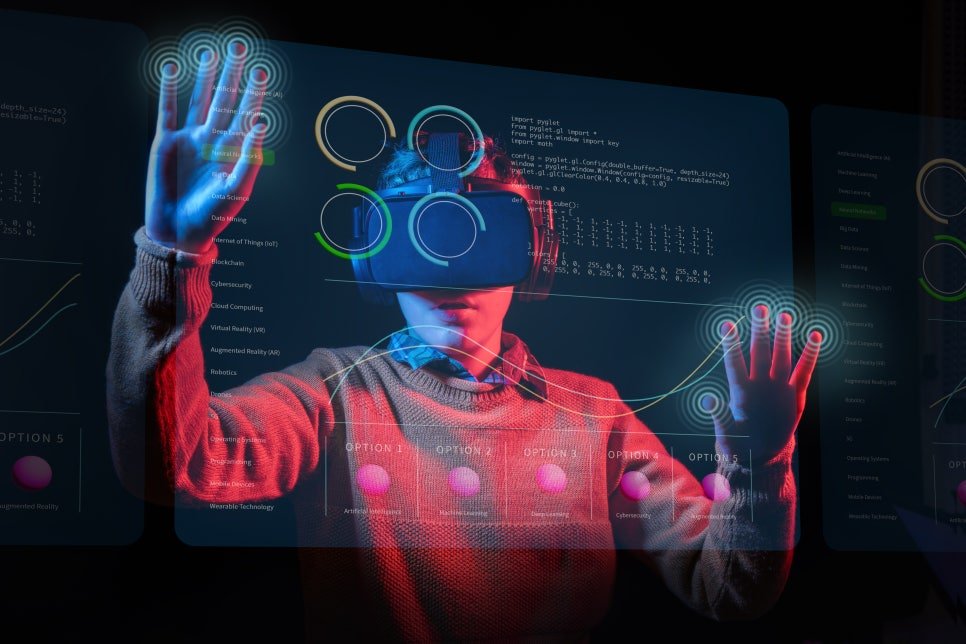
- Haptic Technology: Future virtual concerts will utilize haptic suits or wearable tech, allowing fans to feel the “vibration” of the bass or even a “virtual high-five” from an idol’s avatar.
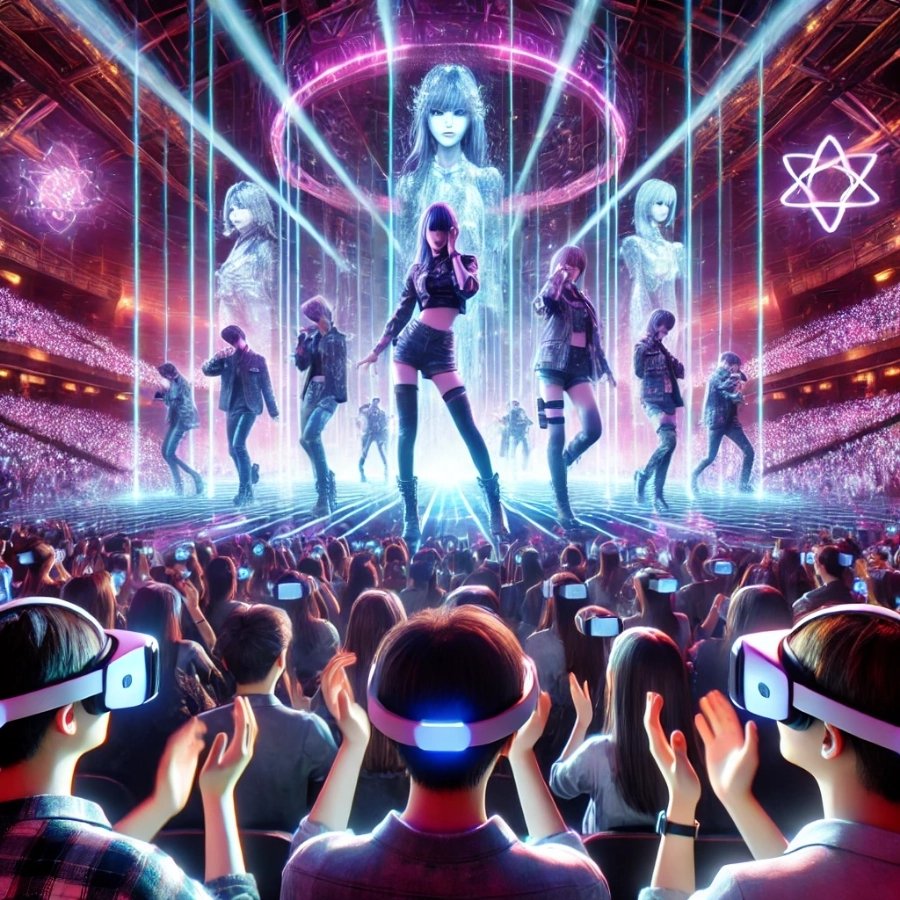
- The Infinite Stage: Metaverse venues will allow millions of fans to occupy the same “space” simultaneously, where the stage can transform from a floating island in the sky to a futuristic underwater city in a split second.
4. Sustainability: The “Green” K-Pop Revolution
The industry has heard the calls for change. By 2030, K-Pop aims to lead the global music industry in sustainability.
- Zero-Waste Fandom: Physical albums will become premium, artisanal collectibles made from 100% biodegradable materials. The primary “bulk” consumption will shift to eco-friendly NFT photocards and digital assets.
- Carbon-Neutral Tours: Major agencies like SM and HYBE are already planning for hydrogen-powered tour buses and carbon-offsetting initiatives for world tours, making “K-Pop” synonymous with “Green Pop.”
5. The Return of the Legends: The 2026 “Grand Convergence” and Beyond
As of right now in 2026, we are witnessing a rare phenomenon: The Grand Convergence. * BTS, BLACKPINK, BIGBANG, and EXO are all active and making massive comebacks simultaneously after completing their military and personal hiatuses. This “Second Peak” of the 3rd Generation is providing the financial and cultural fuel to fund the experimental 5th and 6th generations.
- Heritage K-Pop: K-Pop will develop its own “Classic” category. Expect to see hologram tours of 1st-generation legends and “Legacy Festivals” that celebrate the 100-year history we’ve discussed in this series.
Summary: K-Pop Predictions for 2030
| Trend | Future Vision |
| Market | K-Local: Fully localized groups in every major continent. |
| Technology | AI-Personalization: Idols interacting 1-on-1 with millions of fans. |
| Experience | Total Immersion: VR/AR concerts with physical haptic feedback. |
| Industry | Circular Economy: Zero-waste albums and eco-friendly global tours. |
Kyoung’s Final Reflection: > Standing here in Seoul in 2026, I realize that K-Pop’s greatest strength isn’t its technology or its flashy videos. It’s the human connection. Whether it’s a trot singer in 1935 or a virtual avatar in 2030, the core remains the same: music that understands our “Han” (sorrow) and provides “Shin-myeong” (joy). As long as that heart remains, K-Pop will never end.
Series Epilogue
From the small clubs of the US 8th Army to the vast expanses of the Metaverse, we’ve seen the incredible resilience of Korean culture. This concludes our 10-Part History of K-Pop! Thank you for walking this century-long journey with me.
💡 Go to related article
- The Grand Odyssey of K-Pop: A Century of Rhythm, Resilience, and Revolution
- Chapter 1: The Colonial Roots & The Soul of Trot – Where K-Pop’s Heartbeat Began
- Chapter 2: The US 8th Army Era & The Kim Sisters – The Neon Lights of a New Frontier
- Chapter 3: The “Jeans and Guitars” Revolution – Youth, Resistance, and the King (1970s – 1980s)
- Chapter 4: The Golden Age of Ballads & the 1988 Seoul Olympics – A Nation Finds Its Voice (1980s – 1990s)
- Chapter 5: The Seo Taiji Revolution & the 1st Generation Idols – The Big Bang of Modern K-Pop (1990s – Early 2000s)
- Chapter 6: The Hook Song Era & Hallyu 2.0 – When K-Pop Became a Digital Virus (Mid-2000s – Early 2010s)
- Chapter 7: The Global Domination – 3rd Generation & the Social Media Revolution (2012 – 2017)
- Chapter 8: The Digital Natives – 4th Generation & The Performance Revolution (2018 – 2022)
- Chapter 9: The 5th Generation – The Era of Naturalism & Hyper-Globalization (2023 – Present)

A lifestyle writer covering K-beauty, fashion, and art. Kyoung shares honest insights on K-pop and smart shopping, capturing the vibrant trends of modern Korea.