If you want to understand the Korean soul, you must listen to Pansori. It is often described simply as “traditional opera,” but this definition fails to capture its raw, visceral power. Pansori is the sound of blood and breath; it is a musical form where a single vocalist (Sorikkun) stands against the world, armed only with a fan and a voice that ranges from a whisper to a thunderclap.
For travelers and culture enthusiasts, Pansori is the gateway to understanding Han (deep sorrow) and Heung (joy). Before diving into the specific stories and styles, it is helpful to understand where Pansori fits within the wider spectrum of Korea’s musical heritage.
💡 Cultural Context: Pansori is a jewel within the crown of Gugak (National Music). For a broader look at how it differs from court music and military bands, read our essential guide: Traditional Korean Music: Gugak, Pansori, Daechwita.
- More Than Music: The Art of Storytelling
- The Voice of the People: Satire and Empathy
- The Anatomy of a Performance
- A Landscape of Sound: The Three Styles (Je)
- The Five Madang: Stories That Survived History
- Pansori in Cinema: Watch Free on YouTube
- Where to Watch Live: 2026 Performance Guide
- A Cultural Pilgrimage: Namwon and Gwanghalluwon
More Than Music: The Art of Storytelling
The word Pansori (판소리) is a compound of “Pan” (a public space or gathering) and “Sori” (sound). Unlike Western opera, which relies on elaborate sets, orchestras, and costumes, Pansori relies entirely on the imagination. A skilled Sorikkun creates the universe through sound alone.
To perform Pansori is to perform a feat of extreme physical and mental endurance. A full performance of a single story can last anywhere from three to eight hours. The singer does not just sing; they act out every role—from a corrupt official to a weeping maiden—using three distinct techniques:
- Chang (Song): The melodic singing, used to express intense emotion.
- Aniri (Speech): Spoken passages used to advance the plot or engage in witty banter.
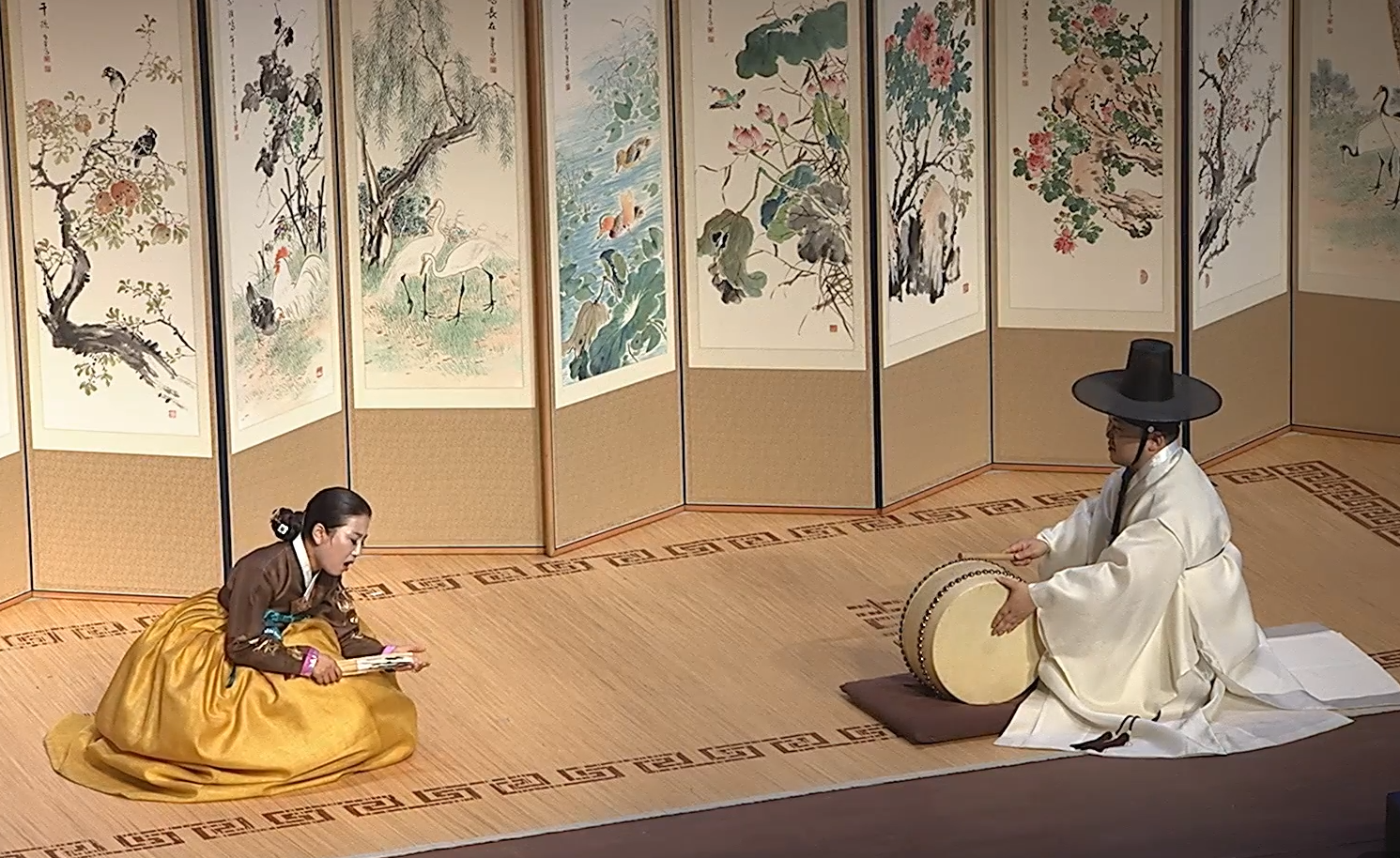
- Ballim (Gesture): The physical acting, often using a folding fan to mimic a sword, a letter, or a butterfly.
The Voice of the People: Satire and Empathy
Why does Pansori hold such a revered place in Korean history? Because it was the voice of the common people. While the aristocracy enjoyed stiff, formal court music, Pansori developed in the bustling marketplaces and village squares of the 17th and 18th centuries.
It served a dual purpose: Entertainment and Social Commentary.
Through satire and humor, Pansori singers openly mocked the hypocrisy of the ruling class (Yangban) and sympathized with the struggles of the poor. It was a safe space where the oppressed could laugh at their oppressors. Yet, the stories also upheld Confucian virtues like loyalty and filial piety, allowing the art form to eventually gain acceptance among the aristocracy and royalty in the late Joseon Dynasty. It is a rare art form that bridged the gap between the lowest and highest classes of society.
The Anatomy of a Performance
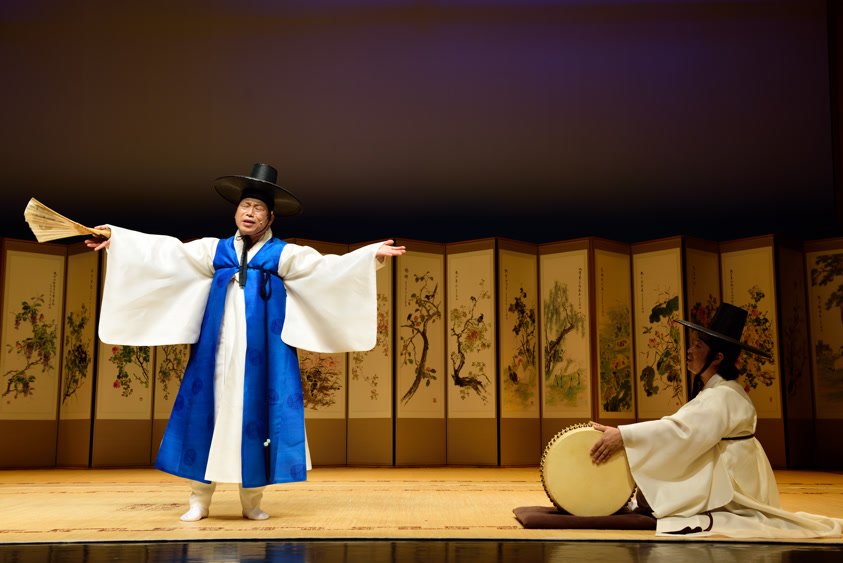
A Pansori performance is not a monologue; it is a dialogue. The stage contains only two people: the singer and the drummer (Gosu). However, there is a third, invisible participant: the audience.
The Role of the Drummer (Gosu)
There is a famous Korean saying: “First is the Gosu, second is the Sorikkun.” This highlights the critical role of the drummer. Using a barrel drum (Buk), the Gosu does not just keep time; they breathe life into the singer’s rhythm, speeding up the tension during a chase scene or slowing down to a heartbeat during a tragedy.
The Magic of Chuimsae
If you attend a performance, do not sit silently. Pansori requires Chuimsae (추임새)—verbal encouragement thrown from the drummer and the audience. Cries of “Eolssigu!” (Right on!), “Jota!” (Good!), and “Jalhanda!” (You’re doing great!) are essential. These shouts fuel the singer’s energy. In this way, the “Pan” becomes a communal space where the boundary between performer and spectator dissolves.
A Landscape of Sound: The Three Styles (Je)
Pansori is deeply tied to the geography of Korea. The style of singing changes based on the region, creating a unique sonic map of the peninsula.
Dongpyeonje (East Side Style)
Originating from the rugged terrain east of the Seomjin River (including Namwon, Gurye, and Unbong), this style mirrors the mountains. It is majestic, vigorous, and masculine. The singers project a “heavy” sound, ending notes abruptly and cleanly, much like a rock falling to the ground. It avoids excessive emotion, focusing instead on power and grandeur.
Seopyeonje (West Side Style)
From the fertile plains west of the Seomjin River (Gwangju, Boseong, Naju), this style is the sound of sorrow. It is sophisticated, decorative, and deeply emotional. Seopyeonje singers master the art of “aching,” stretching the ends of notes to pull at the listener’s heartstrings. This style is most closely associated with Han—the quintessential Korean sentiment of grief and resilience.
Junggoje (Middle Old Style)
Often overlooked but historically significant, Junggoje originated in the Gyeonggi and Chungcheong provinces. As the name suggests, it represents a “middle ground” or bridge between the East and West styles. The sound is characterized by its clarity and honesty—it is less decorative than Seopyeonje but smoother than Dongpyeonje. Though many of its traditions were lost over time, it is currently being rediscovered and restored by dedicated scholars and artists.
“Sarang-ga” (Love Song) from Pansori Chunhyangga – Song Ga-in & Kim Jun-su
The Five Madang: Stories That Survived History
In the past, there were 12 distinct Pansori narratives. Today, only five survive. These are known as the “Five Madang.” They survived because they encapsulated the core values and conflicts of Korean life.
- Chunhyangga (Song of Chunhyang): The masterpiece of Pansori. It is a romance between a magistrate’s son and a gisaeng’s daughter, but at its core, it is a story of resistance against corrupt power. It features the most musical variety and literary depth.
- Simcheongga (Song of Sim Cheong): The ultimate tale of filial piety. A daughter sacrifices her life for her blind father. It is famous for its heart-wrenching tragic sections, requiring a singer with immense emotional range.
- Heungboga (Song of Heungbo): A humorous parable about brotherhood and greed. It uses fast-paced, rhythmic singing to depict the chaotic life of the poor but kind Heungbo versus his rich, nasty brother Nolbu.
- Sugungga (Song of the Underwater Palace): A biting political satire featuring a rabbit and a turtle. By using animals as protagonists, it sharply critiques the rigid social hierarchy of human society.
- Jeokbyeokga (Song of Red Cliff): Based on the Chinese Romance of the Three Kingdoms, this war epic is technically demanding, requiring the singer to mimic the sounds of battle and the shouting of generals.
Pansori in Cinema: Watch Free on YouTube
Cinema is one of the best ways to experience the emotional depth of Pansori. Two masterpieces by director Im Kwon-taek are essential, and as of 2026, you can easily find them online.
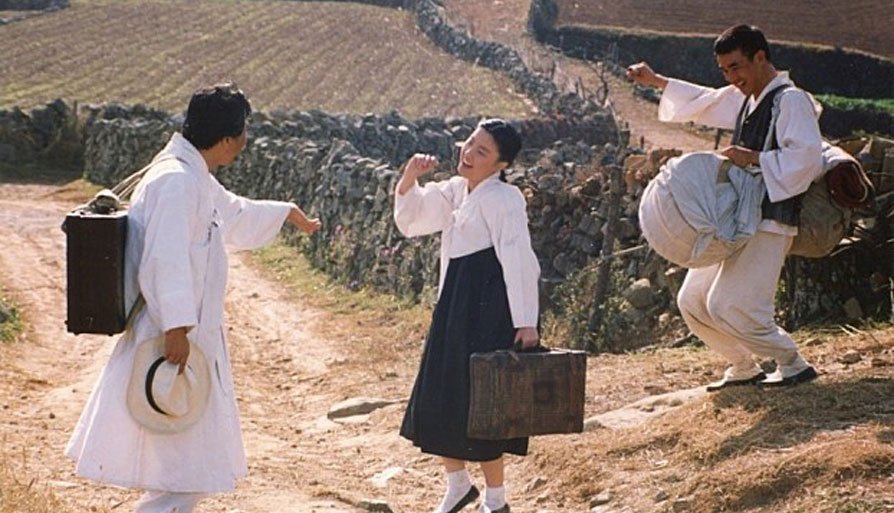
1. Seopyeonje (1993)
This film single-handedly revived national interest in traditional music.
- The Story: Set against the chaotic backdrop of the Japanese colonial era, the Korean War, and rapid industrialization, it follows a family of itinerant musicians. As Western culture floods in, their traditional art loses its place. The father, obsessed with perfecting his daughter’s sound, believes that true art comes from “Han” (sorrow), leading to tragic choices.
- Why Watch: It captures the heartbreaking struggle of artists trying to preserve their identity in a changing world.
- Where to Watch: You can watch the full movie for free on the “Korean Classic Film” (한국고전영화) YouTube channel, operated by the Korean Film Archive. It includes high-quality English subtitles.
2. Chunhyang (2000)
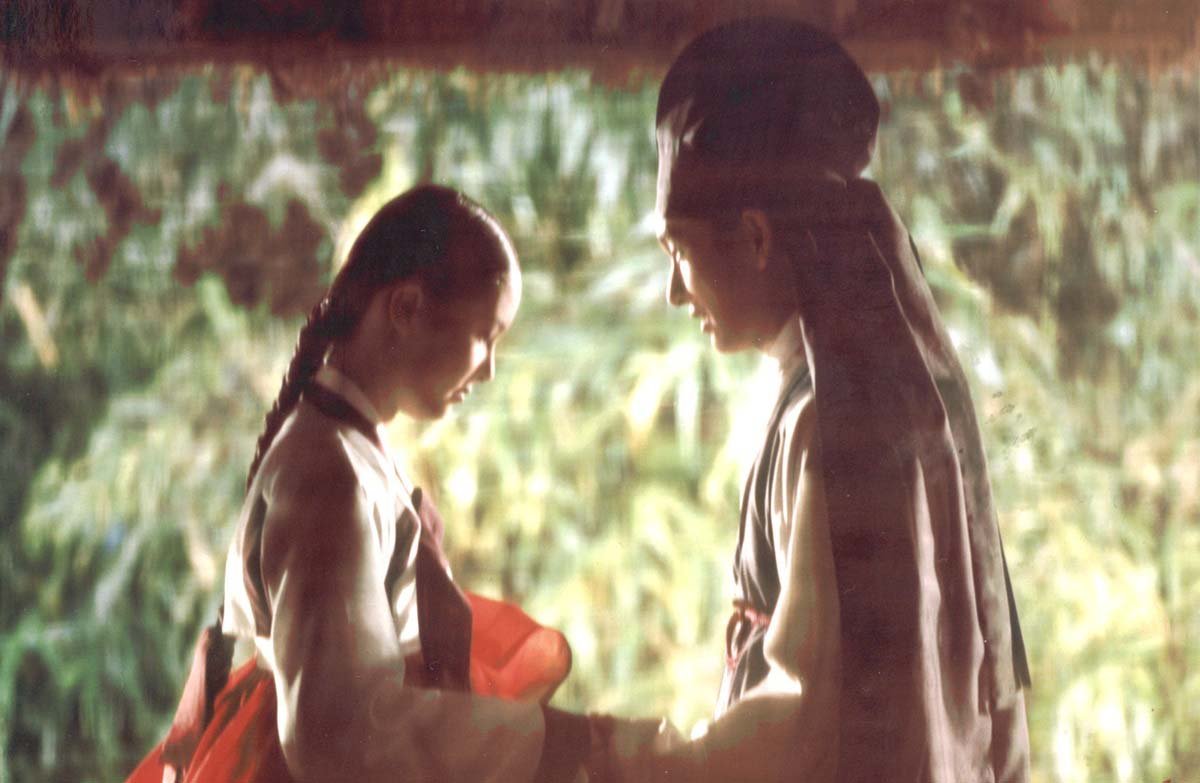
This is not a standard historical drama; it is a “Pansori Musical.”
- The Style: The unique charm of this film is that the screenplay is the Pansori song itself. A real master singer (Myeongchang Cho Sang-hyun) narrates the entire movie through song. The film cuts between the visual dramatization of the lovers and the actual singer performing on stage, creating a powerful fusion of theater and cinema.
- Where to Watch: The full version of Chunhyang is available on YouTube. You can find it by searching “Chunhyang 2000 full movie.” While it is not always on the Archive channel, official and fan-restored uploads are widely accessible for global audiences.
Where to Watch Live: 2026 Performance Guide
Watching a video is educational, but sitting in the “Pan” (the performance space) is transformative. Here are the best places to catch a live performance in 2026.
In Seoul: The Hub of Tradition
For travelers in Seoul seeking authentic traditional music, there are three premier destinations:
- National Theater of Korea: This is the most prestigious venue for Pansori. Their “Complete Performance of Pansori” season typically begins in March. Visitors should check the “2026 Repertory Season” or the February/March schedule on their official website by searching for “Complete Performance of Pansori” to book tickets for renowned masters.
- National Gugak Center: Located in Seocho-dong, this center is accessible and foreigner-friendly. They present the “Saturday Performance of Korean Music & Dance” every Saturday at 3 PM at the Yeak-dang or Umyeon-dang halls. Tickets and information for 2026 performances are available on their English website.
- Seoul Donhwamun Traditional Theater: For a more intimate experience where you can see the singer’s sweat and facial expressions up close, visit this theater near Changdeokgung Palace. Check their website for the 2026 annual schedule, which features various traditional performances including Sanjo and Pansori.
In Other Regions: The Festival Experience
If you are planning to travel outside the capital, timing your visit with a festival offers a deep dive into the culture.
- Jeonju International Sori Festival: This is a major global music event held annually in Jeonju (전주) during the autumn months of September and October. It mixes traditional Pansori with world music. As this is a large-scale festival, the specific 2026 dates and performance lineup will be officially updated on their website around summer. Prospective visitors are encouraged to check the site then for accurate planning.
A Cultural Pilgrimage: Namwon and Gwanghalluwon
If you wish to walk inside the world of Pansori, you must go to Namwon (남원) in Jeollabuk-do. This city is the setting of Chunhyangga and the birthplace of the Dongpyeonje style.
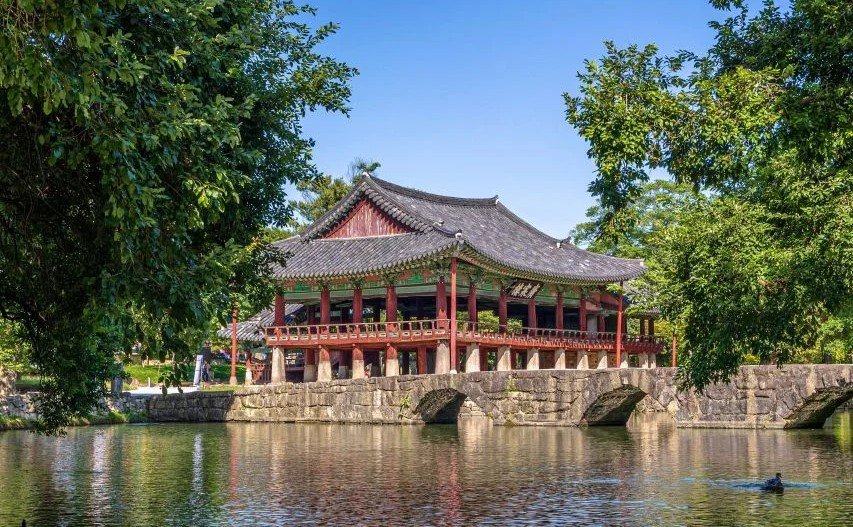
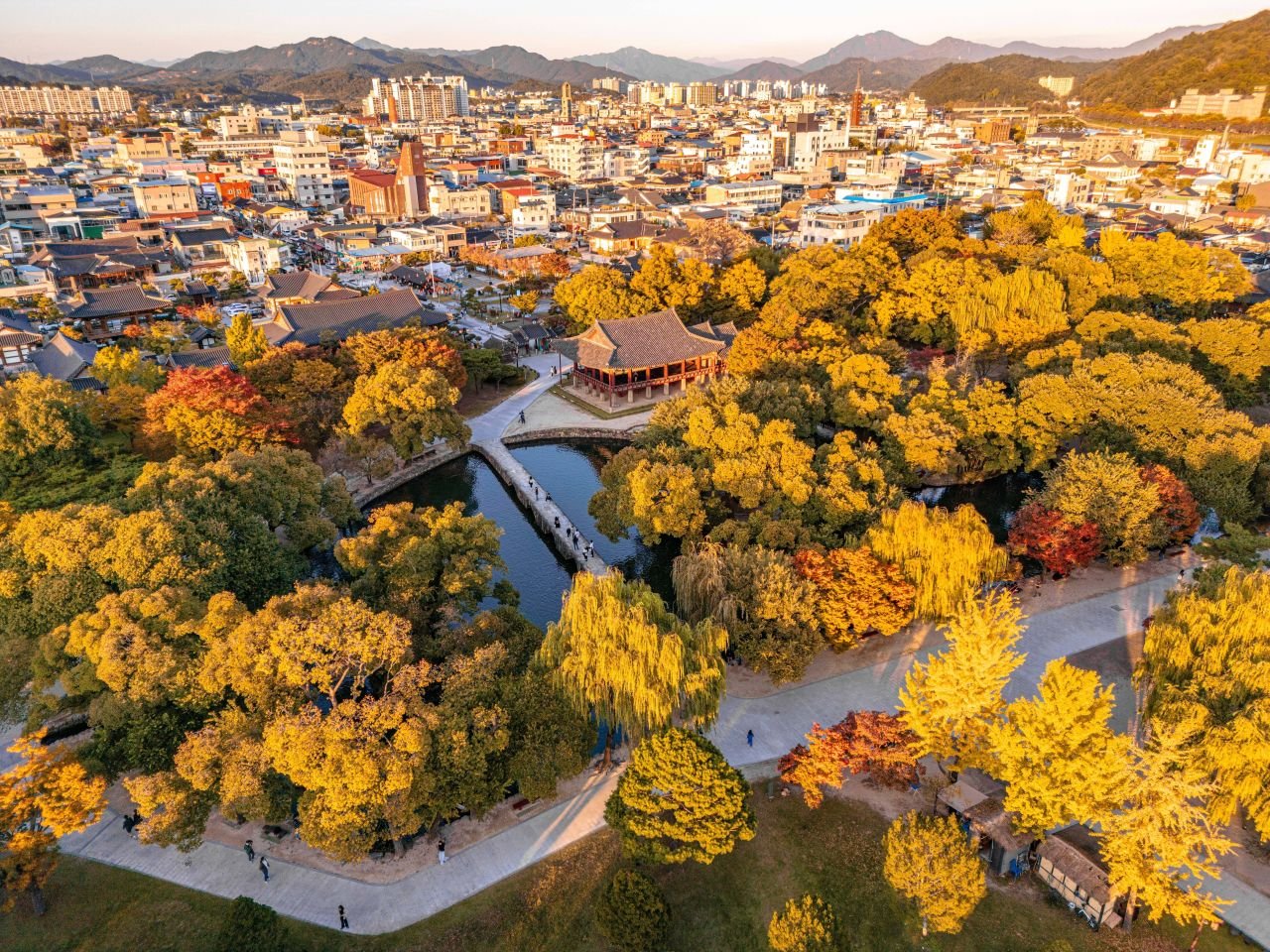
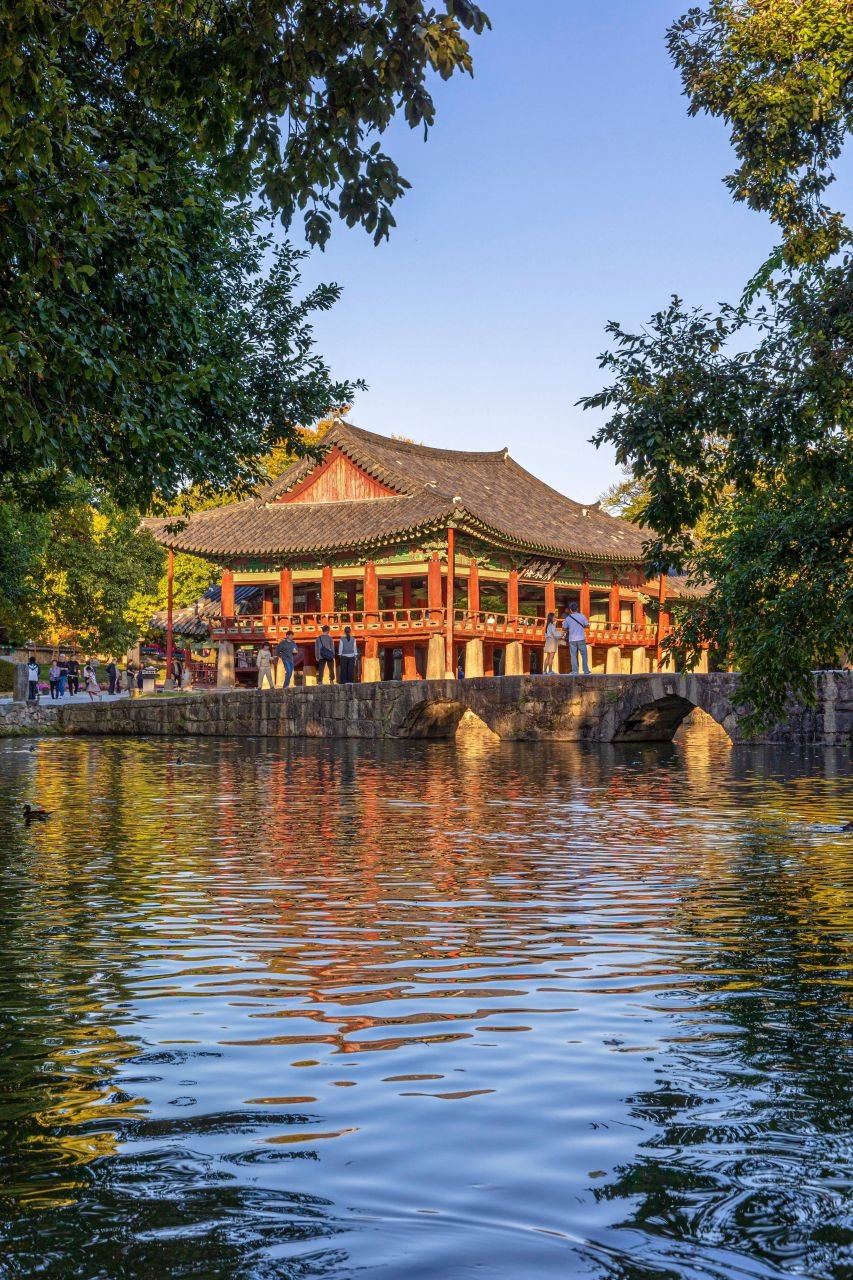
The centerpiece of the city is Gwanghalluwon (광한루원). This is not just a park; it is a living artifact. Built in the 15th century, it represents a utopian vision of the universe. The garden features the Ojakgyo Bridge and Gwanghallu Pavilion, the exact fictional meeting place of the lovers Mong-ryong and Chun-hyang.
It is widely considered one of the finest traditional gardens in Korea, rivaling the palaces of Seoul. Walking here, you are walking through centuries of literary history.
🎬 Scene Stealer: Gwanghalluwon is a favorite filming location for many historical K-Dramas. To find out which of your favorite scenes were filmed here (and other locations), check out our specific guide: Step Into the Screen: The Ultimate K-Drama Travel Guide 2026.
📌 Local Insider Tip: The Jeonju-Namwon Connection
Most travelers base themselves in Jeonju (전주). Namwon is the perfect cultural day trip from there.
- Distance: Roughly 60km (approx. 1 hour).
- Transport: Frequent Intercity Buses run from Jeonju Intercity Bus Terminal to Namwon.
- Itinerary: Arrive in Namwon by 10 AM. Visit Gwanghalluwon Garden first. Cross the bridge to the Chunhyang Theme Park. Enjoy Namwon’s famous Loach Soup (Chueotang) for lunch, and return to Jeonju by evening.
Korean Culture portal KCulture.com

Founder of Kculture.com and MA in Political Science. He shares deep academic and local insights to provide an authentic perspective on Korean history and society.