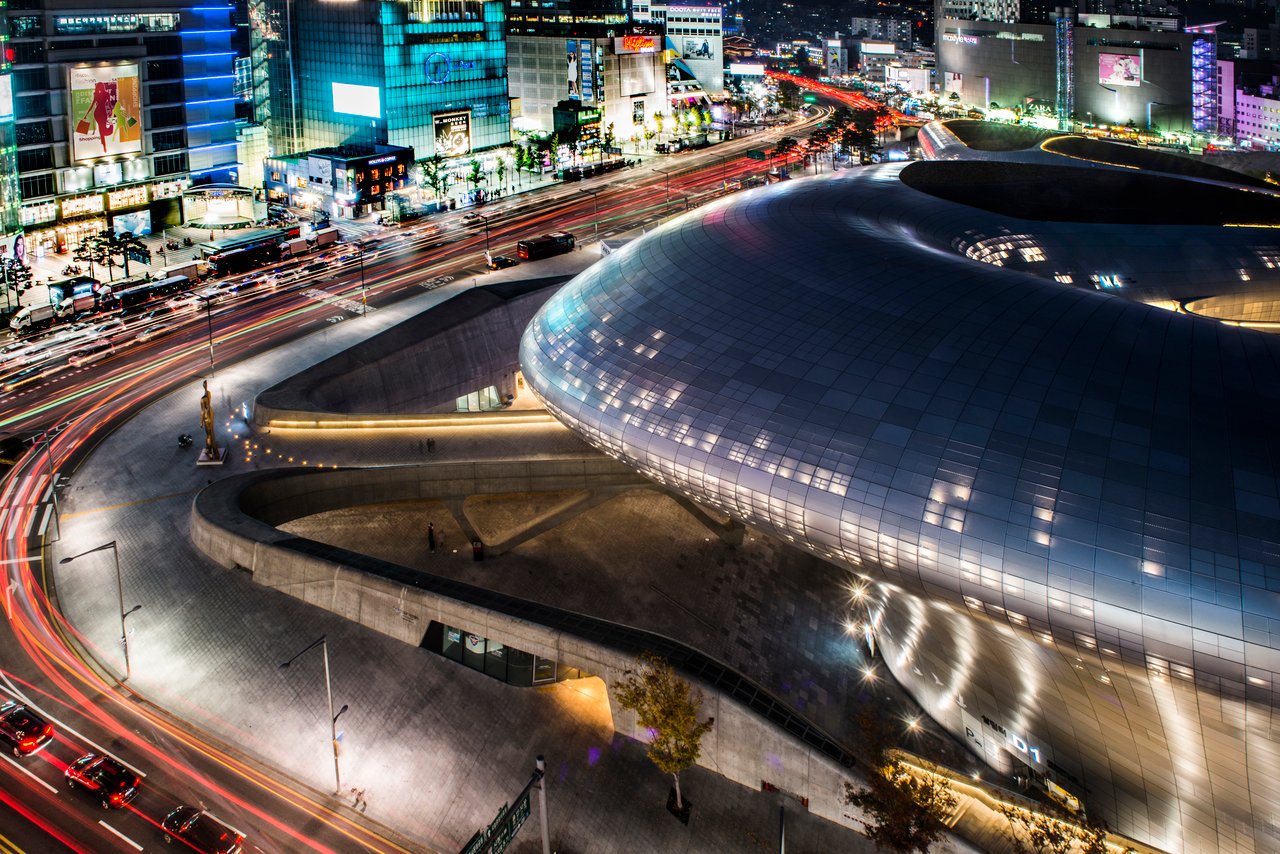
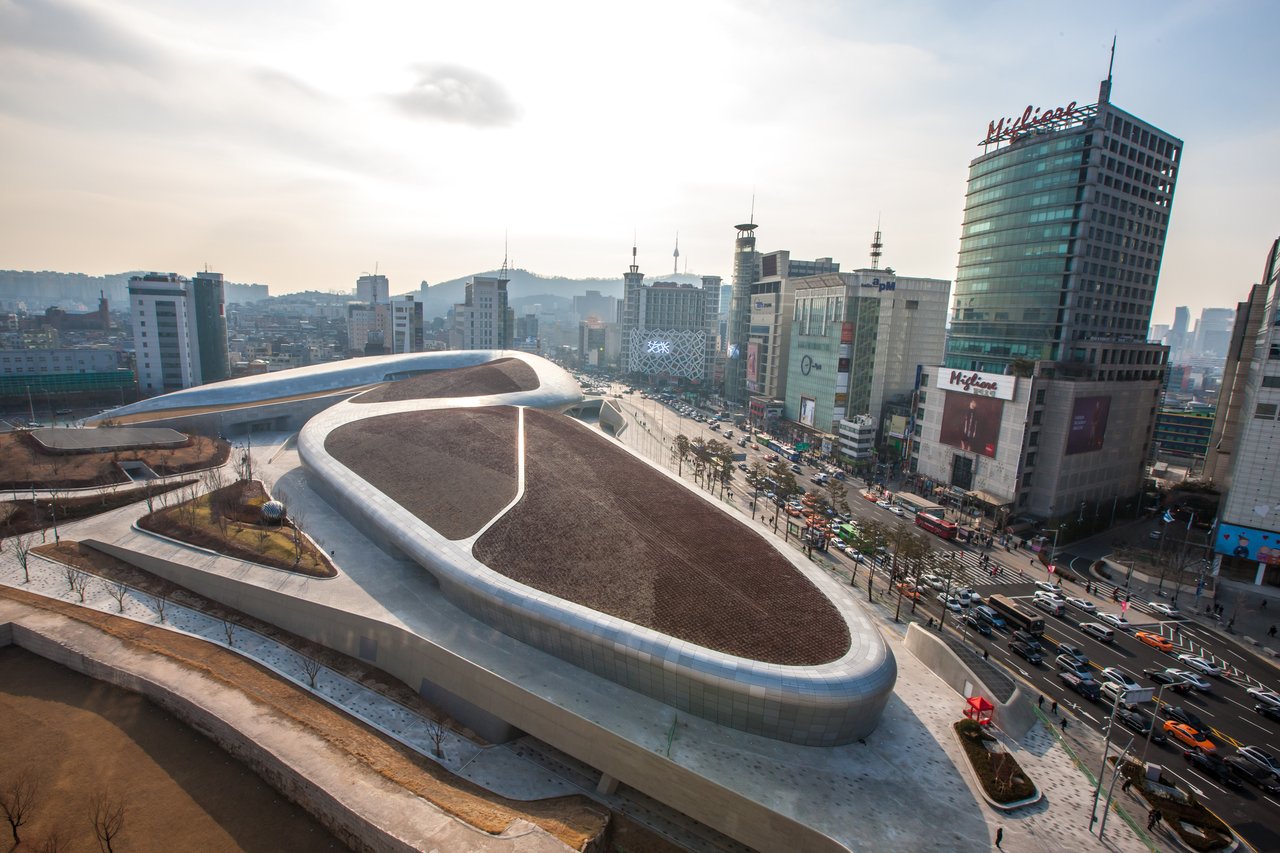
If you have ever stood in the middle of Seoul and felt like a giant silver spaceship had just crash-landed in the city center, you were likely looking at the Dongdaemun Design Plaza, better known locally as DDP. DDP is not just an architectural marvel; it is the undisputed beating heart of Seoul’s fashion, art, and design scene. As the official main venue for the biannual Seoul Fashion Week and home to numerous design showrooms, it serves as the primary stage where Korea’s trends are introduced to the world. Whether you are an architecture geek, a photographer chasing the perfect night shot, or a traveler looking for a futuristic escape, this is your ultimate guide to conquering DDP.
- The Architecture: A Legacy of Zaha Hadid
- What to Do Inside: The Full Experience
- Best Photo Spots & Night Views
- Where to Go Next: Nearby Hotspots
- Practical Guide & Local Tips
- FAQ
- Seoul Travel Blueprint: Where to Go Next?
The Architecture: A Legacy of Zaha Hadid
Before you step inside, you have to understand what makes this building so special. Designed by the legendary architect Zaha Hadid, DDP is her final masterpiece before her passing. The core concept is the “Metonymic Landscape,” which aims to integrate the building seamlessly into the surrounding cultural and historical terrain.
The Fluidity of Form
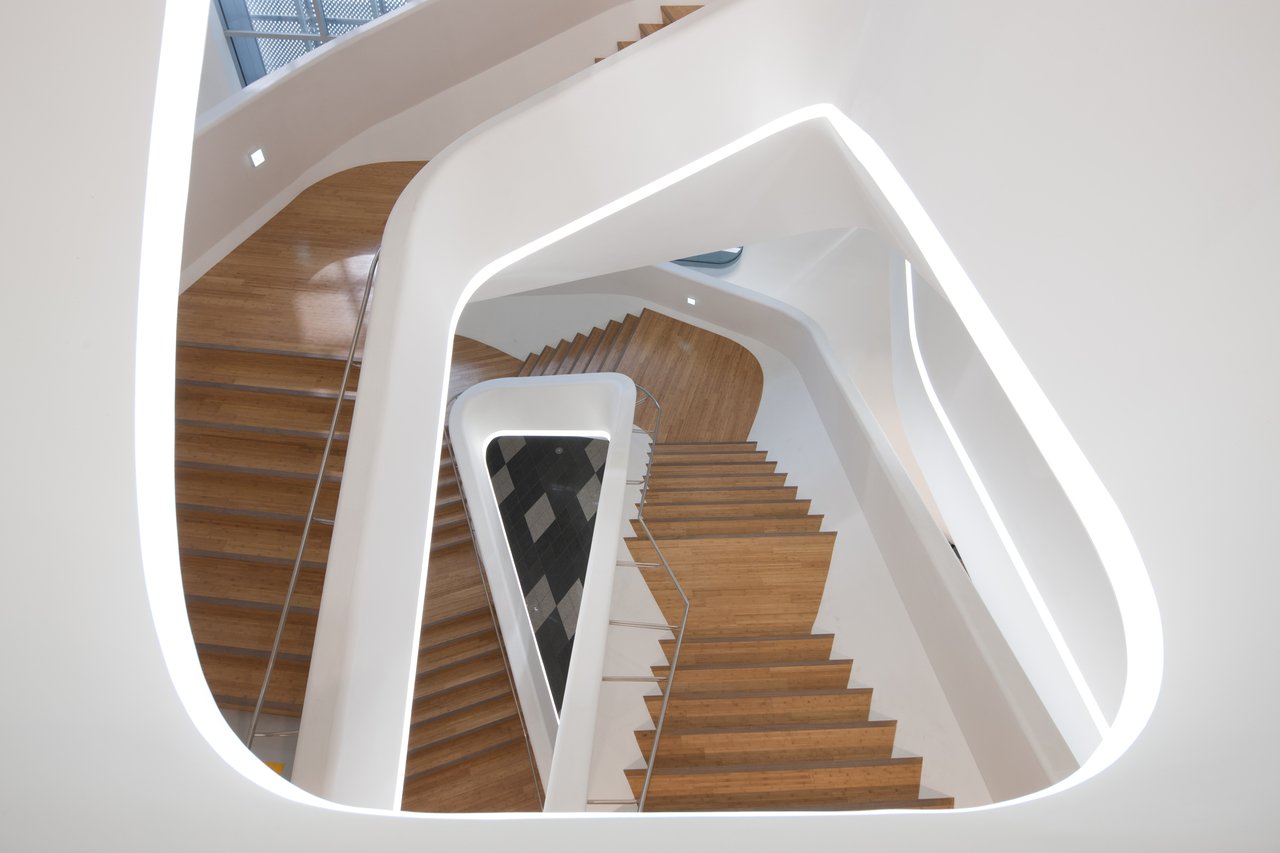
The most striking feature of DDP is that it completely lacks straight lines. Inside and out, you will struggle to find a single sharp angle or pillar. The entire structure flows like liquid, creating a sense of continuous movement.
The 45,133 Aluminum Panels
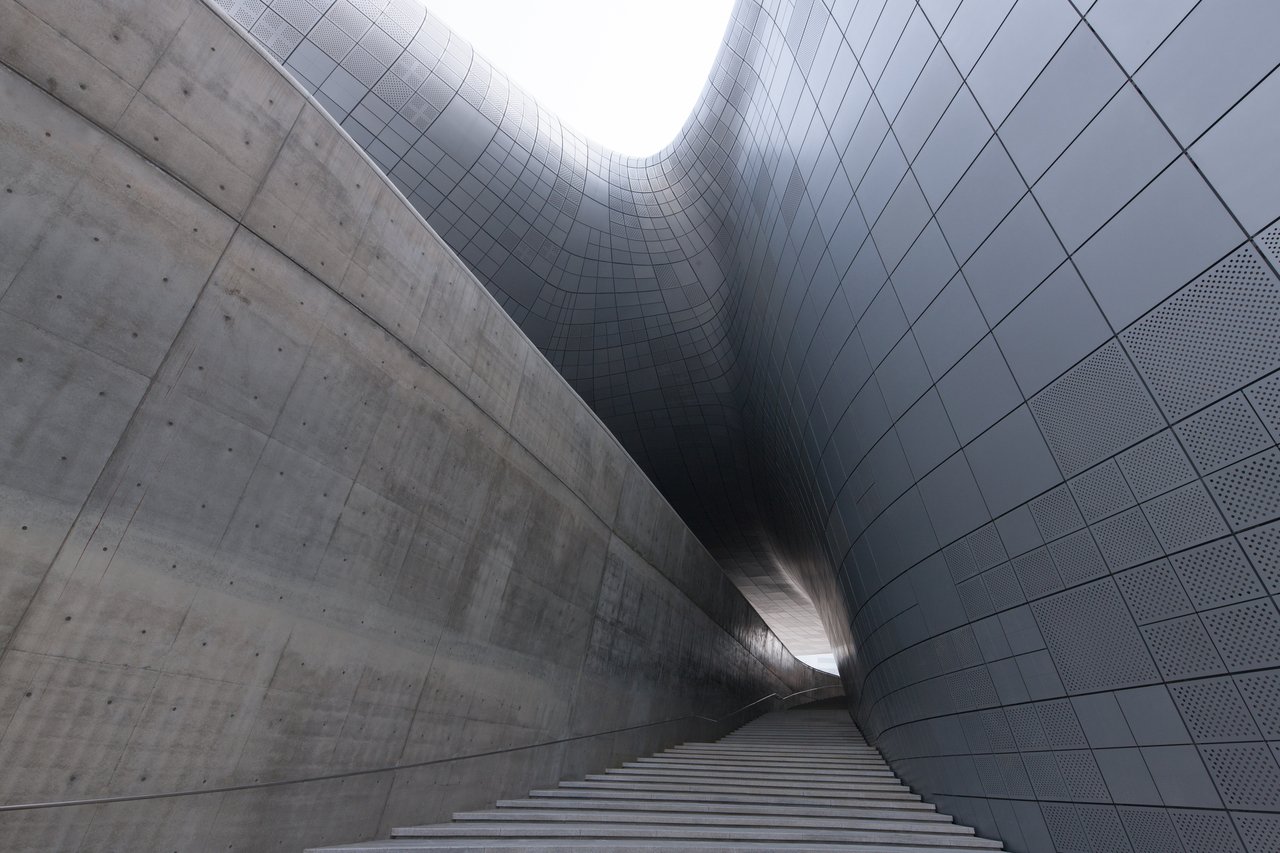
If you look closely at the exterior, you will notice the skin of the building is made up of aluminum panels. Specifically, there are 45,133 panels, and here is the mind-blowing part: no two panels are exactly the same. They were each crafted with different curvatures to fit the fluid design. Because of this texture, the building looks like a living organism that changes its expression depending on the sunlight and shadows throughout the day.
What to Do Inside: The Full Experience
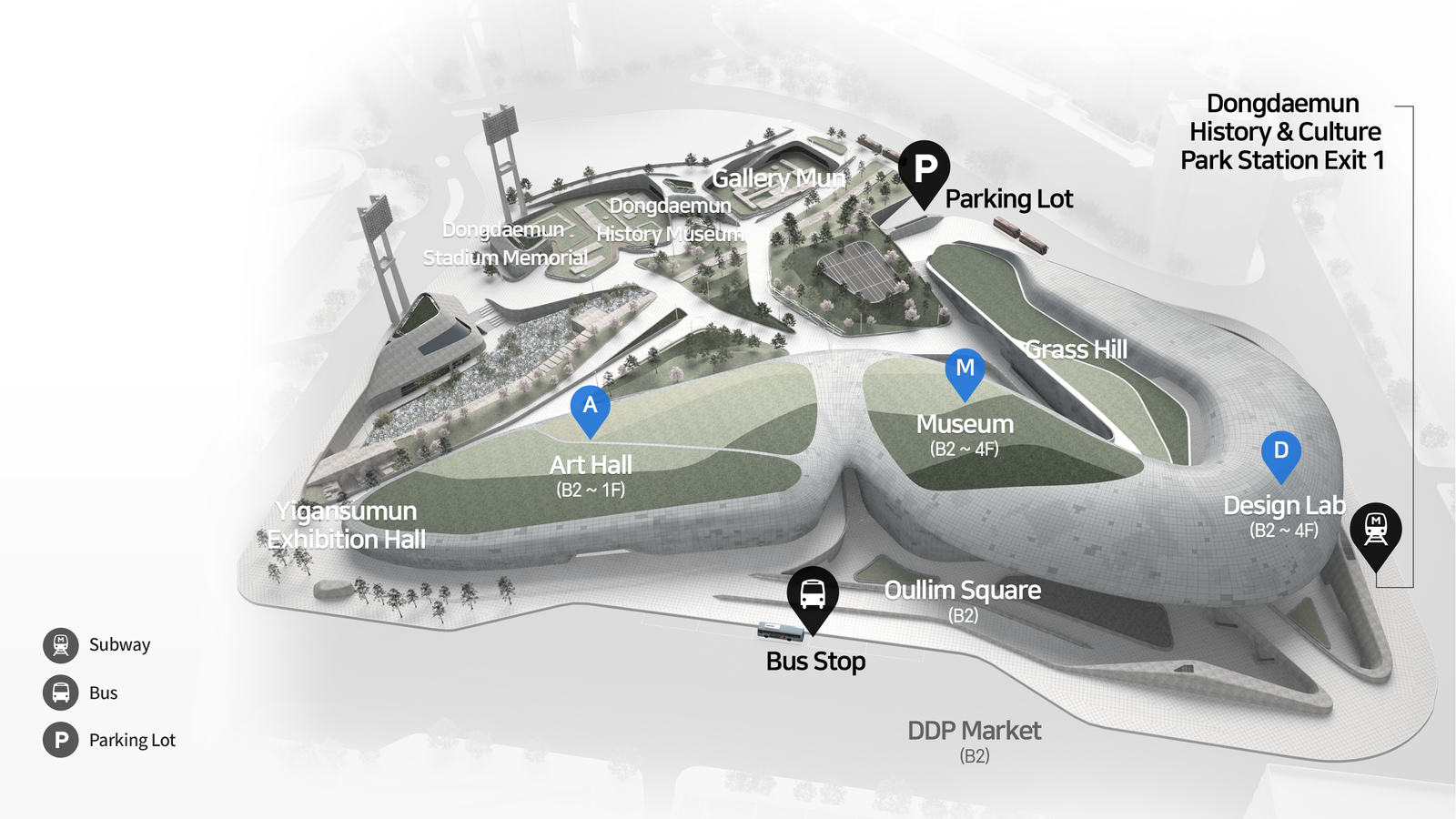
DDP is massive and can be confusing because it is divided into three main zones: A (Art Hall), M (Museum), and D (Design Lab). Here is how to navigate it like a pro. (*You can see maps of all floors by going to https://ddp.or.kr/?menuno=349)
1. Walk the Design Pathway (Museum)
Located in the Museum (M) zone, the Design Pathway (디자인둘레길) is my personal favorite feature. It is a gentle, sloping walkway that spirals from the second basement level (B2) all the way up to the 4th floor. Instead of taking an elevator, walk this path. It allows you to physically experience the “no straight lines” concept as you ascend through the building’s core.
2. Rest at D-Forest (Design Lab)
Living in Korea, I often see travelers exhausted from walking. The D-Forest (D-숲) on the 1st floor of the Design Lab is a designated indoor healing space. It is designed with a “forest” concept where anyone can sit, rest, and even charge their phones for free. It is a rare, non-commercial public space in such a busy district.
3. Shop at the DDP Design Store
Forget the generic keychains you see at street stalls. The DDP Design Store offers high-quality goods curated by the Seoul Design Foundation. If you want a souvenir that screams “modern Seoul aesthetic,” this is the place to buy it.
💡 Local Note: DDP hosts the massive “Seoul Light” media facade festival, which typically takes place annually during the autumn or winter seasons. Even if you visit outside the festival period, the building’s inherent architectural lighting turns on after sunset, making it well worth a night visit.
Best Photo Spots & Night Views
DDP is arguably the most “Instagrammable” location in Seoul. To get the best shots, you need to know where to stand.
- Oullim Square (어울림광장): This is the B2 outdoor area connecting the subway station to the DDP entrance. From here, you can look up at the massive, curving bridge-like structures. It creates a sci-fi atmosphere that looks like a spaceship hangar.
- The Night Transformation: The real magic happens after 7:00 PM. Light radiates through tiny perforations in the aluminum panels, making the solid metal look like it is floating or breathing. This is when the “spaceship” vibe is strongest.
- The Concrete Staircase: Near the Art Hall, there is a brutalist-style exposed concrete staircase that contrasts beautifully with the metallic exterior. It is a favorite spot for fashion editorials.
Where to Go Next: Nearby Hotspots
DDP does not exist in a vacuum. It is located in Dongdaemun (동대문), a district where the ancient and the futuristic collide. Once you are done exploring the spaceship, walk to these nearby spots:
1. Heunginjimun Gate (흥인지문)
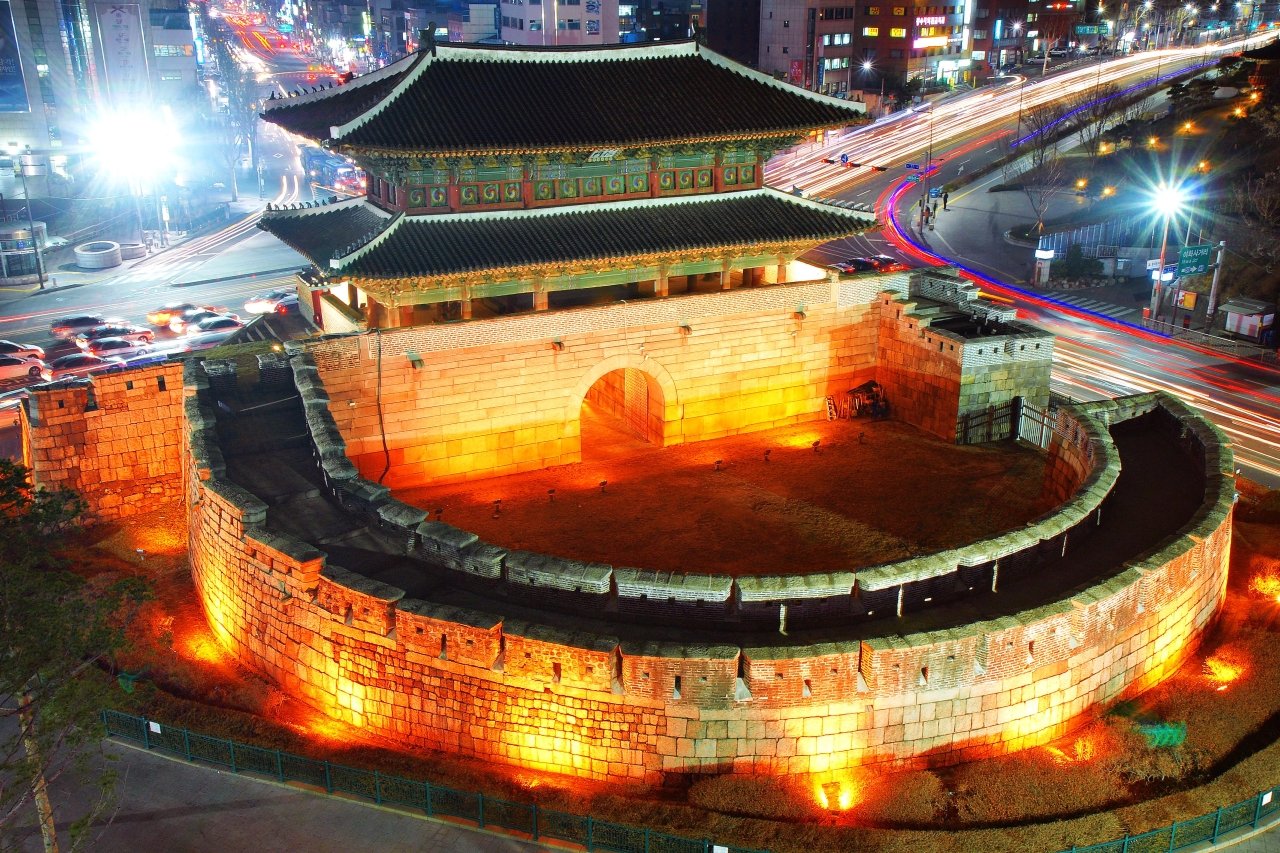
Just a 5-minute walk away stands one of the Eight Gates of Seoul. Seeing this 600-year-old traditional gate with the futuristic DDP in the background provides a stark and beautiful contrast of Seoul’s history.
2. Cheonggyecheon Stream (청계천)
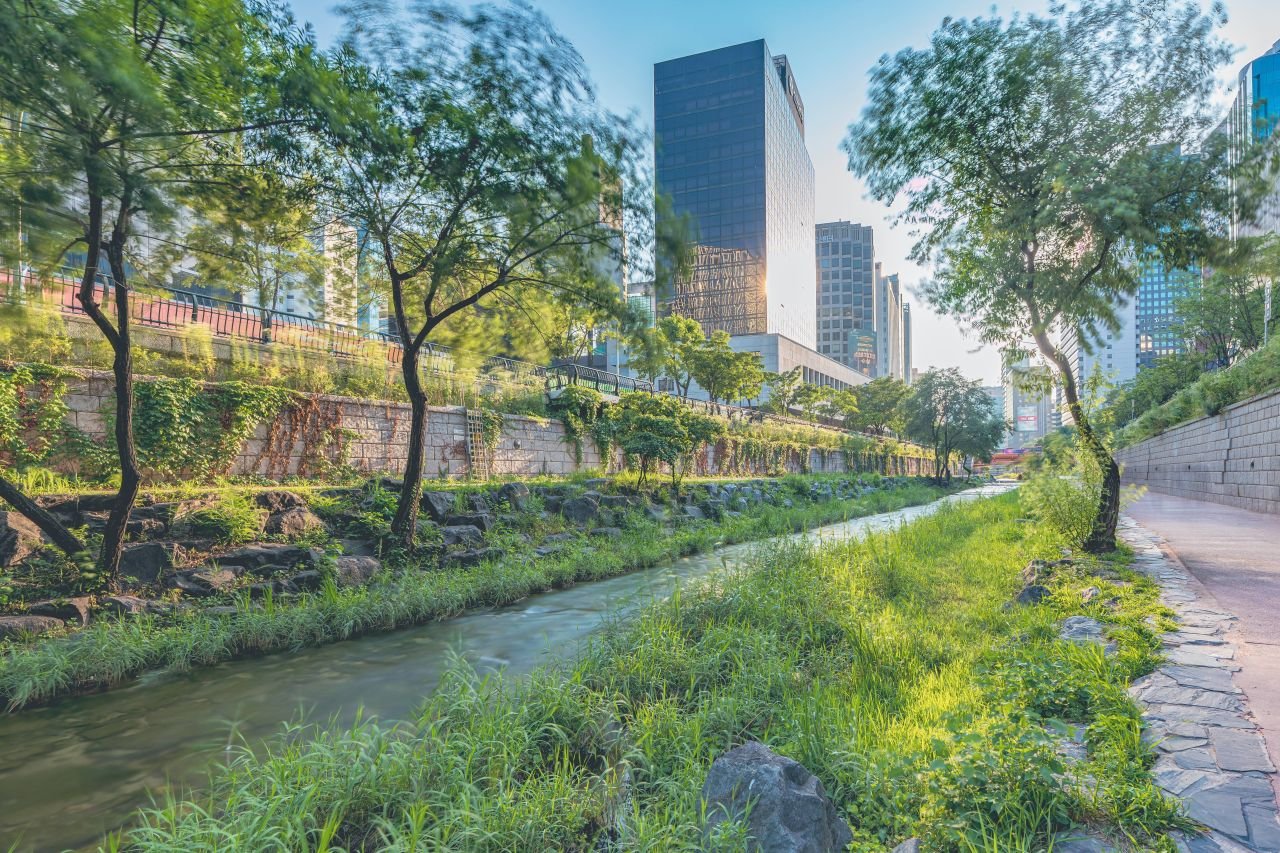
Directly across from DDP, you can step down into this sunken stream. It is a peaceful walking path that cuts through the city. It’s perfect for cooling off or taking a quiet stroll away from the traffic noise.
3. Gwangjang Market (광장시장)
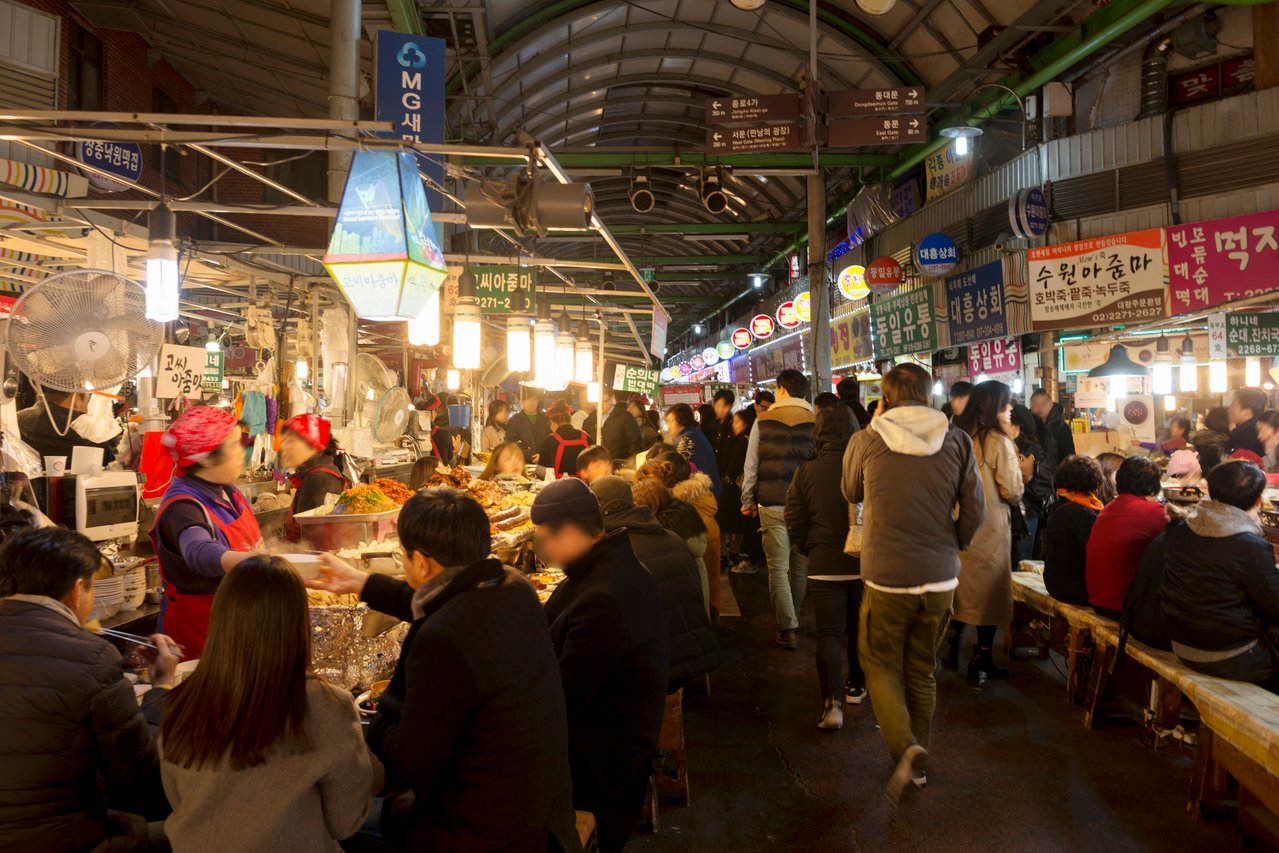
Hungry? Do not just eat at the mall. Walk about 10-15 minutes to Gwangjang Market. It is famous for its street food, particularly Bindaetteok (mung bean pancakes) and Yukhoe (beef tartare). It is chaotic, loud, and delicious.
Practical Guide & Local Tips
How to Get There
The easiest way is via the subway. Take Line 2, 4, or 5 to Dongdaemun History & Culture Park Station (동대문역사문화공원역) and use Exit 1. This exit is directly connected to Oullim Square.
Luggage Storage
Since Dongdaemun is a shopping mecca, many travelers come with bags. You can find lockers at:
- Inside the subway station near Exit 1.
- Design Lab 1st floor.
- Entrance of DDP Market.
Prices typically range from 1,000 to 2,000 KRW depending on size and duration.
Tickets & Reservations
While entering the DDP complex, Design Lab, and Oullim Square is free, specific exhibitions in the Museum zone usually require tickets. You can check the official website (ddp.or.kr) for current schedules. If online booking (Naver/Interpark) is difficult due to language barriers, visit the “Information Desk” at B2 Oullim Square for help with on-site ticketing.
📌 Pro Tip for Dining: If you want a quick bite, head to the “Design Market” on B2. For more options, the food courts in the nearby Hyundai City Outlet (현대시티아울렛) or Doota Mall (두타몰) offer excellent variety and are foreigner-friendly.
FAQ
Is DDP open on Mondays?
The public areas and Design Lab are generally open, but many exhibitions and the Museum zone are often closed on Mondays. Always check the specific exhibition schedule if you are visiting for a show.
Can I take photos inside?
Yes, photography is allowed in most public areas. However, some specific art exhibitions may restrict photography, so please check the signage at the entrance.
Seoul Travel Blueprint: Where to Go Next?
Here are my hand-picked guides to help you plan your next stop, whether you want more luxury, historical contrasts, or local street food.
- 2026 Hongdae Mastery: Shopping and Hotspots, Busking & Nightlife
- Yeonnam-dong Shopping & Cafe: Discover Seoul’s Most Aesthetic Alleys
- Why You Must Visit Itaewon: Best Food, Nightlife & Hidden Gems
- Luxury Guide to Gangnam, Seoul : Top Hotels, Dining, and Experiences
- Starfield Library Seoul: A Professional Local’s Guide to Coex Mall
- Gyeongbokgung Palace Hanbok Tour Guide: Hanbok Rental Tips
- Gwangjang vs. Namdaemun Market: Where to Find Real Korean Generosity
- Mangwon Market 2026 Guide: Best Food and Local Tips
Korean Culture portal KCulture.com

Founder of Kculture.com and MA in Political Science. He shares deep academic and local insights to provide an authentic perspective on Korean history and society.