Introduction: A Feast Fit for Royalty
Imagine a table so laden with an incredible variety of colorful, aromatic dishes that you don’t know where to begin. This is Hanjeongsik, the Korean full-course meal that embodies the generosity and culinary artistry of Korean culture. More than just a meal, Hanjeongsik is an experience, a grand banquet that originated from the elaborate table settings of Korea’s royal courts and aristocratic families. It’s not an everyday affair; Koreans typically reserve this magnificent feast for special occasions, such as celebrating family milestones, hosting honored guests, or simply indulging in the pinnacle of Korean cuisine. The flavor profile is a magnificent symphony, featuring everything from the savory depths of soy sauce and the earthy richness of soybean paste to the sweet and spicy notes of chili paste, ensuring every palate finds something to delight in.
Ingredients & Flavor Profile
At the heart of a Hanjeongsik experience is the sheer diversity of ingredients, showcasing the best from Korea’s land, sea, and mountains.
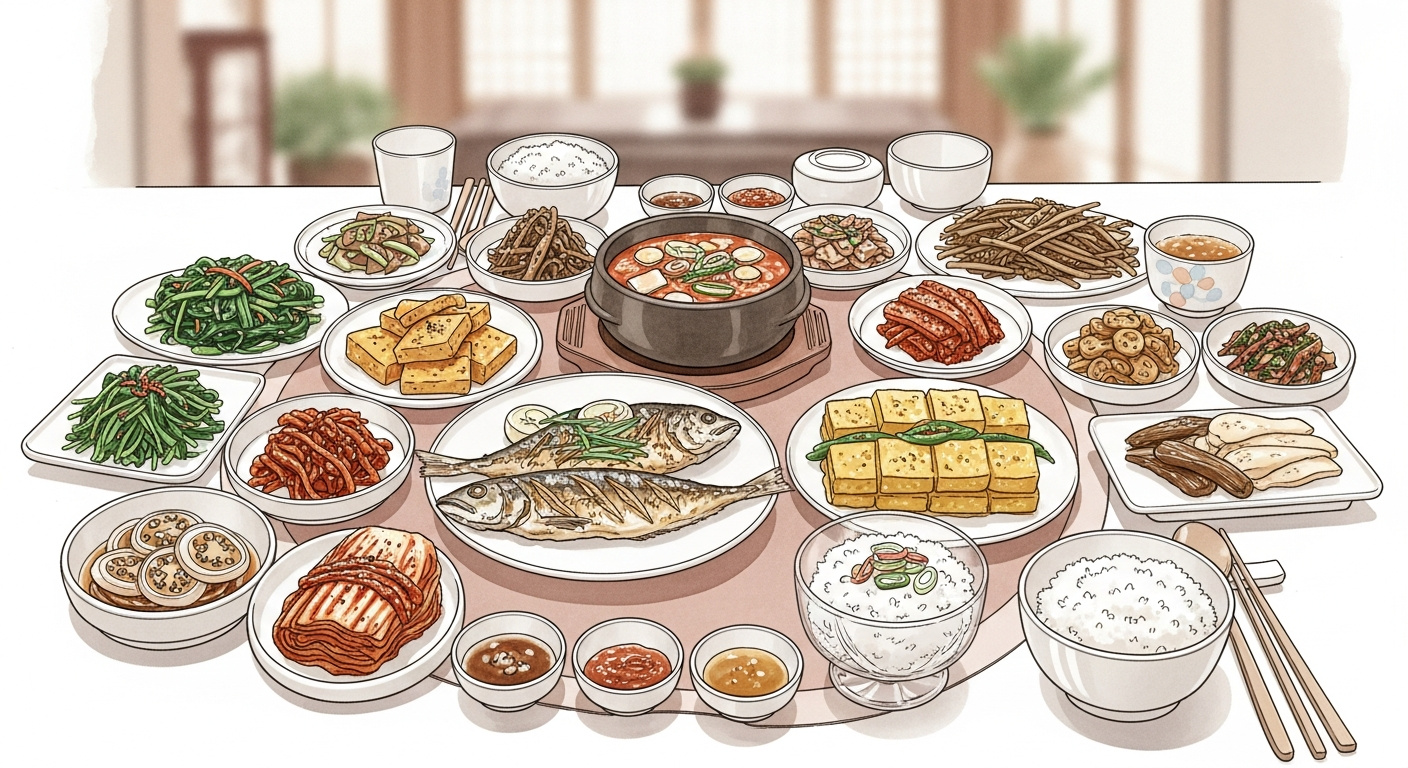
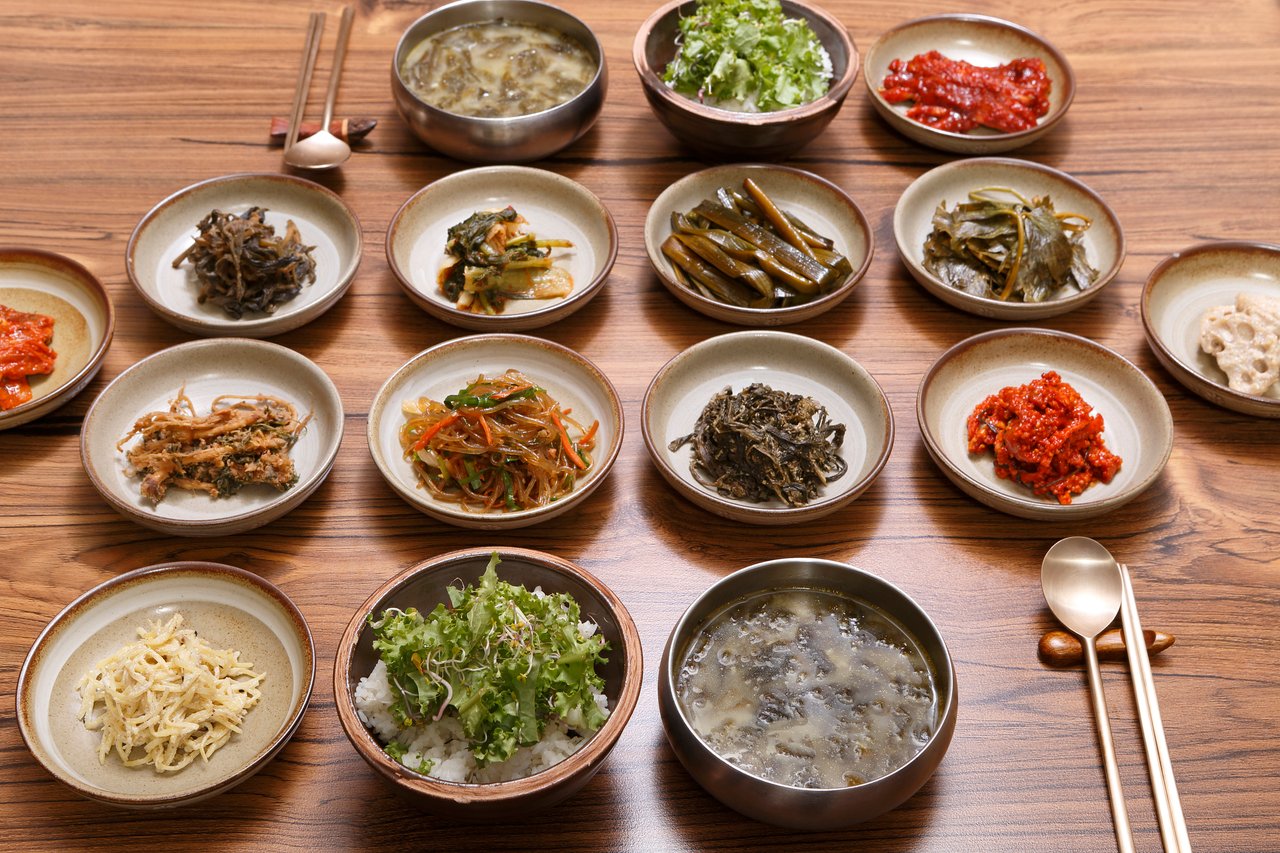
- Key Ingredients: While the exact dishes vary by region and season, a classic Hanjeongsik table typically features a stunning array of main and side dishes (Banchan). Expect to see stars like Bulgogi (sweet soy-marinated grilled beef), Saengseon-gui (perfectly grilled fish), savory Jeon (Korean-style pancakes), Japchae (stir-fried glass noodles with vegetables), and a vibrant collection of Namul (seasoned vegetable dishes). Of course, no Korean meal is complete without the essentials: a warm bowl of Bap (rice) and a comforting Guk (soup).
- The Secret of Taste: The magic of Hanjeongsik lies not in a single dominant flavor, but in the harmonious balance of many. The foundation of this culinary orchestra is built on Korea’s essential trio of fermented sauces. Savory ganjang (soy sauce) provides a deep, umami base for dishes like Bulgogi and Japchae. Earthy doenjang (soybean paste) gives stews their profound, rustic flavor. Finally, spicy and slightly sweet gochujang (chili paste) adds a vibrant kick to various stews and seasoned dishes. Together, they create a complex and satisfying taste journey across dozens of plates.
Dietary Information (Vegetarian/Allergy)
Hanjeongsik can be a paradise for vegetarians, but it requires careful communication. While the table is abundant with vegetable-based dishes (namul, vegetable jeon, tofu dishes), the overall meal is not strictly vegetarian as it almost always includes meat and fish. However, due to the sheer variety, it is possible to enjoy a fulfilling meal by focusing on the plant-based offerings.
Safety Tip: We strongly advise vegetarian and vegan travelers to inform the restaurant staff of their dietary restrictions when ordering. It’s important to ask if the vegetable dishes contain hidden animal products, such as fish sauce (often used in kimchi and namul) or meat-based broths.
How It’s Served: A Culinary Spectacle
The serving of Hanjeongsik is a spectacle in itself, a testament to the Korean philosophy of abundance and shared enjoyment. Traditionally, dozens of dishes are presented all at once, covering the entire table in a breathtaking mosaic of colors, textures, and aromas. At the center are the core components: individual bowls of rice and a shared soup or stew (jjigae). Surrounding them is a constellation of banchan, inviting diners to sample and combine flavors as they wish.
While the single grand table setting is classic, many modern high-end restaurants have adopted a Western-style course-by-course presentation. This often begins with light appetizers, moves through fish and meat courses, and concludes with the main rice and stew course, followed by dessert. Whether served all at once or in courses, the experience is designed to be a leisurely and communal celebration of food.
This is a standard method based on general recipes. Every restaurant has its own secret twist and unique style!
Nutritional & Health Benefits
Hanjeongsik is often praised as one of the world’s healthiest ways to dine, offering a remarkably balanced and nutrient-dense meal.
- Complete Nutrition: With staples like grilled fish and Bulgogi, you receive high-quality protein essential for muscle and body function. The wide array of namul (vegetable sides) provides a wealth of vitamins, minerals, and dietary fiber, which aids digestion.
- Probiotic Power: The meal is rich in fermented foods, including the foundational seasonings like doenjang and gochujang, as well as the ever-present kimchi. These foods are packed with probiotics that promote a healthy gut microbiome.
- Balanced Diet in One Sitting: A single Hanjeongsik meal naturally incorporates all the major food groups—carbohydrates (rice), proteins (meat/fish/tofu), and healthy fats, alongside a rainbow of vegetables. It is the epitome of the “eat the rainbow” philosophy.

The KCulture Editorial Team is dedicated to providing deep insights and accurate information about the vibrant world of Korean culture.