What is Gunghap? Understanding Korean Marital Compatibility
If you have ever dated a Korean or watched a K-Drama involving marriage, you have likely heard the word Gunghap (궁합). In short, Gunghap is a traditional Korean method of analyzing the marital compatibility between two people based on their birth data. However, it is far more than a simple horoscope; it is a complex evaluation of cosmic energy, utilizing the philosophy of Yin and Yang and the Five Elements to determine if a couple will prosper together or face hardship.
Living in Korea, I often see young couples visiting philosophy cafes not just to check if they are “meant to be,” but to understand how to harmonize their different personalities. In this guide, we will explore the deep history, principles, and modern significance of this fascinating cultural tradition.
- The Meaning of Gunghap: Palace of Harmony
- How It Works: Saju and the Five Elements
- When and Why: The Historical Context
- Gunghap in Modern Korea: Fun vs. Destiny
- The Philosophy of Balance
The Meaning of Gunghap: Palace of Harmony
The term Gunghap (궁합) literally translates to “The Union of Palaces.” Here, “gung” refers to the house or room representing a person’s fate, and “hap” means union or harmony. Therefore, reading Gunghap is essentially checking whether the “houses” of two individuals can stand firmly together without collapsing.
This practice is deeply rooted in Saju (사주), or the “Four Pillars of Destiny,” which analyzes the year, month, day, and time of a person’s birth. While Western astrology focuses on star signs, Korean Saju focuses on the flow of time and energy. To understand the foundational concepts of this system, you might want to read our detailed guide on Decoding Saju: A Beginner’s Guide to Korean Fortune Telling.
How It Works: Saju and the Five Elements
The core principle of Gunghap relies on the interaction between the Ohaeng (오행), or the Five Elements: Wood, Fire, Earth, Metal, and Water. Everyone is born with a specific dominant energy. The goal of Gunghap is not just to find a “perfect” match, but to identify relationships of Sangsaeng (상생), where elements support each other, versus Sanggeuk (상극), where elements clash.
The Five Elements Relationship Table
| Element | Generates (Good Match) | Overcomes (Clash) | Personality Tendency |
|---|---|---|---|
| Wood (Mok) | Fire | Earth | Growth, creativity, flexibility |
| Fire (Hwa) | Earth | Metal | Passion, dynamism, impatience |
| Earth (To) | Metal | Water | Stability, reliability, stubbornness |
| Metal (Geum) | Water | Wood | Determination, principle, rigidity |
| Water (Su) | Wood | Fire | Wisdom, adaptability, mystery |
Outer vs. Inner Gunghap
A professional reading typically divides compatibility into two layers:
- Outer Gunghap (Geot-gung-hap): This compares the birth years (Zodiac animals). For example, it checks if a Dragon and a Rooster get along. This generally represents the couple’s social relationship and how they appear to the outside world.
- Inner Gunghap (Sok-gung-hap): This analyzes the birth day and time. This is considered much more critical as it reveals deep personality compatibility, emotional bonding, and even physical or sexual harmony.
💡 Insider Note: In modern slang, young Koreans sometimes use the term “Sok-gung-hap” specifically to refer to sexual chemistry, but traditionally, it encompasses the entire internal spiritual connection between spouses.
When and Why: The Historical Context
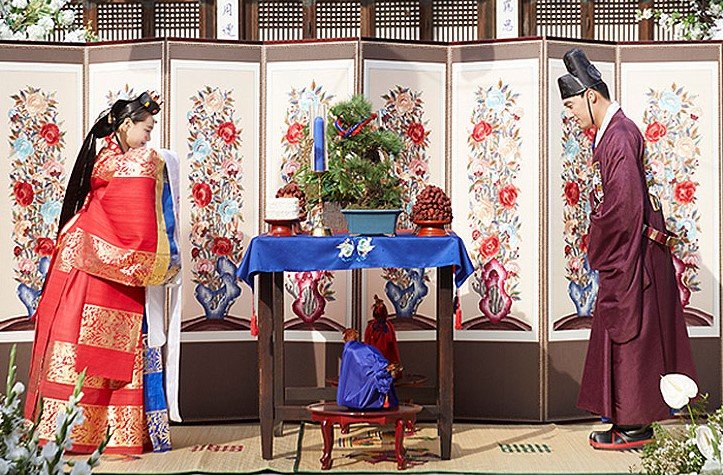
Historically, Gunghap was not optional; it was a prerequisite for marriage, particularly during the Joseon Dynasty. Marriage was viewed as a union between families rather than just individuals.
The Traditional Process
When marriage talks, known as Uihon (의혼), began, the groom’s family would send a document called the Saju-danja (사주단자) to the bride’s family. This paper contained the groom’s exact birth details. The bride’s family would then take this to a fortune teller or scholar to analyze the Gunghap.
If the reading suggested that the couple’s energies would harm each other (for example, water extinguishing fire), the marriage might be called off to prevent future misfortune. Conversely, if the Gunghap was excellent, they would proceed to Taekil (택일), the process of selecting an auspicious wedding date.
Gunghap in Modern Korea: Fun vs. Destiny
Today, the perception of Gunghap has evolved. While some conservative families still prioritize it, most modern Koreans view it as a form of “cultural counseling” or entertainment.
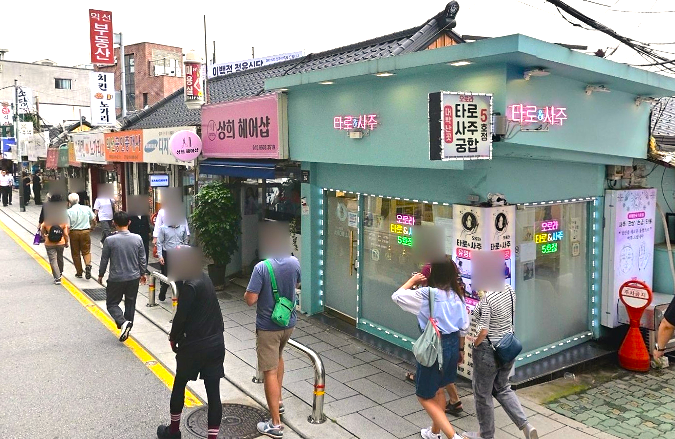
- Dating Course: It is very common for couples to visit a “Saju Cafe” in areas like Hongdae (홍대) or Gangnam (강남) on a date. It’s a fun way to learn about each other’s personalities.
- Wedding Preparation: Even if the couple isn’t superstitious, parents often consult a fortune teller to pick a “good day” for the wedding, just to be safe.
- Experience Digital Wisdom: Our AI uses the same traditional logic to provide guidance on how to harmonize your energies for a more balanced relationship.
✨ Consult the AI Master for Your Union ($3) - New Year Tradition: Just as couples look at compatibility, individuals often check their annual fortune, known as Tojeongbigyeol (토정비결), at the start of the year. You can learn more about this seasonal custom in our article on 2026 Tojeongbigyeol: A Mindfulness Guide.
The Philosophy of Balance
From a cultural perspective, Gunghap is valuable not because it predicts the future with 100% accuracy, but because it emphasizes the philosophy of harmony and balance. It teaches that no individual is perfect; we all have excesses and deficiencies in our energy.
A “bad” Gunghap result doesn’t always mean “break up.” Instead, a wise fortune teller will interpret it as a warning: “You have too much Fire and he has too much Metal, so you must be careful with your temper to avoid melting him.” It serves as a guide for understanding differences and navigating conflict.
Are you curious about your own energetic balance? You don’t always need to visit a philosopher in the mountains. You can experience a modern interpretation of these traditional insights through digital tools. Check out our feature on AI Tojeongbigyeol and Saju Viewing to see how technology is preserving this ancient wisdom.
Discover the wisdom behind Korean traditions.
Korean Culture portal KCulture.com

Founder of Kculture.com and MA in Political Science. He shares deep academic and local insights to provide an authentic perspective on Korean history and society.