Introduction & Synopsis
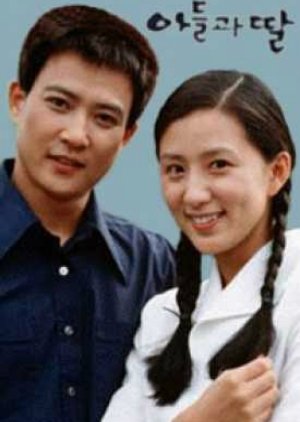
Before the polished gloss of modern K-Dramas, there were raw, powerful sagas that held a mirror to Korean society. Sons and Daughters (아들과 딸) is one such masterpiece. This iconic 1992 family drama from MBC tells the story of fraternal twins, Gwi-nam (meaning “Precious Son”) and Hoo-nam (a name cruelly meaning “Later, a Son”), born into a household steeped in the rigid tradition of son preference. From the moment of their birth, their paths diverge dramatically. Gwi-nam is showered with affection, opportunity, and the family’s full support. Hoo-nam, by contrast, is treated as a second-class citizen, her ambitions stifled and her existence tolerated rather than celebrated. The series chronicles their fraught journey through youth and adulthood, exploring the deep scars of discrimination and the arduous path toward reconciliation and self-worth.
Deep Cultural/Historical Insight: The Shadow of Son Preference
To understand the seismic impact of Sons and Daughters, one must first understand the social context of early 90s Korea. The nation was experiencing rapid economic modernization, yet traditional, patriarchal values rooted in Confucianism remained deeply entrenched. Central to this was the concept of Nam-a-seon-ho-sa-sang (남아선호사상)—the overwhelming preference for male children. Sons were seen as essential to continue the family line, perform ancestral rites, and provide for parents in old age. Daughters, on the other hand, were often considered temporary members of the family who would eventually marry and belong to their husband’s household.
This ideology wasn’t just a private family matter; it was a societal pressure that shaped everything from education and inheritance to the simple distribution of food at the dinner table. Sons and Daughters did not invent this conflict; it dragged it from the quiet suffering of countless homes onto the national stage, forcing an entire generation to confront the emotional and psychological damage of this systemic discrimination.
Narrative Analysis: A Story of Resilience, Not Just Victimhood
The brilliance of the drama’s narrative lies in its refusal to paint its characters in simple strokes of good and evil. The mother, who so blatantly favors her son, is not a monster but a product of her time, desperately clinging to the only value system she knows. The favored son, Gwi-nam, is not a villain but is himself a victim of immense pressure, often weak-willed and struggling to live up to the pedestal his family built for him.
The emotional core of the story is Hoo-nam’s journey. Her story is a profound exploration of *han* (한)—a uniquely Korean concept representing a deep-seated feeling of sorrow, injustice, and resentment, but also a quiet, resilient strength. The narrative masterfully follows her struggle not for revenge, but for basic human dignity and the right to define her own life. It’s a compelling, slow-burn narrative that invests the viewer deeply in her fight for self-actualization against overwhelming odds.
The Pulse of the Time: A National Phenomenon
When Sons and Daughters first aired, its success was nothing short of a cultural explosion. It achieved a staggering peak viewership rating of 61.1%, meaning that on some nights, well over half the country was tuned in. This wasn’t just entertainment; it was a national conversation starter. The character of Hoo-nam became a symbol for a generation of Korean women who saw their own silent struggles reflected on screen. The drama also served as a major launching pad for its cast, particularly for a then-rookie actor named Han Suk-kyu, whose thoughtful portrayal of Hoo-nam’s supportive admirer catapulted him to stardom.
Cast Spotlight: Legendary Performances
- Kim Hee-ae as Hoo-nam: This role remains one of the most defining of Kim Hee-ae’s illustrious career. She delivered a masterclass in subtlety, portraying Hoo-nam’s deep pain and unbreakable spirit through quiet glances and controlled emotion rather than loud hysterics. Her performance was the soul of the drama, earning her widespread acclaim and cementing her status as one of Korea’s finest actresses.
- Choi Soo-jong as Gwi-nam: As the “Precious Son,” Choi Soo-jong skillfully embodied the complexities of a man both privileged and burdened. He portrayed Gwi-nam’s inherent weaknesses and moments of selfishness with a believability that made the family dynamic all the more tragic and real.
- Chae Shi-ra as Mi-hyun: Playing Gwi-nam’s romantic interest, Chae Shi-ra represented a more modern, assertive femininity. Her character often served as an external lens through which the audience could view the starkly traditional and often suffocating nature of Gwi-nam’s family.
Global Viewing Guide
Finding this 90s classic with subtitles can be a treasure hunt, but it is often available through official broadcaster channels. Fans can watch this on:
- MBC Drama Classic YouTube Channel: MBC frequently uploads episodes of its legendary dramas to its official archive channels. Subtitle availability may vary, but this is often the most direct source.
- Kocowa: This streaming service, a joint venture by the top Korean broadcasters (including MBC), is a primary destination for classic and contemporary dramas, often with high-quality subtitles.
Final Verdict
Sons and Daughters is more than a vintage drama; it’s a vital cultural document. It’s a poignant, heartbreaking, and ultimately uplifting story about the fight for identity in the face of suffocating tradition. For any K-drama fan wanting to understand the social history that shaped modern Korea and witness foundational performances from legendary actors, this powerful family saga is essential viewing.

The KCulture Editorial Team is dedicated to providing deep insights and accurate information about the vibrant world of Korean culture.