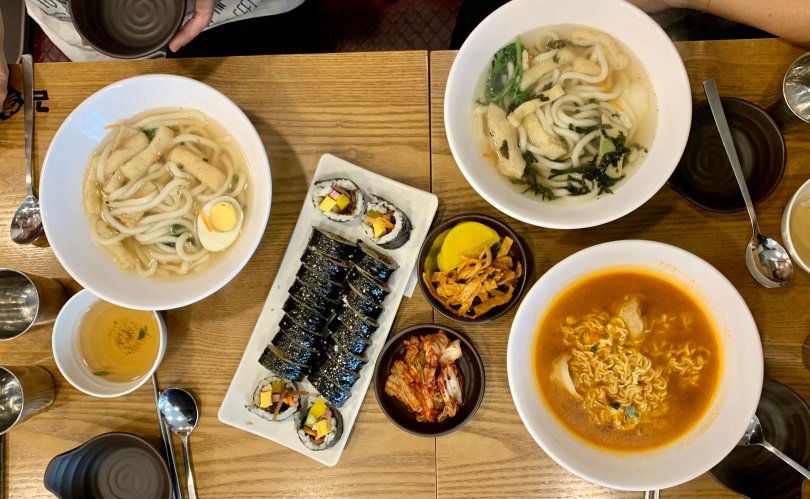
Hello there, fellow food adventurers! You’re reading my article, so I can already tell you have a sweet spot (or maybe a very spicy spot!) for Korean food. Isn’t K-Food just the most exciting thing these days?
As a local expert living right here in Korea, holding certifications in Korean Cuisine and Baking, I get to dive deep into the daily delights this country offers. And today, we are talking about my ultimate comfort food, a category I can never get enough of: Bunsik!
It’s no secret that Bunsik is an absolute must-try for any visitor. Remember the viral sensation a few ago? When the K-Pop-inspired animation ‘K-Pop Demon Hunters‘ captivated the global audience, the sight of the main character, Rumi, stuffing a Gimbap roll in one bite sparked the “Gimbap Challenge” across social media! That tells you everything—Bunsik is more than just food; it’s a piece of Korean culture.
In fact, if I had to list my top 10 favorite foods, Gimbap and Tteokbokki would absolutely be on it. So, let’s unlock the delicious secrets of Bunsik, from its surprising history to my very own kitchen-tested recipes! Ready to dive in? Let’s go!

🧐 What Exactly is Bunsik (분식)? A Historical Bite
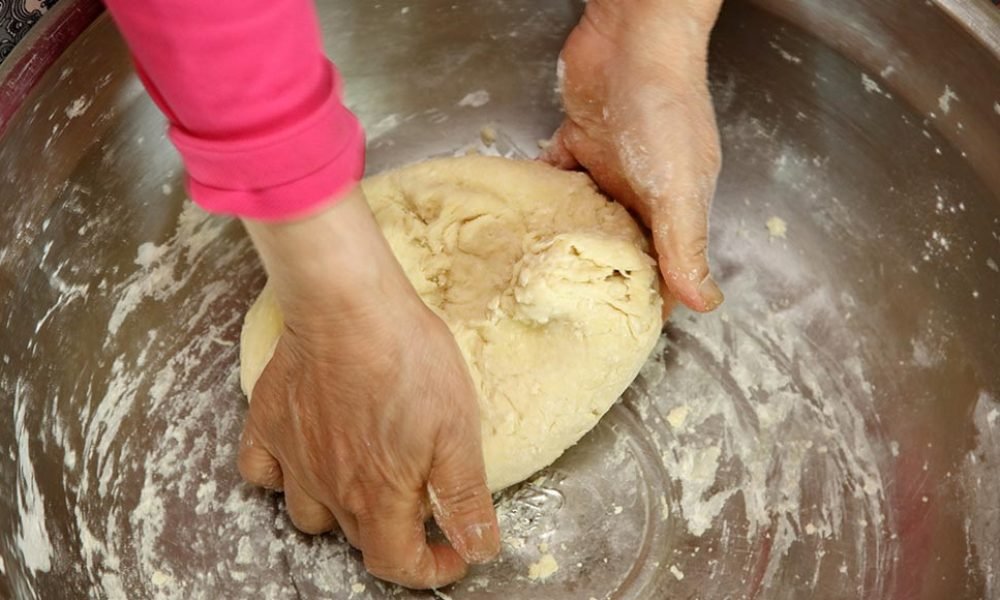
The word Bunsik (분식, 粉食) literally means “flour-based food” (粉 means powder/flour, and 食means food). But its meaning has delightfully expanded over the years!
Originally, it specifically referred to dishes made from wheat flour—steamed, baked, or fried. This emphasis on flour began in the 1960s and 70s during the “Mixed Grain and Flour Consumption Encouragement Campaign.” This national effort aimed to reduce rice consumption and promote the use of wheat flour. This is when the term Bunsik was coined and really took off!
Today, the definition is much broader. Bunsik is a catch-all term for simple, convenient, and often budget-friendly dishes made with easily accessible ingredients. This now includes everything from the classic flour-based dishes to simple street foods like Gimbap (which uses rice!) and Sundae (which uses noodles and fillings!). Think of Bunsik as Korea’s incredibly versatile and beloved “fast casual” category.
👑 The Royal Court of Bunsik: Must-Try Dishes
When you step into a Bunsik-jip (Bunsik restaurant) or a street food stall, these are the main characters you simply must meet!

1. Gimbap (김밥): The Perfect Korean Seaweed Roll
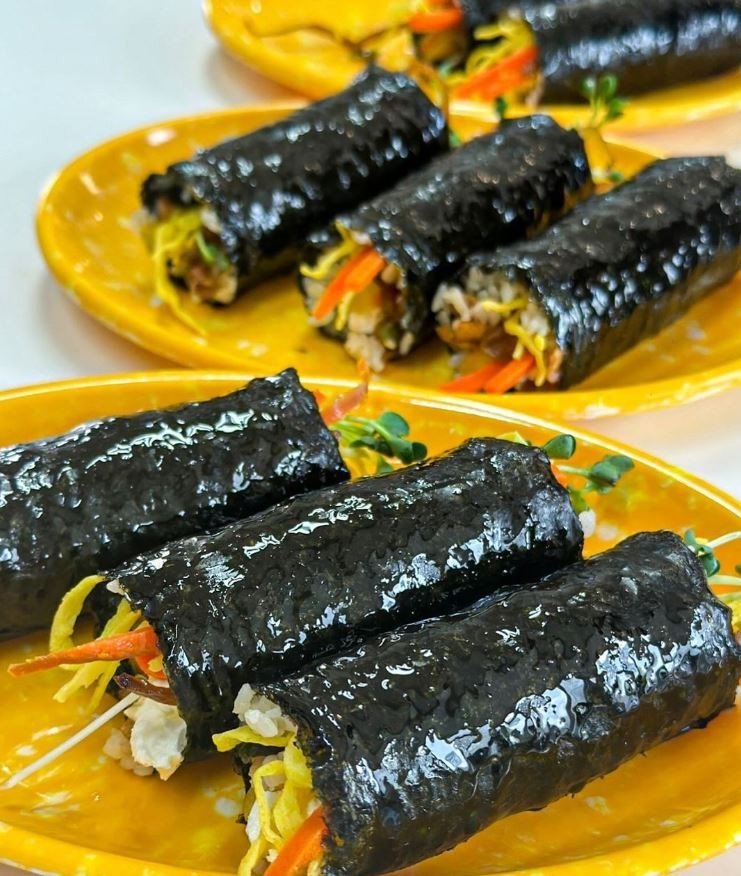
Gimbap is often called the Korean equivalent of a Japanese Maki roll, but it has its own unique charm and flavor profile! It’s essentially cooked rice seasoned with sesame oil and salt, wrapped in a sheet of dried seaweed (Gim), and filled with an array of colorful ingredients, then sliced into bite-sized pieces.
As an expert who loves fussing over ingredients, I must tell you: Gimbap is deceptively simple but requires serious dedication! Preparing the individual ingredients—like sautéing carrots, frying egg ribbons, and blanching spinach—is key to achieving that perfect, balanced roll.
The beauty of Gimbap lies in its endless customization. Depending on the main ingredient, the name changes: Bulgogi Gimbap (marinated beef), Jeyuk Gimbap (spicy pork), Chamchi Gimbap (tuna salad), and even Salad Gimbap (fresh veggies). Each bite is a little flavor explosion, offering a perfect harmony of savory, sweet, and nutty notes.
✨ Local Expert Tip: Look for Mayak Gimbap (“drug Gimbap”) in traditional markets! These tiny, addictively delicious rolls are served with a sweet and tangy mustard dipping sauce. They’re dangerously good!

2. Tteokbokki (떡볶이): The Red-Hot Queen of Street Food

Oh, Tteokbokki! If Bunsik had a queen, she would be drenched in a spicy, fiery red sauce and have the chewiest texture imaginable! This dish features Garae-tteok (chewy cylinder-shaped rice cakes) braised in a thick, savory, and sweet chili sauce, often accompanied by eomuk (fish cakes) and scallions.
Though its name implies “stir-fry” (bokki), it’s more of a delicious stew or braise. We stir it constantly to prevent the rice cakes from sticking to the bottom and burning—no one wants sad, scorched Tteokbokki!
While the vibrant red, Gochujang (Korean chili paste)-based sauce is the most common, you can also find variations like:
- Gungjung Tteokbokki: A soy-sauce-based version that was historically served in the royal court—sophisticated and savory.
- Jajang Tteokbokki: Made with black bean sauce, giving it an earthy sweetness.
- Cream Tteokbokki: A modern fusion that’s rich and comforting.
Tteokbokki isn’t just a snack; it’s a cultural icon. It’s comforting, warming, and the perfect accompaniment to Gimbap, Sundae, and Twigim—a holy trinity known as Tteok-Twi-Sun (떡·튀·순)!
3. Sundae (순대): The Unexpected Delicacy

Don’t confuse this with the ice cream dessert! Korean Sundae is a savory sausage, a unique and much-loved Bunsik item. It is made by stuffing a casing (traditionally pig or cow intestine) with a mixture of dangmyeon (glass noodles), pig’s blood, barley, and vegetables, and then steaming or boiling it.
While the modern, ubiquitous version you find everywhere is the Dangmyeon Sundae (glass noodle sausage), Korea has a rich heritage of regional Sundae! As a local expert, I adore these variations:
- Pyeong-an-do’s Baek Sundae: Made mostly with meat and little to no vegetables.
- Byeongcheon Sundae (Chungcheong-do): Uses mostly pig’s blood and vegetables, with less meat.
- Abai Sundae (Hamgyeong-do/Gangwon-do): Often uses squid or pollock as the casing and is stuffed with glutinous rice and seafood.
The difference extends to the dipping sauce! In Seoul and Gyeonggi, we often dip it in salt mixed with black pepper. But head south, and you might get Ssamjang (spicy bean paste) or even Gochoojang (chili paste)! It’s a fun regional food game!

4. Twigim (튀김): Crispy, Crunchy Heaven

Twigim simply means “deep-fried food,” and it’s the essential partner to Tteokbokki’s spicy sauce. The magic here is the dipping! Dipping crispy fried tteokbokki in leftover tteokbokki sauce is a great way to enjoy it.
Common Twigim varieties include:
- Yachae Twigim: Mixed vegetable fritters.
- Goguma Twigim: Sweet potato fritters.
- Ojing-eo Twigim: Korean-style fried squid—chewy inside, crunchy outside.
- Gim-mari: Fried rolls of glass noodles wrapped in seaweed.
5. Other Bunsik Stars
- Kkochi (꼬치): Skewers! Think Dak-kkochi (grilled chicken skewers with sweet-spicy sauce) and Eomuk-kkochi (fish cake skewers) swimming in a hot broth—perfect for a cold day!
- Myeon-ryu (면류): Noodle Dishes. While Ramen is the biggest star (which deserves its own dedicated post!), you’ll also find simple and refreshing dishes like Janchi Guksu (warm noodle soup) and Bibim Guksu (spicy cold noodles).


👩🍳 My Kitchen Secrets: Making Bunsik at Home!
One of the best things about Bunsik is that you can totally make it at home, wherever you are! Based on my cooking certifications and endless practice, here are two of my favorite recipes. Don’t be shy—give them a try!

🥕 My Homemade Veggie Gimbap Recipe (우리집 야채김밥)
| Ingredient | Preparation |
| Gim (Seaweed sheets) | Use Gimbap-specific sheets |
| Rice | Warm rice, seasoned with a pinch of salt and a drizzle of sesame oil |
| Egg | Whisked with a pinch of salt, fry into a thin Jidan (omelet), then slice into long strips |
| Carrot | Thinly julienned, stir-fried lightly with salt |
| Cucumber | Julienne, removing the watery seed center |
| Ham | Sliced long, lightly pan-fried or blanched |
| Pickled Radish (Danmuji) | Drain excess water |
| Perilla Leaves (Kkaennip) & Lettuce | Thoroughly washed and dried (This is key to prevent soggy rolls!) |
The Rolling Process
- Lay a sheet of Gim (rough side up!) on a bamboo mat (Gimbal) or cutting board.
- Spread a thin, even layer of seasoned rice, leaving about 2-3 cm bare at the top edge (this helps seal the roll!).
- The Secret to Balance: Layer your ingredients neatly in the center, starting with the leafy greens (lettuce, then perilla leaves) to act as a barrier, followed by the drier items (carrot, egg, ham, danmuji). Remember: Don’t overfill!
- Lift the edge of the mat and roll it tightly over the filling, pressing down firmly to secure the ingredients. Roll until the end, letting the bare edge seal the roll.
- Brush the outside with a little sesame oil for shine and flavor! Slice into bite-sized pieces and enjoy!

🔥 My Spicy Tteokbokki Recipe (밀떡파 Tteokbokki) – 1 Serving
I’m a proud Mil-tteok-pa (밀떡파, “wheat rice cake faction”)—I think they absorb the sauce better and stay chewier longer! I also never make just one serving, but I made this exception just for you! 🥰
| Ingredient | Quantity (T: Tablespoon) |
| Mil-tteok (Wheat Rice Cake) | 200g |
| Eomuk (Fish Cake) | 2 sheets |
| Green Onion (Dae-pa) | 1/2 stalk, sliced diagonally |
| Water | 350ml |

Sauce Mix (Ratio: 4 : 2 : 2 : 1 : 1)
- Gochugaru (Korean Chili Flakes): 2 T
- Gochujang (Korean Chili Paste): 1 T
- Soy Sauce (Ganjang): 1 T
- Oyster Sauce (Gool Sauce): 1/2 T
- Sugar: 1/2 T
The Cooking Method
- Prep: Rinse the Mil-tteok in cold water and slice the fish cakes and green onion.
- Boil: In a pot, bring 350ml of water to a boil. Add the Tteok and Eomuk, and boil over medium heat until the Tteok softens (about 2-3 minutes).
- Season: Lower the heat to medium-low. Add all the prepared sauce ingredients and stir well to dissolve.
- Braise: Continue to stir and cook. This is critical: The longer you simmer, the chewier the tteok gets and the better the sauce permeates!
- Finish: When the sauce starts to thicken and become glossy, add the green onion. Simmer for 1-2 more minutes until it reaches your desired consistency!
✨ The Bunsik-jip Secret: For that authentic street stall flavor, crank the heat up to high for the last 30 seconds to finish it off with a rich, glossy coat!

💖 Why You’ll Fall in Love with Bunsik
Bunsik is more than just cheap, fast food. It’s the taste of Korean nostalgia, the warmth of a street vendor on a chilly day, and a symbol of Korea’s resilient, resourceful culinary spirit.
Whether you’re visiting Korea and grabbing a plate of Tteokbokki with friends, or you’re following my recipes at home, you’re participating in a beloved culinary tradition. Give these dishes a try, and I promise, they will become your new favorites!

A certified Korean chef and baker. Min shares authentic tastes of Korea, from hidden local gems to traditional recipes and everyday lifestyle.