I often observe how the legacy of the 1636 siege at the Namhansanseong mountain fortress continues to resonate as a powerful symbol of national resilience in modern Korea. This era, known as the Byeongja Horan, serves as a hauntingly beautiful backdrop for some of the most profound works in Korean cinema and television. In this deep dive, I will guide you through the heart of the Byeongja Horan historical dramas and movies that bring this era to life. We will explore the political despair in the film The Fortress (2017), the adrenaline-pumping rescue mission in War of the Arrows (2011), and the epic romance and suffering of captives in the hit drama My Dearest (2023). By the end of this article, you will see why these stories are essential viewing for anyone seeking to understand the real Korea.
- The Dramatic Turning Point of Joseon History
- The Fortress: An Ideological War in the Deep Snow
- War of the Arrows: The Lethal Legacy of Korean Archery
- My Dearest: The Human Cost and the Tragedy of Captives
- The Fall of Hope: The Tragic Fate of Crown Prince Sohyeon
- Masterpiece Comparison: Which One Should You Watch?
- Legacy of Remembrance: Visiting Namhansanseong and Samjeondo
The Dramatic Turning Point of Joseon History
The era surrounding the Byeongja Horan (the Manchu Invasion of 1636) is arguably the most dramatic and tragic period in the 500-year history of the Joseon Dynasty. It was a time of shifting global powers, where the Ming Dynasty was falling and the Qing (Jurchens) were rising. In Joseon, this led to the deposition of King Gwanghaegun and the rise of King Injo through a coup. This political instability, combined with a fierce loyalty to the fading Ming, set the stage for a conflict that would bring the nation to its knees at the gates of Namhansanseong.

The Fortress: An Ideological War in the Deep Snow
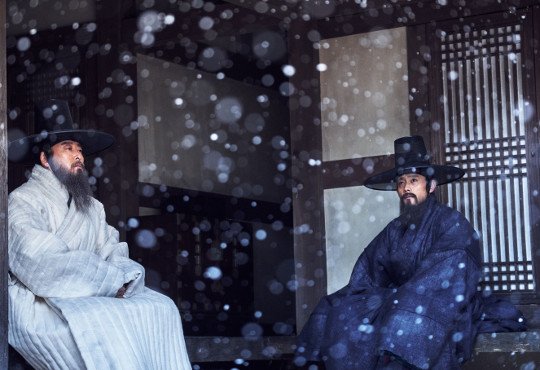
The film The Fortress (Namhansanseong) captures the 47 days King Injo and his court spent hiding in the mountain fortress while surrounded by the Qing army. This isn’t your typical action movie; it is a heavy, philosophical battle of words. You witness the agonizing choice between “Life in Humiliation” (surrendering to save the people) and “Death with Honor” (fighting to the end for the Ming Dynasty).
Understanding the Joseon-Ming Relationship
Foreign viewers often see the term “vassal state” and assume Joseon was a colony. That is a mistake. The relationship between Joseon (the King) and Ming (the Emperor) was an “Investiture-Tributary” diplomatic system. In this ritualistic framework, the Ming recognized the Joseon King’s legitimacy, and Joseon acknowledged Ming’s seniority in exchange for military protection and trade. However, Joseon was a fully independent sovereign state. Ming officials did not govern Joseon’s internal affairs, and the two nations interacted through formal diplomatic envoys. Joseon’s fierce loyalty to Ming was rooted in Confucian ethics and the help Ming provided during the Japanese invasions (Imjin War).
For those watching The Fortress, pay attention to the contrasting perspectives of the two main ministers. Their debate isn’t just about politics; it’s about the very definition of a nation. Is a country its land and people, or is it its integrity and principles? The chilling winter cinematography makes you feel the desperation of a court with no way out.

War of the Arrows: The Lethal Legacy of Korean Archery
While the kings debated, the common people fought for their lives. War of the Arrows (Choijong-byeong-gi Hwal) is a high-octane action film that highlights the personal tragedy of the invasion. The story follows Nam-yi, a master archer whose sister, Ja-in, is kidnapped by the Qing elite forces on her wedding day. Nam-yi sets out on a solo mission to hunt down the invaders and rescue his sister using nothing but his bow.
This film is famous for its portrayal of the “Gok-gung” (the curved Korean composite bow). Unlike the large, straight bows of the West, the Korean bow was small but incredibly powerful, designed for long-range mountain combat. The film shows the “A-gi-sal” (bolt-like short arrows) which were terrifyingly fast and nearly impossible for enemies to track.
📌 Local Note: From Joseon Archers to Olympic Gold
It is no coincidence that South Korea is an absolute powerhouse in modern Olympic Archery. The Korean team has achieved legendary success, sweeping gold medals in both individual and team events for decades. This “archery DNA” dates back to the Joseon era and earlier, where the bow was the ultimate defense for a mountainous peninsula. When you watch the intense bow fights in the movie, remember that you are seeing a centuries-old tradition that still lives on in the hearts of Korean athletes today.

My Dearest: The Human Cost and the Tragedy of Captives
If The Fortress is about the leaders and War of the Arrows is about the warriors, then the drama My Dearest (Yeon-in) is about the survivors. This epic romance centers on Lee Jang-hyun and Yoo Gil-chae, whose lives are torn apart by the invasion. The drama vividly portrays a dark reality often skipped in history books: the fate of the hundreds of thousands of Joseon people taken as captives to the Qing Dynasty.
The middle part of the drama focuses on Gil-chae being framed as a runaway slave and sold in the slave markets of Simyang (Shenyang). This mirrors the real history where families had to pay massive ransoms (called “Sok-hwan”) to bring their loved ones back. Even more heartbreakingly, the women who returned were often labeled as “Hwanyang-nyeo” (women who returned home) and faced social stigma for “losing their virtue.” My Dearest handles this with incredible sensitivity, making you root for the characters to find dignity in a world that has stripped it away.
The Fall of Hope: The Tragic Fate of Crown Prince Sohyeon
A central figure linking The Fortress and My Dearest is Crown Prince Sohyeon. After Joseon’s surrender, he was taken to the Qing capital as a hostage. During his eight-year stay, he became a “bridge” between cultures. He was fascinated by Western science, astronomy, and Catholicism, which he learned from Jesuits like Adam Schall. He saw the modernization of the Qing as a blueprint for Joseon’s future.
However, his father, King Injo, viewed Sohyeon’s open-mindedness as a betrayal. When the Prince finally returned to Joseon with dreams of modernization, he died suddenly and mysteriously just two months later. History strongly suspects he was poisoned on his father’s orders. His wife, Crown Princess Bin-gung Kang, was later framed for treason and executed, and their children were exiled. This tragedy marks the “greatest what-if” in Korean history—the moment Joseon missed its chance to modernize early.
Masterpiece Comparison: Which One Should You Watch?
To help you decide which masterpiece to dive into first, here is a quick breakdown of their unique strengths:
| Title | Genre | Why Watch? | Key Historical Focus |
|---|---|---|---|
| The Fortress | Political Drama | Superb acting and deep philosophical dialogue. | The 47-day siege and the surrender at Namhansanseong. |
| War of the Arrows | Action/Thriller | Incredible archery stunts and fast-paced chase scenes. | The lethality of Joseon bows and the kidnapping of citizens. |
| My Dearest | Epic Romance | Heart-wrenching love story and emotional resilience. | The plight of captives in Simyang and social stigma after returning. |
Legacy of Remembrance: Visiting Namhansanseong and Samjeondo
The Byeongja Horan ended with the “Kowtow of Samjeondo,” where King Injo bowed his head to the ground until it bled, surrendering to the Qing Emperor. This site is marked by the Samjeondo Monument (Samjeondobi), which still stands today near Lotte World in Seoul. While it represents a moment of deep national humiliation, Koreans have chosen to keep it there as a reminder to never repeat the mistakes of the past.
As you walk through the ancient gates of Namhansanseong, a UNESCO World Heritage site, you aren’t just looking at old stones. You are walking through the stage where these dramas took place. The stories of Byeongja Horan are painful, but they are stories of endurance. Whether it’s the flight of an arrow or the secret look between lovers in a slave market, these works of art ensure that the voices of those who suffered are never silenced. I highly recommend watching all three to get a complete, emotional picture of this incredible turning point in East Asian history.


Korean Culture portal KCulture.com
Join the mailing service and add to your favorites.

Founder of Kculture.com and MA in Political Science. He shares deep academic and local insights to provide an authentic perspective on Korean history and society.