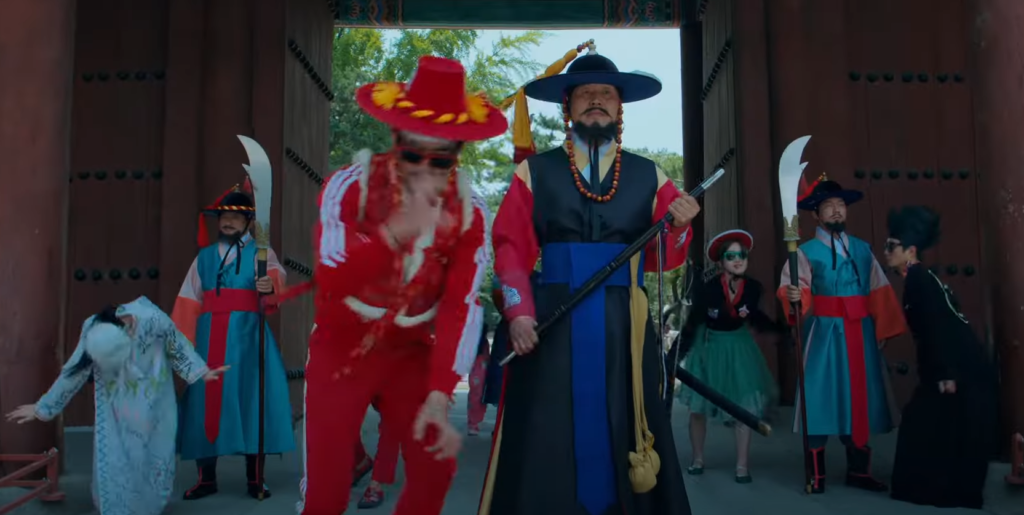
Korea’s Cultural Blueprint: How Confucianism Shapes Kdramas, Education, and Everyday Life
If you’ve ever dipped your toes into the world of hallyu—be it a gripping kdrama, the complex social dynamics of a kpop group, or just observing life in South Korea—you’ve likely noticed a certain set of unspoken rules. The deep bows, the strict honorifics, and the seemingly relentless focus on academic success. Why is South Korean society structured this way?
As experts in Korean culture, we can tell you that the roots of these features trace back to a single, foundational source: Confucianism. For centuries, it has served as the core operating system for Korea’s social, political, and ethical structure. While its direct influence has lessened over time, its “legacy” is still vividly reflected in the traditions, entertainment, and social expectations of modern Korea.
This article, a deep dive into KCulture, will explain how this ancient philosophy became the cultural blueprint for a modern, dynamic nation, making sense of those moments in kdramas that might leave non-Koreans scratching their heads.
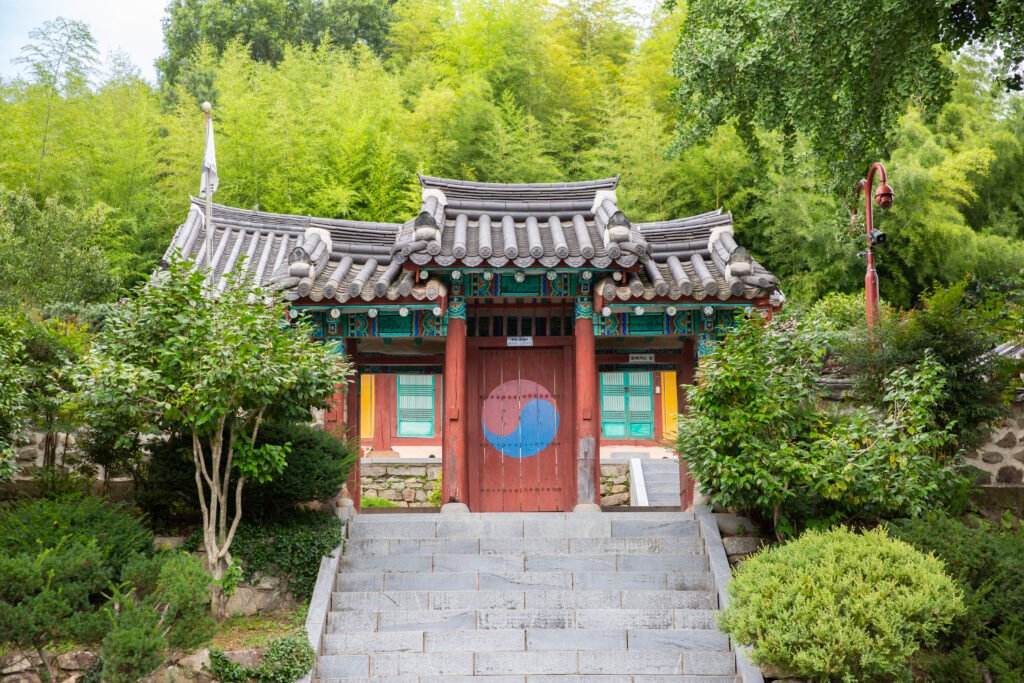
Yuhak (儒學) vs. Yugyo (儒敎): More Than a Philosophy
When discussing Confucianism in a Korean context, you might hear two terms: Yuhak and Yugyo. While most modern Koreans use them interchangeably, understanding the distinction helps clarify its role in history.
- Yuhak (儒學, ‘Study of the Scholars’): This refers to the philosophical and academic system itself—the original ideas of Confucius and later scholars like Mencius about self-cultivation, ethics, and building a just, harmonious society.
- Yugyo (儒敎, ‘Teaching of the Scholars’): This is the application of the philosophy—the socio-political, ethical, and ritualistic system. For over 500 years of the Joseon Dynasty, Yugyo was the state ideology, forming the basis of the law, the bureaucratic structure, and the moral code.
The key takeaway is this: for centuries, Confucianism was not just a religion (you won’t find Confucian churches); it was the entire social framework. It dictated everything from how you addressed your neighbor to who held political power, making its impact profound and lasting.
📌 Essential Korean Term: Ye (예, 禮)
If one value had to be named as the most visible legacy of Confucianism in modern Korea, it would be Ye (Propriety). This concept dictates proper behavior, ritual, and courtesy. It is the direct reason for the complex system of honorifics in the Korean language, the deep importance of knowing someone’s age and social standing, and the entire structure of respectful social etiquette you see in both historical and contemporary Korean society.
The Core Confucian Values Echoing in Kdramas and Klifestyle
The system is built on key ethical pillars, but a few have trickled down into modern KCulture with significant force:
‘Hyo’ (Filial Piety) and the Family Hierarchy
Hyo (효, 孝), or filial piety, is arguably the most powerful surviving value. It means absolute respect for one’s parents and ancestors. In kdramas, this manifests in several ways:
- Unwavering Parental Authority: Characters, even successful adults, often struggle to defy their parents’ wishes, especially regarding marriage or career paths. This reflects the traditional hierarchical structure where parents’ desires were paramount.
- Ancestral Rites (Jesa, 제사): Though changing rapidly, the tradition of holding elaborate ceremonies on holidays (like Seollal and Chuseok) and death anniversaries to honor ancestors is a direct application of Hyo. The Jongmyo Jerye (종묘제례) in Seoul, the royal ancestral rite, is a spectacular UNESCO Intangible Cultural Heritage that showcases this tradition on a grand scale.
- The Eldest Son’s Burden: Historically, the eldest son often bore the heaviest responsibility for family lineage and ancestor worship, a theme frequently explored in family-focused kdramas.
The “Education Fever” and the Scholar Ideal
Why is education often portrayed as a life-or-death battle in kdramas and movies? This intense focus on academic achievement is a direct inheritance from Confucianism.
The Joseon Dynasty was ruled by scholar-officials who had to pass rigorous civil service exams. Scholarship was the only path to high status, honor, and success. This belief persists today, fueling the fierce competition for top universities (the SKY schools: Seoul National, Korea, and Yonsei), the national obsession with the CSAT (Suneung, 수능) college entrance exam, and the massive Hagwon (학원), or cram school, industry.
The idea is simple: knowledge equals honor, and a prestigious education is seen not just as personal success, but as a way to honor one’s entire family—a perfect blend of Hyo and Yuhak.
Confucianism’s Enduring Legacy in Everyday Modern Life
While the formal practice of Confucianism is rare among the youth, its legacy shapes daily interactions through a pervasive sense of hierarchy and proper conduct (Ye), particularly in professional and social settings.
The Principle of Hierarchy and Respect
The core of Confucian influence in modern life lies in recognizing and respecting the five cardinal relationships (O-ryun, 오륜). Though not strictly followed, the underlying principle of defined roles based on age, position, and seniority remains powerful. This is how it manifests:
- In the Workplace (Jikjang, 직장): The relationship between superior and subordinate (Boss-Employee) is strictly hierarchical. Respect for one’s senior (Seonbae, 선배) involves deferring to their decisions, using formal speech, and participating in specific group etiquette (like the drinking culture described below).
- In School (Hakgyo, 학교): The student-teacher relationship is one of unquestioning respect. Even among students, a clear hierarchy exists between senior students (Seonbae) and junior students (Hubae, 후배), where seniority demands deference and proper speech.
- In the Family (Gajok, 가족): Though modern family dynamics are changing, the traditional roles persist: father over son, older sibling over younger sibling. Decisions often flow from the eldest or highest-ranking family member, rooted in Hyo (Filial Piety).
| Cultural Feature | Confucian Root (Ye/Hyo) | Modern Application |
|---|---|---|
| Honorific Language (Jondaetmal, 존댓말) | Ye (Propriety). | Korean has different verb endings and vocabulary based on the listener’s age and social status. Using the correct level of speech is a daily, fundamental act of respect for hierarchy. |
| Drinking Culture & Hierarchy | Ye (Propriety). | When drinking soju or makgeolli with an elder or a superior, you must turn your head away and cover your glass with a hand to show respect. The junior must always pour for the senior first. |
| Bowing and Greetings | Ye (Propriety). | The depth of a bow (from a slight head tilt to a deep 90-degree waist bend) is determined by the difference in social status and age, demonstrating respect for the other person’s rank. |
| Respect for Elders (Seniors) | Hyo (Filial Piety). | This extends beyond the family to all elders. You see it in giving up your seat on the subway, avoiding criticism of seniors, and using respectful titles (like calling a stranger Ajeossi or Ajumma). |
The Men on the Money: Key Korean Thinkers
The depth of Korean-developed Confucianism, known as Neo-Confucianism, is literally cemented in its currency. The two most important scholars of the Joseon Dynasty are featured on modern banknotes:
- Yi Hwang (이황, Toegye): Featured on the 1,000-won bill.
- Yi I (이이, Yulgok): Featured on the 5,000-won bill.
These figures developed the philosophy, ensuring it was not merely an imported idea but a thoroughly integrated Korean system that dominated every aspect of life.
Final Thoughts: The Fading, Yet Unavoidable, Foundation of KCulture
Is contemporary South Korea a “Confucian country”? Not in the strictly religious or political sense of the Joseon era. Modern society actively pushes back against its more rigid, patriarchal, or hierarchical elements, and democracy and capitalism have installed many new programs.
However, Confucianism remains the cultural foundation that explains the drive for education, the strength of family bonds, and the social etiquette that governs interactions. It’s the reason a simple greeting can require a split-second assessment of the other person’s age, and why characters in a historical kdrama will go to extremes for loyalty (*Chung*) or respect (*Ye*).
To truly appreciate the richness and complexity of KCulture, from its entertainment to its lifestyle, you must understand this initial chapter. It is a legacy that represents both a source of deep cultural pride and, at times, modern stress, but it is undeniably the blueprint for modern Korean society.
FAQ on Korean Confucianism
❓ Is Confucianism still taught in Korean schools?
Formal, deep academic study of the Confucian classics is now rare and typically reserved for university-level philosophy or history programs. However, the ethical and historical impact of Confucianism is covered extensively in history and ethics classes as a fundamental element of Korea’s past and present social structure.
❓ Does the concept of ‘Hyo’ (Filial Piety) apply to ancestors who weren’t one’s parents?
Yes. Hyo is a foundation for respecting all elders and superiors in general. It dictates that respect and care must extend to grandparents, senior family members, and even figures of authority (teachers, bosses). In a modern context, you can see it applied broadly to respect for seniors in any social or workplace setting.
❓ What are the Five Virtues mentioned in Confucianism?
Beyond ‘Chung’ (Loyalty) and ‘Hyo’ (Filial Piety), a person should cultivate:
- In (인, 仁): Benevolence, humanity, and kindness.
- Ui (의, 義): Righteousness and justice.
- Ye (예, 禮): Propriety, ritual, and courtesy. (The most visible today)
- Ji (지, 智): Wisdom and knowledge.
- Shin (신, 信): Trust and good faith.
Korean Culture portal KCulture.com
Join the mailing service and add to your favorites.

Founder of Kculture.com and MA in Political Science. He shares deep academic and local insights to provide an authentic perspective on Korean history and society.