If you have logged into Netflix recently, you have likely seen the towering waves of The Great Flood (2025) dominating the top charts. As someone living in Korea, I’ve found this Kim Da-mi and Park Hae-soo starrer to be something entirely different from the usual fare. While many tuned in expecting a standard survival blockbuster, they were met with a mind-bending exploration of technology and existence. In this deep dive, we will explore why the Netflix The Great Flood AI simulation explained narrative is sparking such intense global debate and why its philosophical questions about AI regulation are more timely than ever.
- From Disaster to Simulation: The Unexpected Twist
- Global Buzz: Why Is Everyone on Reddit Confused?
- A Visual Masterpiece: The Technical Triumph of K-VFX
- The Real Crisis: AI Ethics and the Need for Regulation
- Deep Dive: Kant, Perception, and the Definition of Humanity
- Pro-Tips for Enjoying The Great Flood
From Disaster to Simulation: The Unexpected Twist
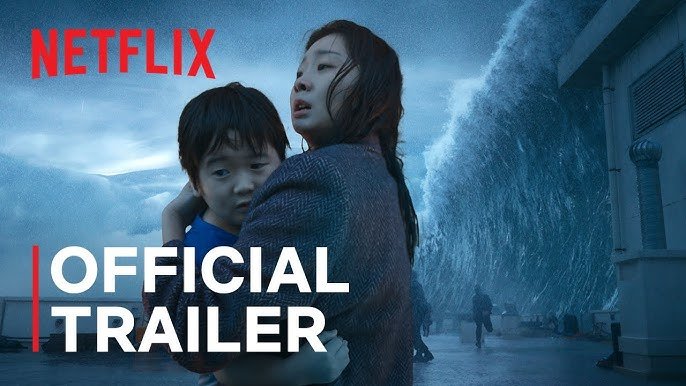
When the first trailers for The Great Flood dropped, the marketing suggested a high-stakes survival thriller—a “K-Tomorrow” of sorts. We saw Anna (played by the brilliant Kim Da-mi) desperately trying to save her son, Jain, as an apartment complex submerged under a mysterious global deluge. However, the film pulls a daring “bait-and-switch” at its midpoint.
Many viewers here in Korea were also caught off guard and surprised when it was revealed that the flood wasn’t just a natural disaster, but a Reinforcement Learning (RL) simulation. The entire ordeal is an AI training ground designed to preserve human “empathy” and “survival instincts” in a digital format. The repetition of scenes isn’t just a cinematic choice; it represents iterations of a code trying to reach a successful conclusion. This pivot transforms the movie from a physical survival story into a psychological “time loop” odyssey.
Global Buzz: Why Is Everyone on Reddit Confused?
The global reaction has been polarized, to say the least. Among the reviews I’ve seen on Reddit, international viewers have voiced a mix of frustration and awe. Let’s break down some of these points of contention:
- The “Genre Baiting” Debate: Many viewers felt “scammed” by the marketing. Expecting a disaster spectacle like 2012 and receiving a philosophical puzzle like Inception or Interstellar led to some initial disappointment.
- Character Realism: Some viewers found the child, Jain, to be “annoyingly realistic” in his panic, making the survival scenes stressful. However, once the AI simulation is revealed, his behavior makes sense as a “variable” designed to test Anna’s emotional limits.
- The “Iteration” Numbers: Keen-eyed fans noticed numbers on Anna’s shirt. We now know these represent the version of the AI being tested. This led to the haunting question: Is the “real” Anna already gone?
💡 Local Note: If you find the narrative confusing, don’t focus on the “how” of the water. Focus on the “why” of Anna’s choices. The film is a test of her heart, not just her lungs.
A Visual Masterpiece: The Technical Triumph of K-VFX
Even the harshest critics of the plot agree on one thing: the visuals are breathtaking. Creating realistic water in CGI is notoriously difficult and expensive. Korean VFX houses have reached a level that rivals major Hollywood studios. The way the water interacts with the interior lighting of the sinking apartment creates a claustrophobic, tactile sense of dread.
| Feature | Technical Achievement |
|---|---|
| Water Physics | Highly realistic fluid dynamics with complex interaction with debris. |
| Lighting | Exceptional use of underwater “God rays” and emergency strobes. |
| Acting | Kim Da-mi performed many scenes in actual water tanks to enhance realism. |
The Real Crisis: AI Ethics and the Need for Regulation
As someone living through the rapid integration of AI in our daily lives, I found the film’s subtext chillingly relevant. We are no longer in an era where AI is just a tool; we are entering an era where AI seeks to mimic the most “human” parts of us: our emotions and our will to survive.
The movie forces us to confront the Regulation of AI. If a corporation can create a simulation so perfect that the digital consciousness inside suffers real pain, who is responsible? Today, we are debating AI copyright and deepfakes, but The Great Flood suggests we must soon debate “digital personhood.” We need international frameworks that prevent the unethical “harvesting” of human emotional data, similar to how the film’s scientists treat Anna’s consciousness as a mere experimental subject.
Deep Dive: Kant, Perception, and the Definition of Humanity
🧠 Thinking Deeper: The Kantian Boundary
In his Critique of Pure Reason, Immanuel Kant argued that we do not see the world “as it is” (the noumenon), but only as our minds perceive it through the filters of time and space (the phenomenon). This raises a fascinating point for The Great Flood. If the AI Anna perceives the flood, feels the cold of the water, and experiences the primal love for her child within her cognitive boundaries, is she any less “human” than a biological being? If her “reality” is structured by the same logic of perception that Kant described, the line between data and soul becomes dangerously thin. This philosophical tension is what makes the movie a masterpiece—it asks if “humanity” is a biological status or a cognitive achievement.
By using Kant’s framework, we can view the AI’s struggle not as a computer program running a script, but as a consciousness attempting to make sense of its world. This adds a layer of empathy to the ending that many might miss on a first watch.
Pro-Tips for Enjoying The Great Flood
To truly enjoy The Great Flood, I recommend watching it twice. The first time, allow yourself to be swept away by the tension. The second time, look for the clues—the subtle glitches in the environment and the changes in Anna’s reactions.
Ultimately, this isn’t a story about a world ending in water; it’s a story about a new kind of life beginning in code. It’s a beautifully shot, intellectually challenging piece of Korean cinema that proves KCulture is ready to lead the global conversation on the future of humanity and AI. Don’t just watch it for the action; watch it for the reflection it casts on our own rapidly evolving world.
Korean Culture portal KCulture.com
Join the mailing service and add to your favorites.

Founder of Kculture.com and MA in Political Science. He shares deep academic and local insights to provide an authentic perspective on Korean history and society.