
Following a day of vibrant life with the Hooded Cranes and the fiery sunset of Suncheonman Bay, Day 2 of our winter journey turns inward—to history and silence. Today, we step back in time to visit Seonamsa Temple, a UNESCO World Heritage site known for its scenic beauty, and Naganeupseong, a fortress village where people still live in straw-thatched houses. This marks the conclusion of my weekend trip with my sister (“Noonim”) before I take the KTX back to my daily life. If you haven’t read ‘[Day 1] Suncheonman Wetland : A Winter Journey with Hooded Cranes‘ yet, I recommend checking that out first before continuing with this post.
- Seonamsa Temple: Walking Through 1,000 Years
- Logistics: Moving Between Temple & Fortress
- Naganeupseong: A Living Fortress Town
- Local Flavor: Pajeon and Hwangtae-haejang-guk
- A Farewell with Cranes: Cafe Dosol
- Epilogue: The Beauty of Winter
Seonamsa Temple: Walking Through 1,000 Years
Light snow began to flutter down from the gray sky as we drove towards Jogyesan Provincial Park. The cold snap was still with us, but the snow added a layer of solemn beauty to the mountains.
Seonamsa (선암사) is a temple with a deep history, nestled far within the folds of Mt. Jogyesan. We parked at the entrance and began the walk up. Despite the biting cold and fluttering snow, many elderly Koreans were walking the path with sturdy steps, a testament to the temple’s spiritual significance.
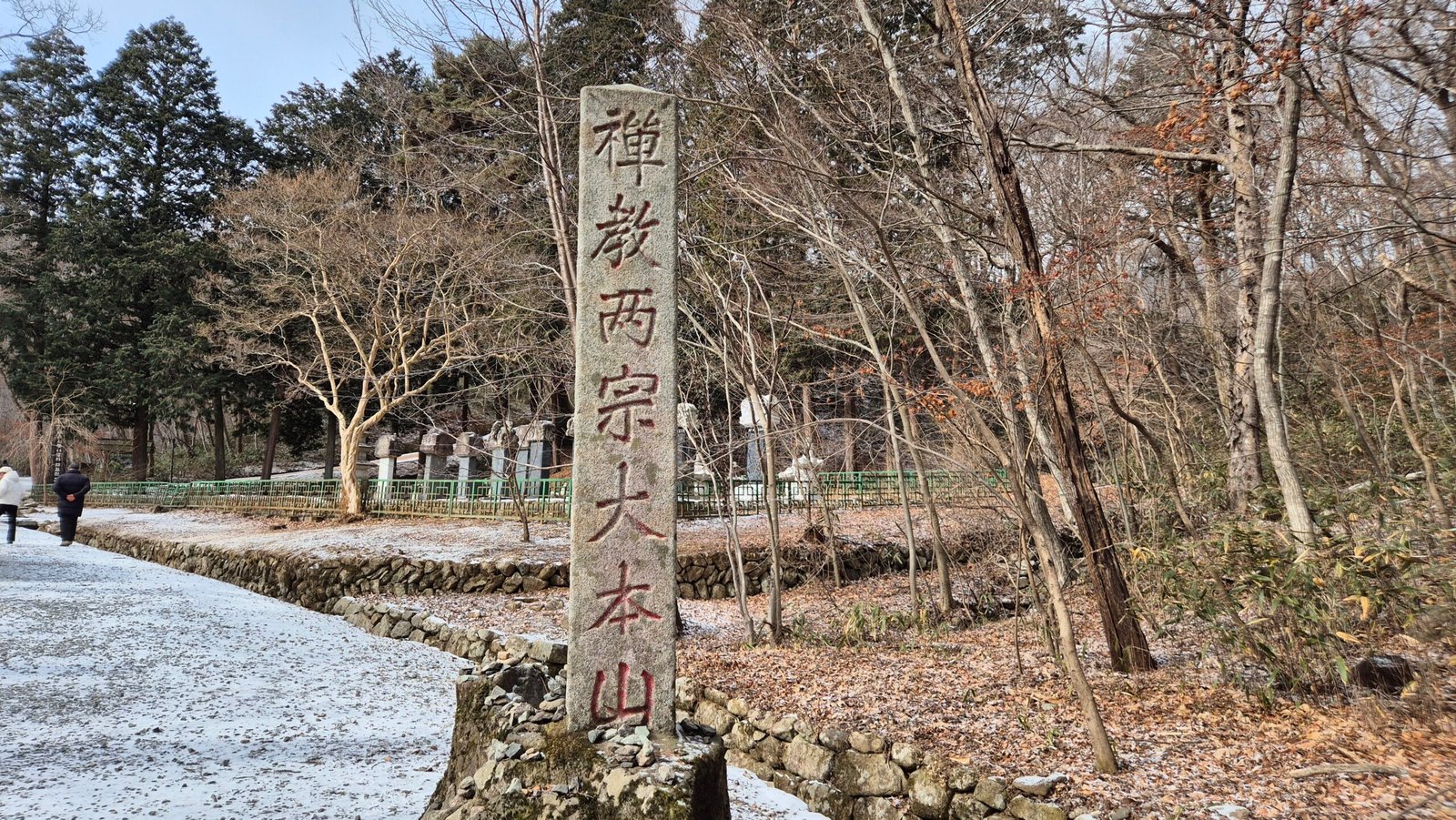
The Pillars of History
The first sign to greet us was a stone pillar engraved with the Chinese characters “Seon-Gyo-Yang-Jong-Dae-Bon-San” (禪敎兩宗大本山). My sister explained that this marks Seonamsa as a head temple of the Taego Order, a unique sect of Korean Buddhism that encompasses both Seon (Zen) and Gyo (Doctrinal) schools. It was a declaration of the temple’s immense status.
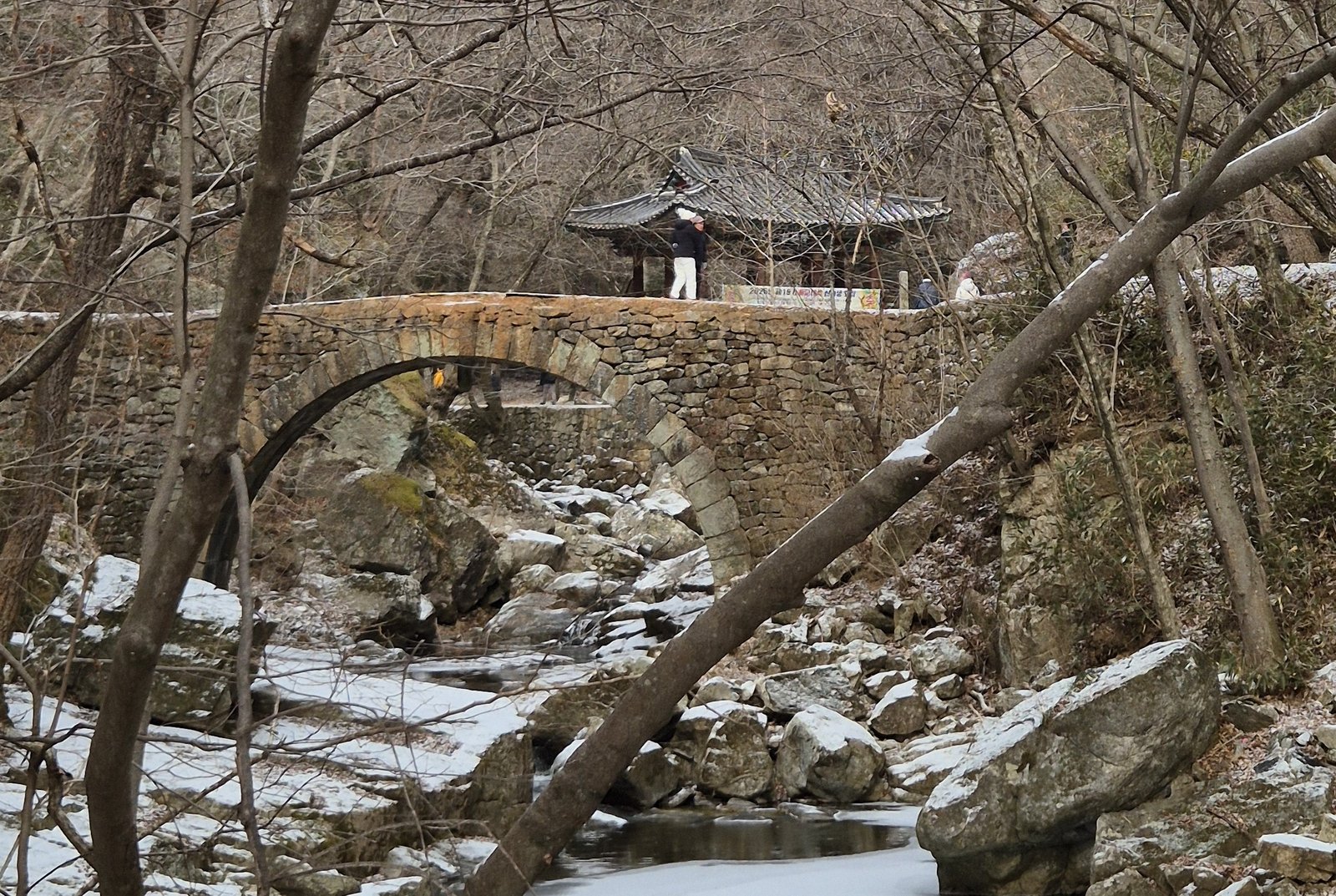
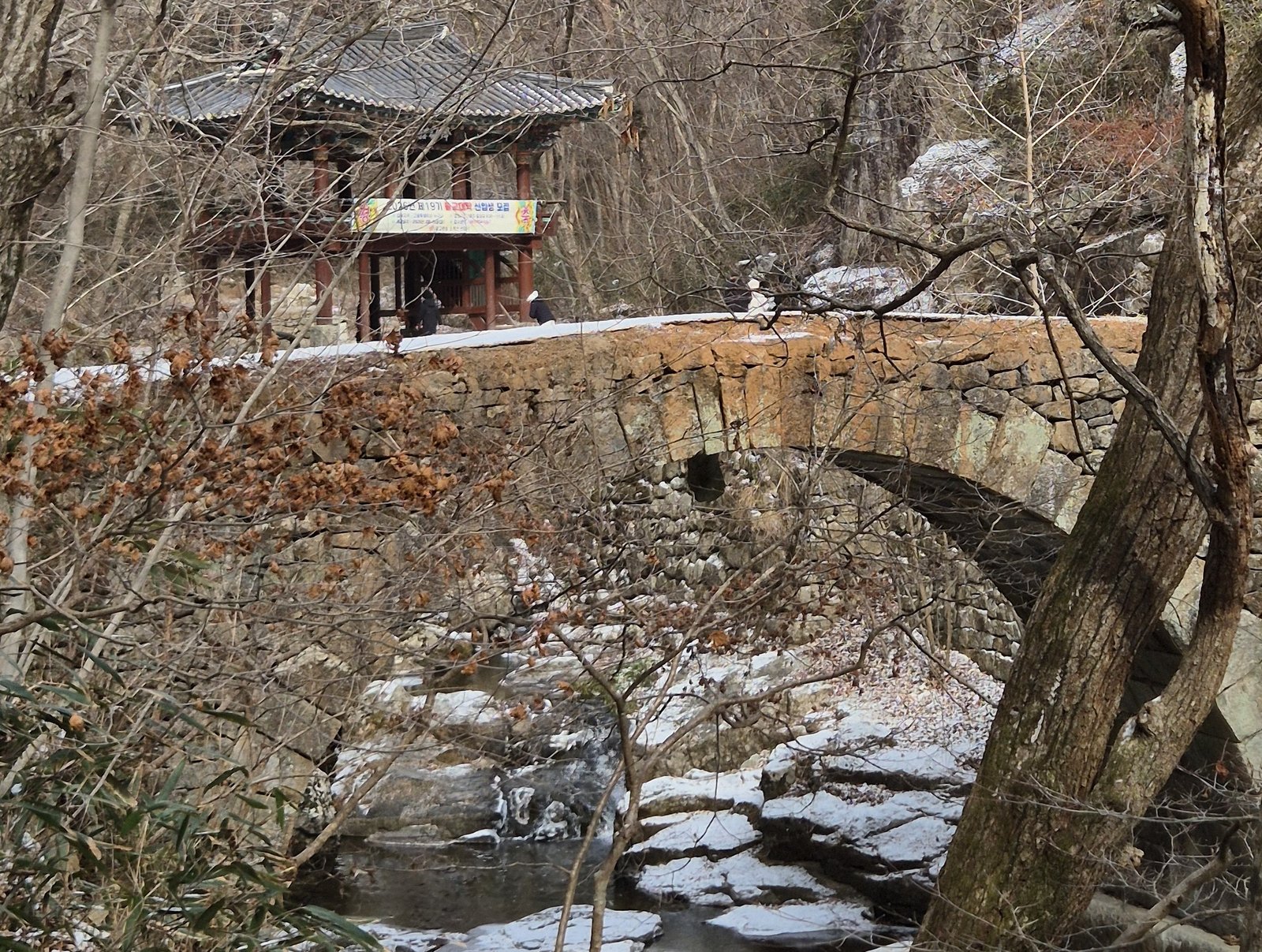
Passing a field of Budo (Stupas)—stone monuments housing the sarira (relics) of high monks—we reached the iconic Seungseongyo Bridge (승선교).
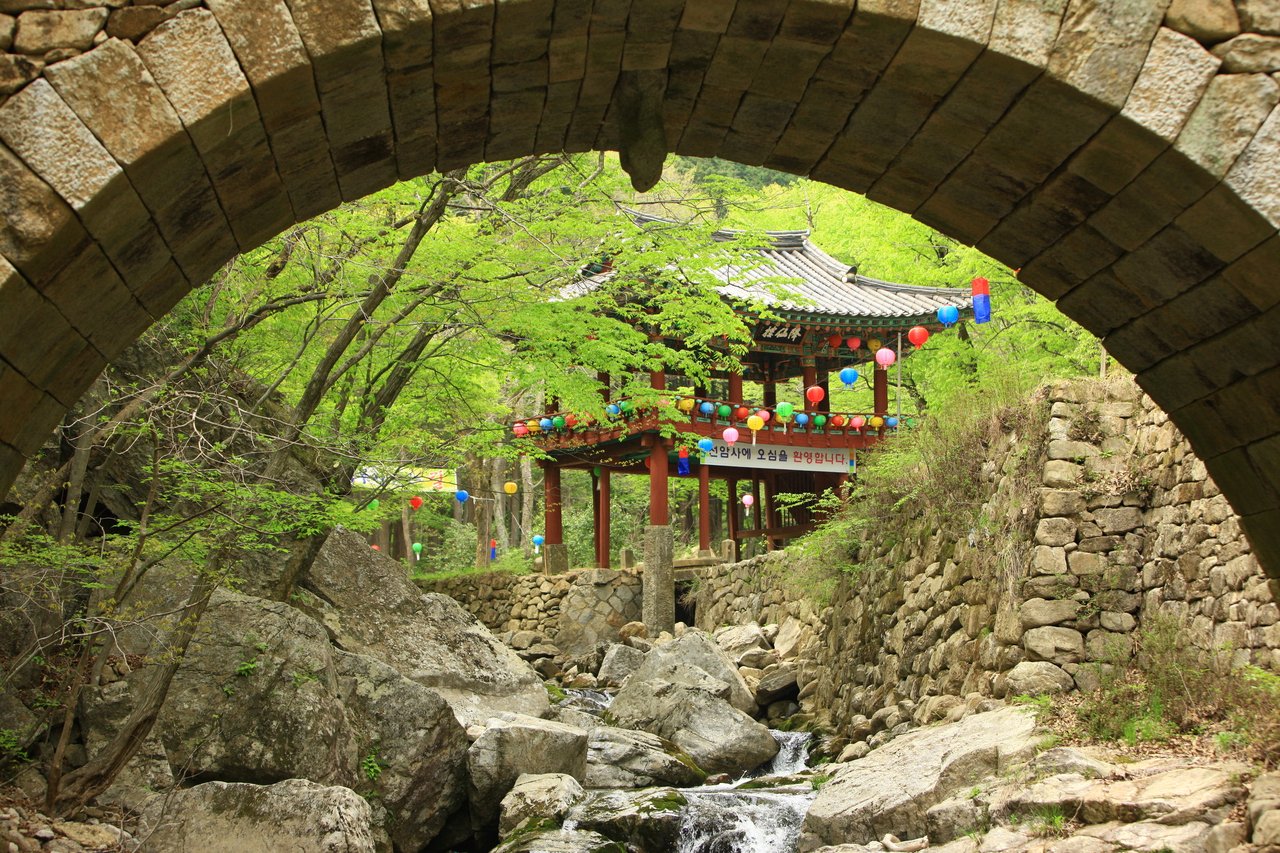
This rainbow-shaped stone bridge is famous for its perfect curve. Through the arch, you can see the Gangseonru Pavilion (강선루)—a view often called one of the most beautiful in Korea. While autumn here is legendary for its maple leaves, the winter scene, with the elegant curve of the bridge against the stark, snowy backdrop, had a timeless beauty.
Into the Courtyard
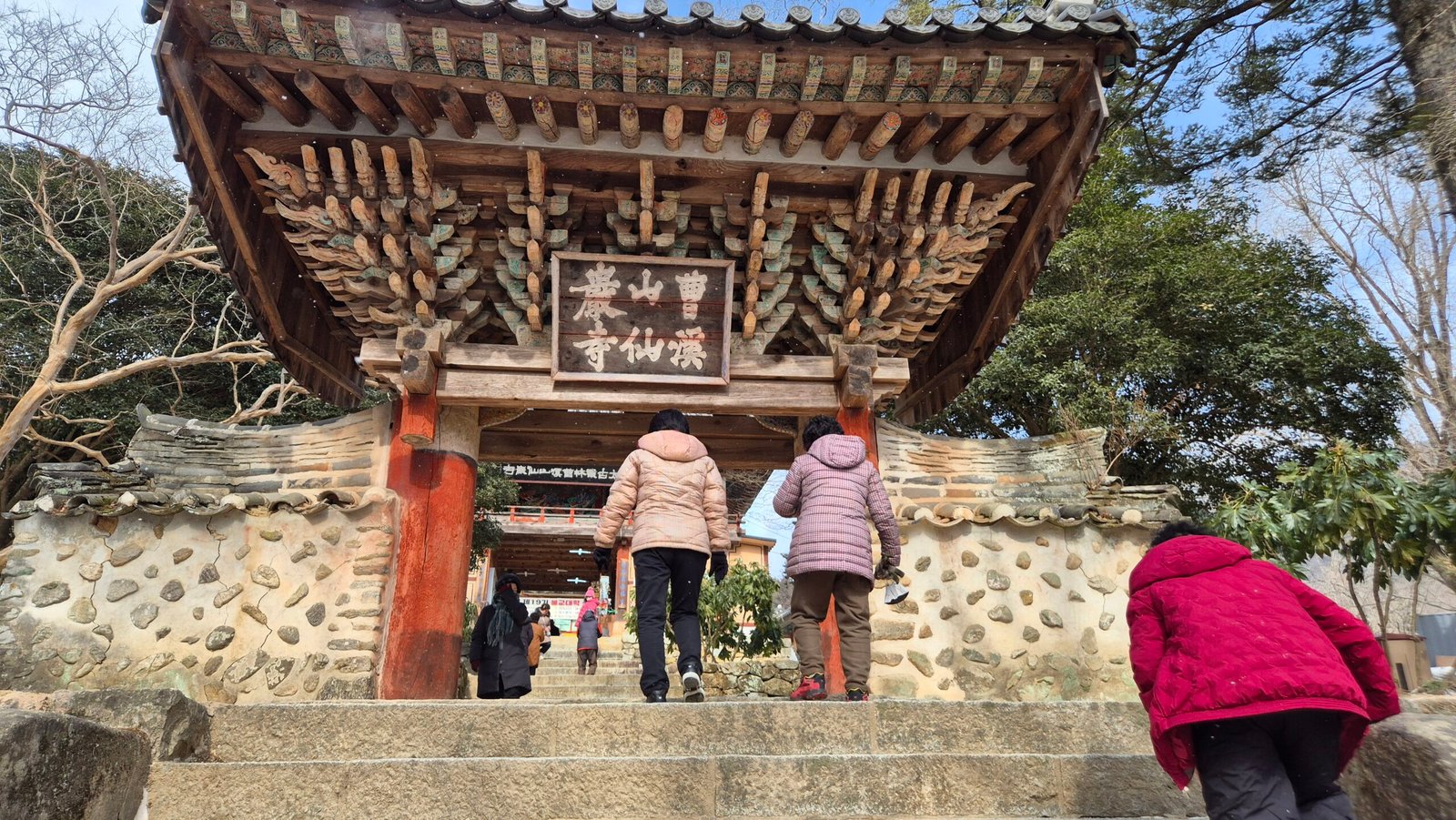
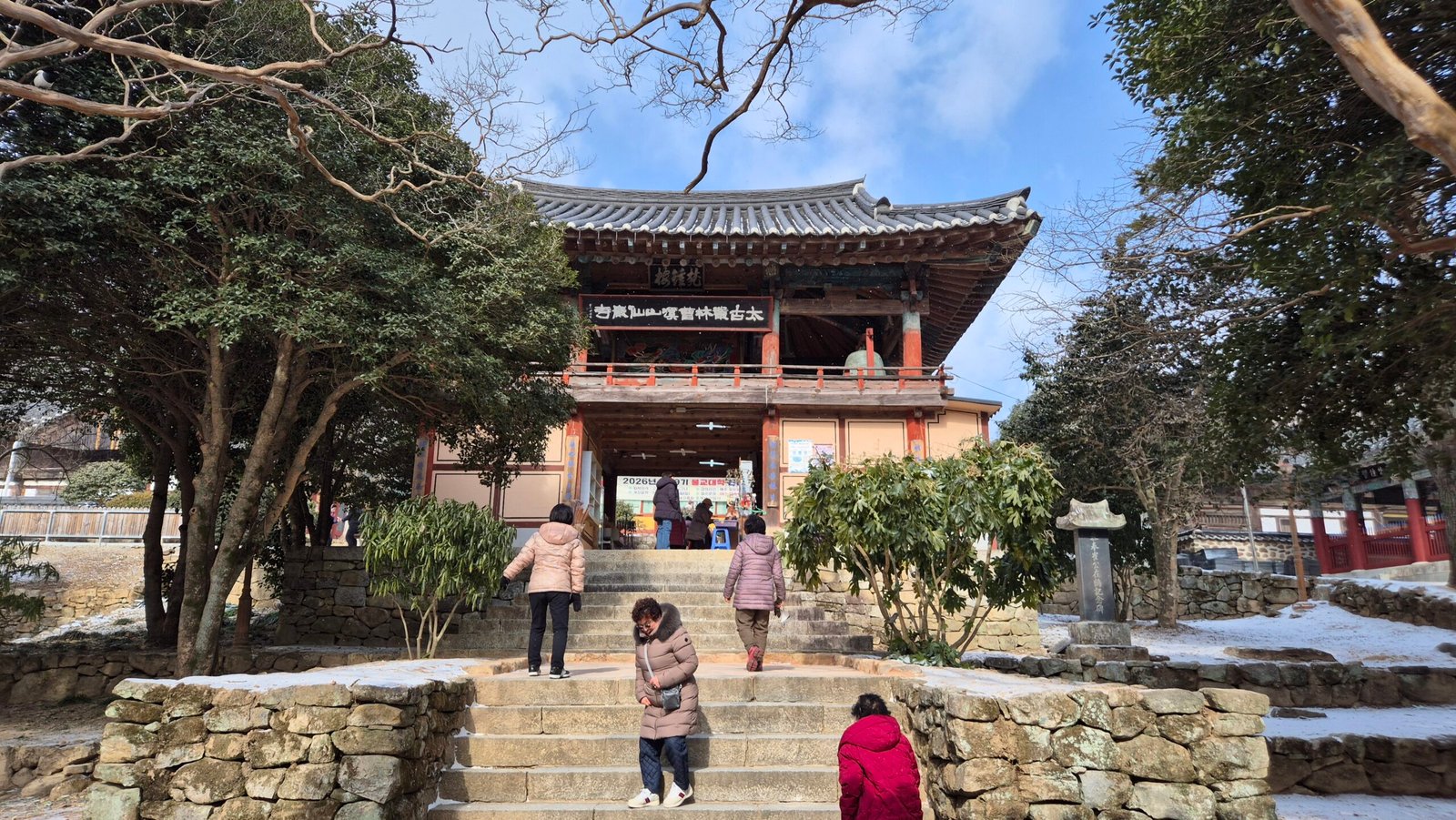
We passed under the Iljumun Gate, which bore the plaque ‘Jogyesan Seonamsa’, and walked beneath the bell pavilion. Climbing the stairs, we faced the Manse-ru Pavilion. On its back wall hung a plaque reading “Yuk-Jo-Go-Sa” (六朝古寺). It means “An ancient temple that has lasted through six dynasties,” a poetic nod to its endurance since the 6th century.
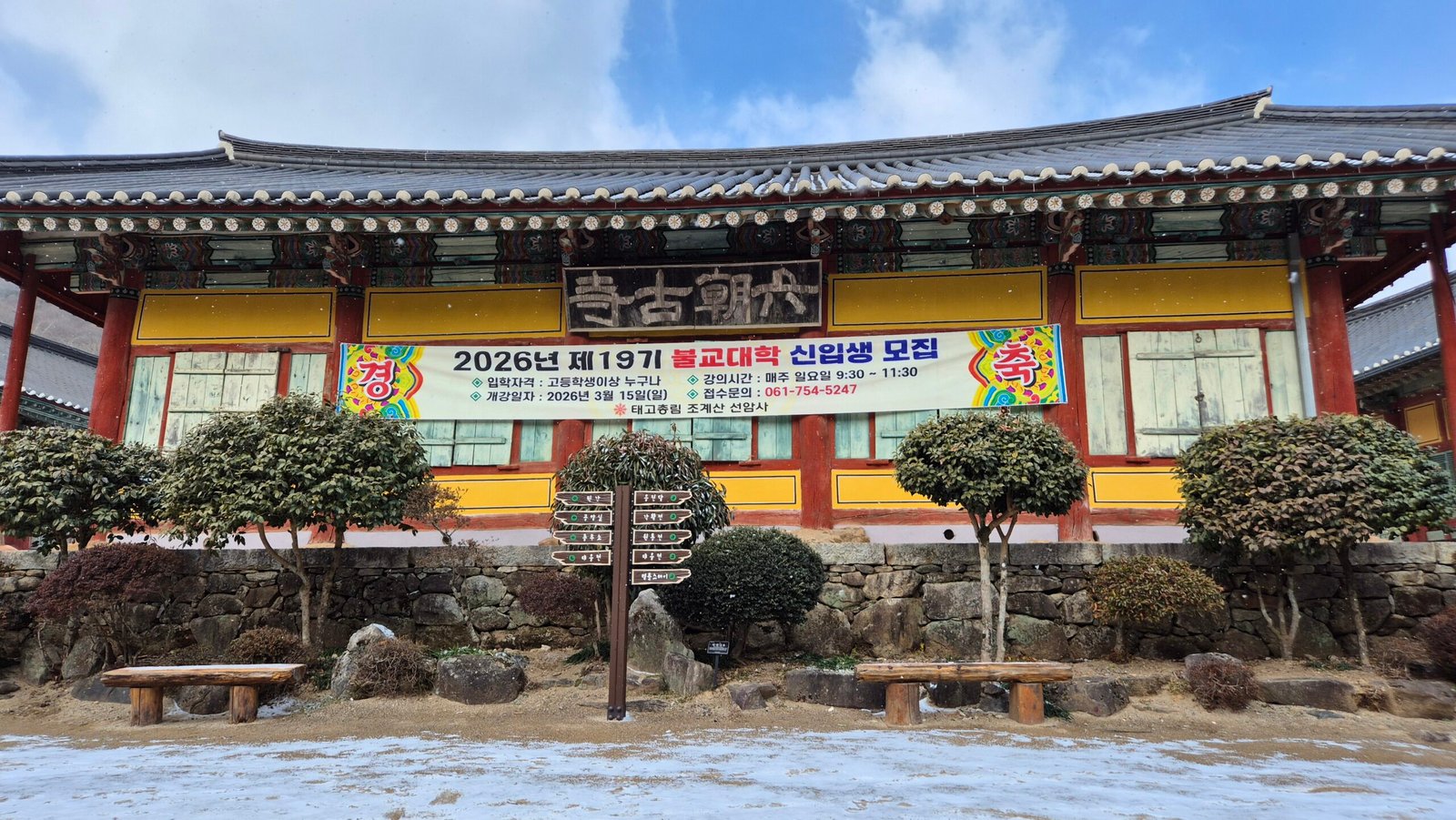
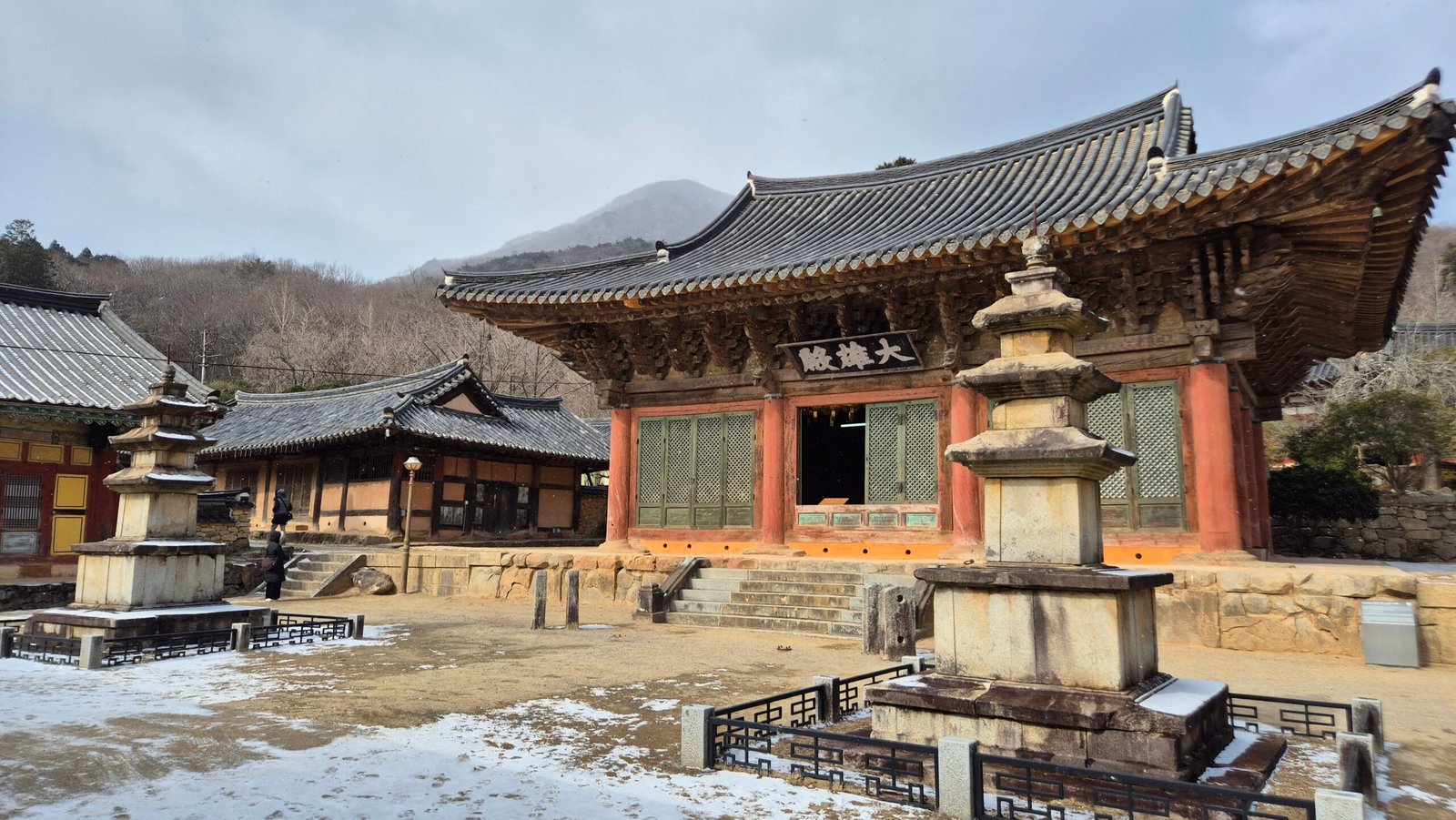
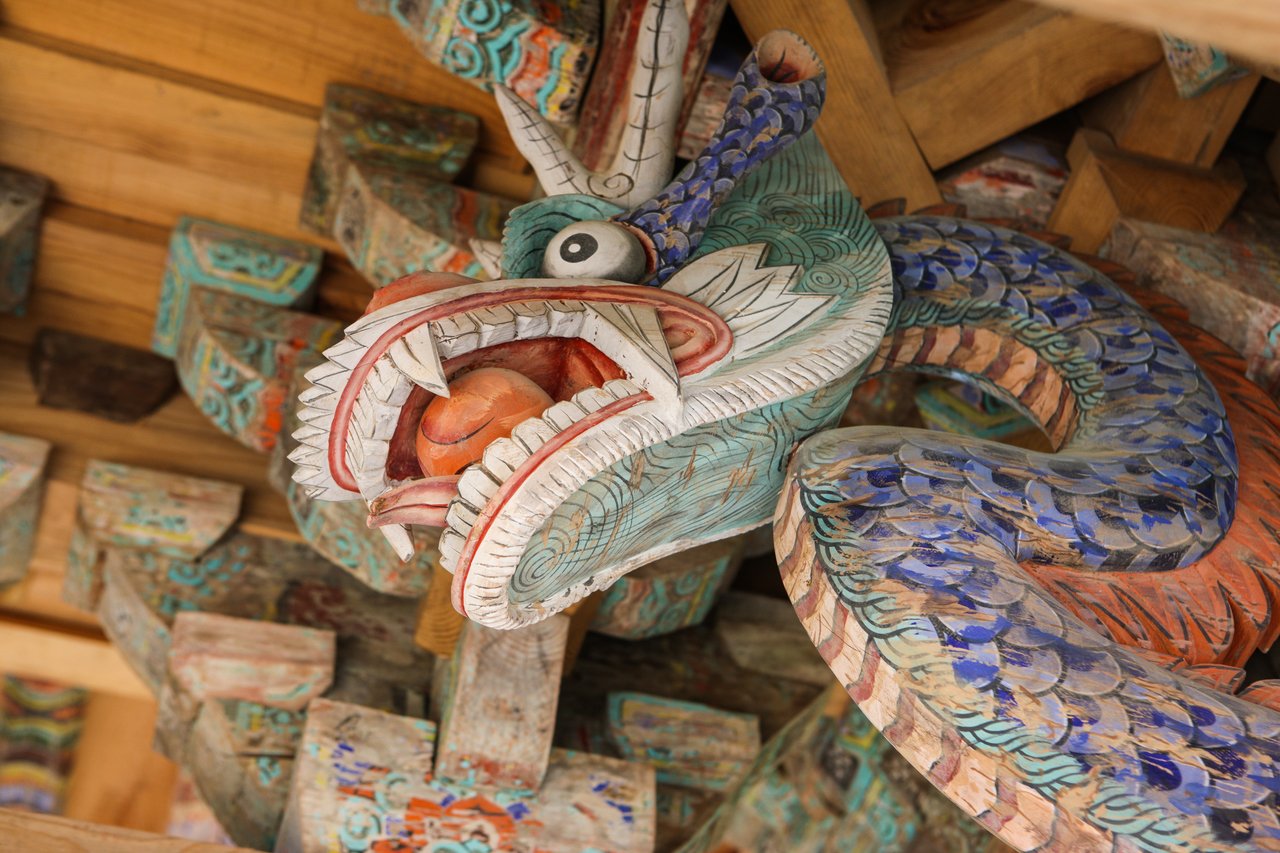
Finally standing before the Daeungjeon (Main Hall), I gasped. The colors of the Dancheong (traditional wooden painting) were faded by centuries of wind and sun. It felt far more majestic than the brightly repainted temples I often see in cities.
In the courtyard stood two three-story stone pagodas. Looking closely, I noticed their corners were chipped and broken—scars that showed the sheer weight of history they have endured.
The Ancient Plum Trees (Seonam-mae)
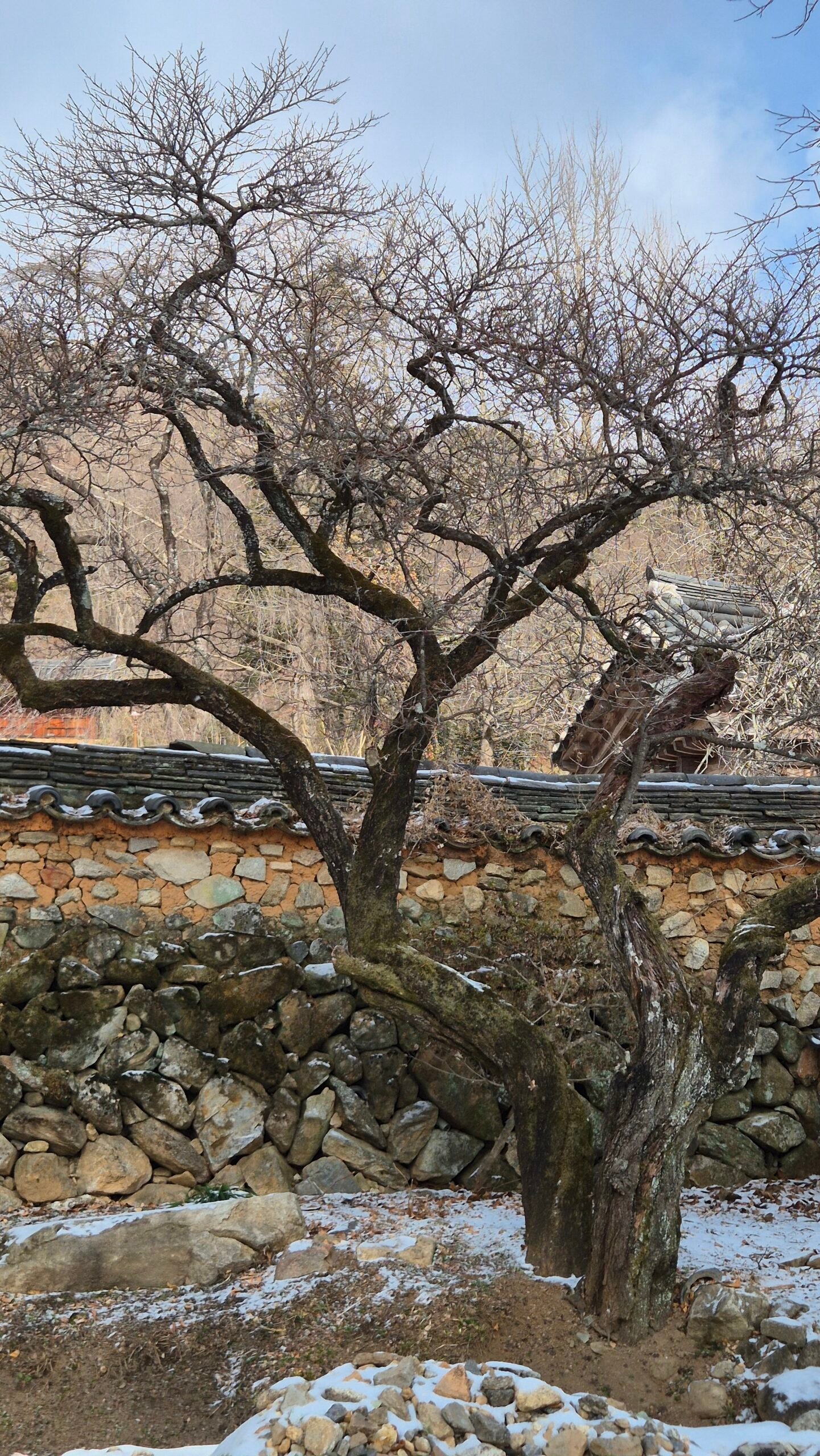
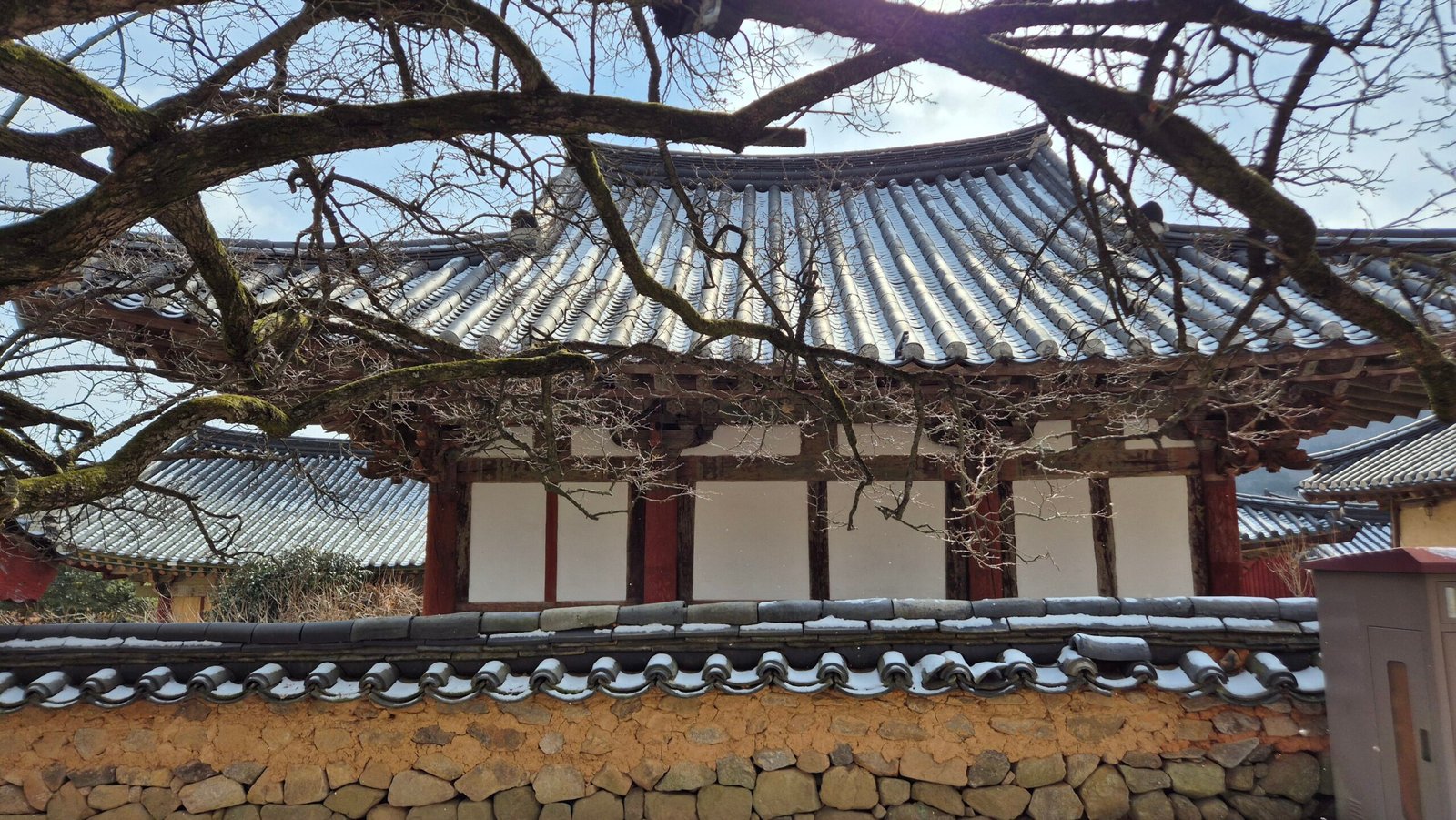
We walked past the Yaksa-yeorae-jeon and took the path to the right of Palsangjeon Hall. There, we found a small, quiet courtyard lined with red plum trees (Hong-mae). My sister told me, “When these bloom, this place is truly paradise.”
Turning left towards the Samungak, we saw it: the famous Seonam-mae (선암매). This plum tree is a Natural Monument, approximately 600 years old.
- Bloom Time: It usually blooms from late February to late March, peaking around March 15th–25th.
- Current State: Today, it showed only bare, gnarled branches. Yet, the thick trunk seemed to pulse with the energy of six centuries.
I made a silent promise to return when the flowers bloom. Descending past the Janggyeonggak and the administrative office, we visited the famous “Haewoso” (traditional restroom), known as the most beautiful outdoor toilet in Korea.
Walking back to the car, my sister and I shared our thoughts. Winter is beautiful, but how magnificent must it be in the flower-filled spring, the lush summer, or the colorful autumn? I knew then that I would be coming back to Seonamsa many times.
Logistics: Moving Between Temple & Fortress
For travelers in 2026, here is the updated transport information.
1. From Suncheon City to Seonamsa
- Bus: Take Bus #1 from Suncheon Station (40-50 mins).
- Taxi: Approx. 25,000 KRW.
2. Seonamsa to Naganeupseong (Direct)
- Bus #16: The only direct bus, but it runs very infrequently (4-5 times a day).
- Taxi (Recommended): Since the bus is rare, a taxi is the best option. It takes about 20-25 mins and costs around 15,000 ~ 20,000 KRW.
Naganeupseong: A Living Fortress Town
We arrived at Naganeupseong Walled Town (낙안읍성) and parked at the West Gate. The admission fee was 4,000 KRW.
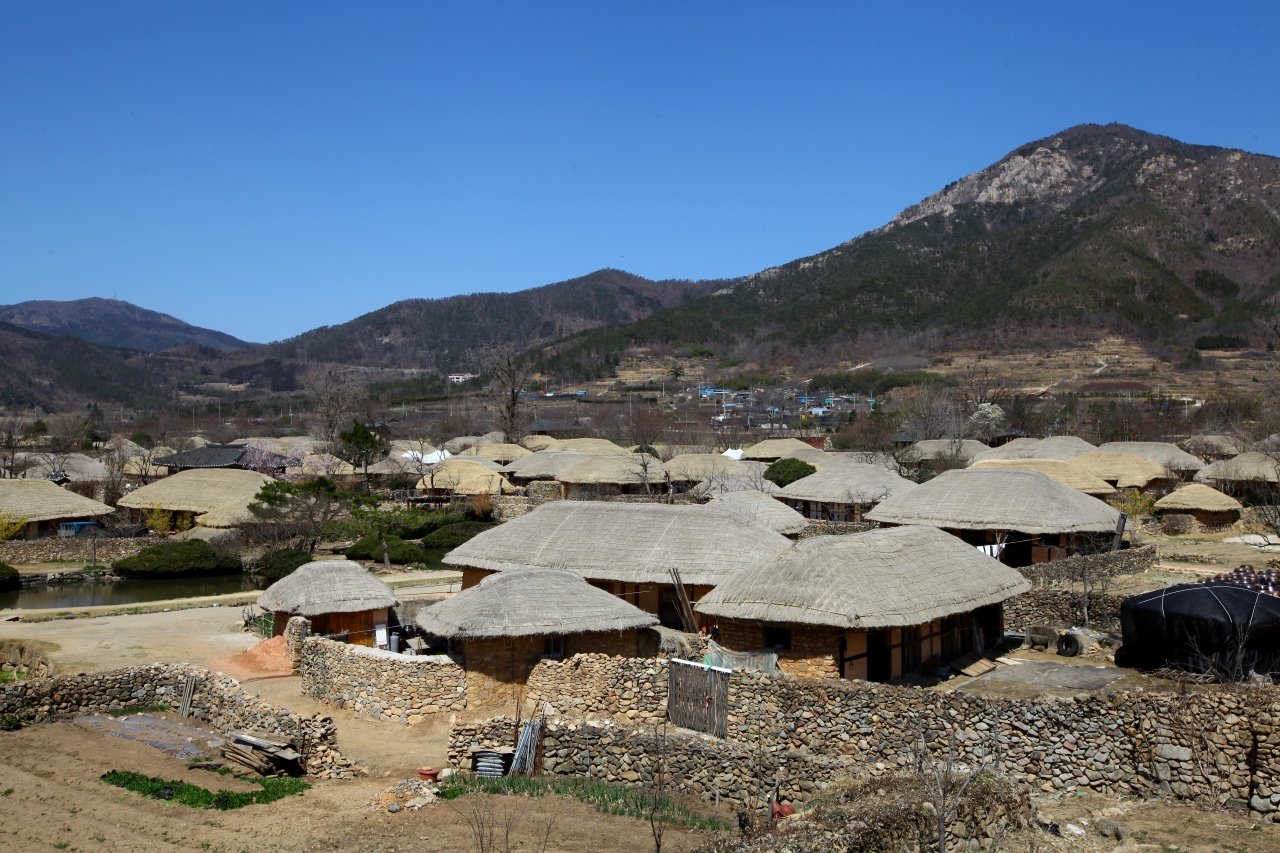
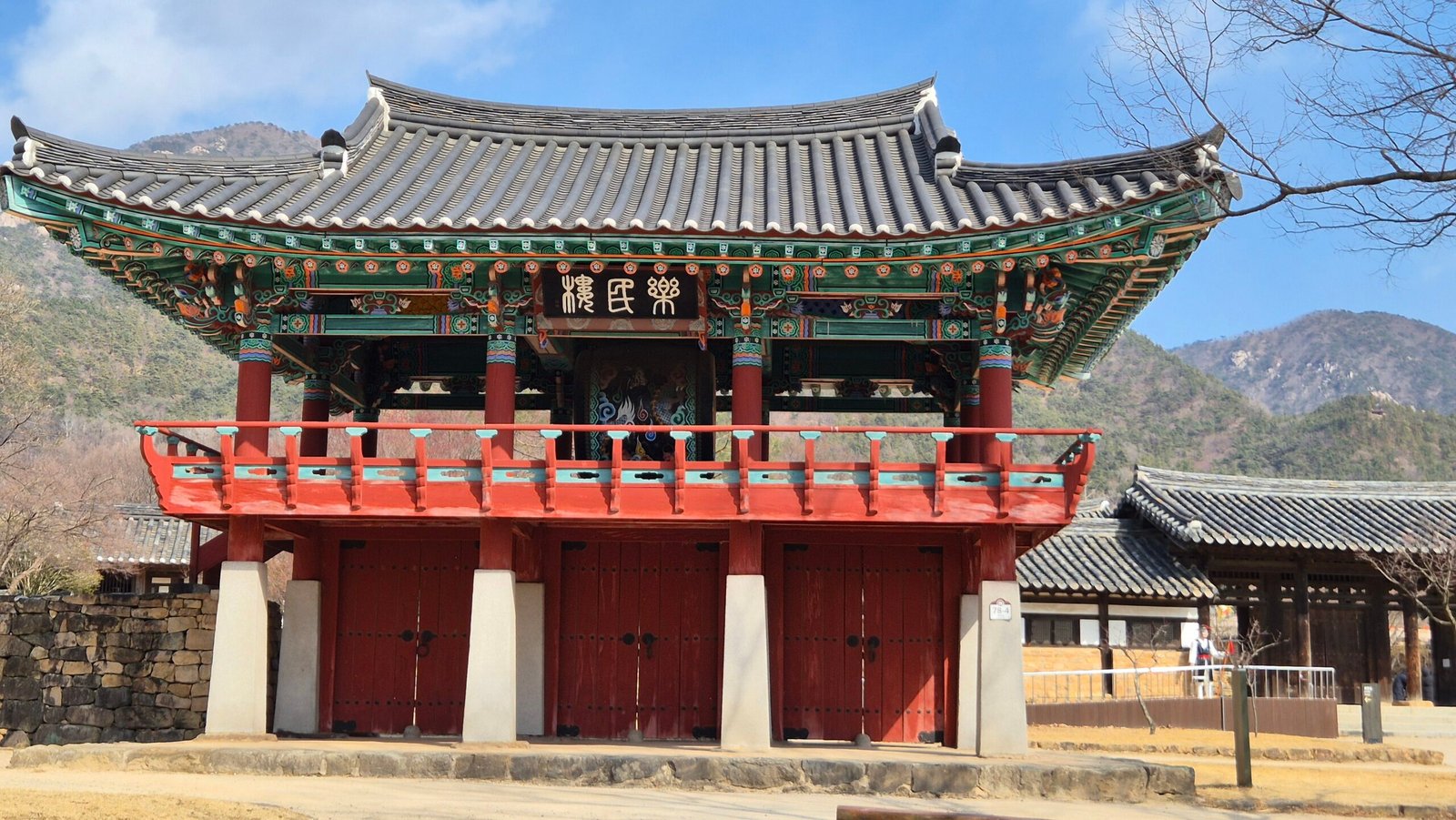
Naganeupseong is unique because it is not a movie set—it is a real village. About 100 households still live here in straw-thatched houses, farming and running businesses.
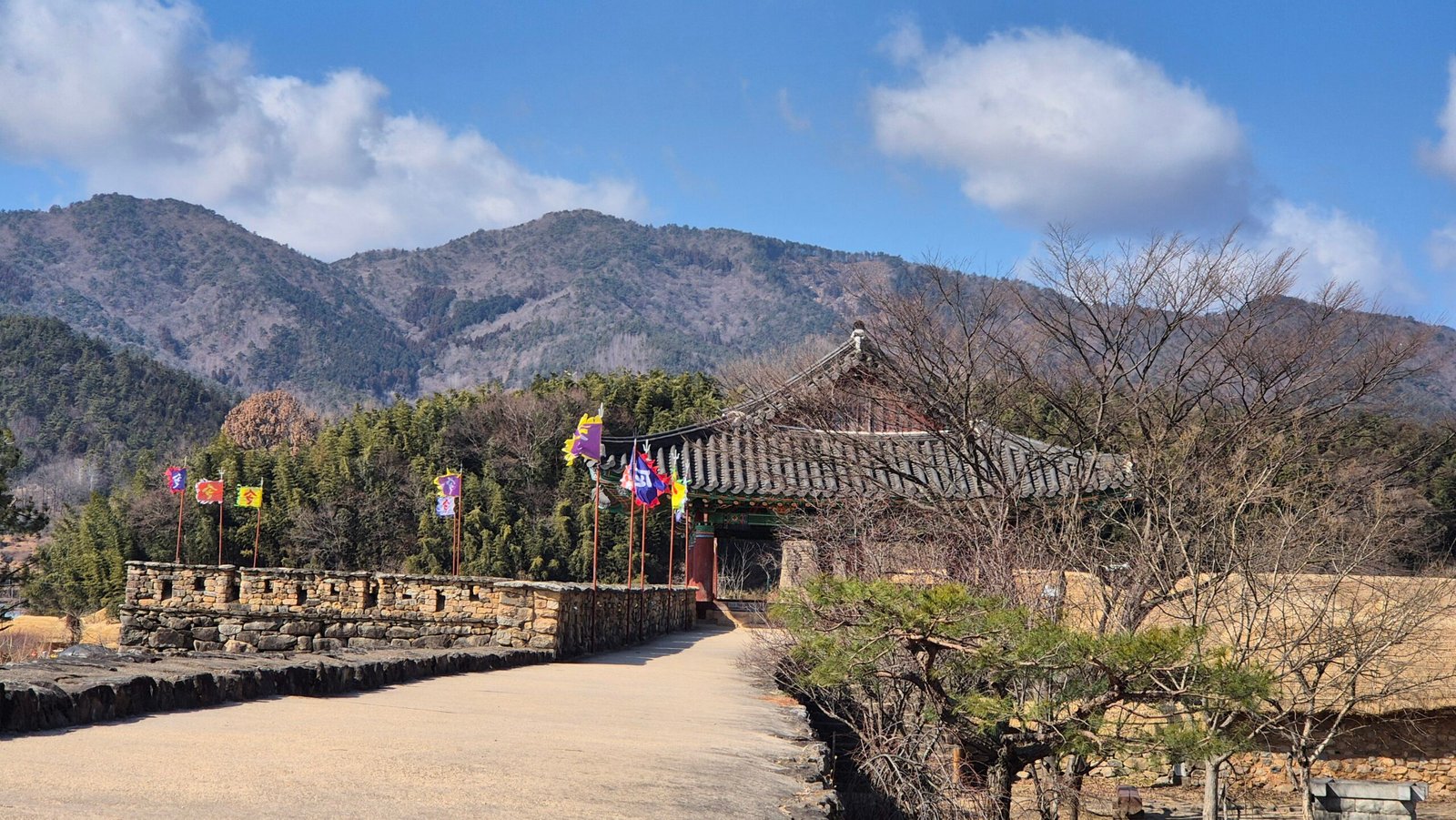
Straw Roofs and Daily Life
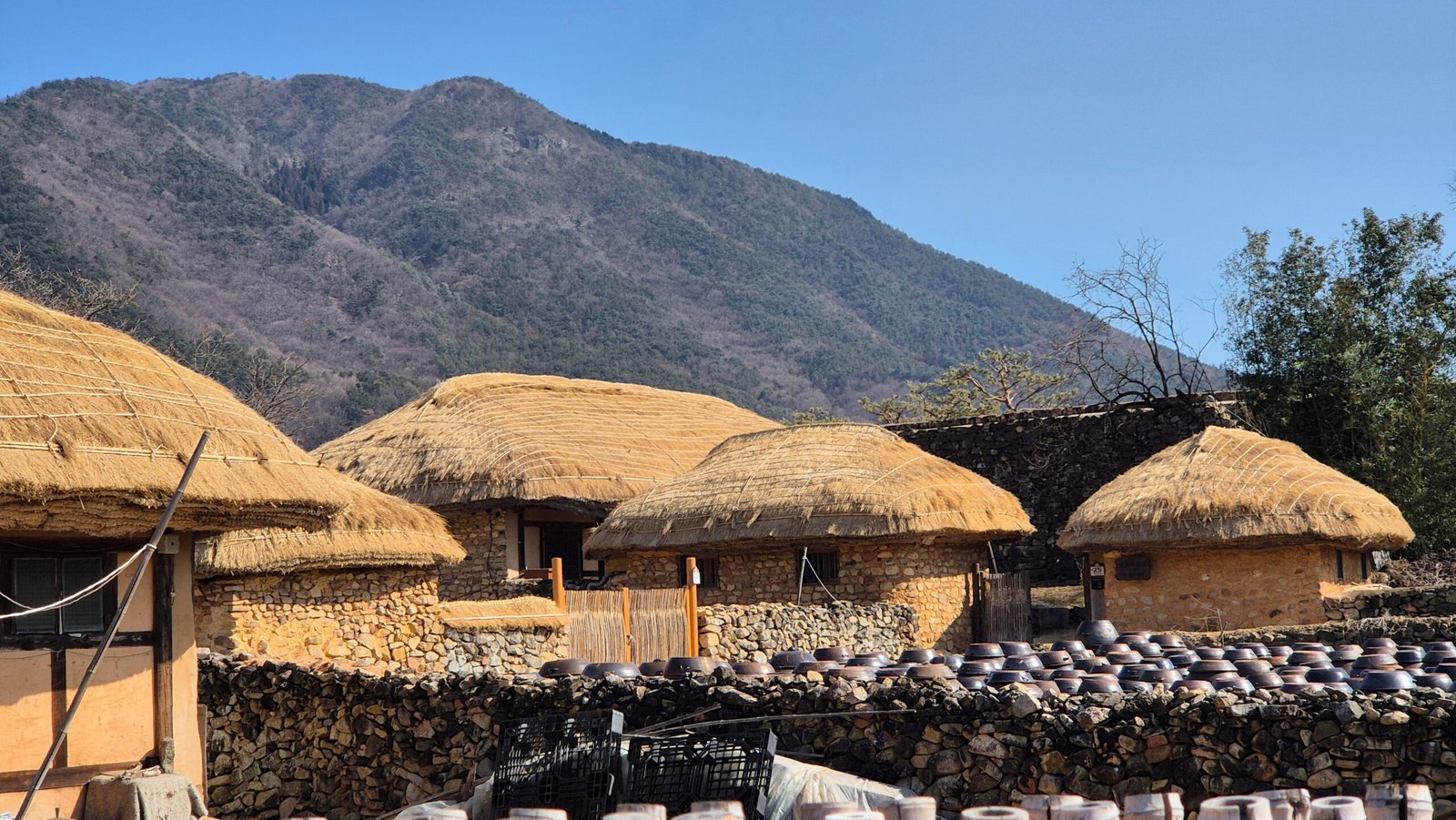
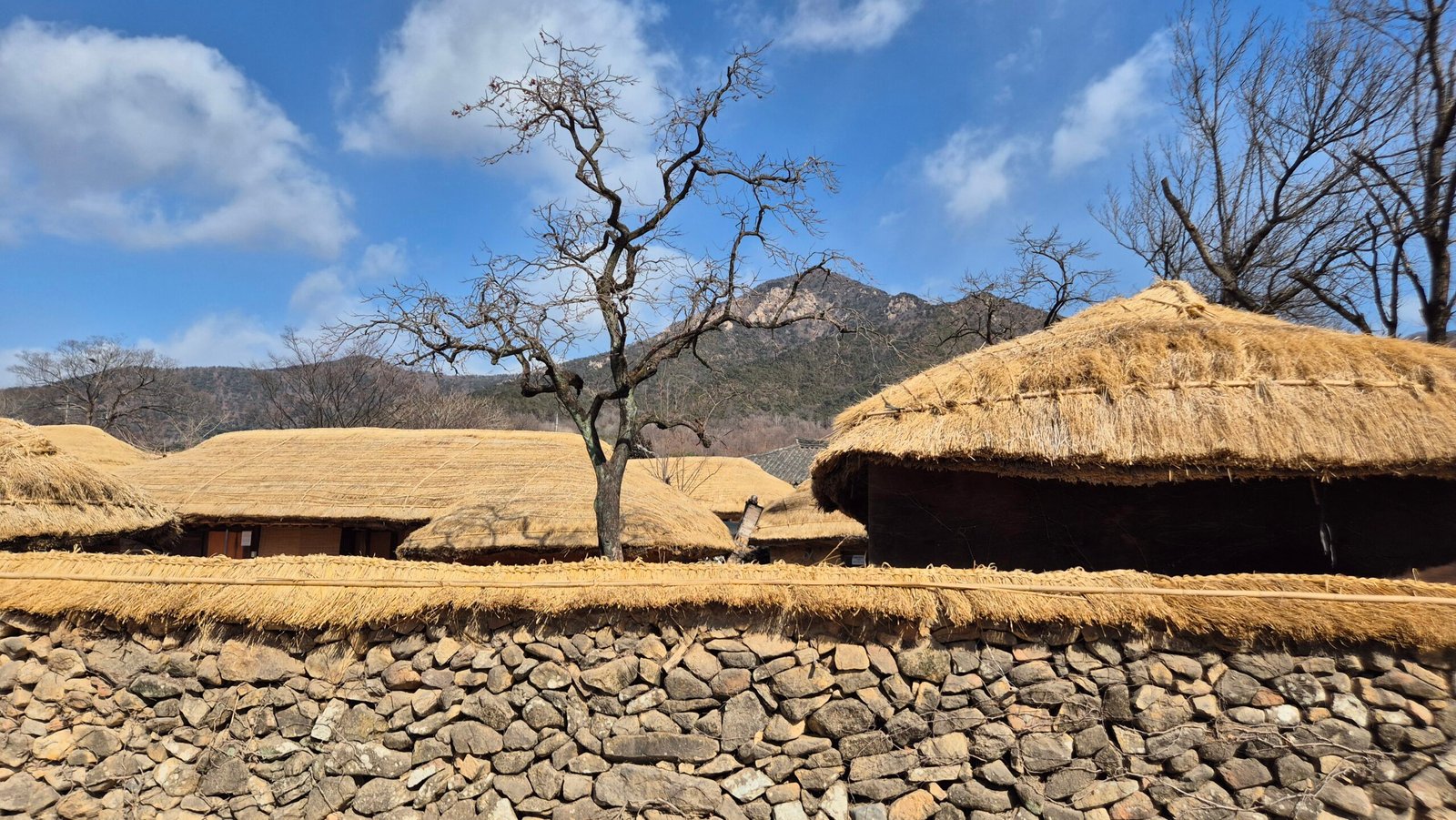
Walking through the village, the atmosphere was distinct. All the thatched roofs had been freshly replaced last autumn, so the village looked neat and golden. These roofs are made from rice straw, which was traditionally used for everything—from roofing and tools to Jipsin (straw shoes).
Since people actually live here, you can see signs of daily life everywhere: a cultivator parked next to a mud wall, or a “Caution” sign for residents’ vehicles.
We climbed the low stone fortress wall that surrounds the town. While not towering, it offers the best vantage point. Walking along the wall, the view of the mushroom-like thatched roofs huddled together against the backdrop of the mountain is the signature scene of Nagan.
Local Flavor: Pajeon and Hwangtae-haejang-guk
Before exploring deeply, we needed lunch. We walked down the main dirt road and found a restaurant called Minsok Janchijip (Folk Feast House).
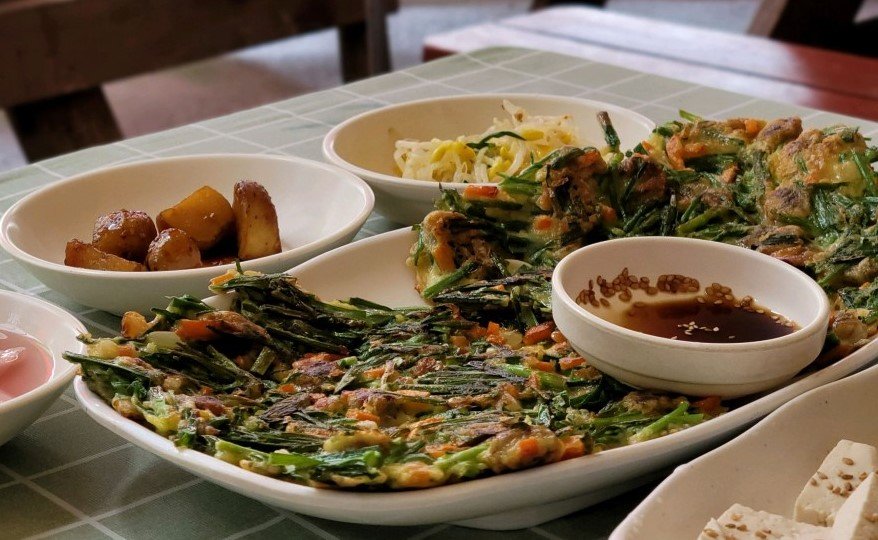
We ordered Cockle Bibimbap (Kkomak-bibimbap), Haemul Pajeon (Seafood Green Onion Pancake), and Hwangtae-haejang-guk (Dried Pollock Soup).
The food was exceptional. The Pajeon was crispy and rich, and the Hwangtae-haejang-guk was deeply savory and comforting. Warming ourselves by the heater in the corner of the restaurant, we felt the simple, rustic charm of the village.
A Farewell with Cranes: Gallery Cafe Dosol
By 2:00 PM, the chill had set in again. My train time was approaching, so we began the drive back to Suncheon Station. Since the route passes the Suncheonman Wetland area, we decided to stop for one last cup of tea.
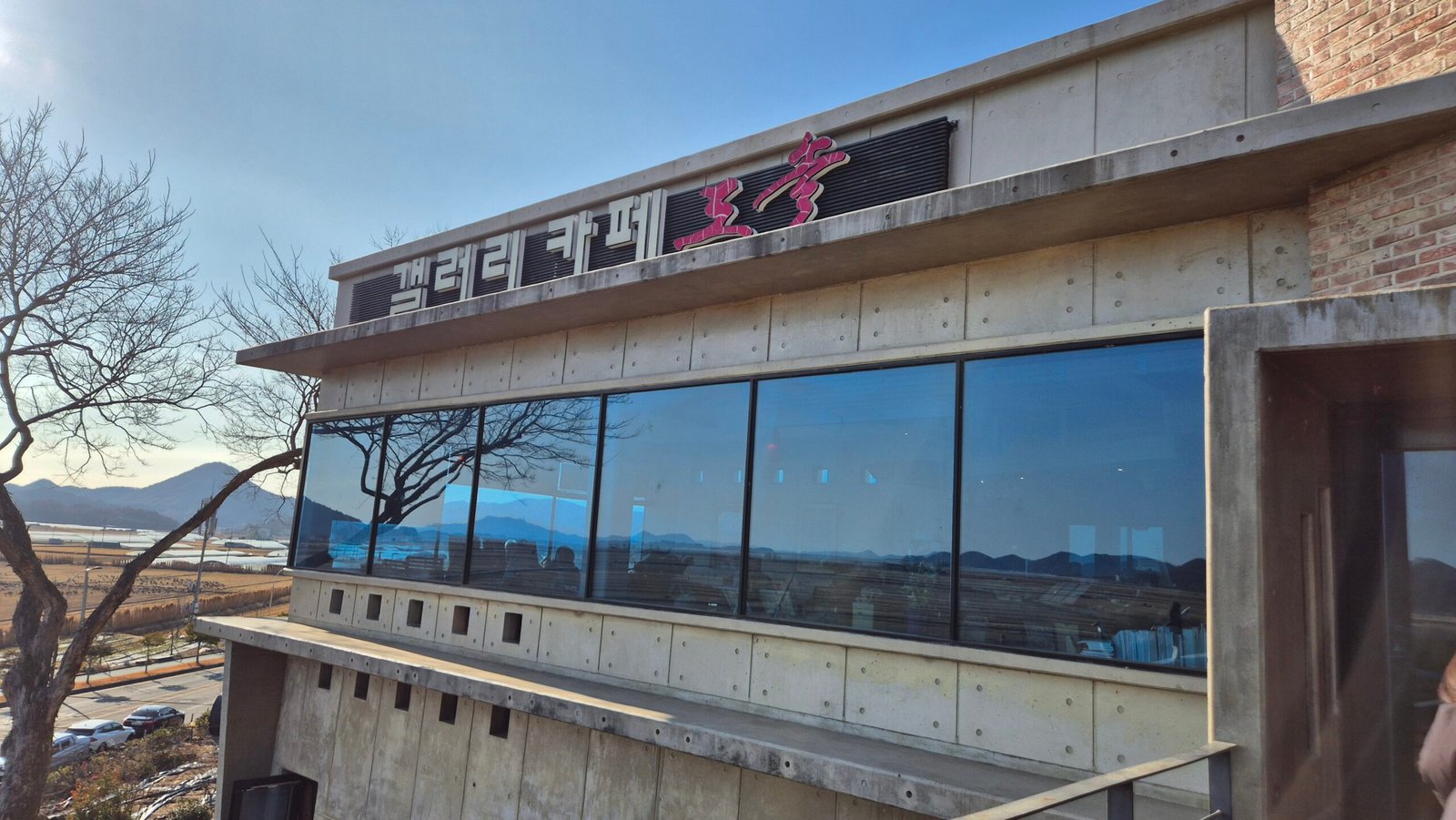
We visited a place called Gallery Cafe Dosol (갤러리 카페 도솔). It sits on a hill overlooking the Suncheonman Bay.
The cafe was run by an elderly couple who seemed to have retired to this quiet life. The first floor was like a small museum, filled with antiques they had likely collected over a lifetime. It was fun just looking around at the collection.
The Telescope Surprise
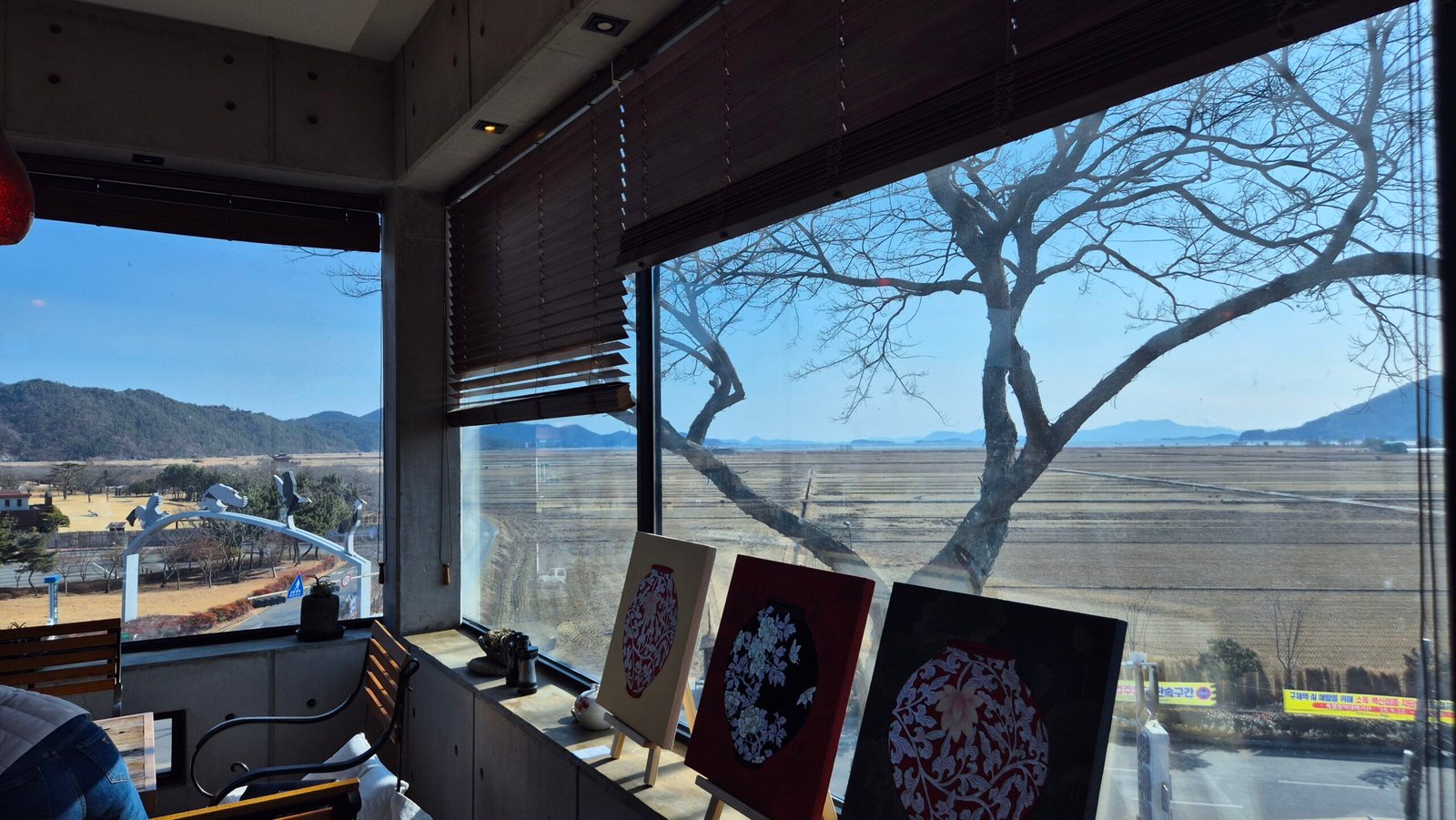
The highlight, however, was the view. The cafe had large windows facing the rice paddies, and the owner provided a high-quality telescope for guests.
We took turns looking through the scope. There they were—the Hooded Cranes we had seen yesterday, feeding peacefully just a few hundred meters away. Every time a guest looked through the lens, bursts of “Wow!” and applause filled the quiet cafe.
I ordered Jujube Tea (Daechu-cha). To be honest, I don’t remember the taste. It wasn’t bad, but my senses were entirely focused on the cranes dancing in the lens of the telescope. It was the perfect spot to rest and say goodbye to Suncheon.
Epilogue: The Beauty of Winter
We spent about an hour and a half at the cafe before I had to rush to Suncheon Station to catch my train.
As I boarded the KTX and waved goodbye to my sister, I reflected on the trip. This weekend was truly fantastic. Perhaps if we had come in spring for the plum blossoms, or in autumn for the maple leaves, the scenery might have been more colorful. But then, we would not have seen the Hooded Cranes.
I have no regrets. The cranes were a gift only winter could give. As for the beautiful Seonam-mae plum blossoms? Well, that just gives me a reason to come back spring.
Korean Culture portal KCulture.com
Founder of Kculture.com and MA in Political Science. He shares deep academic and local insights to provide an authentic perspective on Korean history and society.
![[Day 1] Suncheonman Wetland : A Winter Journey with Hooded Cranes](https://kculture.com/wp-content/uploads/2026/02/20260207-110013-1024x577.jpg)