Whether you’re watching Son Heung-min lead his team with the national emblem on his chest or getting lost in the epic scenes of a historical K-drama, one thing likely catches your eye: the striking, almost cryptic design of the South Korean flag. With its swirling red and blue center and mysterious black bars, it looks more like a philosophical code than a typical national banner. But what do these symbols actually represent? Beyond the flag, there are other hidden layers to Korea’s identity—a flower that ‘blooms forever’ and an anthem born from resilience. In this post, we’ll explore the fascinating history and deep meanings behind Korea’s three core symbols: the Taegeukgi, the Mugunghwa, and the Aegukga.
- The Birth of Taegeukgi: From Diplomacy to Resistance
- The Universe on a Canvas: Meaning of Taegeuk and Trigrams
- Aegukga: A Melody of Love and Independence
- Mugunghwa: The Flower That Never Fades
- Symbolism in Modern Korea: Customary Status and Daily Presence
The Birth of Taegeukgi: From Diplomacy to Resistance
The story of the South Korean flag, the Taegeukgi, is intimately tied to Korea’s transition into the modern international era. For centuries, the Joseon Dynasty did not have a national flag in the Western sense. It wasn’t until the late 19th century, during a period of intense diplomatic pressure from surrounding powers, that the need for a national symbol became urgent.
The first recorded use of a design resembling the modern Taegeukgi occurred in 1882. Bak Yeong-hyo, a Korean envoy to Japan, realized that Korea needed a flag to represent its sovereignty during diplomatic missions. He drew a design featuring the red and blue Taegeuk circle and the trigrams, which was then formally adopted by the Joseon government in 1883. It is fascinating to think that a design rooted in ancient Eastern philosophy was chosen specifically to help Korea navigate the complexities of modern Western-style diplomacy.
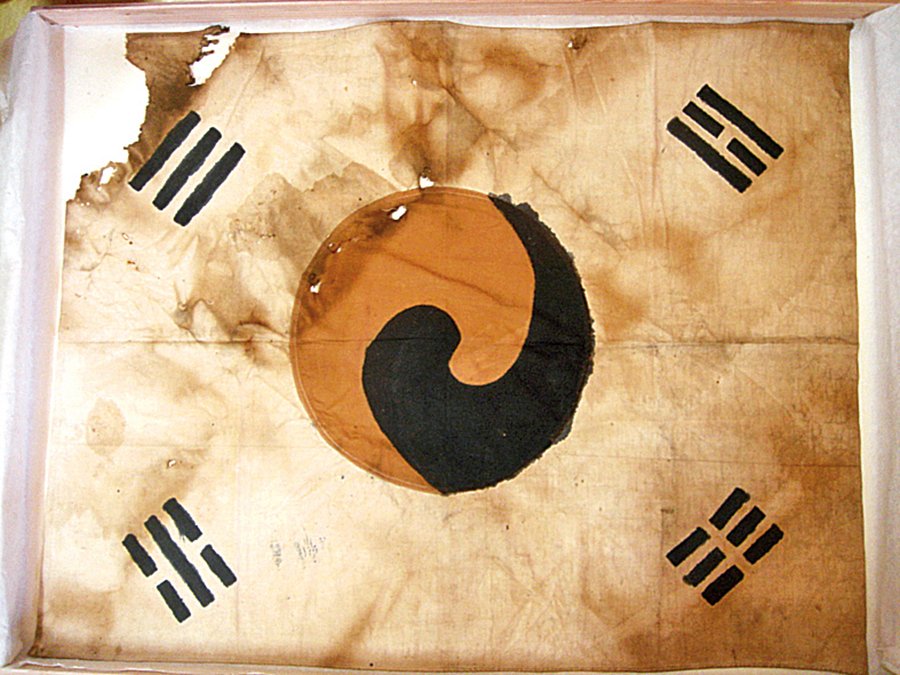
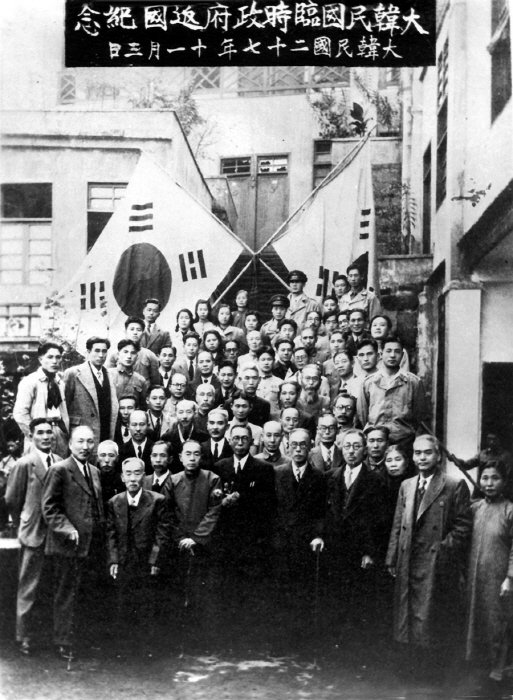
However, the flag truly became a “people’s symbol” during the Japanese colonial period (1910–1945). When Korea’s sovereignty was taken away, the Taegeukgi was banned, which only made it more precious. During the March 1st Independence Movement in 1919, thousands of Koreans took to the streets holding hidden, hand-drawn flags as a symbol of defiance and hope. Beyond the streets, the Provisional Government of the Republic of Korea and various independence armies carried the Taegeukgi into battle and diplomacy, treating it as the legitimate face of the nation. When the Republic of Korea was officially established in 1948, the government naturally chose the Taegeukgi as the official national flag.
The Universe on a Canvas: Meaning of Taegeuk and Trigrams
What makes the Taegeukgi unique among world flags is its deep philosophical foundation. It isn’t just a collection of colors; it is a visual representation of the universe and the harmony of opposites. As someone living in Korea, you start to see these patterns everywhere—in architecture, traditional clothing, and even modern branding.
The White Background
The white base of the flag represents purity, peace, and the “white-clad people” (Baek-ui-min-jok). Historically, Koreans favored white clothing, which symbolized a clean, honest, and peaceful spirit. It serves as the “empty space” from which the universe arises, reflecting a desire for tranquility and ethnic homogeneity.
The Taegeuk Circle
In the center is the Taegeuk circle, divided into red (Yang) and blue (Um/Yin). This represents the dualism of the universe: light and dark, heat and cold, masculine and feminine. The interlocking swirl suggests that while these forces are opposites, they are in a state of constant motion and perfect balance. It is a reminder that harmony is the successful balancing of opposing forces.
The Four Trigrams (Gwae)
In the corners of the flag are four black trigrams, known as Gwae. These are derived from the I Ching (Book of Changes) and represent the essential elements of the universe. Each trigram has a specific meaning and corresponds to a cardinal direction, a season, and a celestial body.
| Trigram | Korean Name | Meaning | Nature/Element |
|---|---|---|---|
| Top Left (3 solid lines) | Geon (건) | Heaven / Justice | Sky / Spring / East |
| Bottom Right (3 broken lines) | Gon (곤) | Earth / Abundance | Earth / Summer / West |
| Top Right (1 solid between 2 broken) | Gam (감) | Water / Wisdom | Moon / Winter / North |
| Bottom Left (1 broken between 2 solid) | Ri (리) | Fire / Light | Sun / Autumn / South |
Aegukga: A Melody of Love and Independence
The national anthem, Aegukga (meaning “The Song of Love for the Country”), has a history as poignant as the flag. Interestingly, the lyrics were written long before the current melody was composed. In the early 1900s, various lyrics were sung to the tune of the Scottish folk song “Auld Lang Syne.” It was the heart’s cry of a people longing for their lost homeland.
The lyrics are widely attributed to figures like Yun Chi-ho or the independence leader An Chang-ho. They speak of the East Sea, the granite peaks of Baekdusan Mountain, and the pine trees that stand firm against the wind. These are metaphors for the Korean people’s endurance. The refrain, which mentions the Mugunghwa flower, further solidifies the connection between these national symbols.
💡 Local Note: If you attend a formal event in Korea, you will notice people standing with their right hand over their heart. The emotion during the anthem is palpable, especially when it involves international sports, as it remains a symbol of the nation’s survival and success.
The modern melody was composed in 1935 by Ahn Eak-tai while he was living in Europe. He felt that Korea should have its own unique melody rather than using a foreign folk song. His composition was adopted by the Provisional Government in exile and officially became the national anthem with the founding of the republic in 1948.

Mugunghwa: The Flower That Never Fades
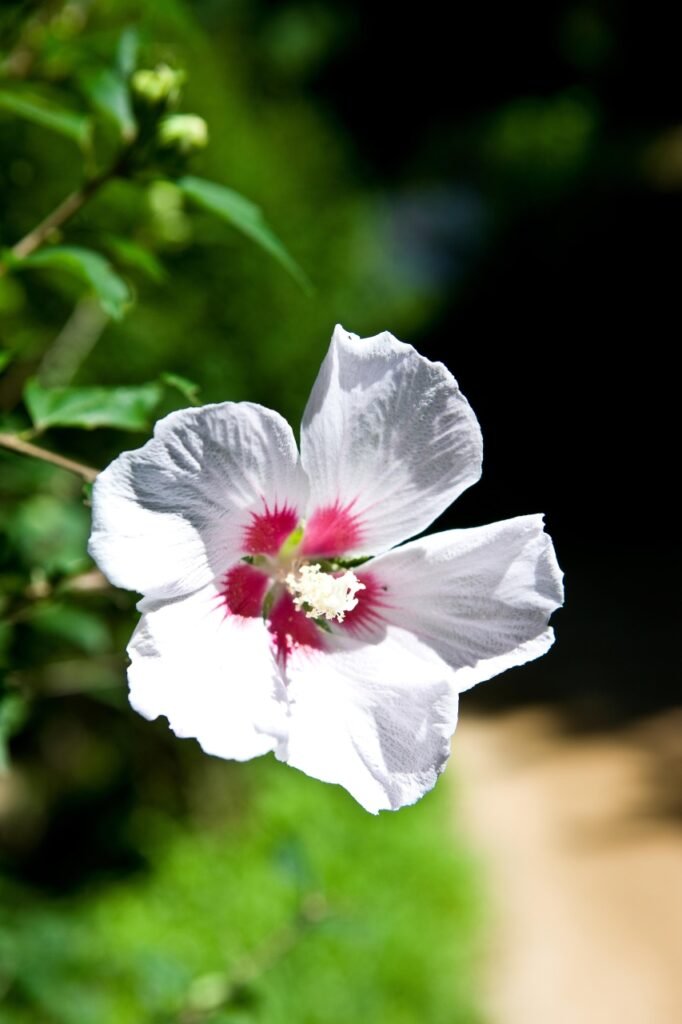
The Mugunghwa, known in English as the Rose of Sharon (Hibiscus syriacus), is the national flower of Korea. Its name is derived from the Korean word Mugung, which means “immortality” or “infinite.” This is a perfect metaphor for the Korean spirit because the flower is incredibly resilient; it is remarkably free from pests and can bloom in difficult soil conditions.
The flower’s history with Korea goes back thousands of years. Ancient Chinese records referred to Korea as the “Land of the Mugunghwa.” During the Japanese colonial era, the flower became a symbol of resistance. Because the flower was so deeply associated with Korean identity, the colonial government actually tried to eradicate it, even encouraging people to plant cherry blossoms instead. In response, independence activists planted Mugunghwa as an act of silent protest, representing a spirit that “blooms and blooms again, never fading.”
Today, the flower is integrated into the halls of power. It forms the base of the national emblem, the Presidential seal, and the insignia of the National Assembly. If you look at the badge of a Korean police officer or the lapel pin of a member of parliament, you will see the five petals of the Mugunghwa. It represents the “eternal” nature of the Korean state and its commitment to the people.
Symbolism in Modern Korea: Customary Status and Daily Presence
Here is an interesting fact about the South Korean national symbols: while the Taegeukgi is strictly protected by the “National Flag Act,” there is currently no specific law that officially designates the Mugunghwa as the national flower. It is recognized as the national flower through “customary law” (Gwanseup-beop), based on long-standing tradition and public consensus.
Because it lacks a formal legal foundation like the flag, there are ongoing arguments within Korean society and the legislature that a legal and institutional basis should be established. Proponents believe this would allow for more systematic preservation and promotion of the flower. Despite this lack of a formal “National Flower Act,” the Mugunghwa is treated with the highest respect in all government documents and state ceremonies.
In our daily lives, you will see a concerted effort to keep this symbol alive in the landscape. The government promotes the planting of Mugunghwa in public parks and along mountainsides. You might notice dedicated “Mugunghwa Gardens” in urban centers or rows of these flowers blooming along major highways during the summer months from July to September. These planting initiatives ensure that the flower remains a visible and living part of the Korean environment, reminding every passerby of the resilience it represents.
Korean Culture portal KCulture.com
Join the mailing service and add to your favorites.

Founder of Kculture.com and MA in Political Science. He shares deep academic and local insights to provide an authentic perspective on Korean history and society.