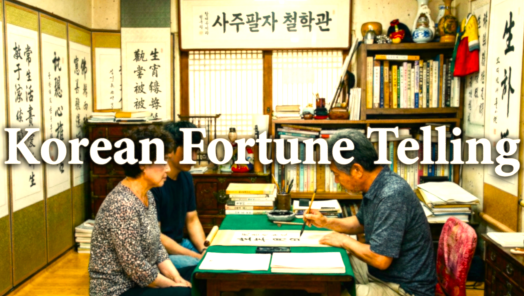
If you are a fan of K-dramas or Korean movies, you have definitely seen this scene before: The protagonist, facing a massive life crisis or a complicated love triangle, sits nervously across from a person in Hanbok (or sometimes just a regular suit) inside a cozy, dimly lit room. They hand over their birth date and time, and the fortune teller begins to scribble Chinese characters furiously on a piece of paper to reveal their destiny. This isn’t just a dramatic plot device; it is a very real, deeply ingrained part of daily life here. We are talking about Korean fortune telling Saju.
- What Exactly is Saju? Decoding the Name
- Origins: Statistics or Superstition?
- Saju vs. Shamanism: Clearing the Confusion
- The Four Pillars: How the System Works
- When Do Koreans Consult Saju?
- Experiencing Saju in Seoul: A Travel Guide
- Try It Now: Your Destiny via KCulture AI
What Exactly is Saju? Decoding the Name
To understand the Korean mindset, you have to understand Saju. The word Saju (사주) literally translates to “Four Pillars.” It is shorthand for Saju Palja (사주팔자), which means “Four Pillars and Eight Characters.” It sounds cryptic, but the concept is surprisingly logical.
Imagine your life is a building. The moment you were born—down to the exact year, month, day, and hour—defines the foundation of that building. These four time elements are the “Four Pillars.” Each pillar is represented by two characters (one Heavenly Stem and one Earthly Branch), totaling eight characters. Hence, the name.
💡 Local Insight: You might hear Koreans sigh and say, “Oh, it’s my Palja.” This is a fatalistic way of saying, “It’s my destiny/fate.” However, modern Saju is less about accepting a fixed fate and more about understanding your “weather forecast” so you can bring an umbrella if it’s going to rain.
Origins: Statistics or Superstition?
While Saju is a staple of Korean culture today, its roots dig deep into ancient China. It is based on Myungrihak (the study of the principles of fate), which evolved from ancient Chinese philosophy regarding the movement of the universe, nature, and energy.
Many foreigners dismiss Saju as mere superstition, similar to Western horoscopes found in the back of magazines. However, here in Korea, it is often viewed through a lens of “big data” accumulated over millennia. Think of it this way: For thousands of years, scholars observed patterns. They noted that people born with a certain energy configuration during a specific season tended to have specific personality traits, health issues, or life trajectories.
Saju uses the logic of the Five Elements (Wood, Fire, Earth, Metal, Water) and Yin-Yang theory to analyze these patterns. It provided guidance to ancestors on what careers to pursue, who to marry, and importantly, what to avoid. It is a system of categorization and probability rather than simple magic.
Saju vs. Shamanism: Clearing the Confusion
This is the most common point of confusion for visitors. You walk down a street in Hongdae and see flags with swastikas (a Buddhist symbol here) or white and red flags. Is that Saju? Not necessarily.
There are two main types of fortune telling in Korea:
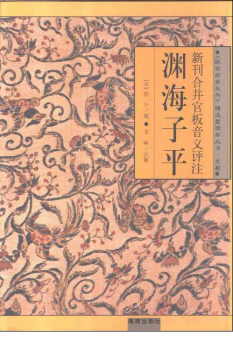
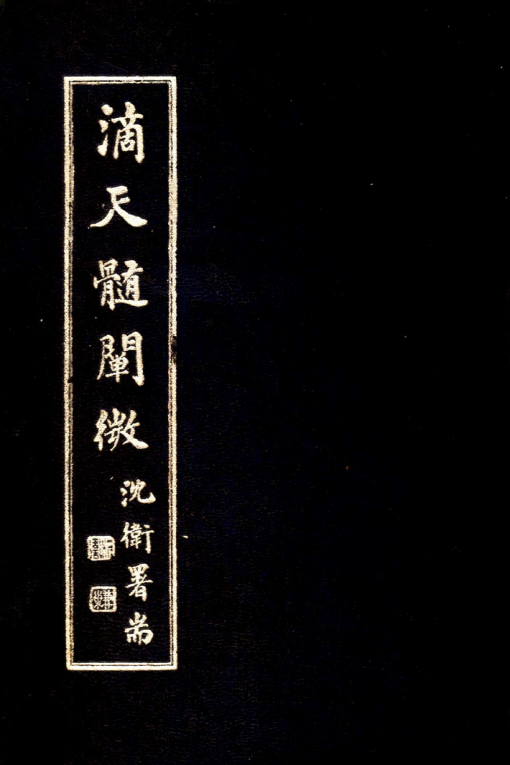
- Saju (Myungrihak): This is academic. The reader (often called a philosopher or scholar) uses a book (the Manseok) to calculate your chart based on your birth data. It is analytical, logical, and requires years of study. They interpret the text.
- Shamanism (Mudang/Sinjeom): This is spiritual. A Mudang (shaman) enters a trance and channels spirits or deities to give answers. They don’t necessarily need your birth time; they “see” or “hear” things.
If you see a calm scholar with a book, that’s Saju. If you see bells, colorful flags, and perhaps a more intense spiritual atmosphere, that is likely a Shaman. Saju is generally considered more approachable for the general public and is treated almost like a personality test or career counseling.
The Four Pillars: How the System Works
So, what do these pillars actually represent? When a master looks at your chart, they are analyzing the interaction between these four columns. Here is a simplified breakdown for beginners:
1. The Year Pillar
This represents your background, ancestors, and early childhood. It sets the broader context of your life, much like the root of a tree. It often indicates the environment you were born into.
2. The Month Pillar
This is associated with your parents and your youth. It is a strong indicator of your career path and social standing. In Saju analysis, the season of your birth (contained here) is crucial for determining the “temperature” of your chart.
3. The Day Pillar
This is the most important pillar. The “Day Master” (the upper character of the Day pillar) represents YOU. It defines your core identity, your ego, and your spouse. When people say, “I am Fire” or “I am Water” in Saju terms, they are referring to this specific character.
4. The Hour Pillar
This represents your later years, your children, and what you produce in life (your legacy). Since many people don’t know their exact birth time, this pillar is sometimes estimated, but having it ensures a much higher accuracy.
When Do Koreans Consult Saju?
Saju isn’t something Koreans check every day. It is reserved for pivotal moments. As a local, I can tell you that the Saju market booms during these specific times:
New Year (Sinnyeon Unse)
Between December and February, Saju cafes are packed. Koreans want to know their Sinnyeon Unse (New Year’s Luck). They ask: “Will I get a promotion this year?” or “Is this a good year to move houses?” It helps them plan their year strategically.
Gunghap (Marital Compatibility)
Before getting married, it is traditional for couples (or their parents!) to check Gunghap. This isn’t just “do we like each other?” It analyzes if the elements of the two people support or destroy each other. For example, if one person has too much “Fire” and the other is “Water,” it might be a passionate but destructive relationship. Conversely, “Wood” feeds “Fire,” suggesting a supportive partner.
Career and Education
Students finishing high school or university often consult Saju to find career paths that match their elemental nature. A person with strong “Water” energy might be advised to go into trade, diplomacy, or flow-based industries, while someone with “Metal” might be suited for law, military, or engineering.
Experiencing Saju in Seoul: A Travel Guide
If you are visiting Seoul, getting your Saju read is a fantastic, low-barrier cultural experience. You don’t need to go to a scary temple in the mountains. You can do it with an Iced Americano in hand.
Saju Cafes
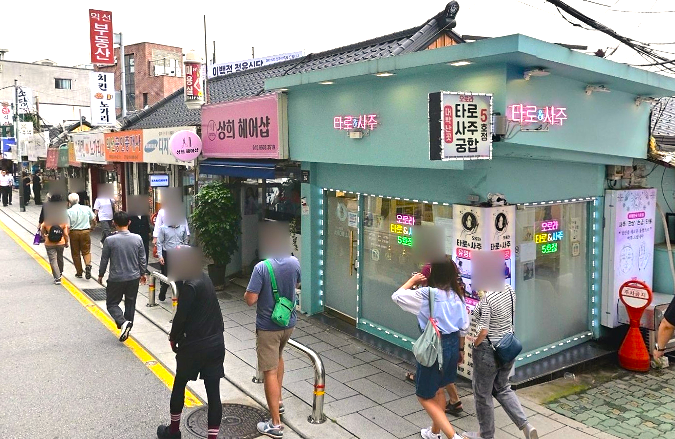
These look just like regular coffee shops but have private booths or tables where the masters sit. You buy a drink, pay a consultation fee (usually 30,000 to 50,000 KRW), and get a 30-minute reading. It’s casual, fun, and often brutally honest.
Street Tent Fortune Tellers
In areas like Hongdae (Hongik University Station) or Jongno-3-ga, you will see rows of vinyl tents illuminated by lamps at night. These are old-school. They are cheaper, grittier, and offer a very “real” Seoul vibe. However, English service is rare here.
📌 Travel Tip: If you don’t speak Korean, look for Saju Cafes in Myeongdong or Hongdae that explicitly advertise “English Available.” Alternatively, bring a Korean friend or use a high-quality translation app. Some younger masters are quite tech-savvy and can communicate well!
Try It Now: Your Destiny via KCulture AI
Are you curious about your Four Pillars but can’t fly to Seoul right now? Or perhaps you want to test the waters before visiting a cafe?
We have developed a state-of-the-art solution right here on KCulture.com. Our AI Saju Service isn’t just a random generator. It has been trained on classical Myungrihak texts that have been studied for centuries. It calculates the exact positioning of the stars and elements at your birth time to deliver a comprehensive reading.
Best of all? It is completely free.
You don’t need to sign up for a complicated subscription. Enter your birth details, and discover:
- Your dominant element and personality type.
- Your wealth and career luck for the year.
- Love and compatibility insights.
👉 Click here to try the KCulture AI Saju Service now.
Conclusion
Whether you believe in destiny or not, Saju is a fascinating window into the Korean soul. It reflects a culture that values harmony with nature, respects the cycles of time, and seeks wisdom in patterns. Sitting down for a reading is more than just fortune telling; it’s a form of therapy and introspection for many Koreans.
So, next time you are in Seoul, sit down at a cafe, sip some tea, and ask about your fate. Or, start right now with our AI tool. Who knows? Saju might just reveal a path you never knew was waiting for you.
Korean Culture portal KCulture.com
Join the mailing service and add to your favorites.

Founder of Kculture.com and MA in Political Science. He shares deep academic and local insights to provide an authentic perspective on Korean history and society.