
Stepping into a Korean Buddhist temple is not just a visit to a religious site; it is a physical walk through 1,700 years of philosophy, art, and harmony with nature. In this guide, we explore the intricate hierarchy of Buddhas and Bodhisattvas, the unique architectural identity that sets Korean temples apart from those in China and Japan, and the spiritual symbolism hidden in every gate and hand gesture. Whether you are seeking historical insight or spiritual peace, understanding these layers will transform your experience from a simple stroll into a profound cultural journey.(For the significance of Buddhism in Korea, please refer to ‘The Silent Soul of Korea: Buddhism, Society, and History‘.)
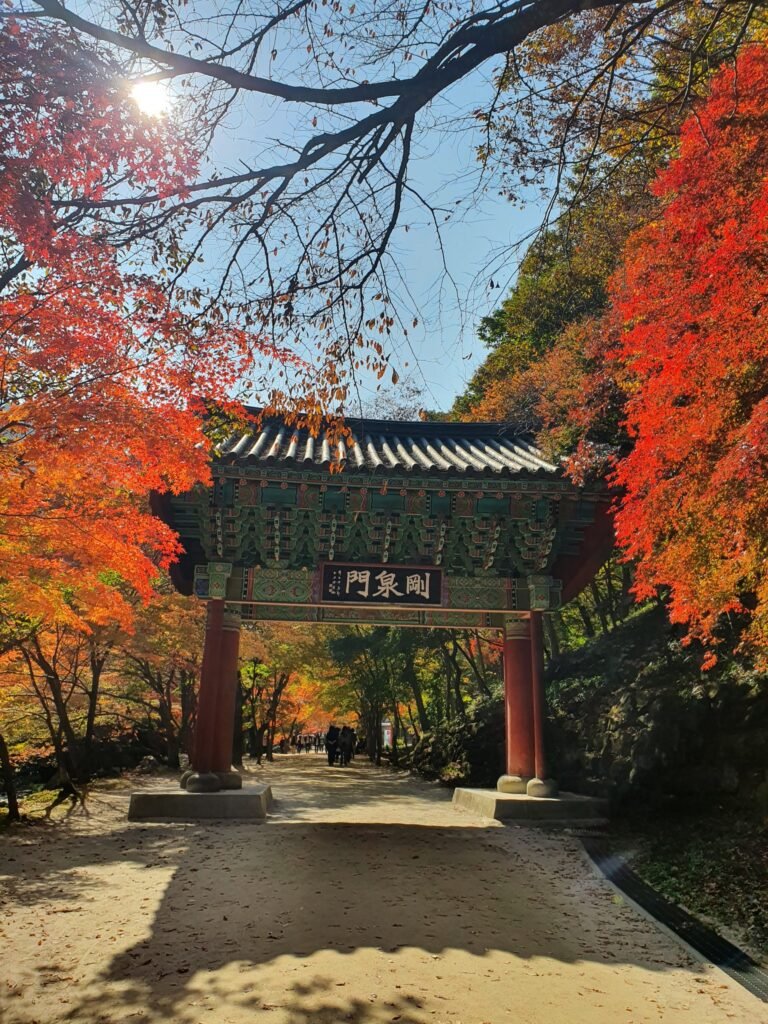
- What Makes Korean Temples Unique? (Korea vs. China & Japan)
- The Layout: A Journey from the Secular to the Sacred
- The Buddhas: Enlightened Beings and Their Iconic Halls
- Decoding Hand Gestures (Mudras) and Postures
- The Bodhisattvas: Compassionate Guides and Their Specialized Roles
- The Harmony of Buddhas, Bodhisattvas, and Local Spirits
- Temple Etiquette: Visiting with Respect
What Makes Korean Temples Unique? (Korea vs. China & Japan)
I often hear visitors ask, “Don’t all East Asian temples look the same?” While they share a common root, Korean temples have a distinct personality. Unlike Chinese temples, which often follow a rigid, symmetrical, and palatial layout on flat land to project imperial power, Korean temples—specifically the Sansa (mountain monasteries)—are designed to flow with the natural topography of the mountains. They are “organic” rather than “imposed” (Source: Cultural Heritage Administration of Korea).
Compared to Japanese Buddhism, which often emphasizes Zen minimalism and meticulously manicured “dry” gardens (Karesansui), Korean temples feel more colorful and “lived-in.” A defining characteristic of Korean Buddhism is Tong-bulgyo (Harmonized Buddhism), a tradition of blending different schools of thought into one. This is why you will see Shamanic shrines (Samsunggak) nestled right behind the main Buddha hall—a uniquely Korean integration of indigenous mountain spirit worship with Buddhist philosophy.
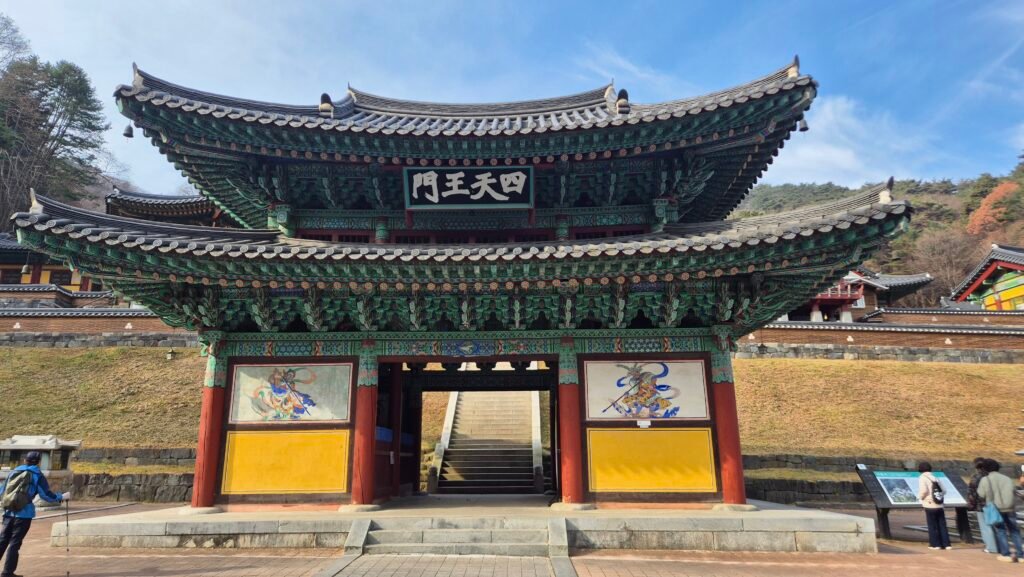
The Layout: A Journey from the Secular to the Sacred
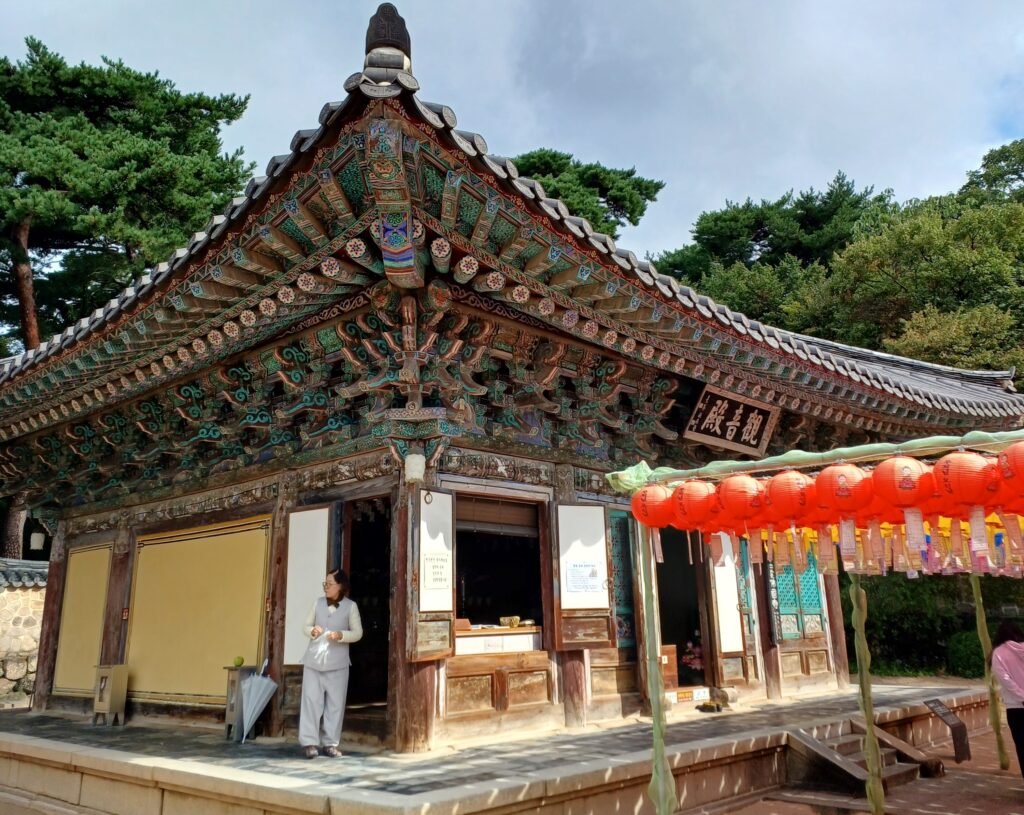
When you enter a temple, you aren’t just walking; you are symbolically shedding your worldly burdens. The layout is usually linear, leading you through three specific gates:
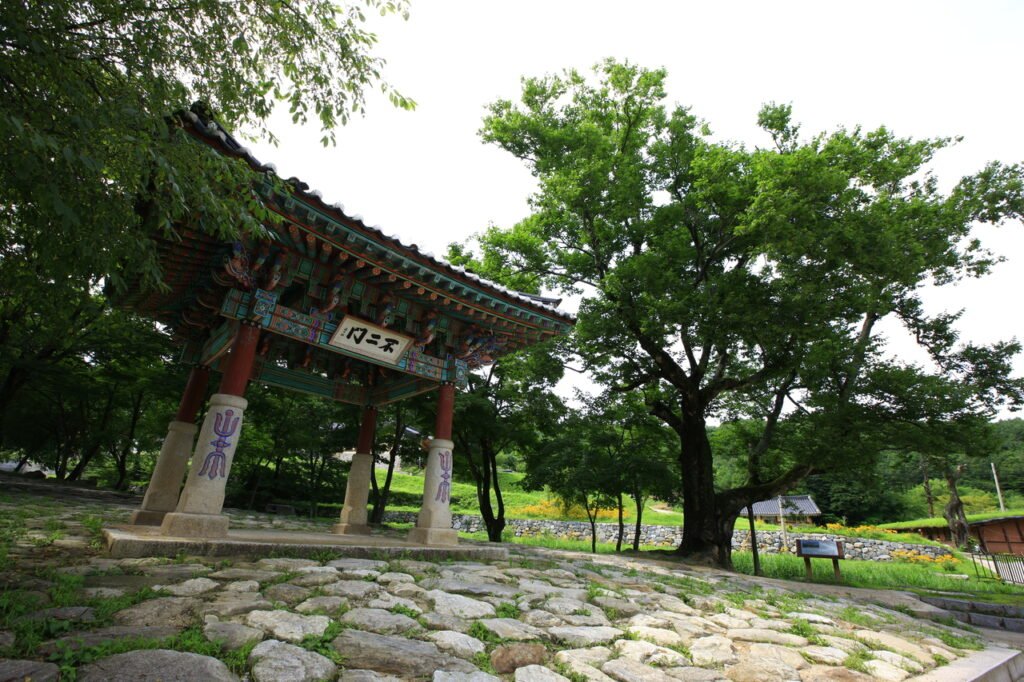
- Iljumun (One-Pillar Gate): The first gate. Viewed from the side, the pillars appear as one line, symbolizing “One Mind” (Il-sim). It represents leaving your scattered thoughts behind to enter the world of truth.
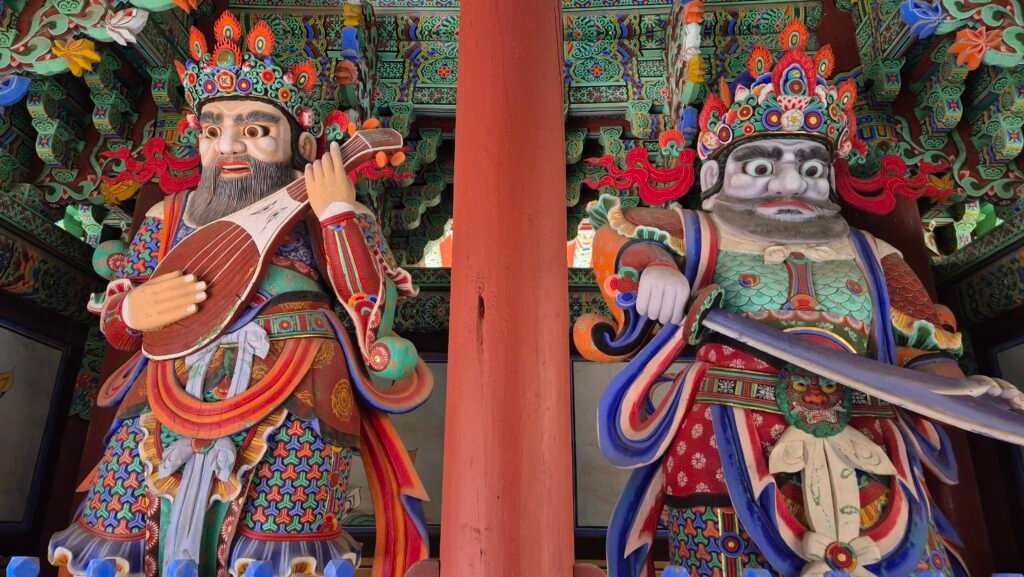
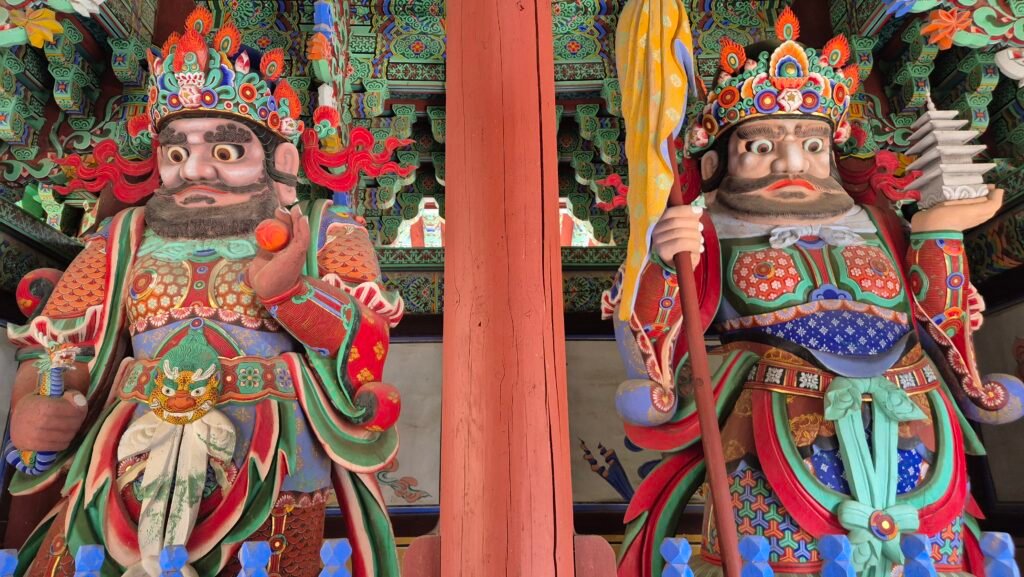
- Sacheonwangmun (Four Heavenly Kings Gate): Here, you meet four fierce-looking guardians. They protect the Buddha’s teachings and ward off evil spirits. Don’t be scared—they are there to protect the practitioners!
- Bulimun (Gate of Non-Duality): The final gate before the main courtyard. “Non-duality” means that life and death, you and I, are not two separate things but one. Passing this gate signifies readiness to face the Buddha.
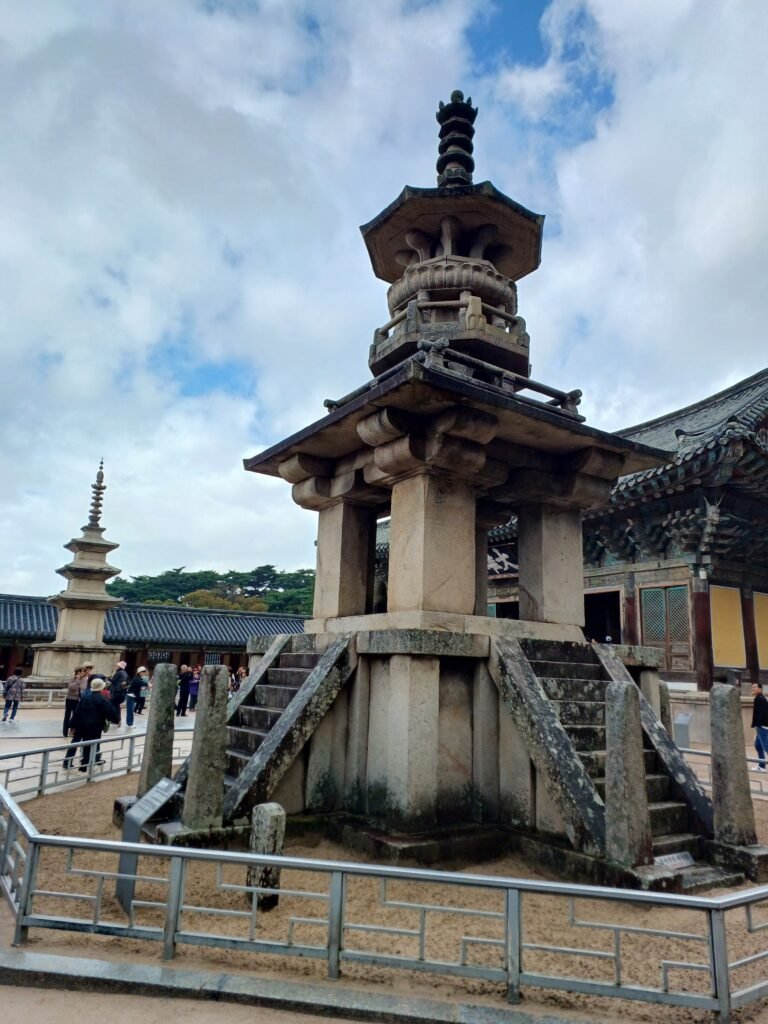
💡 Pro Tip: Look for the Pagoda (Tap) in the main courtyard. In Korean Buddhism, the pagoda is considered the “tomb” of the Buddha, originally built to house his relics (Sari). Walking clockwise around the pagoda while praying is a common way to earn spiritual merit.
The Buddhas: Enlightened Beings and Their Iconic Halls
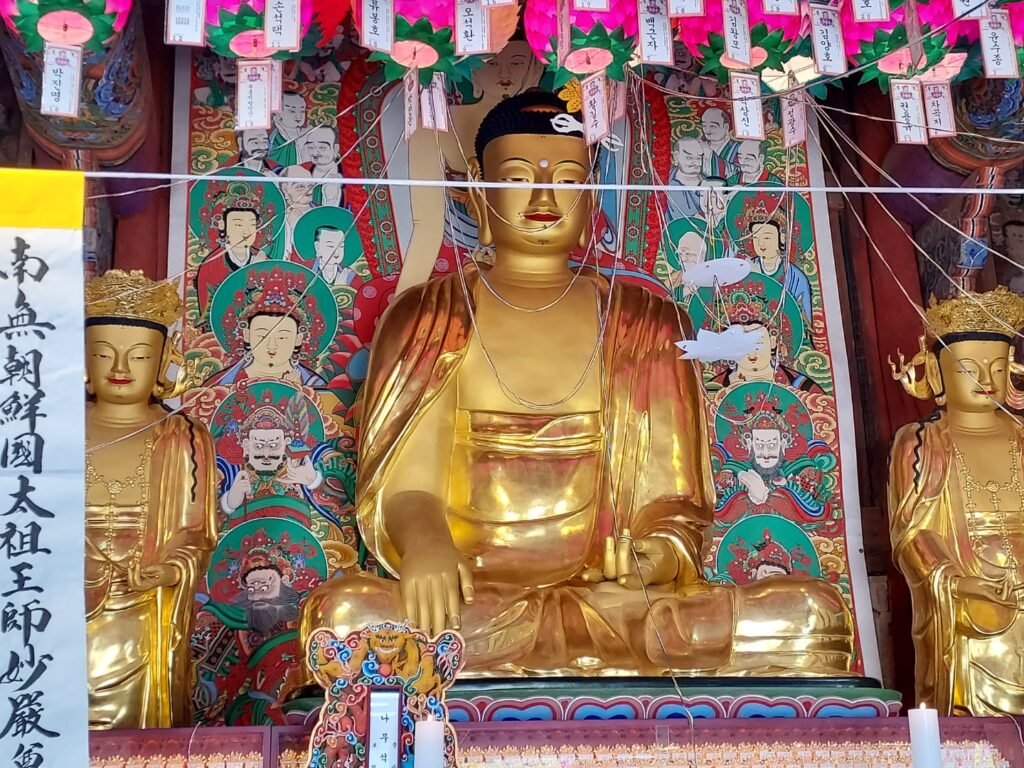
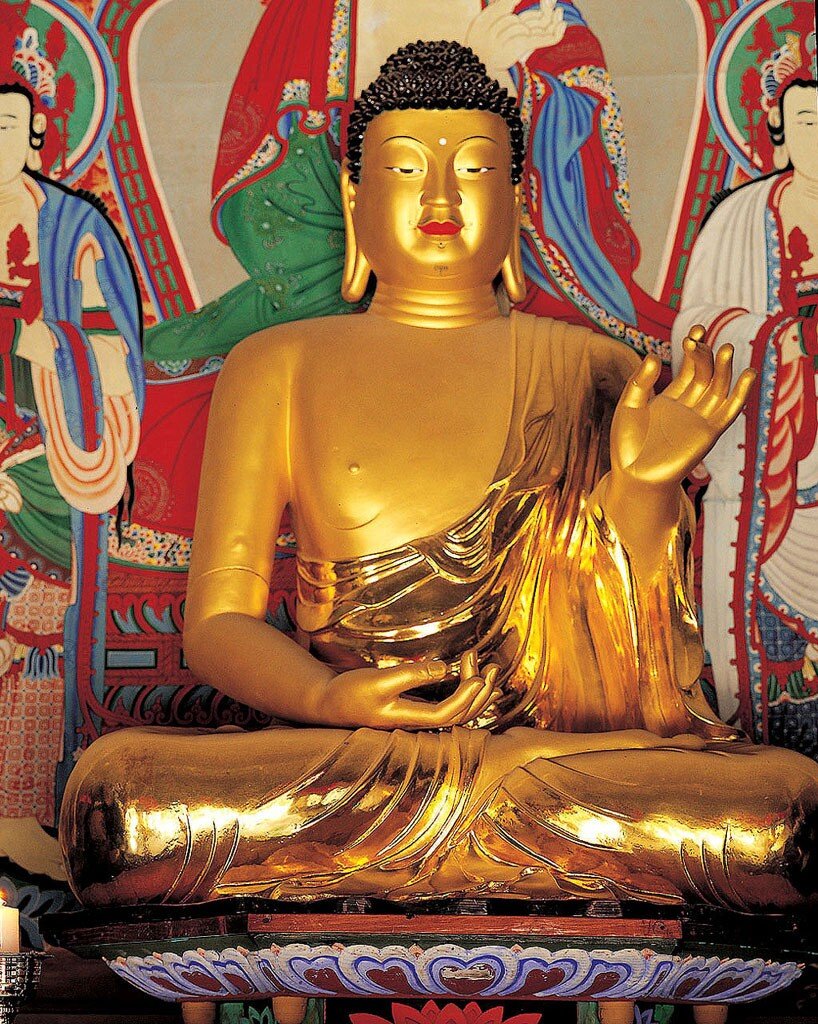
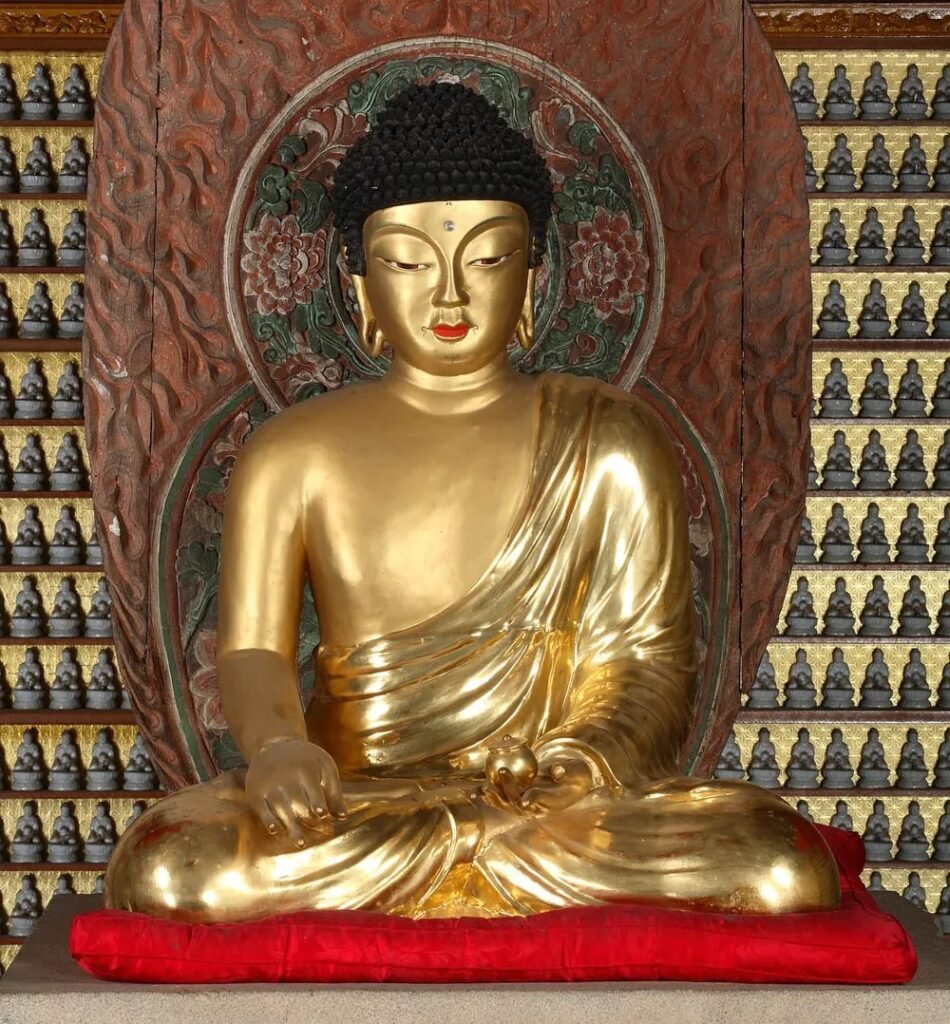
It can be confusing to see so many different statues. A simple trick to identify a Buddha (Beop-sin) is to look at their attire. Buddhas have achieved full enlightenment; therefore, they wear simple monk’s robes with no jewelry and have curly hair resembling small shells (Nabal).
| Buddha Name | Hall Name (Korean) | Significance |
|---|---|---|
| Seokgamoni-bul | Daeungjeon | The historical Buddha (Siddhartha Gautama), the “Great Hero.” |
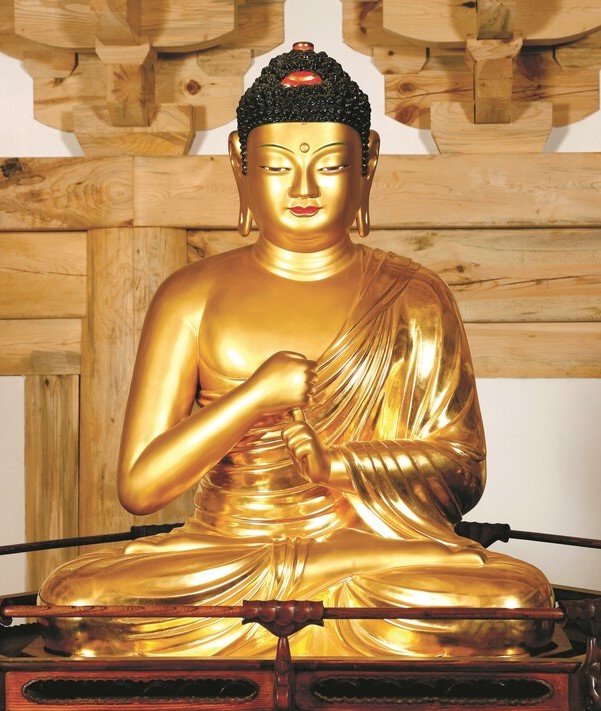
| Birojana-bul | Daejeokgwangjeon | The Cosmic Buddha representing the absolute truth and light. |
| Amita-bul | Geukrakjeon / Muryangsujeon | The Buddha of Infinite Light who guides souls to the Western Paradise. |
| Yaksa-yeorae-bul | Yaksajeon | The Medicine Buddha who heals physical and spiritual ailments. |
Decoding Hand Gestures (Mudras) and Postures
The secret to “reading” a Buddha statue lies in the hands, known as Su-in. These gestures tell you exactly which Buddha you are looking at and what they are “saying.”
- Hangma-chokji-in (Earth-Touching Gesture): One hand reaches down to touch the ground. This represents the moment Seokgamoni reached enlightenment and called the Earth to witness his victory over temptation.
- Jigwon-in (Wisdom Fist): The index finger of one hand is wrapped by the other hand. This is the signature of Birojana-bul, symbolizing that the world of sentient beings and the world of Buddhas are one.
- Simuoe-Yeowon-in (Fear Not & Charity): One hand raised (palm out) and one hand lowered. It says, “Do not fear, I will grant your wishes.” This is often seen on standing Buddhas.
The Bodhisattvas: Compassionate Guides and Their Specialized Roles
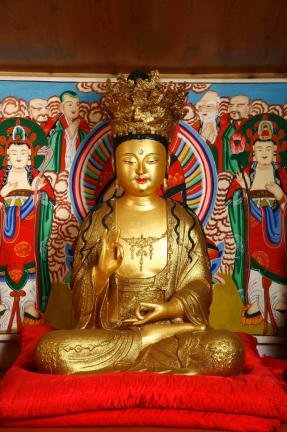
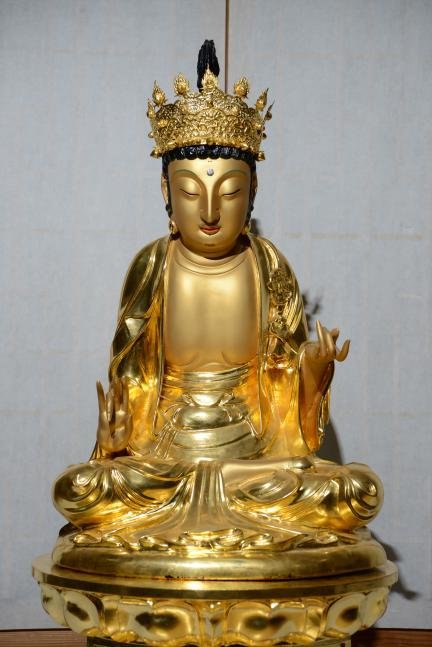
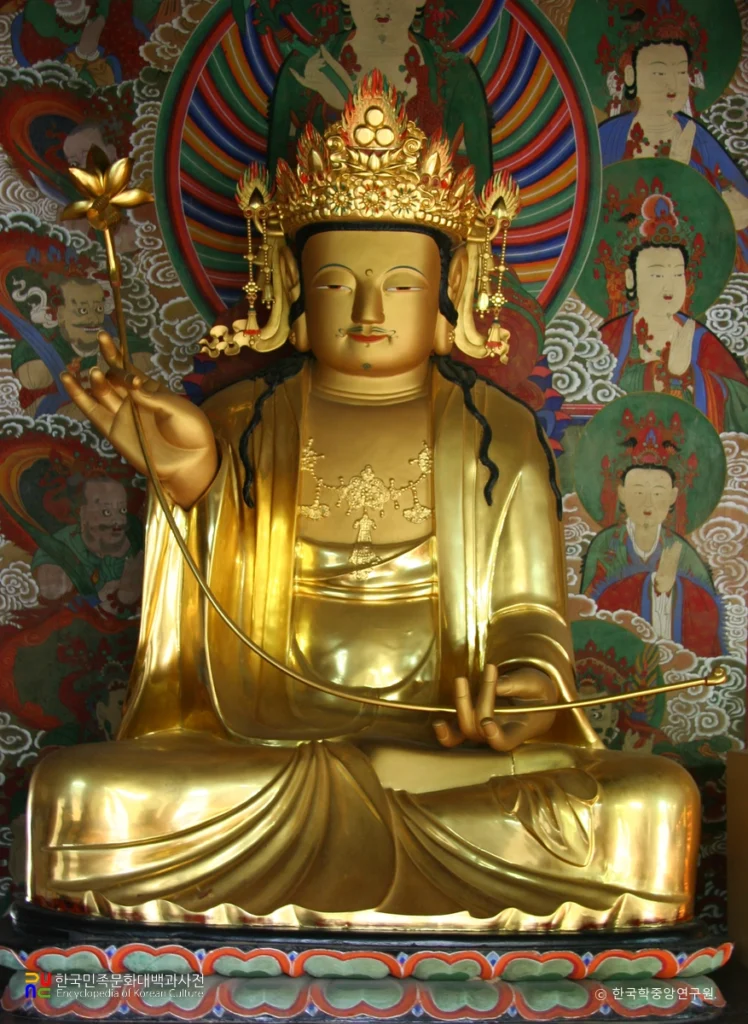
While Buddhas represent the goal, Bodhisattvas (Bosal) represent the journey. They are beings who have reached the brink of enlightenment but chose to stay in this world to help others. You can identify them because they are “fancier”—they wear ornate crowns, jewelry, and flowing silks (reminiscent of Indian royalty).
Key Bodhisattvas and Their Meaning
- Gwanse-eum Bosal (Avalokiteshvara): The Bodhisattva of Compassion. Often called the “Goddess of Mercy” in the West, she hears the cries of the world. She is often found in the Gwaneumjeon or Wontongjeon.
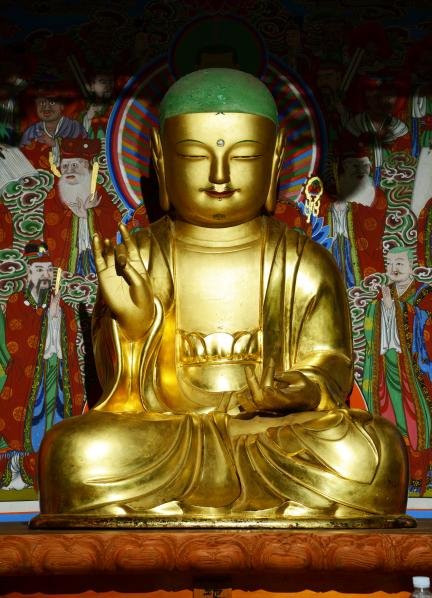
- Jijang Bosal (Ksitigarbha): The Bodhisattva of the Underworld. He vowed not to become a Buddha until the very last soul was rescued from hell. He is unique because he often looks like a monk with a shaved head or a green scarf. You’ll find him in the Myeongbujeon, where people pray for deceased ancestors.
- Munsu & Bohyeon Bosal: These two usually flank Seokgamoni-bul. Munsu represents Wisdom (often riding a lion), and Bohyeon represents Action/Practice (often riding an elephant).
📌 Local Note: Why are there halls with only Bodhisattvas? Places like the Gwanumjeon are “specialized” spiritual clinics. If you are suffering from deep grief, you go to Gwanse-eum. If you are mourning a lost loved one, you go to the Jijangjeon. These halls offer a more intimate, specialized connection than the grand main hall.
The Harmony of Buddhas, Bodhisattvas, and Local Spirits
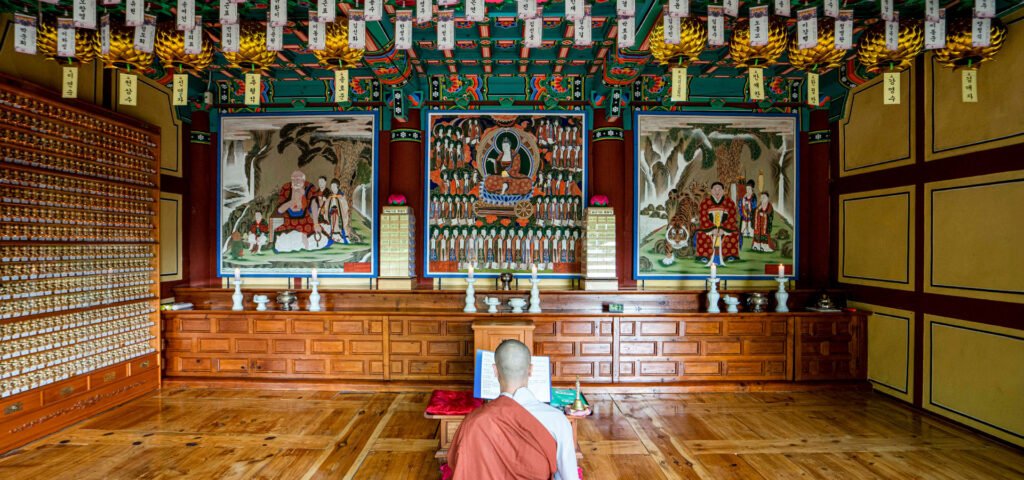
The way Buddhas and Bodhisattvas are arranged is called Bul-dan. Typically, a Buddha is at the center, flanked by Bodhisattvas who act as “ministers” or assistants. This reflects a celestial court where wisdom (Buddha) is supported by compassion and action (Bodhisattvas).
In the higher parts of the temple complex, you will find the Samsunggak (Three Saints Hall). This is a fascinating Korean touch. It houses the Mountain Spirit (Sansin), the Recluse (Dokseong), and the Seven Stars (Chilseong). By placing these local deities within the temple grounds, Korean Buddhism successfully embraced the local culture rather than erasing it, creating a “multi-layered” spiritual space where everyone—even local spirits—could work toward enlightenment.
Temple Etiquette: Visiting with Respect
Honestly, you don’t need to be Buddhist to visit, but following a few local customs will make your visit much more meaningful:
- The Side Door Rule: Never enter a hall through the front center door; that is for monks and the Buddha. Use the side doors.
- The Shoes: Remove your shoes before stepping onto the wooden floors of the halls. Place them neatly facing away from the hall.
- Hapjang (The Bow): When greeting a monk or standing before a statue, put your palms together at chest level and bow slightly. It means “We are one.”
- Walk the Sides: In the courtyard, try to walk along the edges rather than right down the middle, which is traditionally reserved for the spirit of the Buddha.
Korean temples are places of deep silence and profound history. By understanding who sits within the halls and why the gates are placed as they are, you aren’t just a tourist—you become a part of a 1,700-year-old conversation about what it means to be human.
Korean Culture portal KCulture.com
Join the mailing service and add to your favorites.

Founder of Kculture.com and MA in Political Science. He shares deep academic and local insights to provide an authentic perspective on Korean history and society.