
If you’ve watched the Netflix global phenomenon Squid Game, you’ve seen the intense, life-or-death versions of games like Ddalgi-chigi and Marbles. But here in Korea, these aren’t just cinematic plot devices—they are the heartbeat of our childhood memories and a window into the Korean spirit of Jeong (community affection) and healthy competition.
Today, I’m taking you on a deep dive into the authentic rules, origins, and cultural significance of these traditional games. Whether you’re a K-culture enthusiast or looking for fun activities to try with friends, this guide will show you how to play like a true local.
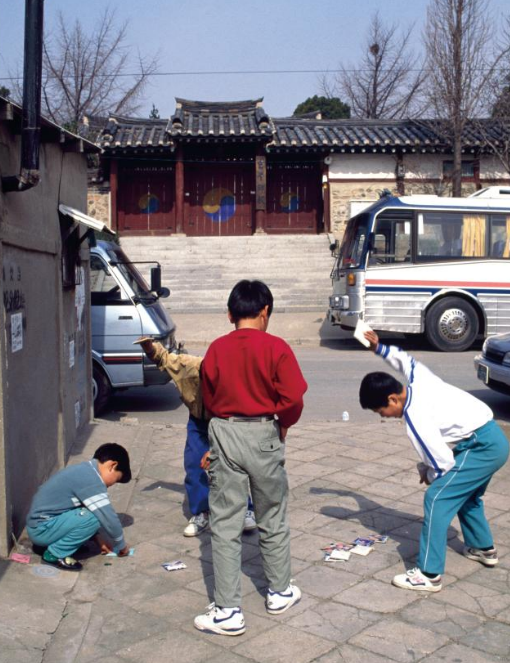
1. Ddakji-chigi (Paper Tile Flipping)
In Squid Game, this was the recruiter’s game. In real life, it’s a test of strength and precision.
The Origins
Traditionally called Ttangji-chigi or Ppyachi-chigi, this game dates back to times when paper was a luxury. Children would use thick book covers or layered Hanji (traditional paper) to create sturdy tiles. By the mid-20th century, recycled calendars and fertilizer bags became the favorite materials for making “King Ddakjis.”
How to Play
The goal is simple: use your Ddakji to flip your opponent’s Ddakji over.
- The Flip (Classic): Players RPS (Rock-Paper-Scissors) to decide who goes first. The loser places their tile on the ground. The winner slams their tile down; if the wind or impact flips the bottom tile, the winner takes it!
- The Push-Out: Draw a circle. Players take turns trying to knock the opponent’s tile out of the ring.
- Wall Hitting: Toss tiles against a wall; the one that bounces back furthest wins.
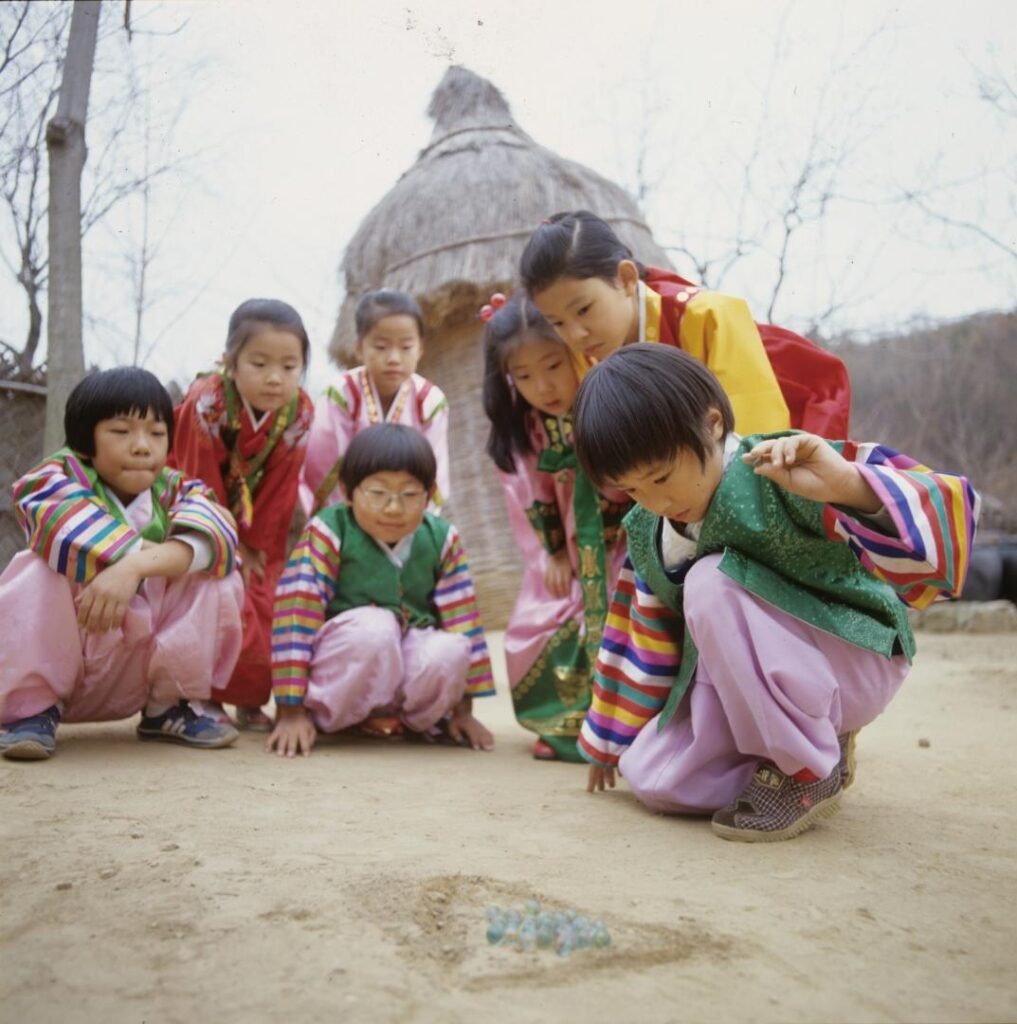
2. Guseul-chigi (Marbles)
This game represents the nostalgia of the 1970s and 80s in Korea, often played in the dirt alleys of Seoul.
Cultural Context
Before glass marbles became common during the Japanese colonial era, Korean children used rounded clay balls dried in the shade or smooth pebbles from streams. It was primarily a winter game for boys, fostering focus and fine motor skills.
Popular Variations
- Bom-deul-gi (Hole In): Dig small holes in the ground. You must flick your marble into each hole in sequence.
- Triangle Game: Draw a triangle and place several marbles inside. Players flick their “striker” marble from a distance to knock others out of the triangle.
- Odd or Even (Hol-jjak): A game of intuition where you hide marbles in your fist and the opponent guesses if the number is odd or even—exactly as seen in the heart-wrenching episode of Squid Game.
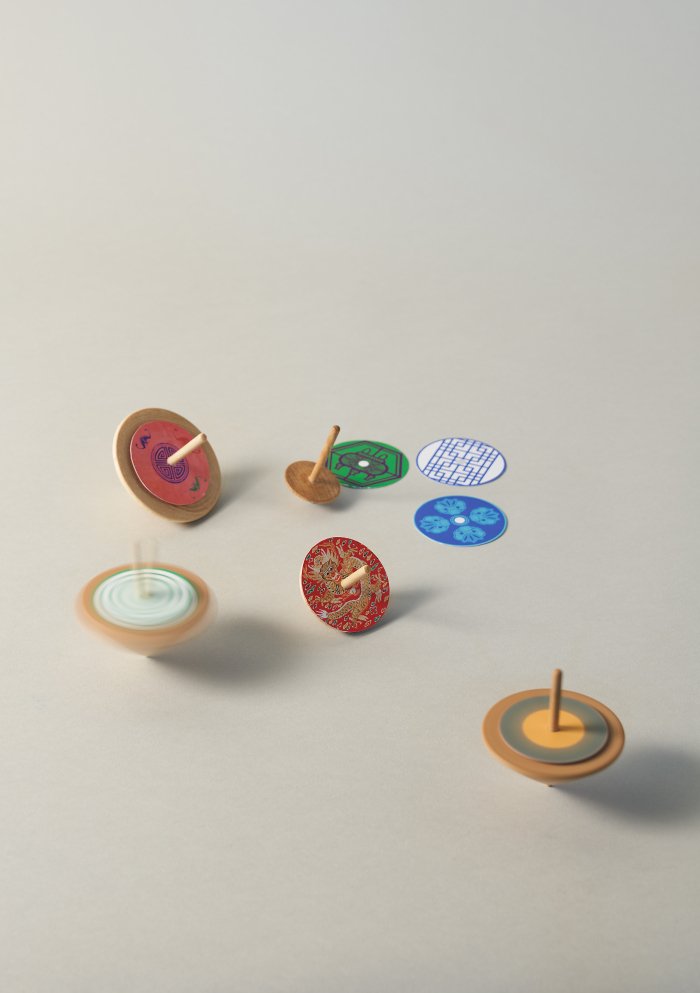
3. Paengi-chigi (Top Spinning)
Winter in Korea meant frozen rice paddies and rivers, the perfect “arenas” for top spinning.
A Piece of History
Records in the Nihon Shoki (Chronicles of Japan) suggest that Korean tops were introduced to Japan during the Silla Dynasty (around the 8th century), proving this game has been a staple for over a thousand years.
Gameplay Styles
- Endurance: Players spin their tops simultaneously. The last one spinning wins.
- Top Battle: Players use their spinning tops to physically collide with the opponent’s, trying to knock it over.
- Distance Racing: Players “whip” their tops with a string attached to a stick to move them toward a finish line 5–10 meters away.
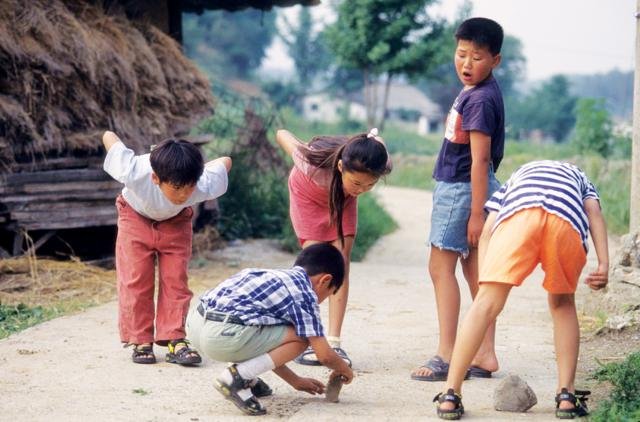
4. Biseok-chigi (Stone Standing)
This game involves knocking over a standing stone (Biseok) using your own stone through various physical challenges.
The Grudge-Turned-Game
Legend says that in the past, corrupt officials would force villagers to build “monuments of virtue” (Songdeokbi) for them. Angry villagers would kick or throw stones at these monuments. Eventually, this act of rebellion evolved into a structured game.
The “Levels” of Difficulty
This is essentially a “level-up” game. You start by simply throwing a stone, but as you progress, you must carry the stone in difficult ways:
- Rabbit: Holding the stone between your ankles and jumping toward the target.
- Newspaper Boy: Tucking the stone under your armpit.
- General: Balancing the stone on your shoulder.
- Rice Cake Vendor: Balancing it on top of your head!
5. Gonggi-nori (Korean Jacks)
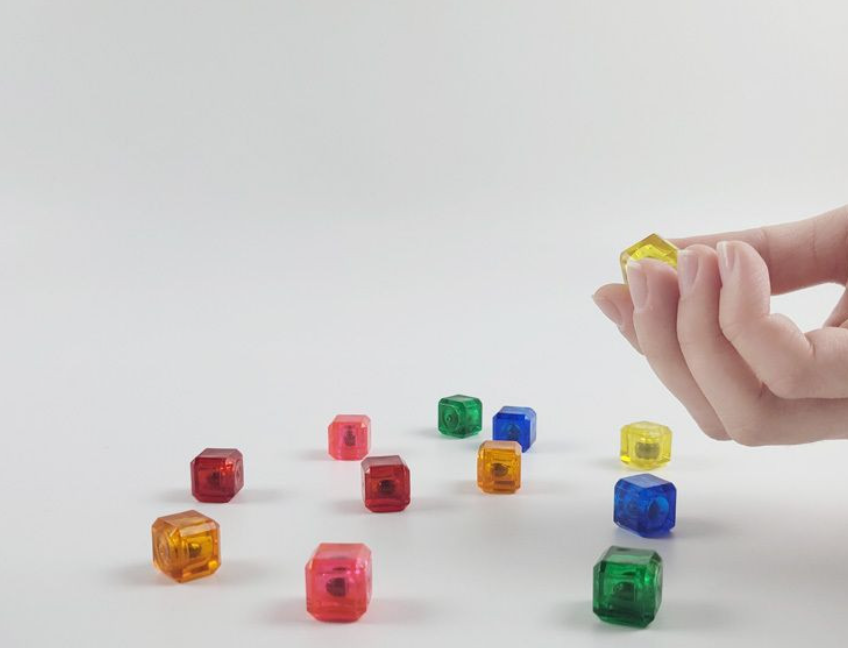
While many games were traditionally for boys, Gonggi was the beloved pastime of girls across the peninsula.
How to Play
Using five small plastic (or stone) pieces, you progress through five levels:
- Level 1-4: Throw one stone up and pick up the remaining stones on the floor (one by one, then two by two, etc.) before catching the falling one.
- Level 5 (The Snap): Toss all five stones, catch them on the back of your hand, toss them again, and snatch them in mid-air. The number of stones caught equals your “score” or “age.”
6. Jegi-chagi (Korean Shuttlecock)
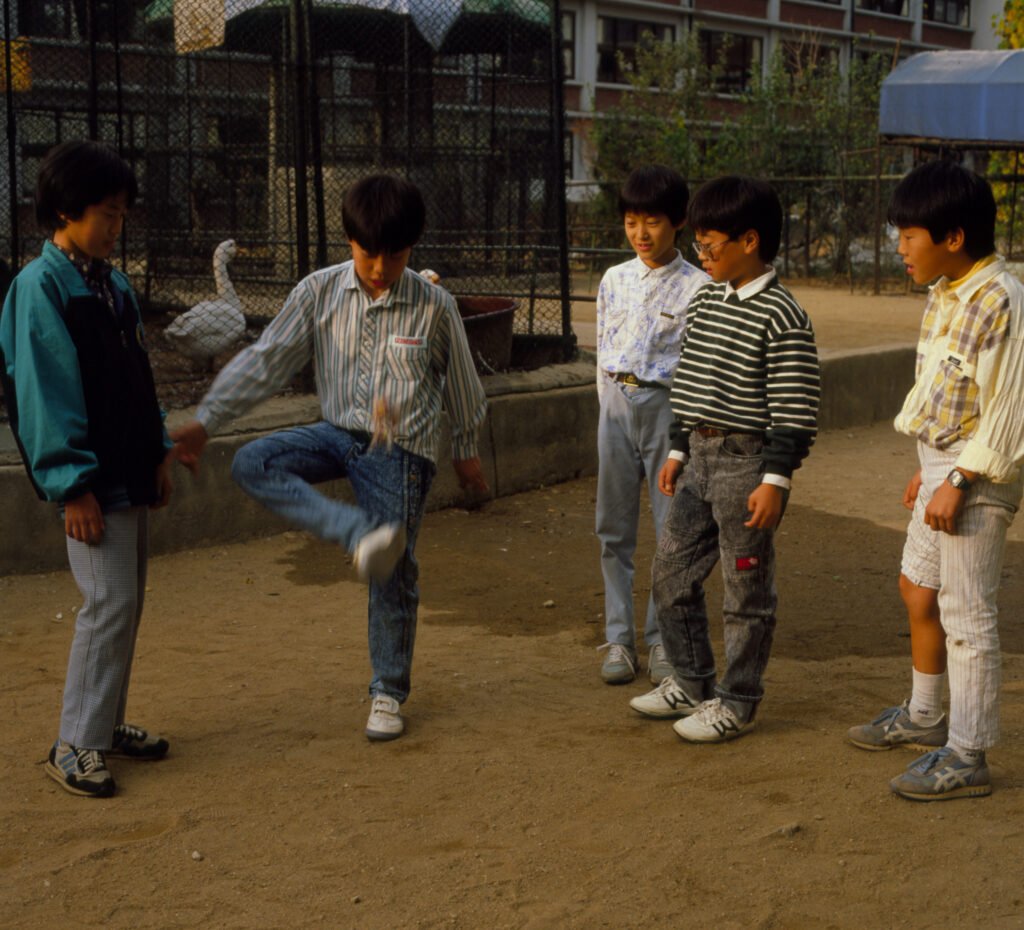
Similar to hacky sack but using a Jegi—a weighted object wrapped in paper or cloth with a feathered tail.
Authentic Variations
- One-Foot Kick: Keeping one foot on the ground while the other kicks.
- Aerial Kick: The kicking foot never touches the ground between hits.
- Mouth Catch: After a series of kicks, you must catch the Jegi in your mouth!
7. Yut-Nori (The Ultimate Board Game)
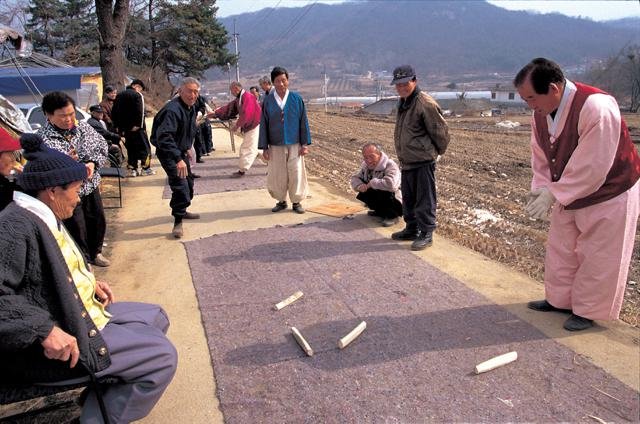
If there is one game that defines Korean family gatherings (especially during Lunar New Year), it is Yut-Nori.
Why it Matters
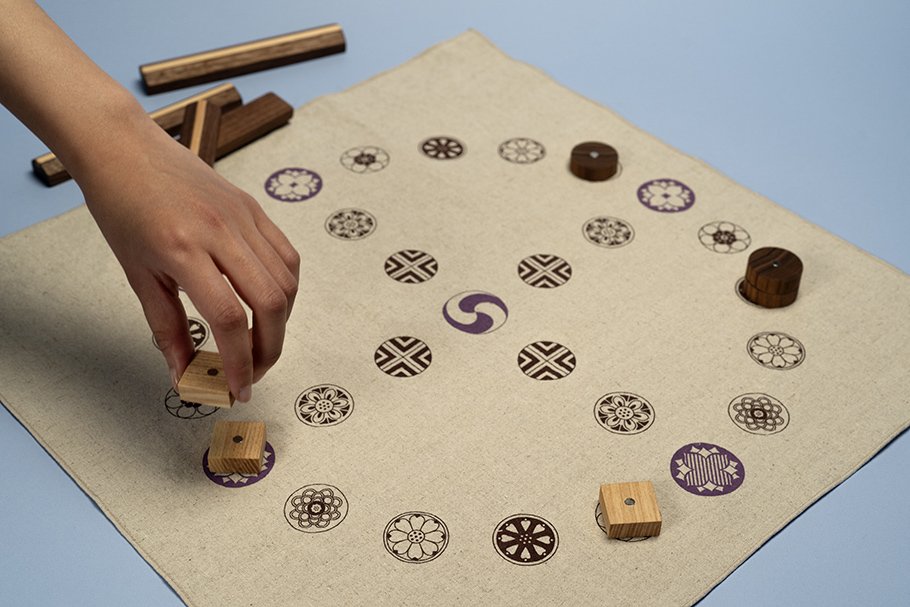
It is more than a game; it was historically used for divination to predict the year’s harvest. The four sticks (Yut) represent livestock: Pig (Do), Dog (Gae), Sheep (Geol), Cow (Yut), and Horse (Mo).
Strategic Play
- Catching: If you land on an opponent’s piece, you “catch” it (sending it back to start) and get an extra turn.
- Piggybacking: If you land on your own piece, you can “stack” them and move them together. High risk, high reward!
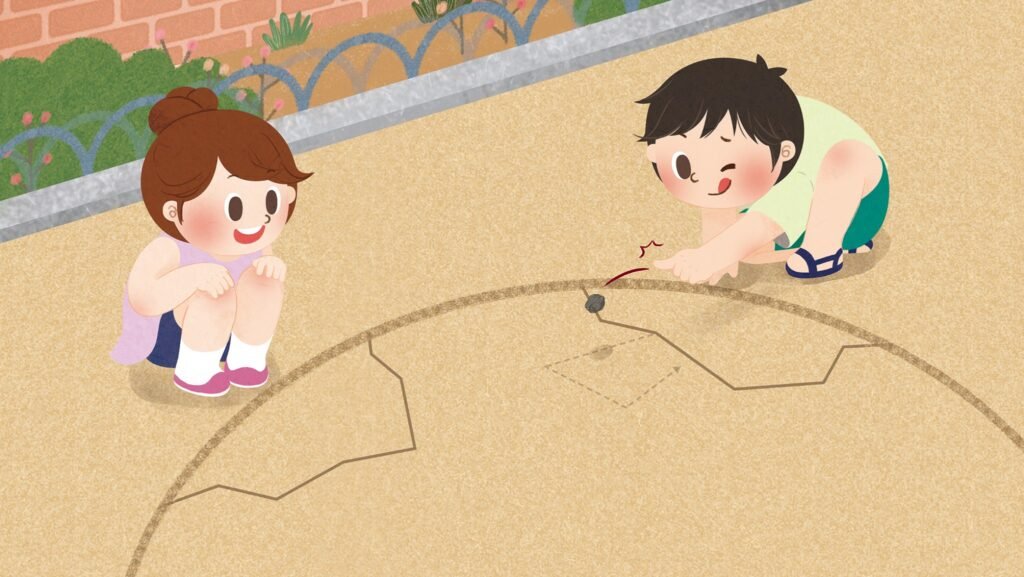
8. Ttang-tta-meok-gi (Land Grabbing)
Reflecting the historical desire for land ownership, this game involves flicking a small stone (called a Mang) three times to return to your “home” base. If successful, the area enclosed by the stone’s path becomes your territory.
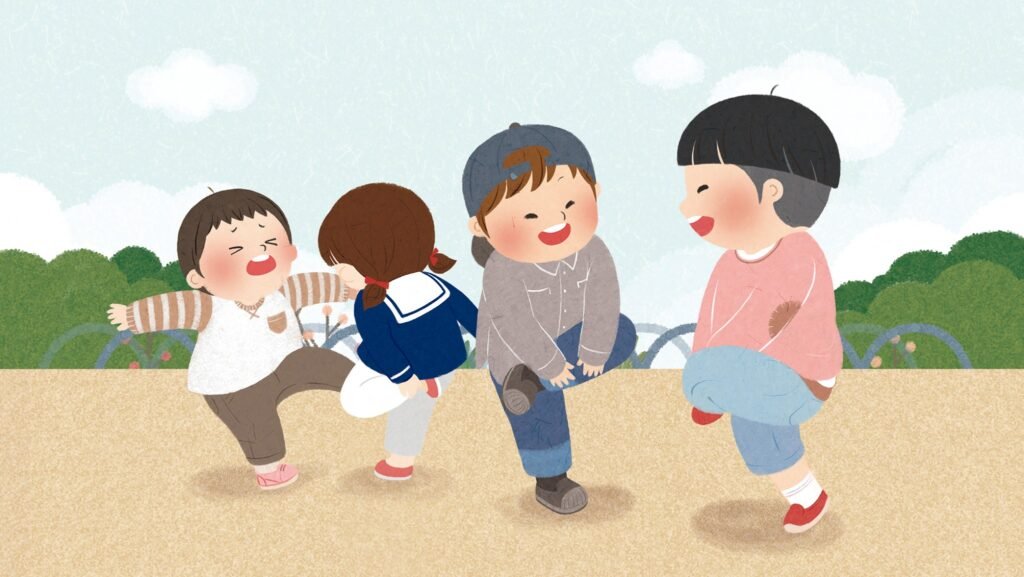
9. Dak-ssaum (Chicken Fight)
A test of balance and strength. Players hold one leg up with their hands and hop on the other, using their knee to bump opponents.
- Pro Tip: Do not use your hands to push! That’s a foul. Victory goes to the one who stays upright the longest.
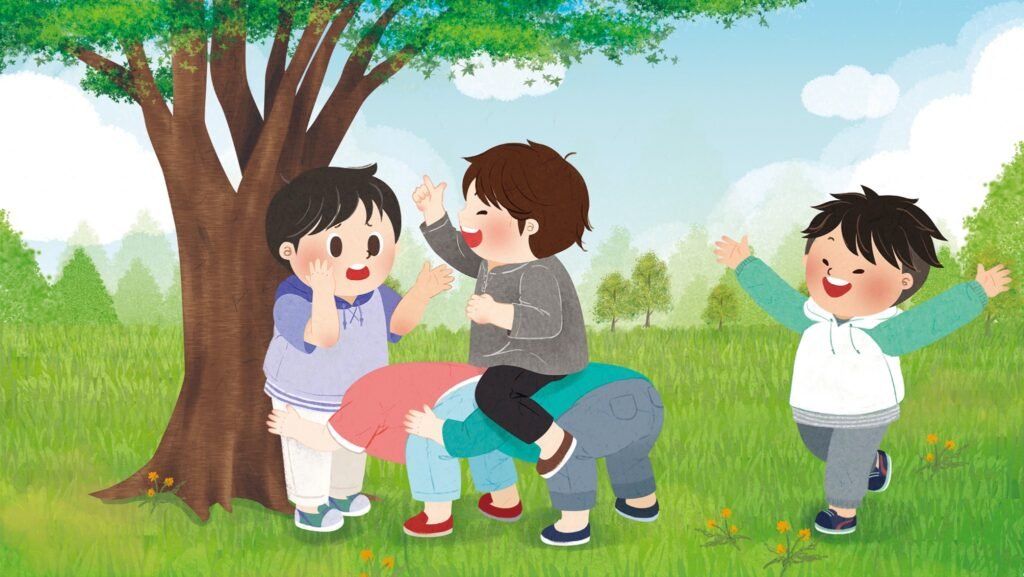
10. Malttuk-bakgi (Leapfrog / Post-and-Rider)
A high-energy team game where one team forms a human “horse” by lining up and bending over, and the other team leaps onto their backs.
- The Decider: Once everyone is on, the “leaders” of each team play Rock-Paper-Scissors to determine who wins the round.
💡 K-Expert Tips for Visitors
If you’re visiting Korea and want to try these yourself:
- Where to Buy: You don’t need a specialized shop. Most Daiso or Artbox locations in Korea sell affordable sets for Yut-Nori, Jegi, and Gonggi.
- Where to Play: Visit the National Folk Museum of Korea or Namsangol Hanok Village. They often have dedicated areas where tourists can play these games for free.
Traditional games are a bridge to understanding the Korean heart—they prioritize the group over the individual and find joy in the simplest materials.
A lifestyle writer covering K-beauty, fashion, and art. Kyoung shares honest insights on K-pop and smart shopping, capturing the vibrant trends of modern Korea.