Living in Korea, I’ve witnessed firsthand how the massive success of The King’s Warden has captivated both local and international audiences, sparking intense curiosity about the real history behind the drama. To give you a clear answer: The Gyeyu Jeongnan (The Coup of 1453) was a bloody and pivotal political usurpation in the Joseon Dynasty where Grand Prince Suyang seized power from his young, politically isolated nephew, King Danjong. In this article, I will guide you through the complex background of this tragedy—from the boy king’s vulnerability to the intense power struggle between the royal family and ambitious ministers—offering a balanced, historical perspective to help you fully appreciate this dramatic era of Korean history.
- The Phenomenon of “The King’s Warden” and Media Depictions
- A Vulnerable Boy King: The Roots of the Crisis
- The Night of Blood: The Gyeyu Jeongnan Coup
- The Ultimate Loyalty: The Sayuksin and Saengyuksin
- The Tragic End of the Boy King
- Historical Verdict: A Villain or a Necessary Monarch?
- Timeline of the 1453 Coup
- Footsteps of the Tragedy: Historical Sites to Visit
The Phenomenon of “The King’s Warden” and Media Depictions
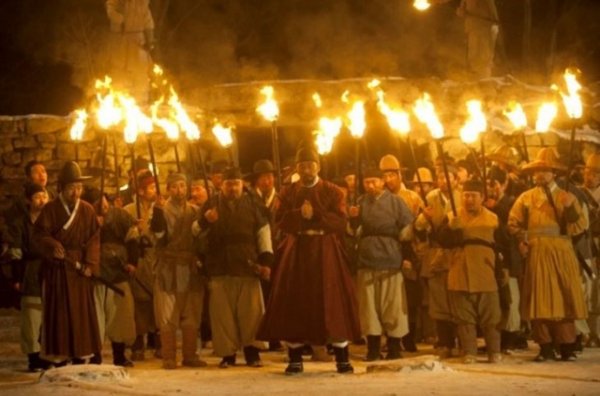
The recent explosion of interest in Joseon royal history across North America and the UK can largely be attributed to the sensational hit, The King’s Warden. This production has managed to humanize historical figures who are often reduced to mere villains or victims in textbooks. If you want a deeper dive into why this show resonates so profoundly with modern audiences, I highly recommend reading our insightful analysis: The Sociological Meaning of The King’s Warden.
Because the events of 1453 are so dramatically compelling, they have been a favorite subject for Korean cinema and television. For those who want to explore more visual storytelling surrounding this era, here are a few notable titles to look up:
- The Face Reader (관상, 2013)
- The Princess’ Man (공주의 남자, 2011)
- Queen Insoo (인수대비, 2011)
A Vulnerable Boy King: The Roots of the Crisis
To understand the sheer brutality of the Gyeyu Jeongnan, we must first look at the tragic circumstances surrounding King Danjong’s ascension. His father, King Munjong, was a brilliant ruler. Even during his time as Crown Prince under King Sejong the Great, Munjong handled many state affairs and left significant achievements. However, his reign as king was tragically short-lived.
Worse still, Munjong passed away without a living Queen. In the Joseon Dynasty, a young king usually relied on the Queen Mother or strong maternal relatives for political protection. The 12-year-old Danjong was left completely alone, surrounded by ambitious uncles and formidable veteran ministers.
The consolidation of power by these veteran ministers, most notably Kim Jong-seo and Hwangbo In, soon crossed the line into arrogance. A glaring symbol of their overreach was the practice of Hwangpyojeongsa (황표정사, Yellow Mark Administration). The ministers would place a yellow mark next to the names of their preferred candidates for government appointments, leaving the young King Danjong to simply rubber-stamp their choices. This effectively stripped the throne of its crucial personnel authority. Furthermore, Prime Minister Hwangbo In even mobilized royal palace guards to construct his own private residence, a brazen display of disrespect toward the royal family that fueled widespread resentment.
💡 Historical Insight: King Munjong, anticipating his early death, entrusted the protection of his son to these powerful ministers. While their initial loyalty to the late king was strong, their subsequent abuse of Shin-gwon (ministerial power) deeply alienated the royal family and inadvertently handed a perfect moral pretext to those planning a rebellion.
The Night of Blood: The Gyeyu Jeongnan Coup
The excessive authority wielded by Kim Jong-seo and his faction deeply threatened Grand Prince Suyang, the second son of King Sejong and Danjong’s uncle. Suyang was a man of immense ambition, military prowess, and political cunning. To solidify their grip on the court, the powerful ministers allied themselves with Grand Prince Anpyeong, Suyang’s culturally refined and popular younger brother. This alliance sparked rampant rumors across the capital.
The streets whispered about the blatant practice of Bungyeong (분경), where ambitious politicians and opportunists shamelessly flocked to the private residences of powerful figures to seek patronage. Grand Prince Anpyeong’s house became the epicenter of this political lobbying, swarming day and night with officials seeking favors. This gave Suyang his perfect justification: he argued that the ministers and Anpyeong were building a private faction to orchestrate a treasonous conspiracy to usurp the boy king.
Positioning himself as the loyal defender of the royal house, Suyang struck on a fateful night in late 1453, aided by ruthless strategists like Han Myeong-hoe and Kwon Ram. He personally led assassins to murder Kim Jong-seo. Immediately after, using a forged royal decree, he summoned court officials to the palace gates, slaughtering those on a premeditated “death list.” Overnight, Suyang became the undisputed ruler of Joseon, rendering Danjong a terrified puppet.
The Ultimate Loyalty: The Sayuksin and Saengyuksin
The story of the 1453 coup is not only defined by the ruthless ambition of King Sejo, but also by the breathtaking, unyielding defiance of those who opposed him. In 1455, the terrified 15-year-old Danjong was forced to abdicate. However, loyalty to the legitimate boy king burned fiercely within the hearts of Joseon’s true Confucian scholars.
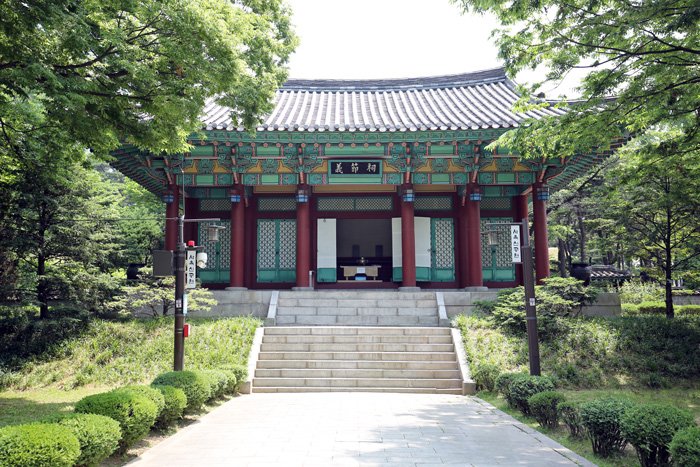
In 1456, a secret plot was hatched to assassinate King Sejo during a diplomatic banquet and restore Danjong to the throne. The plot was betrayed, and the ringleaders were captured. What followed was a display of unimaginable resilience. Six prominent ministers, including the brilliant scholar Seong Sam-mun, were subjected to horrific torture. Their bones were broken and their flesh seared with red-hot irons, yet they refused to bow, refusing even to address Sejo as “Your Majesty.” They were brutally executed, their families annihilated, and their names erased. Today, these men are venerated as the Sayuksin (The Six Martyred Ministers), the ultimate symbols of blood-stained loyalty in Korean history.
But the tragedy did not end with the dead; it lived on in the surviving scholars known as the Saengyuksin (The Six Alive Ministers). Disgusted by Sejo’s usurpation, these six men chose a path equally agonizing in its own right. They abandoned their prestigious government posts, turned their backs on the world, and wandered as hermits, monks, or madmen. Scholars like Kim Si-seup refused to ever set foot in the capital again, living out their days in deafening silence. Their quiet rebellion proved that living for one’s principles sometimes requires just as much courage as dying for them.
The Tragic End of the Boy King
The failed restoration plot of the Sayuksin sealed Danjong’s fate. Furious and paranoid, King Sejo demoted his young nephew to “Prince Nosan” and exiled him far from the capital. When another plot to restore Danjong was uncovered a year later—this time led by Sejo’s own brother, Grand Prince Geumseong—Sejo decided to permanently eliminate the threat.
In 1457, the 16-year-old former king was stripped of his royal status entirely. While circumstantial evidence suggests that King Sejo issued a royal command for Danjong’s death, the exact manner of his execution remains one of the most debated controversies of the era. The official Veritable Records of King Sejo state that Danjong committed suicide upon hearing the decree. However, historians view this account with deep skepticism, as these records were compiled by the very merit subjects who orchestrated the coup and held absolute power under Sejo’s regime.
According to widely accepted unofficial histories (Yasa) and local lore from Yeongwol, the boy king did not actually drink poison (Sasa). The royal envoy allegedly fell to the ground weeping, unable to carry out the horrific order. In this agonizing stalemate, legends state that Danjong, accepting his tragic fate with quiet dignity, personally commanded a local servant (known as a Tongin) to end his life. Following the young king’s final order, the servant strangled him with a bowstring. Regardless of the exact mechanism of his execution, Danjong died alone in his desolate exile, becoming a tragic martyr whose sorrowful tale would be whispered by the common people for centuries.
Historical Verdict: A Villain or a Necessary Monarch?
For international readers, it is easy to view King Sejo purely as a bloodthirsty usurper. However, Korean historical assessment is far more nuanced. While his methods were undoubtedly cruel and his hands were stained with the blood of loyalists and his own family, Sejo’s reign brought much-needed stability to a nation on the brink of factional warfare.
He was a highly effective monarch who strengthened the nation’s foundations, centralized royal authority, and began compiling the Gyeongguk Daejeon (The Grand Code for State Administration), which served as the backbone of Joseon law for centuries. The tragedy of the Gyeyu Jeongnan is thus remembered not just as a tale of murder, but as a profound sociological debate over the cost of political stability versus moral legitimacy.
Timeline of the 1453 Coup
To help you map out the complex chain of events, here is a quick chronological summary of the tragedy:
| Year | Key Event | Details |
|---|---|---|
| 1452 | Accession of the Boy King | King Munjong dies. 12-year-old Danjong ascends. Ministers Kim Jong-seo and Hwangbo In take control of state affairs. |
| Nov 1453 | The Gyeyu Jeongnan | Grand Prince Suyang executes a swift coup. Kim Jong-seo and supporters are assassinated. Grand Prince Anpyeong is exiled. |
| Jul 1455 | The Abdication | Fearing for his life, King Danjong abdicates. Suyang is crowned as King Sejo. |
| Jun 1456 | The Restoration Plot | The Sayuksin (Six Martyred Ministers) plot to assassinate King Sejo fails. They are brutally executed. |
| Jun 1457 | The Exile | Danjong is demoted to Prince Nosan and banished. |
| Oct 1457 | The Tragic End | After another failed rebellion, King Sejo orders Danjong’s death. The young former king is executed in exile under controversial circumstances. |
Footsteps of the Tragedy: Historical Sites to Visit
History isn’t just confined to textbooks; it breathes in the spaces left behind. If you are traveling to Korea and want to truly feel the weight of this era, I highly recommend visiting these poignant locations:
- Sayuksin Park (사육신공원): Located in Noryangjin, Seoul, this serene park houses the tombs of the Six Martyred Ministers. Walking among the quiet, pine-shaded graves in the middle of a bustling modern city offers a profound moment to reflect on their unyielding loyalty.
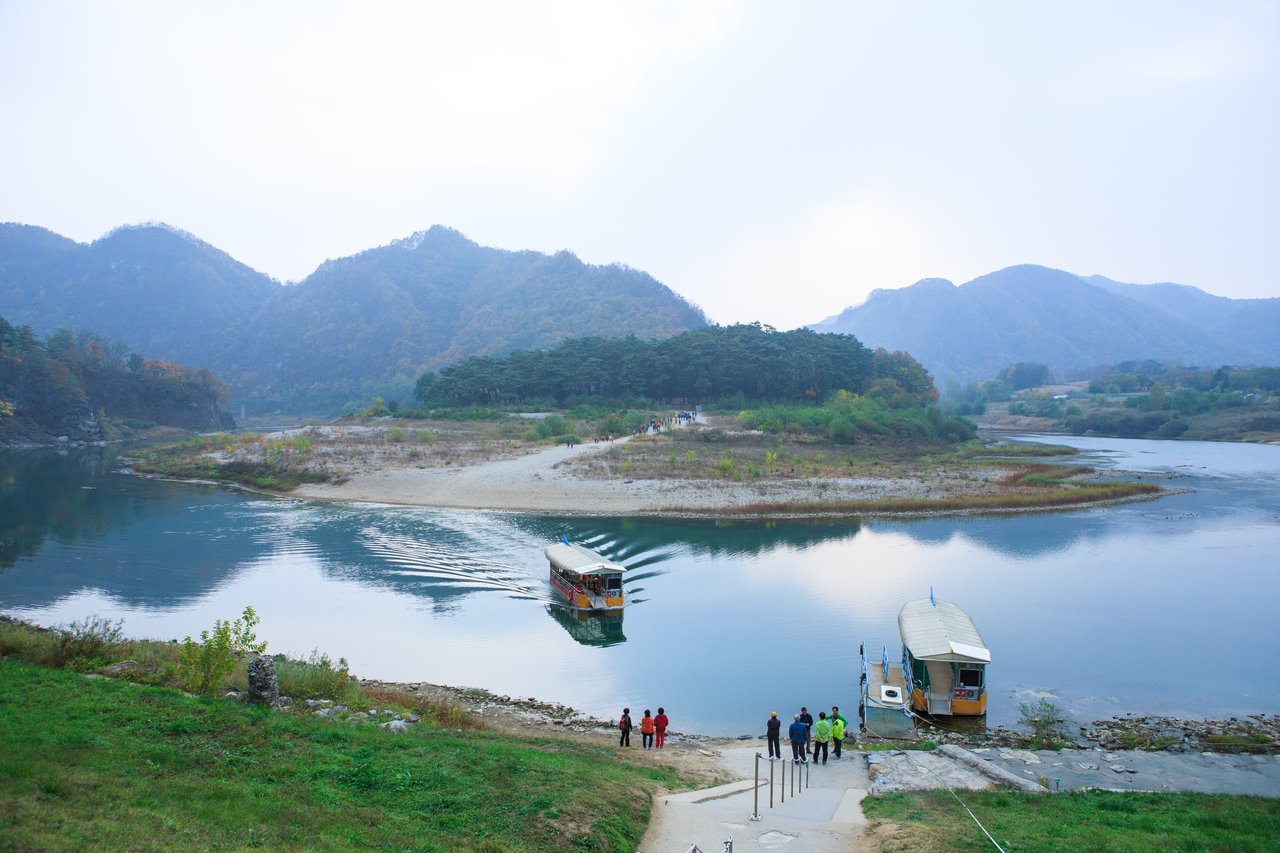
- Cheongnyeongpo (청령포): Located in Yeongwol (영월), this is the exact site of King Danjong’s exile. Surrounded by a deep, curving river on three sides and a sheer, impassable cliff on the other, it acted as a beautiful but cruel natural prison. You can only access it by taking a small ferry, making the isolation of the boy king hauntingly palpable.
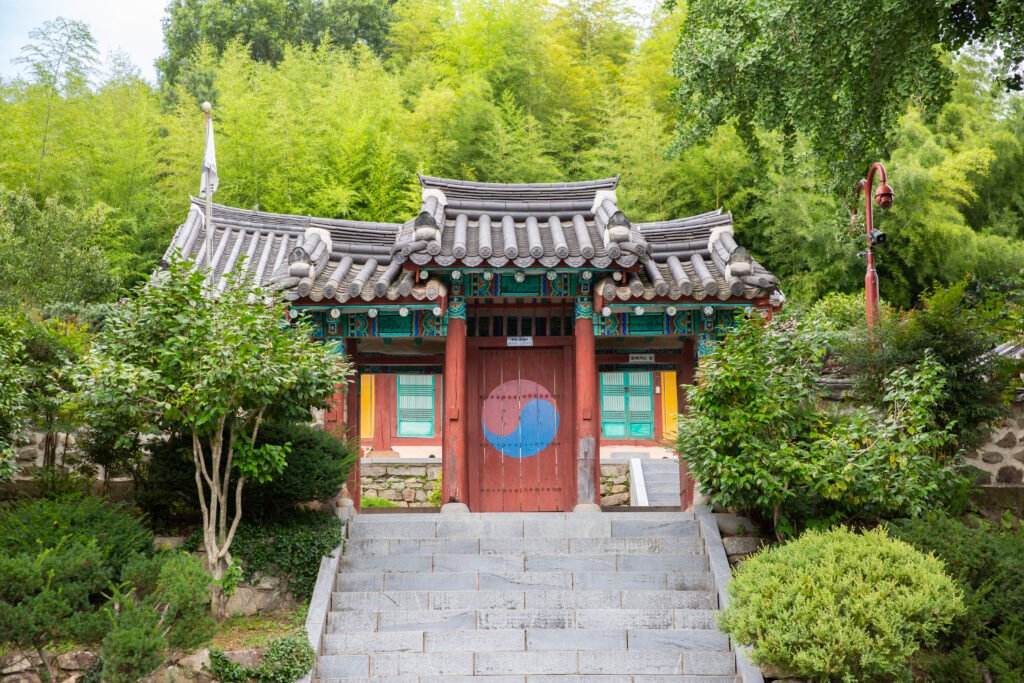
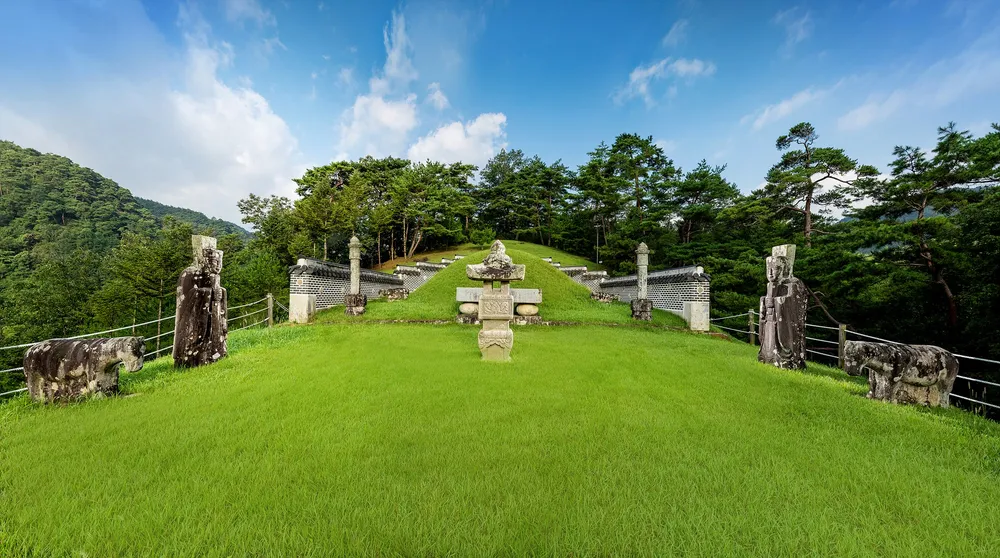
- Jangneung (장릉): Also located in Yeongwol, this is the final resting place of King Danjong. Recognizing the tragic circumstances of his death, later generations restored his royal title and constructed this beautiful tomb. It is now designated as a UNESCO World Heritage site, standing as a quiet testament to a boy whose life was swallowed by the ruthless tide of history.
Korean Culture portal KCulture.com

Founder of Kculture.com and MA in Political Science. He shares deep academic and local insights to provide an authentic perspective on Korean history and society.