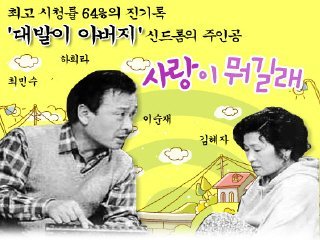
Have you ever watched the gripping Korean drama Deep Rooted Tree (뿌리깊은 나무)? It represents a pivotal moment in history, dramatizing the intense struggle and high stakes behind the creation of Hangeul, the Korean alphabet. While the drama involves fictional elements, one historical truth stands taller than the rest: the creation of this script was a revolutionary act by a single leader to democratize knowledge.
As a local culture expert, I find that many visitors are surprised to learn that Hangeul was not an evolution of ancient pictographs, but a deliberate invention. To truly understand the origin of the Korean alphabet, we must look at the profound dedication of King Sejong the Great. Unlike common misconceptions that credit a group of scholars for the invention, historical records confirm this was the King’s personal masterpiece—born from a deep love for his people. Let’s unpack the history, science, and the fight to protect this writing system.

- King Sejong’s Solitary Invention: Aemin Jeongsin
- The Scientific and Philosophical Principles of Hangeul
- A Visual Masterpiece: Design and Digital Efficiency
- Protecting the Language: The Fight Against Colonial Erasure
- The Evolution of Spacing and Modernization
King Sejong’s Solitary Invention: Aemin Jeongsin
Before the 15th century, Korea relied on Hanja (Chinese characters). This complex system was accessible only to the aristocracy who had the time and resources to master thousands of logograms. The common people—farmers, merchants, and women—remained illiterate, unable to articulate their grievances or understand the laws that governed them.
King Sejong the Great was driven by a philosophy called Aemin Jeongsin (애민정신), meaning “the spirit of loving the people.” He believed the inability to read and write was not a lack of intelligence, but a lack of opportunity.
💡 Historical Fact Check
It is a common misconception that King Sejong created Hangeul with the help of his scholars from the Jiphyeonjeon (Hall of Worthies). However, the Annals of the Joseon Dynasty (Joseon Wangjo Sillok), the most authoritative historical record, clearly states in the entry for December 1443: “This month, His Majesty personally created the twenty-eight letters of the Correct Sounds.” (是月, 上親制諺文二十八字). The invention of the alphabet was the King’s personal project, while the scholars later assisted in writing the explanatory manual, the Hunminjeongeum Haerye.
The Scientific and Philosophical Principles of Hangeul
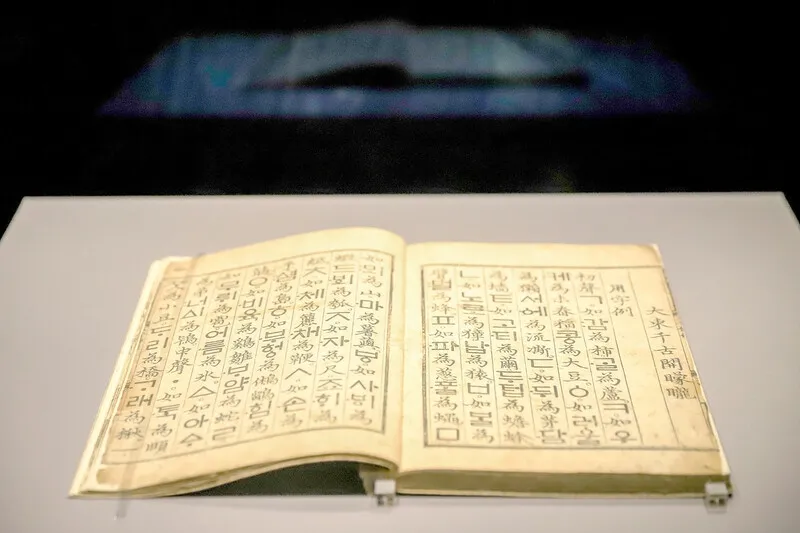
Hangeul is often cited by modern linguists as the most scientific writing system in the world. King Sejong conducted deep phonological research entirely on his own to create a system that was both logical and incredibly easy to memorize. The detailed principles behind the creation of Hunminjeongeum were clearly revealed through the discovery of the Hunminjeongeum Haerye, a famous National Treasure of Korea held by the Kansong Art Museum.
The Science: Modeled After Speech Organs
The shapes of the consonants are not arbitrary lines; they are anatomical diagrams. King Sejong designed them to mimic the shape of the human speech organs (tongue, lips, throat) at the moment the sound is produced.
- ㄱ (G/K): Depicts the root of the tongue blocking the throat.
- ㄴ (N): Depicts the tongue touching the upper gums.
- ㅁ (M): Represents the shape of the closed lips.
- ㅅ (S): Represents the shape of the sharp teeth.
- ㅇ (Ng/Silent): Represents the open throat.
The Philosophy: Heaven, Earth, and Man
While the consonants are scientific, the vowels are deeply philosophical, based on the three fundamental elements of the Neo-Confucian universe:
- Heaven (•): Originally a dot, representing the round sky (now a short stroke).
- Earth (ㅡ): A flat line representing the flat ground.
- Man (ㅣ): A vertical line representing a human standing upright between heaven and earth.

A Visual Masterpiece: Design and Digital Efficiency
King Sejong intended for Hangeul to be easy enough that “a wise man can learn it in a morning, and a fool can learn it in ten days.” This simplicity has had an unexpected benefit in the 21st century: Digital Compatibility.
Hangeul is arguably the best alphabet for the digital age. Unlike Chinese or Japanese, which require complex conversion systems to type, Hangeul’s modular design fits perfectly onto a keyboard. You simply type the initial consonant, vowel, and final consonant, and the computer stacks them into a block automatically. This structure also makes it a favorite for typography and graphic design, offering a modern, geometric aesthetic that is unique to Korea.
Protecting the Language: The Fight Against Colonial Erasure
The existence of Hangeul today is a miracle of survival. During the Japanese colonial period (1910–1945), Japan implemented a ruthless policy of cultural assimilation. The Korean language was banned in schools, and Koreans were forced to adopt Japanese names. The goal was to erase Korean identity completely.
However, Korean scholars fought back with pens instead of guns. The Joseon Language Society (Joseon Eohakhoe) worked in secret to preserve the language.
⚠️ Local Insight: The MAL-MOI Operation
These scholars launched a secret nationwide operation called Mal-moi (gathering words) to compile the first comprehensive Korean dictionary. They believed that “if the language survives, the nation survives.” In 1942, many members were arrested and tortured during the “Joseon Language Society Incident,” and some died in prison. Their sacrifice is why Koreans speak Korean today.

The Evolution of Spacing and Modernization
When King Sejong first created Hangeul, sentences were written in vertical columns without spaces. The logical spacing (띄어쓰기) that makes modern Korean so readable was not part of the original invention but was introduced later through international exchange and standardization.
Step 1: The First Attempt by John Ross (1877)
The very first attempt at spacing Korean words came from a Scottish missionary named John Ross. In his textbook Corean Primer (조선어 첫걸음), he introduced English-style spacing to help foreigners learn the language. It was a practical tool for education that planted the seed for modern grammar.
Step 2: The Independent Newspaper (1896)
Spacing began to reach the Korean public through the Independent (Doknip Sinmun), Korea’s first private newspaper. Reformers like Seo Jae-pil and Ju Si-gyeong, along with American missionary Homer Hulbert, actively used and promoted spacing. They understood that to enlighten the masses, the text had to be easy to read.
Step 3: Standardization by the Joseon Language Society (1933)
The final rules were solidified by the Joseon Language Society. In 1933, they released the Unified Proposal for Hangeul Orthography (한글맞춤법통일안), which officially codified spacing rules.
From King Sejong’s solitary genius in the palace to the sacrifices of independence activists and the contributions of foreign missionaries, Hangeul is a script built on history. It is the heart of Korean culture, beating strong in the digital era.
Korean Culture portal KCulture.com
Join the mailing service and add to your favorites.

Founder of Kculture.com and MA in Political Science. He shares deep academic and local insights to provide an authentic perspective on Korean history and society.