If you have ever followed a K-pop boy group or fell in love with a lead actor in a K-drama, you know the inevitable heartbreak that comes with a “buzz-cut” photo. One day they are performing on a world stage, and the next, they are in a camo uniform, disappearing from the public eye for nearly two years. For us fans, the South Korean mandatory military service is more than just a hiatus; it is a cultural rite of passage that shapes the very fabric of Korean society. Understanding this system is the key to truly “unpacking” why certain plot lines in dramas like Reply 1994 or Nevertheless feel so heavy, and why the enlistment of BTS was a global geopolitical conversation. I want to dive deep into what this sacrifice really means beyond the headlines.
- The Reality of Conscription: Why and How Long?
- The “Military Hiatus”: K-pop, Dramas, and the Fan Experience
- The “Gong-baek” Problem: Career Gaps and Academic Halts
- Controversies of Fairness: Draft Dodging and Dual Citizenship
- The Gender Divide: Bonus Points and the 2030 Generation
- Life Inside the Barracks: From Isolation to Smartphones
- The Path to a Successful Comeback: Life After Discharge
The Reality of Conscription: Why and How Long?
To understand the military in Korea, we have to look at the map. Technically, North and South Korea are still at war, having only signed an armistice in 1953. This “frozen conflict” is the reason why every able-bodied South Korean man is required to serve. It is not a choice; it is a constitutional duty. While the length of service has decreased significantly over the decades—once lasting 36 months in the 1950s—it remains a significant chunk of a young man’s life.
Currently, the service duration depends on the branch of the military. Typically, the Army and Marine Corps serve for 18 months, the Navy for 20 months, and the Air Force for 21 months. For those who do not qualify for active duty due to health reasons (like chronic injuries or mental health struggles), they serve as Social Service Agents (Public Service) for 21 months, working in government offices or subway stations. When you hear that an idol is serving in “public service,” it usually means they have a documented medical history that prevents them from rigorous combat training.
The “Military Hiatus”: K-pop, Dramas, and the Fan Experience
In the fandom world, we call this the “Gun-baek-gi” (Military Hiatus). It is a period of transition where the relationship between the star and the fan is tested. For years, there was a superstition that a military enlistment meant the “end” of an idol’s career. However, the landscape has changed. Groups like SHINee, 2PM, and Super Junior have proven that you can return and be even more popular than before.
💡 Local Note: In K-dramas, the military is often used as a plot device for “long-distance relationships.” In Reply 1994, we see the agonizing wait and the emotional toll of letters. In Nevertheless, the senior “Oppa” who returns from the military often represents a more “mature” (or sometimes more complicated) romantic rival. It is a relatable trope because almost every Korean woman has been a “Rubber Shoe” (Gomusin)—a term for a woman waiting for her boyfriend to finish his service.
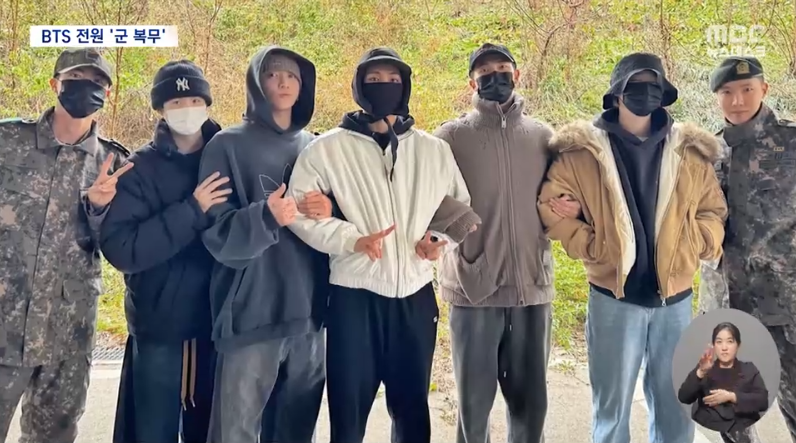
The biggest case in recent history was, of course, BTS. The debate over whether world-class artists should be exempt reached the Korean parliament. While some argued their economic and cultural contribution was worth more than their service, the prevailing social sentiment remained: “In Korea, no one is above the duty of the uniform.” This highlights just how sacred (and sensitive) the idea of military fairness is in Korean culture.

The “Gong-baek” Problem: Career Gaps and Academic Halts
For the average Korean man, enlistment usually happens during university, typically after the first or second year. Imagine being 20 years old, just starting to find your passion, and suddenly having to press “pause” for two years. This creates a massive academic and professional gap, known as Gong-baek-gi. When these men return to school, they are “Bok-hak-saeng” (returning students), often feeling like strangers in their own departments as their female peers and those exempt from service have moved far ahead.
This gap isn’t just about time; it’s about the “loss of touch.” For those in fast-moving fields like IT or the arts, being disconnected from the world for 18 months can feel like a career death sentence. This is why you see such intense anxiety among young Korean men about the timing of their enlistment. They aren’t just losing two years of salary; they are losing two years of competitive edge in one of the most cut-throat job markets in the world.
Controversies of Fairness: Draft Dodging and Dual Citizenship
Nothing enrages the Korean public more than “Draft Dodging.” Because the sacrifice is so universal, seeing the wealthy or the powerful “skip” the line is seen as a betrayal of the national social contract. You might have heard of celebrities who lost their entire careers because they attempted to avoid service by obtaining foreign citizenship or fabricating medical records.
| Type of Avoidance | Public Perception | Consequence |
|---|---|---|
| Dual Citizenship (Renouncing Korea) | “National Betrayal” | Entry bans, permanent loss of public favor. |
| Falsified Medical Records | “Cheating the System” | Re-enlistment (serving twice) and jail time. |
| Preferential Treatment | “Class Injustice” | Career-ending scandals for celebrities and politicians. |
The logic is simple: If my brother, my son, and my father all served, why shouldn’t you? This deep-seated sense of “distributive justice” is why even the most famous stars are careful to express their “honor” in serving, regardless of how they truly feel about the interruption to their lives.

The Gender Divide: Bonus Points and the 2030 Generation
This is where things get really complicated in modern Korean society. In the past, men who completed their service were given “Military Bonus Points” (Gasanjeom) when applying for government jobs. However, this was ruled unconstitutional in 1999 as it was seen as discriminatory against women and those with disabilities. Since then, the debate over “fairness” has reached a boiling point.
Many men in their 20s and 30s today feel they are in a “lose-lose” situation. They argue: “We don’t live in the patriarchal society of our fathers where men held all the power and wealth. We are struggling in a competitive job market just like women, yet we are the only ones forced to sacrifice two years of our lives.” This resentment has contributed to a growing gender divide. Conversely, many women argue that they face systemic glass ceilings and the burden of future childcare, making the “two-year advantage” a myth. It is a sensitive, ongoing social conversation that often shows up in the “comment wars” under news articles about enlistment.
Life Inside the Barracks: From Isolation to Smartphones
If you watch older K-dramas, the military looks like a place of total isolation. You could only make a phone call from a payphone while standing in a long line, and your only connection to the outside world was handwritten letters. Honestly, that version of the military was a black hole for information.
However, since 2019, the Korean military has allowed soldiers to use their smartphones after their daily duties are finished (usually from 6:00 PM to 9:00 PM). This has been a game-changer. Soldiers can now stay in touch with their families, watch YouTube, and even study for certifications. For K-pop fans, this means the “hiatus” isn’t as dark as it used to be. Sometimes, idols can even pop into a fan cafe or send a quick message on Bubble (during permitted hours), making the wait feel much shorter. While they are still physically confined to the base, the digital wall has crumbled.
The Path to a Successful Comeback: Life After Discharge
So, what happens when they come back? The term “Jeon-yeok” (Discharge) is a day of celebration. For an actor, it’s often followed by a “transformation” role—going from a “flower boy” to a “manly man.” Think of Lee Min-ho or Kim Soo-hyun; their post-military careers were even more legendary because they returned with a more mature aura.
For society, the military remains a double-edged sword. It is a source of national pride and security, but also a source of deep personal sacrifice and social friction. For us as fans, the best thing we can do is understand the weight of that camo uniform. It’s not just a break from music or acting; it’s a young man doing his part in a complicated history that is still being written. The next time you see your favorite idol at the enlistment center, remember: they aren’t just leaving the stage; they are stepping into the “real” Korea.
Korean Culture portal KCulture.com
Join the mailing service and add to your favorites.

Founder of Kculture.com and MA in Political Science. He shares deep academic and local insights to provide an authentic perspective on Korean history and society.