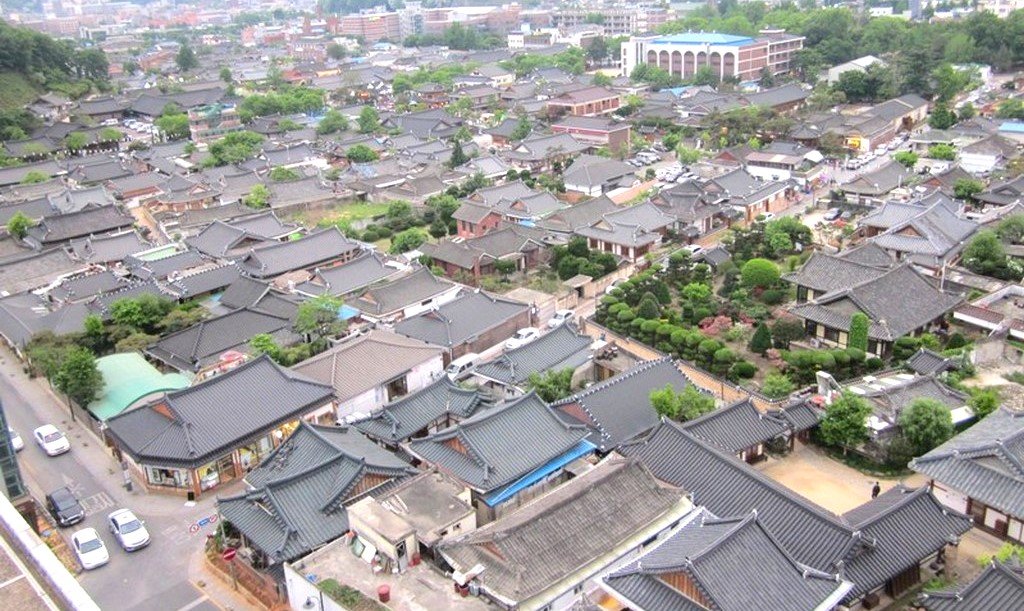
If you are looking for the heart and soul of Korean tradition, you simply cannot skip Jeonju. As someone living in Korea, I often tell friends that while Seoul is the brain of the country, Jeonju is definitely its stomach and its spirit. This Jeonju Hanok Village guide will take you through the winding alleys of over 700 traditional houses, where history isn’t just preserved in museums but lived every single day. Before we dive into the specific landmarks, here is a golden rule for your visit: to truly “unpack” the culture here, you must spend at least one night in a Hanok guest house. Waking up to the sight of sunlight hitting the curved giwa roof tiles is an experience that transforms a simple trip into a lifelong memory.
- Gyeonggijeon Shrine: The Guardian of Royal History
- Jeondong Cathedral: A Story of Faith and Stone
- Pungnammun Gate and the Wisdom of Hyanggyo
- The Soul of Jeonju Gastronomy: Bibimbap and Beyond
- Gamaek and Makgeolli: The Local Night Culture
- Staying in a Traditional Hanok: The True Local Experience
- Travel Tips and Logistics
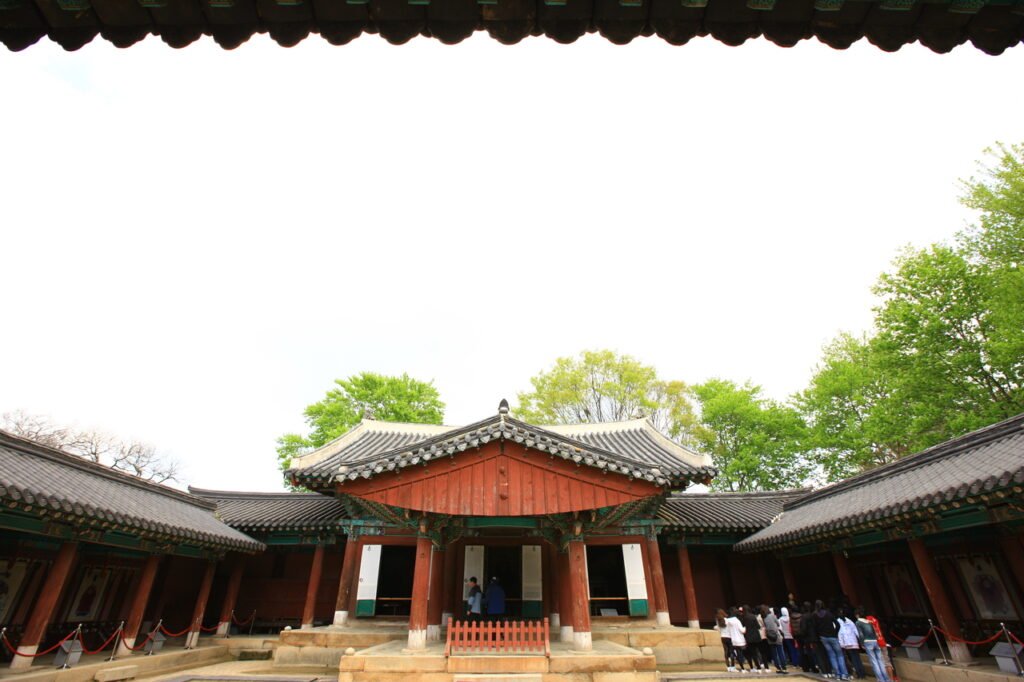
Gyeonggijeon Shrine: The Guardian of Royal History
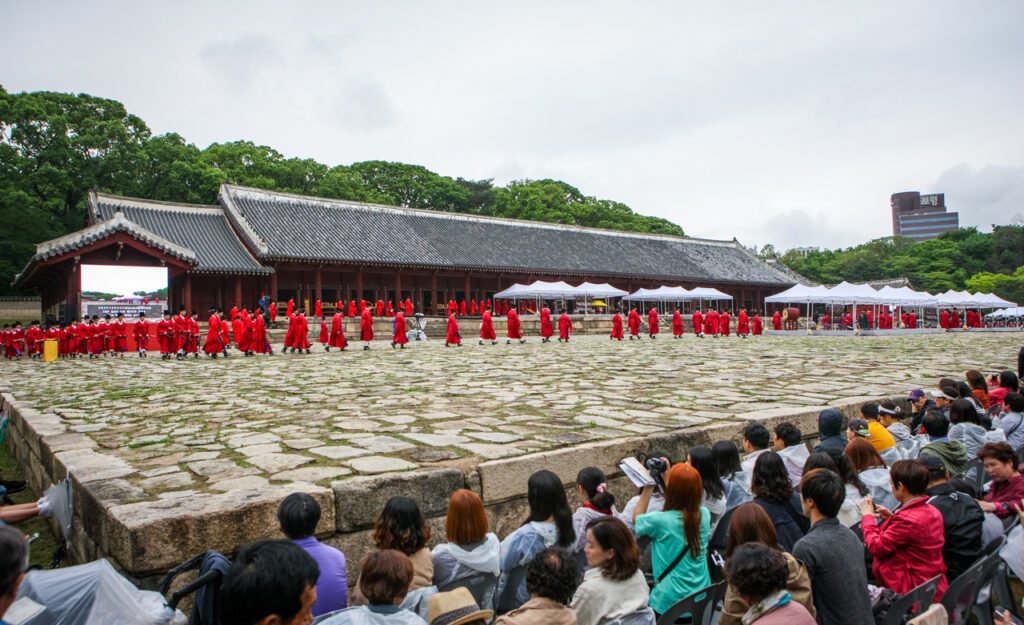
Built in 1410, Gyeonggijeon is more than just a beautiful park; it is the spiritual anchor of the Joseon Dynasty in Jeonju. It was established to house the portrait of King Taejo, the founder of the dynasty. For those of us who appreciate the weight of history, walking through the Hongsalmun (red spiked gate) feels like stepping back 600 years. The portrait hall itself is a masterpiece of Joseon architecture, but there is a deeper story hidden within these grounds that many tourists overlook: the Jeonju Sago (The History Archive).
During the Imjin War (1592-1598), when Japanese forces invaded Korea, three of the four major archives housing the “Annals of the Joseon Dynasty” were burned to the ground. The Jeonju Sago was the only one that survived, thanks to the heroic efforts of local scholars and officials who moved the massive collection of books to a remote mountain cave in Naejangsan. Because of this miracle, the detailed 500-year history of the dynasty was preserved for future generations. When you visit the reconstructed Sago building today, you aren’t just looking at wood and tile; you are looking at the resilience of Korean intellectual heritage.
Jeondong Cathedral: A Story of Faith and Stone
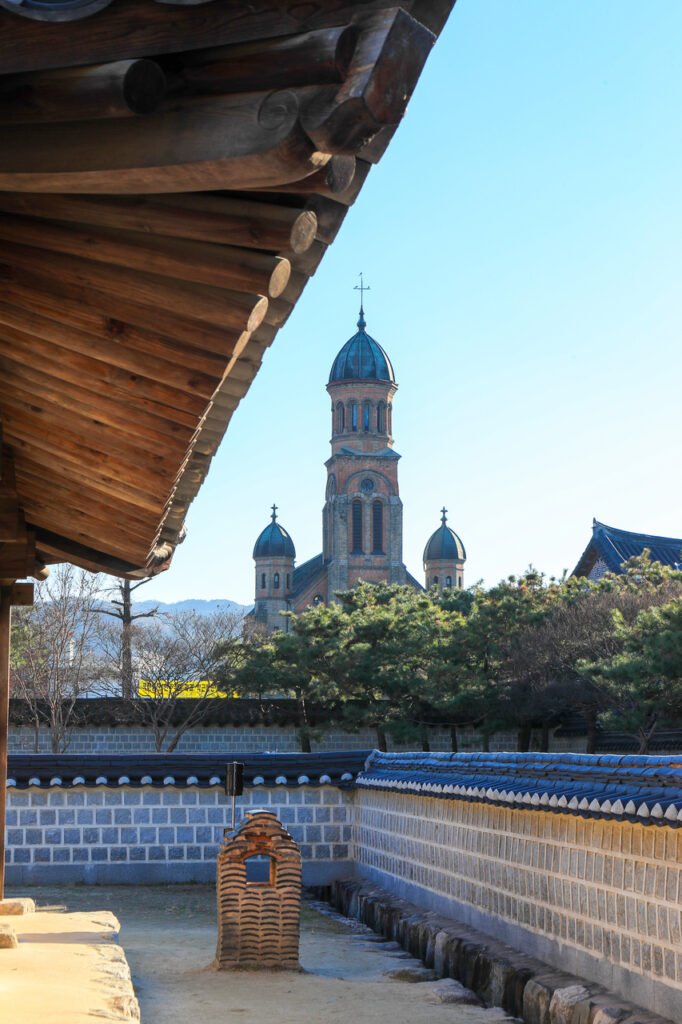
Directly across from the traditional gates of Gyeonggijeon stands the striking Jeondong Cathedral. This Romanesque-style structure, designed by Father Poinel (who also designed Myeongdong Cathedral in Seoul), is often cited as one of the most beautiful buildings in Korea. However, its beauty is rooted in a tragic and powerful history. This very spot was the site of the first Catholic martyrdom in Korea. In 1791, Yun Ji-chung and Kwon Sang-yeon were executed here for their faith, marking the beginning of a long period of religious persecution.
Construction began in 1908 and took 23 years to complete. Here is a detail I find particularly moving: the foundation of the cathedral was built using stones from the Jeonju City Walls, which were being demolished by the Japanese colonial government at the time. By using the stones of the old city to build the new church, the architect physically integrated the history of Jeonju into the walls of the cathedral. The gray and red brickwork creates a stunning contrast against the blue sky, making it a mandatory stop for anyone interested in the intersection of Western architecture and Korean history.
Pungnammun Gate and the Wisdom of Hyanggyo
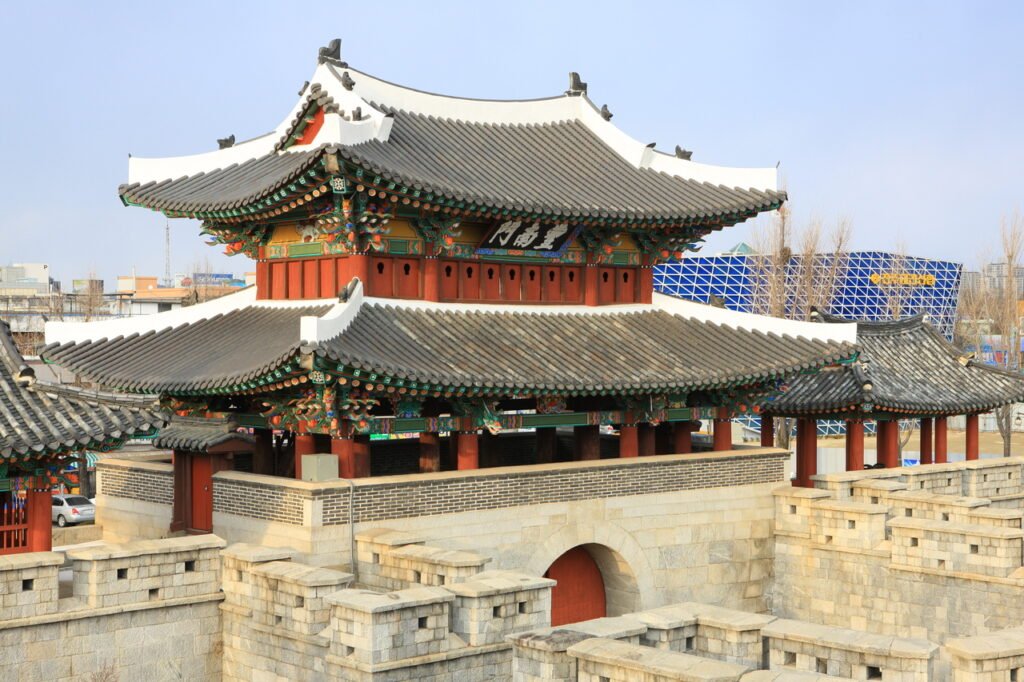
As you continue your walk, you will naturally come across Pungnammun Gate. It is the only surviving gate of the original four that once guarded the walled city of Jeonju. Standing before it, you can imagine the bustling marketplace that has surrounded this gate for centuries. It serves as a physical boundary between the traditional Hanok village and the modern city life of Jeonju.
📌 Local Note: If you find the main streets of the village too crowded, head toward the southeastern edge to Jeonju Hyanggyo. This was a government-run provincial school during the Joseon era. It is remarkably peaceful compared to the main tourist strip. The massive ginkgo trees here are over 400 years old, and their golden leaves in the autumn are a sight you will never forget.
The Hyanggyo was the center of Confucian learning, where students studied for the civil service exams. Walking through the Daemyeongjeon (main hall), you can still feel the scholarly atmosphere. It has also served as a filming location for many famous K-dramas, such as “Sungkyunkwan Scandal,” thanks to its perfectly preserved traditional aesthetic.
📌Check out these nearby gems! : Beyond the main landmarks, climb to Omokdae for panoramic views of Hanok rooftops and explore the artistic Jaman Mural Village. For a trendy local vibe, visit the Nambu Market Youth Mall, then head to the National Intangible Heritage Center (nihc.go.kr). It offers free exhibitions and world-class traditional performances, including regular Saturday shows at 4:00 PM (seasonal; check the website for the latest schedule).
The Soul of Jeonju Gastronomy: Bibimbap and Beyond
In Jeonju, food isn’t just a meal; it’s an art form. The city was recognized as a UNESCO City of Gastronomy because it has maintained traditional cooking methods for centuries. There are two “must-eat” dishes that define the Jeonju experience.
Jeonju Bibimbap
While you can find Bibimbap all over the world, the Jeonju version is a masterpiece of nutritional balance and color. It traditionally features over 30 different ingredients, including local bean sprouts and Hwangpo-mook (yellow mung bean jelly). The rice is often cooked in beef brisket broth to give it a deep, savory flavor. Expect to pay around 13,000 to 17,000 KRW for a proper set. When you mix it, remember to use your chopsticks—not a spoon—to avoid mashing the delicate vegetables and rice grains.
◽ Hanguk-jip
Feature: Opened in 1952, one of the oldest Bibimbap restaurants. Listed in the Michelin Guide and TV shows.
Address: 119, Eojin-gil, Wansan-gu, Jeonju-si, Jeollabuk-do
◽ Gajok Hoegwan
Feature: Run by a designated “Intangible Cultural Heritage” holder. Known for its elegant side dishes and colorful presentation.
Address: 17, Jeollagamyeong 5-gil, Wansan-gu, Jeonju-si, Jeollabuk-do
◽ Seongmidang
Feature: A favorite of past Korean presidents. The rice is pre-mixed/stir-fried before serving, offering a rich and deep flavor.
Address: 19-9, Jeollagamyeong 5-gil, Wansan-gu, Jeonju-si, Jeollabuk-do
◽ Ha Suk-young Gamasot Bibimbap
Feature: Famous for Bibimbap served with freshly cooked “Gamasot” (traditional iron pot) rice and a variety of side dishes.
Address: 19-3, Jeollagamyeong 5-gil, Wansan-gu, Jeonju-si, Jeollabuk-do
◽ Gogung Suragan
Feature: Located in the heart of Hanok Village. Great for trying set menus that include Bibimbap and Tteok-galbi (Grilled Short Rib Patties).
Address: 31, Unhaeng-ro, Wansan-gu, Jeonju-si, Jeollabuk-do
◽ Hanguk-kwan (Hanok Village Branch)
Feature: Easy to find on the main street (Taejo-ro). Served in traditional brass bowls (Yugi) to maintain temperature.
Address: 31, Taejo-ro, Wansan-gu, Jeonju-si, Jeollabuk-do
Kongnamul-gukbap (Bean Sprout Soup)
For breakfast, nothing beats a hot bowl of Kongnamul-gukbap. It is a light, refreshing, and spicy soup that is famously known as the ultimate hangover cure. In Jeonju, it is usually priced between 8,000 and 10,000 KRW. It is usually served with a side of Su-ran (a lightly poached egg). You should add a few spoonfuls of the hot soup and some crushed seaweed to the egg and eat it first to coat your stomach before diving into the main soup. It is the definition of Korean “soul food.”
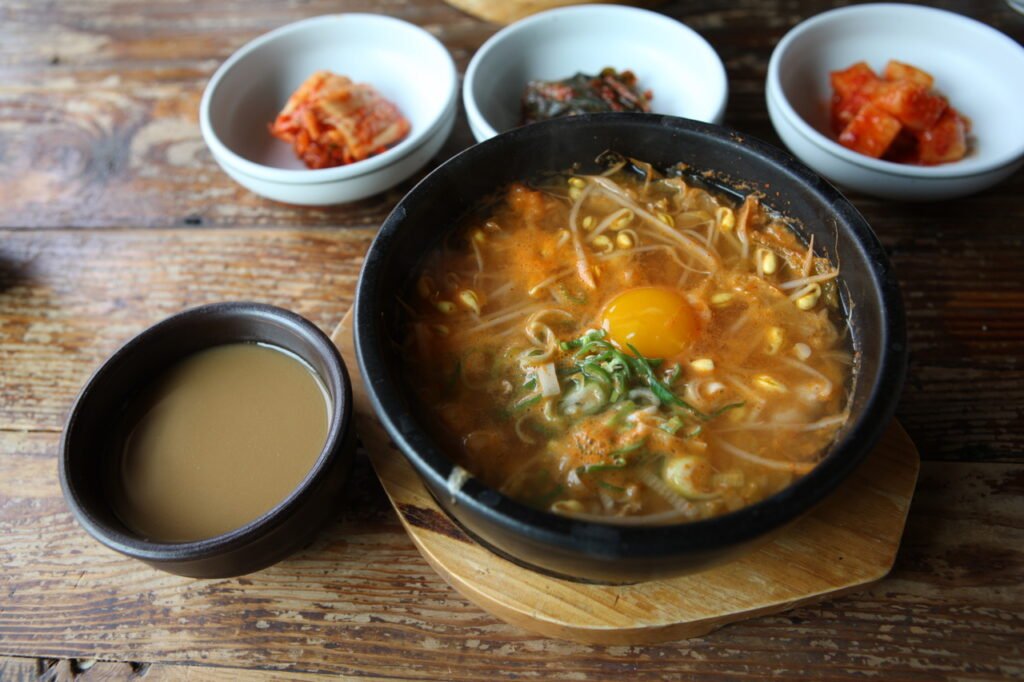
◽ Jeonju Waengi Kongnamul-gukbap
Feature: Authentic “Nambu Market Style” where the poached egg is served on the side. Famous for its deep, refreshing broth.
Address: 88, Dongmun-gil, Wansan-gu, Jeonju-si, Jeollabuk-do
◽ Hyundaek (Hanok Village Branch)
Feature: A popular franchise known for its clean interior and consistent “Nambu Market Style” soup.
Address: 66, Omokdae-gil, Wansan-gu, Jeonju-si, Jeollabuk-do
◽ Hyundaek (Nambu Market Branch)
Feature: The original flagship store located inside the traditional market. Offers a very local atmosphere. (Note: Closes early, around 2:00 PM).
Address: 63, Pungnammun 2-gil, Wansan-gu, Jeonju-si, Jeollabuk-do
◽ Sambaek-jip (Hanok Village Branch)
Feature: “Boiling Style” where rice and sprouts are boiled together in the pot. Mild and savory taste.
Address: 22, Taejo-ro, Wansan-gu, Jeonju-si, Jeollabuk-do
◽ Sambeon-jip
Feature: A long-standing local favorite located in Nambu Market. Featured in “Baek Jong-won’s Top 3 Chef.”
Address: 9-6, Pungnammun 1-gil, Wansan-gu, Jeonju-si, Jeollabuk-do
Gamaek and Makgeolli: The Local Night Culture
As the sun sets, the traditional village takes on a different energy. Jeonju has a unique drinking culture that is deeply tied to the community. You have two main paths: the humble “Store Beer” (Gamaek) or the feast-like Makgeolli alleys.
Gamaek: The “Store Beer” Experience
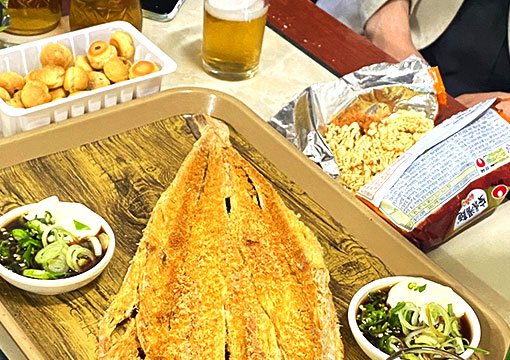
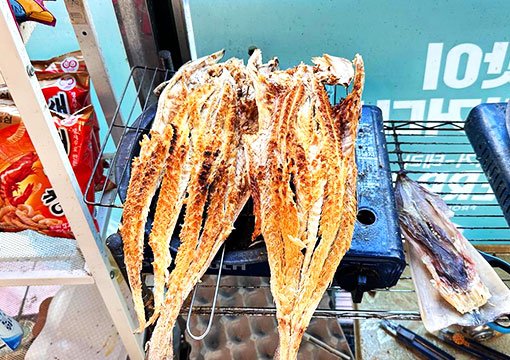
Gamaek is short for “Gage-Maekju,” referring to the practice of drinking cold beer at a small neighborhood corner store (gage). Beer is usually very affordable, around 3,000 to 4,000 KRW per bottle, while the legendary snacks are the main attraction.
| Name | Address (Road Name) | Specialty & Price (Approx.) |
|---|---|---|
| Jeonil Super (Jeonil Gabo) | 16 Hyeonmu 2-gil, Wansan-gu | Charcoal-grilled Hwangtae (18,000 KRW). The “holy land” of Gamaek. |
| Yeongdong Super | 14 Hyeonmu 1-gil, Wansan-gu | Gochu Fried Chicken (18,000 – 20,000 KRW) and fried chicken feet. |
| Gyeongwon Sanghoe | 11 Hyeonmu 2-gil, Wansan-gu | Hand-pounded Grilled Squid (15,000 – 18,000 KRW). |
| Imsil Super | 45 Pungnammun 2-gil, Wansan-gu | “Choktae” (moist dried fish) (15,000 – 18,000 KRW). |
| Pirubong Gamaek | 16 Jeollagamyoung-ro, Wansan-gu | Semi-dried squid (Pidegi) (15,000 KRW) with a retro vibe. |
The Makgeolli Alleys: A Never-ending Feast
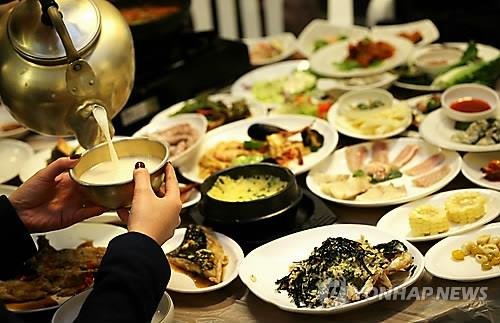
If you head to the Samcheon-dong Makgeolli Alley, you will experience the legendary “Jeonju hospitality.” A basic “kettle set” typically starts at 30,000 to 40,000 KRW, which includes a full kettle of Makgeolli and a massive spread of 15-20 side dishes. As you order more kettles (approx. 15,000 – 20,000 KRW each), the dishes get progressively more extravagant.
- How to get there: From the Hanok Village, it’s a 10-15 minute taxi ride costing about 6,000 to 8,000 KRW. Just ask the driver for “Samcheon-dong Makgeolli Golmok.”
- Chogajip: 10 Geomasan-ro, Wansan-gu
- Jangsu Makgeolli: 5 Geomasan-ro, Wansan-gu
- Yetchon Makgeolli (Main): 11 Seoshin-ro, Wansan-gu (Couple sets starting around 45,000 KRW)
Staying in a Traditional Hanok: The True Local Experience
To truly understand Jeonju, you must sleep on the floor. The Ondol (traditional underfloor heating) system is one of Korea’s greatest inventions. Hanok stays vary in price depending on the level of luxury, but average rates range from 70,000 to 150,000 KRW per night for a standard room. High-end private Hanok villas can exceed 300,000 KRW.
You will sleep on a yo, a thick padded mattress that is surprisingly good for your posture. Most Hanok guest houses are run by locals who take immense pride in their homes. Many of these houses feature beautiful courtyards (madang) where you can sit and watch the rain or enjoy a cup of traditional tea. I highly recommend finding a house that offers a traditional breakfast or a tea ceremony experience. It’s the best way to feel the “slow city” rhythm that Jeonju is famous for. You can find many listings by searching for ‘JeonjuHanokVillage Hanok stay‘ on Naver Maps.
Travel Tips and Logistics
Before you pack your bags, here are a few final “insider” tips to make your trip seamless:
- The Sunday Rule: Many of the older, traditional Gamaek and Makgeolli houses are closed on Sundays. If you are visiting over the weekend, try to schedule your big drinking tour for Friday or Saturday night.
- Gamaek Timing: Most Gamaek spots open around 3:00 PM or 4:00 PM. Jeonil Super often has a long line by 6:00 PM, so arrive early if you want to snag a table without waiting.
- Walking Distance: The Hanok Village itself is very compact. You don’t need a car or bus once you arrive. However, comfortable shoes are a must, as the old stone paths can be uneven.
- Hanbok Rental: You will see many people wearing Hanbok. Rental prices usually range from 10,000 to 30,000 KRW depending on the duration and quality of the garment.
Jeonju is a place where history isn’t tucked away in a book; it’s the smell of charcoal-grilled fish, the sound of wooden gates creaking, and the taste of a 600-year-old tradition. Take your time, eat until you’re full, and let the spirit of Korea’s most traditional city stay with you long after you leave.
Korean Culture portal KCulture.com
Join the mailing service and add to your favorites.

Founder of Kculture.com and MA in Political Science. He shares deep academic and local insights to provide an authentic perspective on Korean history and society.