An Introduction to a Korean Delicacy
Welcome to the deep, complex, and incredibly savory world of Jeotgal-jeongsik! This is not just a meal; it’s a culinary experience that showcases one of Korea’s most cherished traditions: fermentation. A ‘jeongsik’ is a Korean set meal, and this particular one features an dazzling array of ‘jeotgal’ (fermented seafood) as the main stars. Traditionally enjoyed in coastal regions famous for their high-quality salt and fresh seafood, such as Gomsot and Ganggyeong, this meal is a testament to the preservation techniques of ancient Korea. The overall taste profile is a powerful combination of salty, spicy, and savory umami, with a subtle sweetness and a pungent kick of garlic that fermentation has mellowed and deepened.
Ingredients & Flavor Profile
Key Ingredients
The heart of Jeotgal-jeongsik is the variety of fermented seafood it offers. A typical spread can include anywhere from 10 to 20 different kinds. While the exact selection varies by restaurant and season, you can expect to find popular varieties such as:
- Myeongran-jeot: Fermented pollock roe, prized for its rich, briny flavor and delicate texture.
- Changran-jeot: Fermented pollock intestines, known for its chewy texture and distinctively spicy and savory taste.
- Ojingeo-jeot: Fermented squid, which offers a satisfyingly chewy bite seasoned with a sweet and spicy sauce.
The Secret of Taste
The profound flavor of jeotgal comes from a meticulous fermentation process. The core seasoning blend consists of salt, which acts as the primary preservative, and gochugaru (Korean red chili powder) that adds a vibrant color and spicy kick. A touch of starch syrup (mulyeot) is often added to balance the intense saltiness with a hint of sweetness, while fermented garlic infuses the mixture with a deep, aromatic complexity. This combination, over time, transforms fresh seafood into a condiment bursting with umami, the fifth taste that makes food so irresistibly savory.
Dietary Information (Vegetarian/Allergy)
Jeotgal-jeongsik is fundamentally a collection of fermented seafood products. Therefore, it is not suitable for vegetarians or vegans.
Safety Tip: Even when ordering other dishes, it’s wise for vegetarians to ask restaurant staff if any jeotgal or fish sauce has been used in the side dishes (banchan), as these are common hidden ingredients in Korean cuisine.
How It’s Served
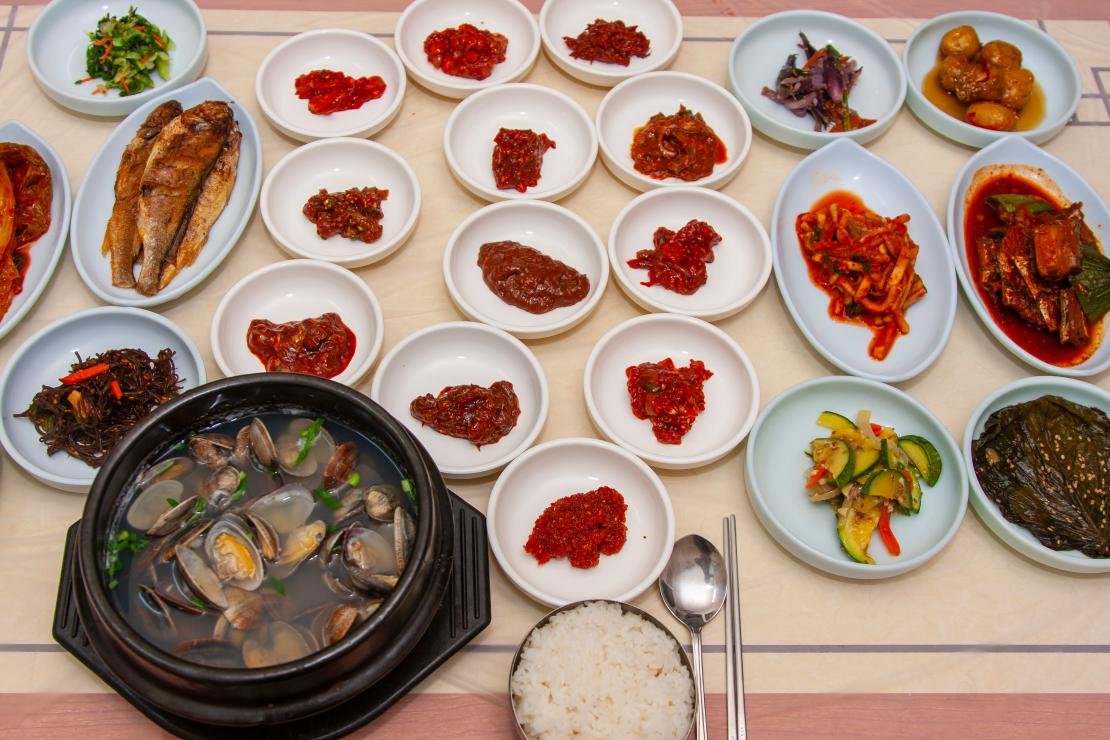
As a ‘jeongsik’ or set menu, Jeotgal-jeongsik is a feast for the eyes before it even reaches your palate. The table is filled with a multitude of small bowls, each containing a different glistening jewel of fermented seafood. At the center of this universe is a steaming bowl of white rice, your canvas for this culinary adventure. The proper way to enjoy it is not to mix everything together, but to savor each jeotgal individually. Take a very small piece with your chopsticks and place it on a spoonful of rice. The plain rice acts as a perfect base, mellowing the saltiness and allowing the unique flavor and texture of each jeotgal to shine through. To cleanse the palate between bites, the meal is often served with a clear, mild soup and sometimes nurungji (scorched rice soup), whose nutty flavor provides a comforting contrast to the intense main dishes.
This is a standard method based on general recipes. Every restaurant has its own secret twist and unique style!
Nutritional & Health Benefits
Beyond its intense flavor, Jeotgal-jeongsik offers several health benefits rooted in its ingredients and preparation method.
- Rich in Probiotics: The fermentation process cultivates beneficial bacteria, making jeotgal an excellent source of probiotics that can aid digestion and promote a healthy gut microbiome.
- Packed with Minerals: Being derived from the sea, these ingredients are a natural source of essential minerals like iodine and zinc.
- Good Source of Protein: Seafood like squid and pollock are rich in protein, which is vital for building and repairing tissues in the body.

The KCulture Editorial Team is dedicated to providing deep insights and accurate information about the vibrant world of Korean culture.