Welcome to the heart of Korean cuisine! As a local expert living in Korea, I can tell you that no single dish defines our table, our history, and our national identity quite like Kimchi. It’s the essential, ubiquitous, and deeply personal dish served at every meal, from the simplest breakfast to the grandest feast. Yet, the story of this fiery, fermented delight is far richer than most people realize. If you’re truly seeking the ‘real’ Korea? Unpack the culture… starting with this remarkable food. Join me as we take a traditional culture perspective into the fascinating history and significance of kimchi that extends far beyond a simple side dish. We’ll explore its ancient, humble beginnings, the scientific magic of its fermentation, and the profound cultural practice of Kimjang.
The Ancient Roots of Kimchi: A History of Preservation
To truly understand the history of Korean Kimchi, we have to look back over 3,000 years. Its origin wasn’t about complex flavor profiles, but a fundamental human need: food preservation. Korea’s long, cold winters made it impossible to grow fresh vegetables year-round, making preservation a matter of survival.
The earliest forms of Kimchi, dating back to the Three Kingdoms period (around 57 BC to 668 AD), were far simpler than the vibrant red product we know today. Ancient Koreans preserved vegetables, mainly radishes and cabbages, by simple salting or brining. This process of purely salting vegetables was known as *jeo* (저).
Around the 12th century, during the Goryeo Dynasty, other ingredients started making their way into the simple brined vegetables. Early seasonings included native spices and flavorings like garlic, ginger, and the indigenous Korean mustard plant. This introduced the concept of jangajji and chimchae—the latter being the direct etymological ancestor of the modern word Kimchi.
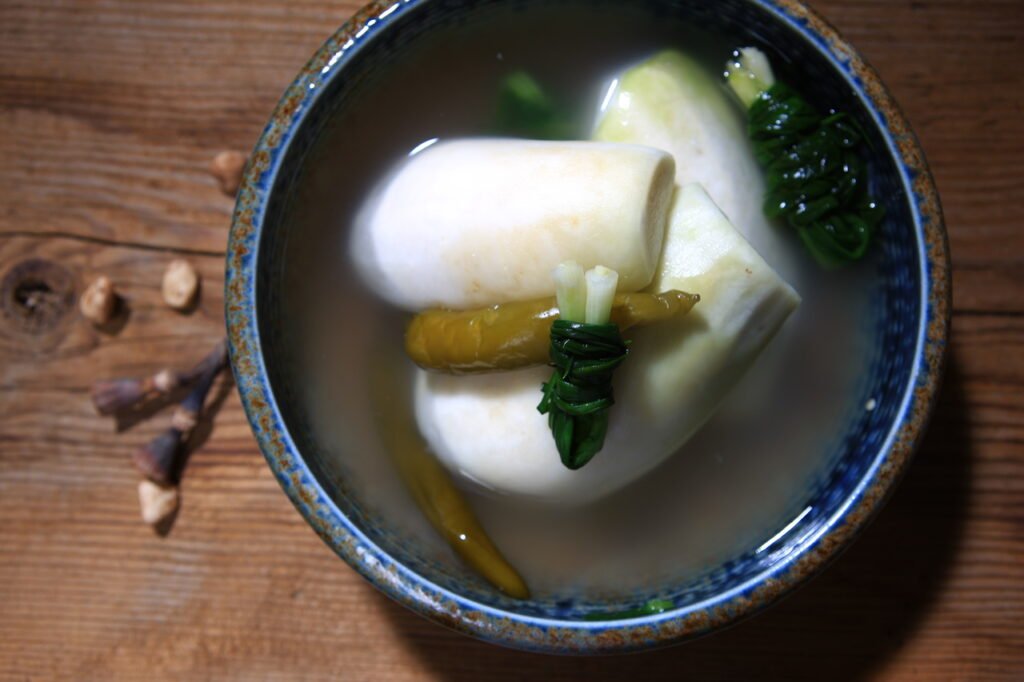
These early Kimchi variations were often white, green, or yellow, and primarily focused on the natural flavors of the vegetables enhanced by a light salt brine. Honestly, you can still find these traditional culture varieties like “White Kimchi” (*Baek Kimchi*) today, offering a tangible link back to our food heritage.
The Influence of Buddhism and Regional Variety
The rise of Buddhism in the Goryeo period influenced the diet by promoting vegetarianism. This led to a greater reliance on vegetables and further experimentation with fermentation techniques to create nutritious and flavorful side dishes.
Different regions also developed their own distinctive pre-chili kimchi styles based on local resources. Coastal areas incorporated more fermented fish and seafood (jeotgal) for an umami depth, while inland regions relied more on grains and mountain herbs for flavoring. This regional diversity is a core keyword in the story of Korean food culture.
The Evolution of Flavor: Chili Pepper, Garlic, and Cabbage
The Kimchi we recognize today—the boldly red, fiery, and deeply fermented version—is surprisingly recent. Its transformation is directly linked to the arrival of new global ingredients.
The Critical Role of Chili Pepper (Gochu)
Here’s the thing: The iconic red color of Kimchi is thanks to the chili pepper, or Gochu (고추), which was not native to Korea. Historical consensus points to its introduction from the Americas, likely via trade routes through China or Japan, sometime in the late 16th or early 17th century, during the Joseon Dynasty.
At first, chili pepper was used primarily for medicinal purposes, but its preservative qualities and intense flavor quickly made it an indispensable spice. By the 18th century, chili powder (gochugaru) had become the dominant ingredient, replacing the milder spices and dramatically changing Kimchi’s color, flavor profile, and preservation efficacy.
📌 Local Note: Contrary to popular belief, the red color isn’t just for heat. The chili powder is crucial because the capsaicin helps inhibit certain bacteria while promoting the growth of beneficial *Lactobacillus*, contributing to safer, more effective fermentation and long-term storage.
The Unsung Importance of Garlic and Other Spices
While chili provides the color and heat, garlic is the backbone of Kimchi’s complex flavor and another powerful preservative. Korean cuisine uses copious amounts of garlic, and Kimchi is no exception. Its presence helps create a richer, deeper flavor profile than simpler fermented foods.
Other key ingredients include ginger, scallions, radish, and the aforementioned fermented seafood (jeotgal). The combination of these ingredients, often differing subtly from family to family, gives rise to the incredible variety of Kimchi we enjoy across the peninsula.
The Rise of Napa Cabbage (Baechu)
The primary vegetable for modern Kimchi, the Chinese cabbage or Napa Cabbage (Baechu, 배추), also underwent significant evolution. While ancient Koreans used various wild greens and simple cabbages, the development of the tightly-headed, oblong Napa cabbage variety that is ideal for salting and seasoning came later.
This specific variety was cultivated and improved through farming practices, reaching its current, easily brined form in the late 19th and early 20th centuries. Its large, broad leaves and firm texture make it perfect for being meticulously coated with the yangnyeom (kimchi seasoning paste) during the Kimjang process.
More Than Just a Side Dish: The Science of Kimchi Fermentation
Kimchi is a marvel of food science. It’s not simply a pickled vegetable; it’s a probiotic powerhouse created through a complex fermentation process. This fermentation is what truly sets it apart from simple pickles or raw vegetable preparations.
The salting process initially extracts water and eliminates harmful bacteria. What remains are the lactic acid-producing bacteria (LAB), primarily species of Lactobacillus. These bacteria consume the sugars in the vegetables and seasonings, producing lactic acid and carbon dioxide.
Kimchi vs. Pickles and Sauerkraut: A Scientific Difference
While sauerkraut (fermented cabbage) and some traditional pickles also rely on lactic acid fermentation, Kimchi is distinct due to its incredibly diverse ingredient matrix:
| Feature | Kimchi (Korean) | Sauerkraut (German/Eastern European) | Pickles (General) |
|---|---|---|---|
| Main Fermentation Agent | Diverse spices, chili, garlic, Jeotgal | Simple salt brine, sometimes caraway seeds | Vinegar (often) or salt brine |
| Key Flavor Element | Spicy, Umami (from Jeotgal), Sour | Sour, Salty | Vinegary, Sweet, or Salty |
| Bacterial Diversity | High (over 100 strains often found) | Moderate (Lactobacillus plantarum dominant) | Varies; often pasteurized or vinegar-based |
The addition of fermented seafood (jeotgal), like salted shrimp or anchovies, is a key difference. Jeotgal is rich in amino acids, which break down during Kimchi’s fermentation, creating the deep, savory umami flavor that is characteristic of the best Korean Kimchi. It’s this scientific synergy of diverse ingredients that makes Kimchi a traditional culture insight into Korean culinary ingenuity.
Kimjang: The UNESCO-Inscribed Tradition of Collective Kimchi Making
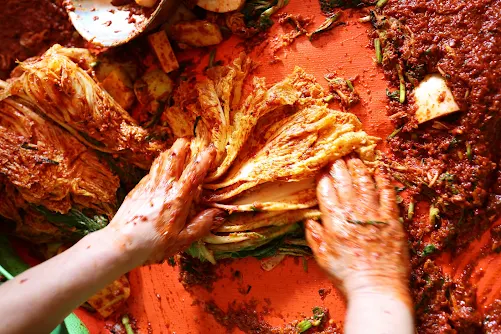
If Kimchi is the lifeblood of the Korean diet, then Kimjang (김장) is the heart that pumps it. Kimjang is the centuries-old tradition of collectively preparing and sharing large quantities of Kimchi in late autumn to sustain the entire family or community through the winter. This practice is so fundamentally important that UNESCO inscribed it on the Representative List of the Intangible Cultural Heritage of Humanity in 2013.
The Culture of Sharing and the Suyuk Tradition
Historically, Kimjang was an intense, communal labor involving family members, neighbors, and friends. The sheer amount of cabbages—often hundreds—meant that people had to work together. This collective effort acted as an essential mechanism for strengthening social cohesion and community bonds.
A beautiful cultural offshoot of Kimjang is the tradition of eating Bossam (보쌈) or Suyuk (수육) on the day of the work. Bossam is tender, thinly sliced boiled pork belly, and it is traditionally wrapped in the freshly made, unfermented Kimchi. It’s a way to celebrate the hard work, thank the helpers, and enjoy the fruits of the harvest before the main batch ferments.
💡 Pro Tip: Trying this pairing—fresh Kimchi and boiled pork belly—is essential for any visitor seeking an authentic taste of Korean culture. The richness of the pork is perfectly balanced by the fresh, spicy yangnyeom.
From Earthen Jars to Modern Refrigeration
After the *Kimjang* was complete, the massive quantities of Kimchi were traditionally stored in large, porous earthenware jars called Onggi (옹기). These jars were then buried in the ground up to their necks. The ground acted as a natural temperature regulator, keeping the Kimchi cool enough to ferment slowly and prevent over-ripening during the winter. This laborious process of burying and retrieving the *Onggi* was a crucial part of the Kimjang labor.

However, as Korea rapidly modernized and apartment living became the norm, burying Onggi became impractical. This challenge led to one of the most uniquely Korean domestic appliances: the Kimchi refrigerator.
From Earthen Jars to the Kimchi Refrigerator: Modern Storage
The Kimchi refrigerator is a testament to the enduring significance of kimchi in the Korean home. It is designed to mimic the consistent, low temperature of the traditional Onggi buried in the soil. These specialized refrigerators maintain a temperature that is slightly colder and more stable than a standard refrigerator, optimizing the long-term, slow-fermentation process.
It is incredibly common for Korean households to own not just a regular refrigerator for general food, but also one to two dedicated Kimchi refrigerators. This reflects the reality that Kimchi consumption is high, and proper, large-scale storage is a necessity, not a luxury.
This modern appliance has essentially preserved the traditional culture of Kimjang by providing a convenient, urban-friendly method of storage. It allows families to continue the practice of making huge quantities of Kimchi once a year, while ensuring the quality and taste remain perfect throughout the seasons. It’s a wonderful example of tradition adapting to the modern world.
Kimchi as a Global Superfood and Cultural Ambassador
Today, Kimchi has achieved global superfood status, celebrated for its robust flavors and impressive health benefits, including being a source of dietary fiber, vitamins, and powerful antioxidants. It’s a core element of the Hallyu wave, a cultural ambassador that invites people all over the world to experience a piece of our heritage.
The simple, humble preserved vegetable that was born out of a need for winter survival has become a complex culinary icon—a dish that carries the entire Korean Culture Insight within its flavor. From the pre-chili white chimchae of the Goryeo Dynasty to the gochugaru-laced baechu of the modern home, the history of kimchi is an edible timeline of Korea itself.
Next time you enjoy a spoonful of this fantastic food, remember the thousands of years of ingenuity, the communal effort of Kimjang, and the scientific magic that went into creating it. It’s more than just a dish; it’s a living, breathing Traditional Culture we are proud to share.
Korean Culture portal KCulture.com
Join the mailing service and add to your favorites.

Founder of Kculture.com and MA in Political Science. He shares deep academic and local insights to provide an authentic perspective on Korean history and society.