I’ve lived in Korea for years, and honestly, the sheer amount of information needed for a first-time trip can be overwhelming. Seeking the ‘real’ Korea? Unpack the culture and simplify your planning with this guide. Whether you’re a K-Pop stan or a history buff, this is The Ultimate Korea Travel Guide for First-Timers designed by a local expert. I’ll cover everything from pre-trip essentials and booking tips to navigating cultural differences and, critically, how to handle money like a local so you can avoid those classic tourist pitfalls.
- Pre-Trip Essentials: Your Korea Travel Checklist
- Payment and Currency Guide: Cash, Cards, and Exchange
- Booking Transportation and Accommodation: The Local Way
- Cultural Insights: What to Know Before You Go
- Must-Visit Destinations for the First-Timer
- K-Food Guide: Must-Try Dishes Beyond BBQ
- Itinerary Planning for Different Durations and Interests
Pre-Trip Essentials: Your Korea Travel Checklist
Before you even pack your bags, there are critical steps to ensure a smooth arrival. Korea is highly modern, but getting the tech and documentation right is crucial for a stress-free experience.

Visa and Customs Clearance
Check your country’s requirements for the K-ETA or visa. Rules can change, so this is non-negotiable. You can check the current policies and required documents here. Also, familiarize yourself with customs regulations, especially regarding food, electronics, and cash, to avoid delays upon arrival. Get a head start on customs procedures with this guide.
Connectivity: The E-Sim or Pocket Wifi
You will need constant internet access. Seriously. Whether you’re navigating via KakaoMap, checking subway times, or translating menus, connectivity is key. I highly recommend an e-Sim card (if your phone supports it) for convenience, or a pocket WiFi device for groups. Book and pick it up at Incheon Airport (ICN).
💡 Pro Tip: Download Essential Apps
Forget Google Maps—it’s unreliable for directions in Korea. Download and familiarize yourself with Naver Map or KakaoMap. Also, get a translation app like Papago, which handles Korean nuances far better than standard translators.
Payment and Currency Guide: Cash, Cards, and Exchange
Korea is one of the most technologically advanced countries, and that includes payments. While credit cards are king, a small amount of cash is necessary for certain local experiences. (For information on your Korea travel budget, please refer to ‘Korea Travel Budget 2025‘.)
The Card-Centric Economy
You can use international credit cards (Visa, Mastercard) almost everywhere—from large department stores to small cafes. Even street vendors often accept card payments. This makes traveling convenient, but always notify your bank that you’ll be using your card abroad to prevent it from being blocked.
When You Need Korean Won (KRW)
While cards dominate, you’ll need cash for a few things:
- Small traditional market vendors (though even they are adopting cards quickly).
- Buying a physical T-money transportation card (topping it up can be done with cash or card).
- Certain tiny local restaurants (the real Local Picks!).
- Some specific vending machines or older coin-operated public facilities.
Best Practices for Currency Exchange
Avoid exchanging large sums at the airport. The best exchange rates are typically found at authorized private money changers, especially in areas like Myeongdong or Namdaemun Market. Alternatively, you can withdraw Korean Won directly from a global ATM (look for banks like KEB Hana Bank or Woori Bank) using your foreign debit card, which often offers better rates than airport tellers.
⚠️ Warning: Dynamic Currency Conversion (DCC)
When paying by card, if asked whether you want to be charged in KRW or your home currency, always choose KRW. Choosing your home currency (DCC) means the merchant or bank is setting the exchange rate, usually resulting in a much higher fee. For a deeper dive into the Korean cash and card system, check out our Playbook here.
Booking Transportation and Accommodation: The Local Way
Getting around Korea is efficient, but booking methods often require local knowledge. Don’t waste time trying to figure out the system on the spot.
Internal Transportation: KTX and Buses
For long-distance travel (e.g., Seoul to Busan), the KTX high-speed train is your best friend. Book tickets in advance, especially during major holidays. Buses are cheaper and reach smaller towns. For intercity travel, a comprehensive guide to public transport is available here.
Within cities, the subway and local buses are excellent. I use a T-money card daily. You can buy one at any convenience store and top it up. It’s essential for seamless travel across most cities.
For detailed guides on Seoul’s subway system, which is an absolute core of your visit, check out this article.
Accommodation: Hotel vs. Hanok vs. Airbnb
- Hotels: Convenient and familiar, but often pricier in central areas like Myeongdong or Gangnam.
- Hanok Stays: A beautiful, traditional culture experience, especially in Seoul’s Bukchon or Jeonju. Expect a cozier (and sometimes firmer) sleeping arrangement on the floor.
- Airbnb/Guesthouses: Great for feeling like a local. Look for places near a major subway station for easy access to everything.
⚠️ Warning: Check-in & Security Deposits
Unlike Western hotels, Korean hotels sometimes require an immediate payment or a substantial security deposit upon check-in. Always confirm the local payment policies beforehand. Also, many smaller hotels may require you to leave your room key at the front desk when you go out.
Cultural Insights: What to Know Before You Go
As a resident, I’ve seen countless tourists puzzled by common local customs. Avoiding these cultural misunderstandings is key to enjoying your Deep Dive into Korean Culture.
The Power of Hierarchy and Respect
Korean culture has a strong emphasis on age and hierarchy. While tourists are often given a pass, a few simple actions show respect: use two hands when giving or receiving something (especially money or business cards), and pour drinks for others before yourself. Saying “Annyeonghaseyo” (Hello) and “Gamsahamnida” (Thank you) goes a long way.(For more information, see here.)
Dining Etiquette: Don’t Be a Food Faux Pas
One common mistake is sticking your spoon or chopsticks upright in your rice bowl—this is traditionally done for ancestral rites and is considered bad luck. Also, don’t blow your nose at the table; if you must, excuse yourself. Sharing food is the norm, especially at Korean BBQ.
📌 Local Note: The Personal Space Bubble
Koreans can be more reserved about physical contact with strangers than in some Western countries. However, on a crowded subway, personal space completely disappears—it’s a collective, unavoidable experience! Don’t take being bumped as an offense.
Must-Visit Destinations for the First-Timer
Your first trip should balance the modern, vibrant Hallyu culture with the beautiful, grounding traditional culture of the past. Here are the core pillars of a great first itinerary.
Seoul: Tradition Meets Neon
Seoul is the beating heart of Korea. Visit Gyeongbokgung Palace for a dose of history and Hanbok photo opportunities. Then, wander through the historic Bukchon Hanok Village. For the modern contrast, explore the bustling markets of Namdaemun and the ultra-modern COEX Mall in Gangnam, a Mecca for K-Pop fans.
Busan: The Coastal Vibe
Korea’s second-largest city offers a completely different, more relaxed feel. Must-sees include Haeundae Beach, the vibrant Gamcheon Culture Village (a colorful, artsy hillside town), and the massive Jagalchi Fish Market for the freshest seafood.
Gyeongju: The Golden Capital of Silla
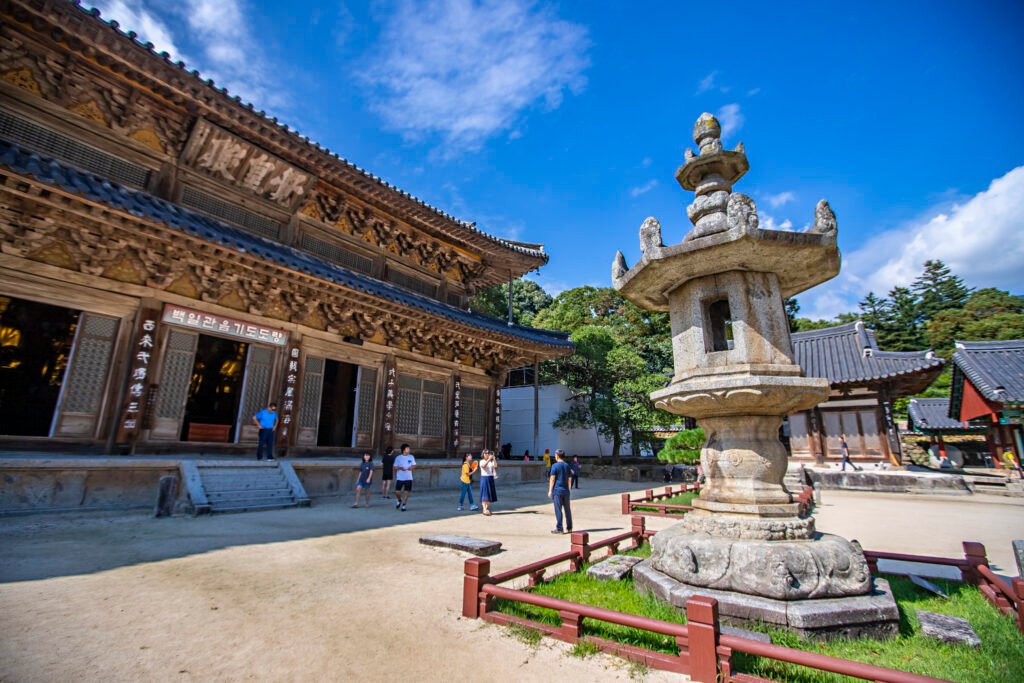
If you want a Traditional Culture Deep Dive, Gyeongju is the answer. As the ancient capital of the Silla Kingdom, it’s an open-air museum filled with historical sites, including royal tombs shaped like grass-covered mounds, temples, and UNESCO World Heritage sites like Bulguksa Temple.
K-Food Guide: Must-Try Dishes Beyond BBQ
Korean Food (K-Food) is a cornerstone of the culture. While Korean BBQ is internationally famous, the real Korean Culture Insight comes from trying the daily staples and local specialties.

| Dish | Description & Flavor Profile | Local Pick Location |
|---|---|---|
| Kimchi Jjigae | Spicy, savory stew made with well-fermented Kimchi, pork, and tofu. Comfort food. | A small, local restaurant (Bapsang) near a traditional market. |
| Bibimbap | Mixed rice with seasoned vegetables, meat, a fried egg, and gochujang (chili paste). A healthy, customizable classic. | Jeonju, the dish’s origin city, for the most authentic flavor. |
| Tteokbokki | Spicy rice cakes simmered in a gochujang sauce. Sweet, chewy, and spicy street food. | A cart (Pocha) in a busy area like Hongdae or a dedicated Tteokbokki street. |
Itinerary Planning for Different Durations and Interests
How you structure your trip depends heavily on your available time and your primary interests in Korean Culture, whether it’s the Hallyu wave or the historical roots.
Duration Differences
- 5 Days: Focus entirely on Seoul. Deep Dive into major sites, one K-Pop/K-Drama themed day, and one traditional day.
- 7-10 Days: Seoul (4-5 days) + Busan (3-4 days). Use the KTX. This balance gives you the city energy and a coastal break.
- 14 Days: The “Golden Triangle”: Seoul, Busan, and Gyeongju/Jeju. This allows for a deeper exploration and a better sense of the country’s diverse landscapes.
K-Pop & K-Drama Fan Itinerary
If you are coming for Hallyu, your schedule should prioritize the following: Visit the SM, JYP, and HYBE buildings in Gangnam. Explore the K-Star Road, and dedicate a day to fan merchandise shopping in Hongdae or the underground stores near Gangnam Station. Consider booking a tour to K-Drama filming locations outside of Seoul for a true Playbook experience.
This journey is your chance to move beyond the screen and experience the Korean Culture Insight firsthand. Remember, the true essence of Korea is found not just in the palaces or the pop charts, but in the small daily interactions and the resilience of its people. I hope this local guidance helps you unlock the real Korea. Safe travels!
Korean Culture portal KCulture.com
Join the mailing service and add to your favorites.

Founder of Kculture.com and MA in Political Science. He shares deep academic and local insights to provide an authentic perspective on Korean history and society.