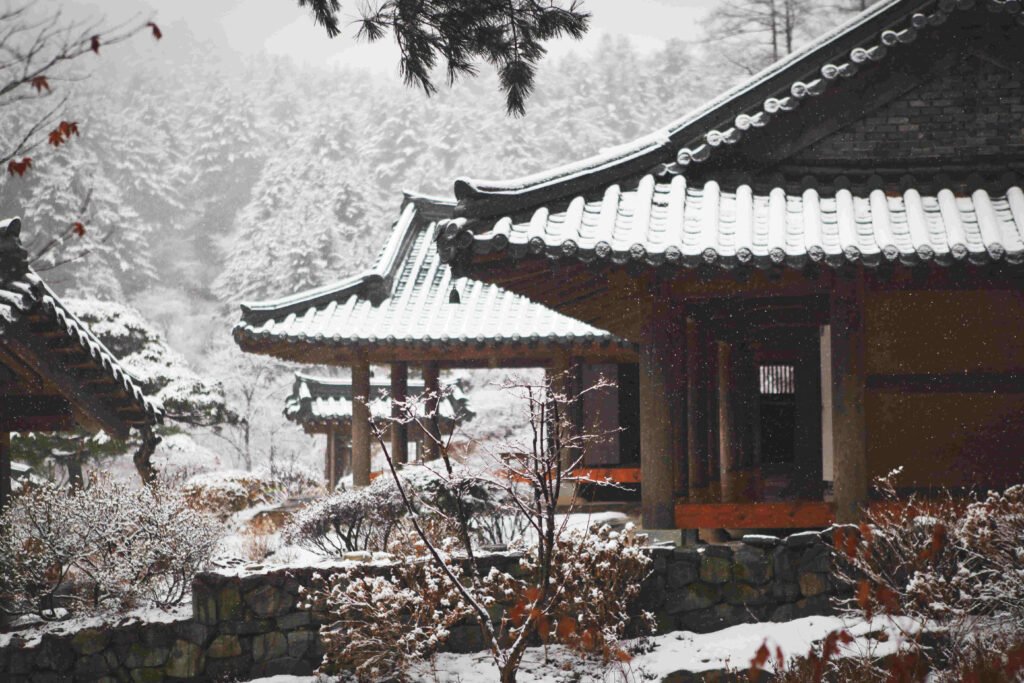
You know, there’s a specific smell in the air when winter hits Korea—crisp, clean, and carrying the faint scent of roasted chestnuts. If you are planning a trip between December and February, you are in for a treat. While the temperatures drop, the charm absolutely skyrockets. We call it a “Frozen Fairytale,” but honestly, it is also about the warmth you find in steaming street food and glowing festivals.
As a local living here, I’ve seen travelers often underestimate the cold or miss out on the best spots because they stick only to Myeongdong. This Korea winter travel guide is your blueprint. From navigating the KTX to finding the best strawberry farms on your own, I’m going to break down exactly how to survive and thrive during the Korean winter. Let’s unpack the real culture, from icy adventures to cozy escapes.
- 1. The Best Winter Travel Courses
- 2. Must-Do Festivals & Experiences
- 3. How to Plan & Book Like a Local
- 4. The Winter Food Bucket List
- 5. Survival Tips & Local Secrets
1. The Best Winter Travel Courses
When friends visit me in winter, I always recommend efficient routes. You don’t want to be waiting for a bus in -10°C weather for too long. Here are the top three curated courses that mix sightseeing with activity.
Course A: The Snowy Fairytale (For Couples & Photography Lovers)
This is the classic “Winter Sonata” route, but it never gets old. It is perfect if you want those iconic snow shots.
- Route: Nami Island → Gangchon Rail Bike → Garden of Morning Calm.
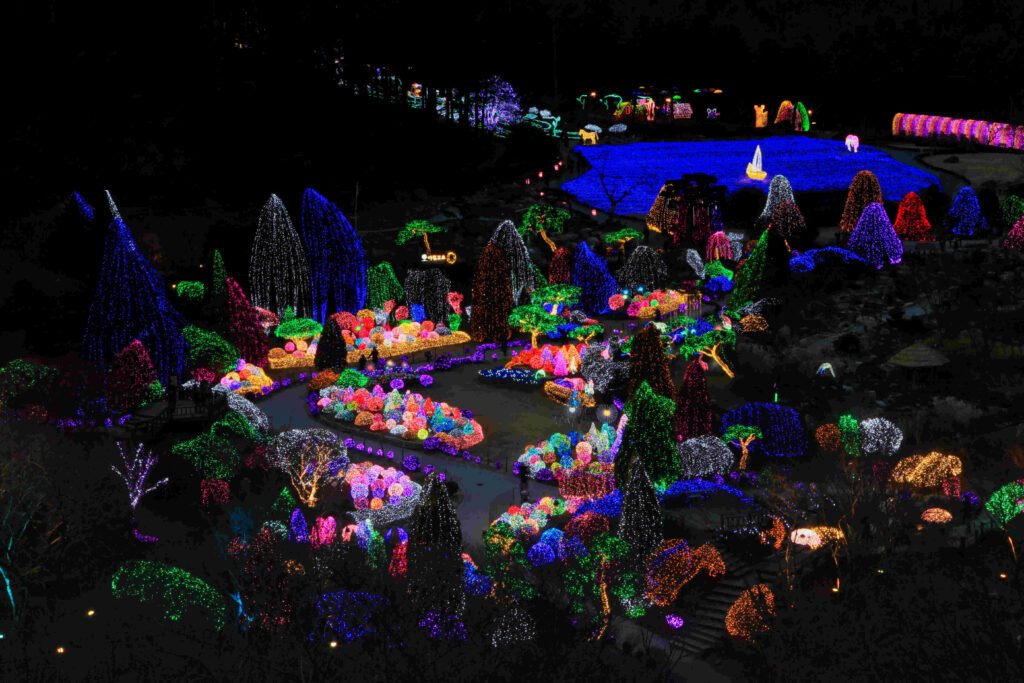
- Why it works: Nami Island’s(1024 Bukhangangbyeon-ro Gapyeong-eup Gapyeong-gun) Metasequoia lane is beautiful in the snow. But the real highlight is the Lighting Festival at the Garden of Morning Calm(432 Sumogwon-ro Sang-myeon Gapyeong-gun). It usually starts around 5:00 PM. Seeing millions of lights illuminate the snowy gardens is magical.
- Transport Tip: Take the ITX-Cheongchun train from Yongsan Station to Gapyeong Station. From Gapyeong, use the local “Gapyeong City Tour Bus” which loops around these major sites.
Course B: Real Winter Adventure (For Families & Active Travelers)
If you want to scream with laughter while sliding down a hill, this is for you.
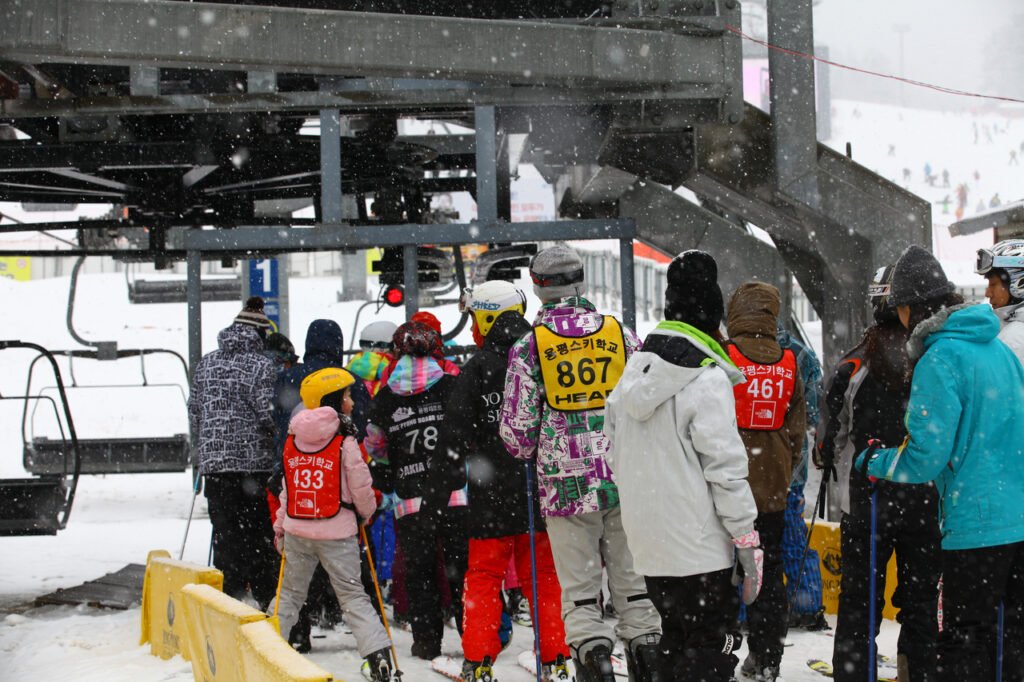
- Route: Seoul → Cheongyang Alps Village OR Vivaldi Park Snowy Land → Strawberry Farm
- Highlights:
- Cheongyang Alps Village: Famous for its massive Ice Fountain Festival. The ice walls create a “Frozen” movie vibe that is huge on Instagram right now.
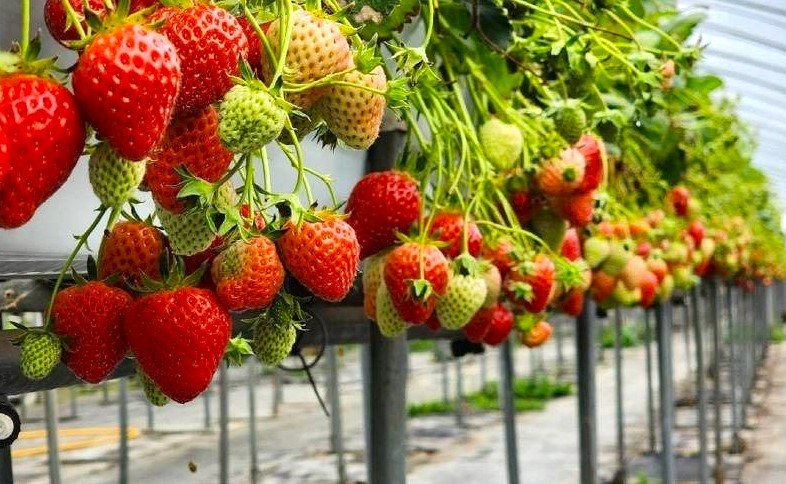
- Strawberry Picking: Korean winter strawberries are incredibly sweet and large. After freezing in the snow, entering a warm greenhouse to pick fresh strawberries is pure bliss.
For detailed information on ski resorts and sledding, please refer to ‘2025/26 Korea Ski Guide: Best Resorts & Sledding Near Seoul‘.
Course C: Seoul Urban Healing (For City Explorers)
You don’t have to leave Seoul to feel the winter vibes.
- Route: Gyeongbokgung Palace (Hanbok Experience) → Gwanghwamun Square (Seoul Lantern Festival) → Myeongdong (Street Food) → Jjimjilbang (Korean Spa).
- Local Insight: Wearing a Hanbok gets you free entry to the palace, but in winter, make sure to rent a fur-lined vest (available at rental shops). End your day at a Jjimjilbang to melt your frozen muscles—it’s a non-negotiable part of Korean winter culture.
2. Must-Do Festivals & Experiences
Korea doesn’t hibernate in winter; we party on the ice. However, these events are time-sensitive.
The Hands-On Ice Festivals
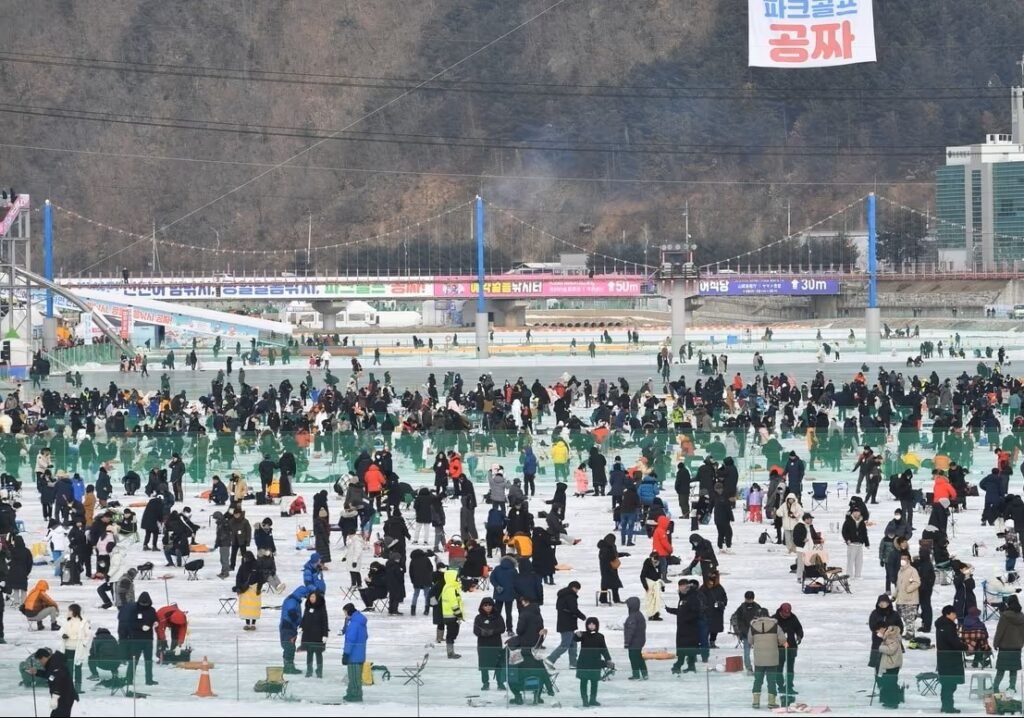
You might have heard of Hwacheon festival, but there are other gems. For instance, the Hongcheongang Kkongkkong Festival is fantastic. It is less crowded than Hwacheon but offers an authentic experience where you can catch trout with your bare hands (if you are brave enough!) or use a fishing rod through a hole in the ice. They also have huge sledding slopes.
City Skating
If you are staying in the city, the Seoul Plaza Ice Rink is a landmark. Located right in front of City Hall, it is incredibly cheap (usually around 1,000 KRW including skate rental). Skating surrounded by skyscrapers and the city library is a core Seoul memory. Alternatively, consider a visit to the ‘Ttukseom Hangang Park Sledding Hill‘.
3. How to Plan & Book Like a Local
Finding these places is one thing; timing them right is another. Here is how we locals handle logistics to get the most out of the season.
Step 1: Check the Calendar Before You Book
Many travelers make the mistake of booking flights first and then looking for things to do. In Korea, especially during winter, festivals and pop-up events dictate the vibe.
- Before finalizing your itinerary, visit KCulture’s What’s On page.
- Why? An ice festival might only run for three weeks. A Christmas market or a special pop-up store in Seongsu-dong might be open for just a few days.
- Strategy: Check the dates of major events like the Ice Rink opening or regional festivals on our site, and build your travel schedule around these key dates to ensure you don’t miss out.
Step 2: Can’t Find a Tour? Go DIY (Do It Yourself)
Sometimes, tour packages on global sites (like Klook or Trazy) sell out, or you might just want a more authentic, unscripted experience. If you can’t find a “Strawberry Picking Tour,” don’t worry. Korea has thousands of farms, and you can find them yourself.
Here is the local way to find a spot using Naver (Korea’s Google):
- Go to Naver Search and type “딸기 체험 농장” (Strawberry Experience Farm).
- You will see a map list of farms across the country. Click on one near your location or destination.
- You can check the exact address and phone number.
📌 Local Note: Most farm owners serve domestic visitors, so they might not speak fluent English. However, Korean hospitality is warm. If you show up or call with a translation app (Papago is best), they will likely welcome you with open arms. It takes a bit of courage, but this “DIY adventure” gives you infinite choices beyond the standard tourist path.
4. The Winter Food Bucket List
You haven’t experienced Korea until you’ve eaten standing up on a windy street corner.
| Food | Description | Local Eating Tip |
|---|---|---|
| Bungeoppang | Fish-shaped pastry filled with red bean or custard cream. | Carry cash (1,000 KRW bills). Eat the tail first if you like it crispy! |
| Hotteok | Fried pancake filled with cinnamon sugar and nuts. | Warning: The syrup inside is lava-hot. Bite a small hole to let steam out first. |
| Odeng Gukmul | Fish cake skewers with hot broth. | The broth is free! Just grab a paper cup and help yourself near the skewer pot. |
5. Survival Tips & Local Secrets
The cold here is “bone-chilling” due to the wind. Here is your survival kit.
The “Long Peding” (Long Puffer Jacket)
You will notice 90% of Koreans wearing knee-length black puffer jackets. We look like penguins, but there is a reason. It is the only thing that blocks the wind. If you didn’t bring one, you can buy affordable ones at SPA brands like Spao or Top Ten.
Hot Packs (Hand Warmers): Use with Caution!
You will find “Hot Packs” (heat patches) in every convenience store. They are life-savers, but you must use them correctly.
⚠️ CRITICAL SAFETY WARNING:
Never stick a hot pack directly onto your bare skin. These packs generate heat for many hours, and direct contact can cause a “low-temperature burn” (blisters and deep skin damage) without you realizing it immediately.
Correct Usage: Always stick them on top of your base layer (undershirt) or inside your coat pocket.
Ondol: The Floor Heating Magic
If you have a choice, book accommodation with Ondol (traditional floor heating). There is no feeling quite like coming in from the snow and sitting on a toasty warm floor. It melts the fatigue away instantly.
Korean Culture portal KCulture.com
Join the mailing service and add to your favorites.

Founder of Kculture.com and MA in Political Science. He shares deep academic and local insights to provide an authentic perspective on Korean history and society.