More Than Monsters: The Soul of Korean Mythology in K-Dramas
If you have watched hit K-dramas like Guardian: The Lonely and Great God (Goblin), Tale of the Nine Tailed, or The Uncanny Counter (Demon Hunters), you have already met them. They are handsome, powerful, and sometimes terrifying. But for those of us living in Korea, these beings—the Dokkaebi, Jeoseung Saja, and Gumiho—are not just TV characters. They are deeply rooted figures in our folklore that have shaped our cultural psyche for centuries.
To truly understand these dramas, you need to look beyond the CGI and romance. In Korean tradition, these creatures are not simple “monsters.” They represent human desires, the inevitability of death, and the complex relationship between nature and humanity. In this deep dive, I will take you into the real stories behind the myths, separating the K-Drama fantasy from the traditional reality.
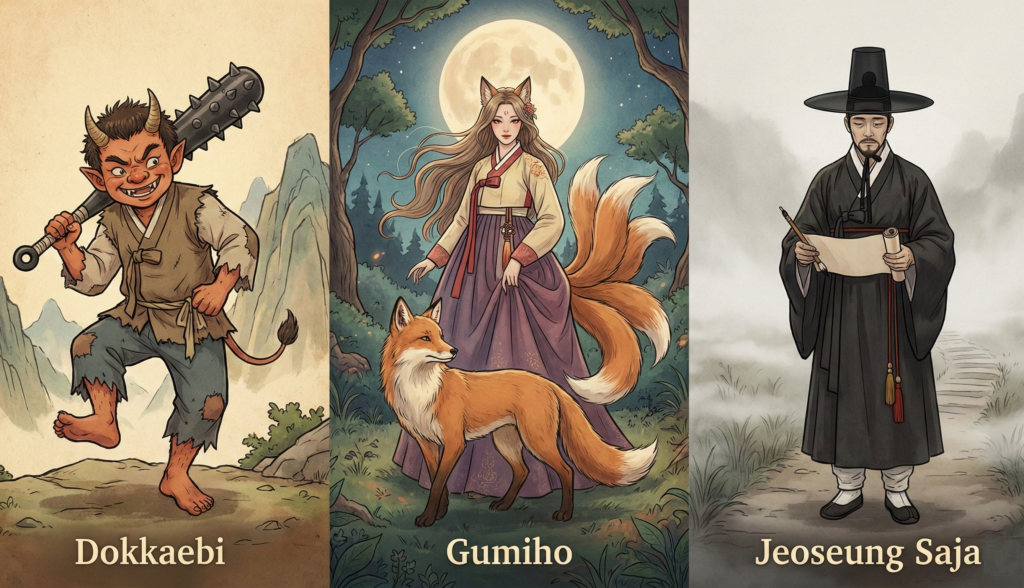
- 1. Dokkaebi: The Mischievous Nature Spirit
- 2. Jeoseung Saja: The Bureaucrat of Death
- 3. Gumiho: The Shape-Shifting Fox with a Dream
- 4. Why Koreans Love These Monsters
- 5. Where to Experience the Myth in Seoul
1. Dokkaebi: The Mischievous Nature Spirit
When international fans hear “Goblin,” they often imagine the small, malicious green creatures from Western fantasy. However, the Korean Dokkaebi (도깨비) is completely different. As portrayed by Gong Yoo in the drama, they are often seen as powerful and charismatic, but the traditional folklore is even more interesting.
Not a Ghost, But a Spirit of Objects
Unlike ghosts (Gwishin), which are the spirits of deceased humans, a Dokkaebi is formed from inanimate objects stained with human blood or sweat—such as an old broom, a fire poker, or worn-out tools. This gives them a “human-like” quality because they are born from objects that lived alongside people.
A Friend, Not a Foe
Traditionally, Dokkaebi are not evil. They are mischievous pranksters who love wrestling (Ssireum), singing, and drinking makgeolli (rice wine). They are known to reward good people with wealth and punish the greedy.
In folklore, they carry a magic club called a Dokkaebi Bangmang-i. Unlike a wizard’s wand, it doesn’t create things out of thin air; it summons existing items. If you ask for gold, it might teleport gold from a greedy rich man’s warehouse to you. This reflects the Korean commoner’s desire for social justice and redistribution of wealth.
📌 Cultural Insight: In the drama Goblin, the main character is a god-like warrior. However, the “real” Dokkaebi of folklore is much more approachable, often depicted wearing a tiger-skin loincloth and challenging travelers to wrestling matches for a drink.
2. Jeoseung Saja: The Bureaucrat of Death
In Goblin (and recently referenced in shows like The Uncanny Counter or Tomorrow), the Grim Reaper is depicted as a chic man in a black suit and hat. This modern visual is actually a direct evolution of the traditional Jeoseung Saja (저승사자).
The Messenger from the Netherworld
The name literally translates to “Envoy of the Afterlife.” In Korean shamanism, the afterlife is a structured bureaucracy ruled by King Yeomra. The Jeoseung Saja is essentially a civil servant. Their job is not to kill, but to guide souls who have reached their expiration date to the judgment hall.
The Importance of the Hat (Gat)
In dramas, they wear black fedoras. This is a modern reinterpretation of the traditional Gat (갓), the wide-brimmed black hat worn by noblemen and officials in the Joseon Dynasty.
Seeing a Jeoseung Saja in a dream or hallucination was traditionally a sign that your time was up. They carry a list with the names of the dying. This reflects the Korean view of death not as a random chaotic event, but as an orderly administrative process that cannot be bribed or avoided.
3. Gumiho: The Shape-Shifting Fox with a Dream
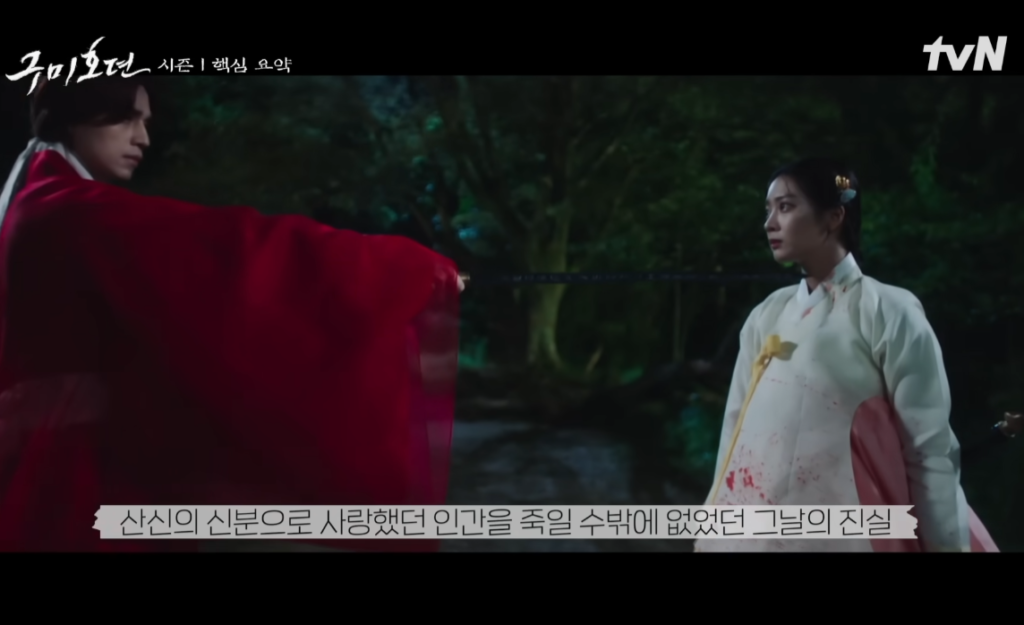
While Western werewolves change under a full moon, the Korean Gumiho (구미호) is a nine-tailed fox that can shape-shift into a beautiful human. Traditionally female (though Lee Dong-wook changed this perception in Tale of the Nine Tailed), the Gumiho is a figure of tragedy and longing.
The Fox Bead (Yeou Guseul)
In folklore, a Gumiho possesses a “Fox Bead” that contains knowledge and power. In stories, the Gumiho might try to transfer this bead into a human’s mouth to absorb their energy (Gi). This is often depicted as a “deep kiss” in modern media, turning a predatory act into a romantic tension.
The Desire to Be Human
The most profound aspect of the Gumiho myth is their goal. Unlike Western monsters that revel in their power, the Gumiho desperately wants to become human.
There is a famous tale where a Gumiho marries a man and tries to live as a human for 100 days without being caught to become permanently human. Usually, the husband breaks a promise, revealing her true form, and she flees in tears. This story represents Han (deep sorrow and resentment)—the pain of being an outsider and the failure to achieve one’s ultimate dream despite immense effort.
4. Why Koreans Love These Monsters
Why do these ancient stories keep appearing in modern K-Dramas? It is because they embody the core emotions of Korean culture: Han (Sorrow), Jeong (Attachment), and Heung (Joy/Excitement).
- Dokkaebi represents Heung and the hope for a reversal of fortune. They are the friends of the common people.
- Jeoseung Saja represents the unavoidable fate and the order of the universe. They remind us to live correctly before facing King Yeomra.
- Gumiho represents the sorrow of unfulfilled love and the desperate desire to belong.
When you watch these characters on screen, you aren’t just watching a fantasy; you are watching a modern remix of the stories Korean grandmothers told their grandchildren to explain the mysteries of life, death, and nature.
5. Where to Experience the Myth in Seoul
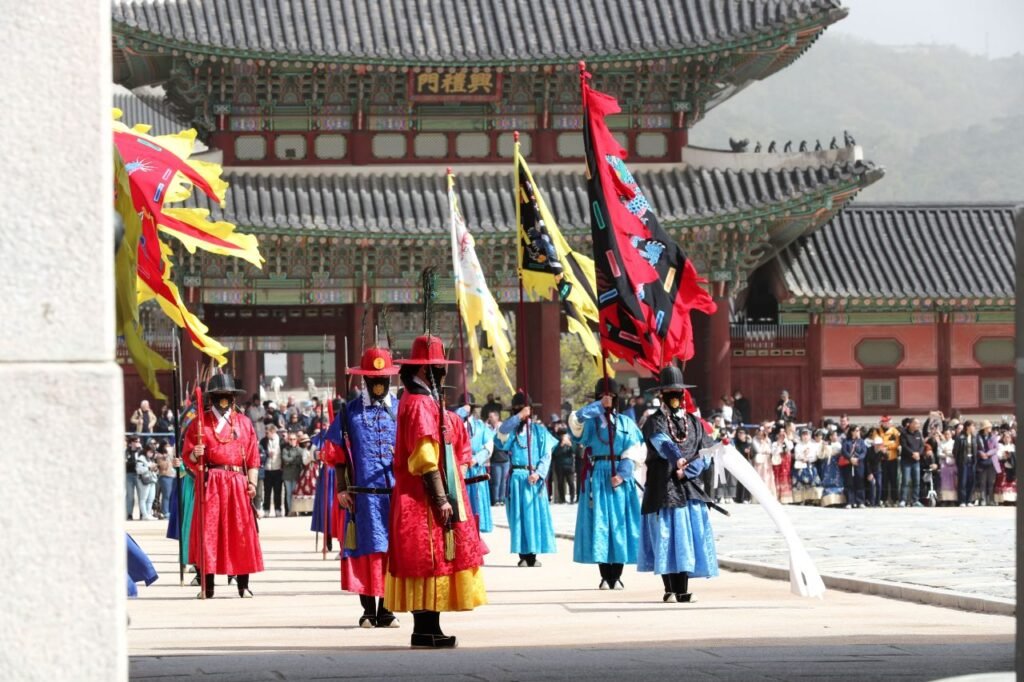
If you want to feel the presence of these myths during your trip, visit the Royal Palaces (Gyeongbokgung or Changdeokgung). Look closely at the roofs. You will see small figurines called Japsang.
These figures, inspired by the “Journey to the West” and local myths, are placed there to ward off evil spirits. While they aren’t exactly Dokkaebi, they share the same architectural role of spiritual protection. Also, visiting the National Folk Museum of Korea (located inside Gyeongbokgung) will let you see the traditional masks and drawings of these fascinating creatures.
Korean Culture portal KCulture.com
Join the mailing service and add to your favorites.

Founder of Kculture.com and MA in Political Science. He shares deep academic and local insights to provide an authentic perspective on Korean history and society.