The Sweet World of Korean Premium Fruits
Most travelers come to Korea expecting spicy kimchi, sizzling BBQ, or vibrant street food. However, there is a hidden layer to Korea’s culinary scene that often surprises first-time visitors: the incredible quality of its fruit. As a local living in Korea, I can tell you that fruit here isn’t just a snack; it is a premium dessert, a cherished gift, and a seasonal event in itself.
From strawberries that taste like sweet candy to melons found nowhere else on earth, Korean agriculture focuses on high sugar content (Brix) and perfect textures. In this deep dive, I will guide you through the fruits you absolutely cannot miss, the cultural stories behind them, and the practical tips you need to enjoy them like a local.
- 1. The Winter Queen: Korean Strawberry
- 2. The Giant Refresher: Korean Pear (Bae)
- 3. The Korea Exclusive: Chamoe (Yellow Melon)
- 4. The Island Treasure: Jeju Mandarin & Hallabong
- 5. The Luxury Bunch: Shine Muscat
- 6. Three Faces of Autumn: Persimmons
- 7. Local Insights: Seasons & Realistic Pricing
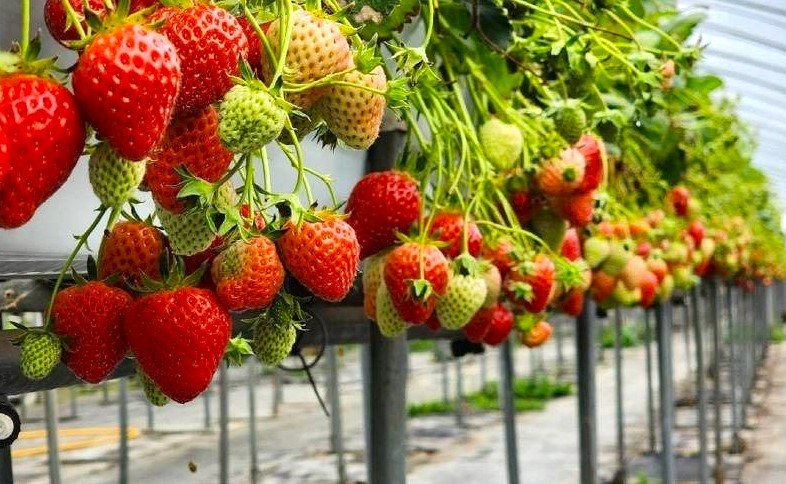
1. The Winter Queen: Korean Strawberry
If you visit Korea between December and April, you are in for a delight. While much of the world considers strawberries a spring or early summer treat, in Korea, the strawberry is the undisputed queen of winter.
Why Winter? The Shift in Seasonality
Decades ago, strawberries were indeed spring fruits here. However, with the widespread adoption of smart-farm greenhouse technology, the season now peaks in deep winter (December/January). The cold weather slows down the ripening process, allowing the berries to accumulate more sugar and develop a firmer texture before being picked.
The Flavor Profile
Korean strawberries (most notably the ‘Seolhyang’ variety) are famous for low acidity and incredibly high sugar content. They are soft, juicy, and intensely fragrant, requiring no sugar or cream to enjoy.
💡 Local Experience: Don’t just buy them at the mart. Visiting a “Strawberry Picking Farm” is a massive trend for couples and families.(Click here to learn more about strawberry picking farm reservations.) Located just outside Seoul, these farms allow you to pick and eat unlimited berries. Also, look out for “Strawberry Buffets” at 5-star hotels—a luxury winter tradition in Seoul.
2. The Giant Refresher: Korean Pear (Bae)
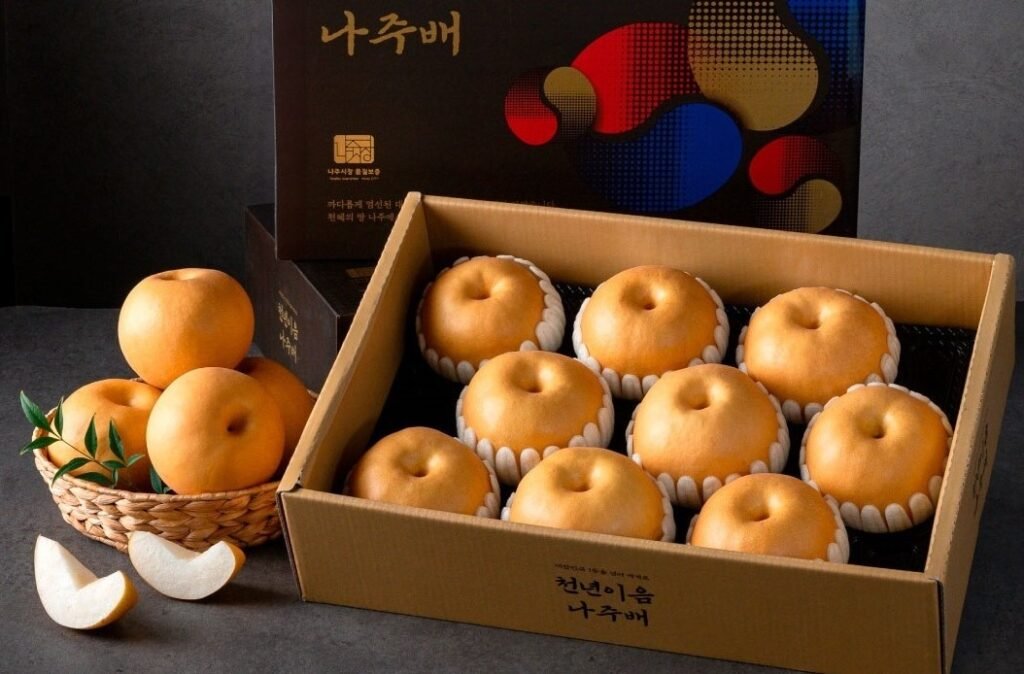
Forget the hourglass-shaped, buttery pears you might know from the West. The Korean Pear (Bae) is round, distinctively large (often the size of a grapefruit or small melon), and has a texture more akin to a crisp apple.
More Juice Than Fruit?
The defining characteristic of the Korean pear is its water content. It is incredibly refreshing and crunchy. When you bite into it, the sweet juice literally runs down your hand. It is the perfect palate cleanser after a heavy meal.
The Ultimate Hangover Cure
There is a funny cultural nuance here. Foreigners often discover the Korean pear through a convenience store drink labeled “IdH.” (This is actually the Korean letters ‘배’ written to look like Latin letters ‘IdH’). Scientific studies—and local experience—suggest that Korean pear juice helps metabolize alcohol, making it a certified local ritual for surviving a rough morning.
3. The Korea Exclusive: Chamoe (Yellow Melon)
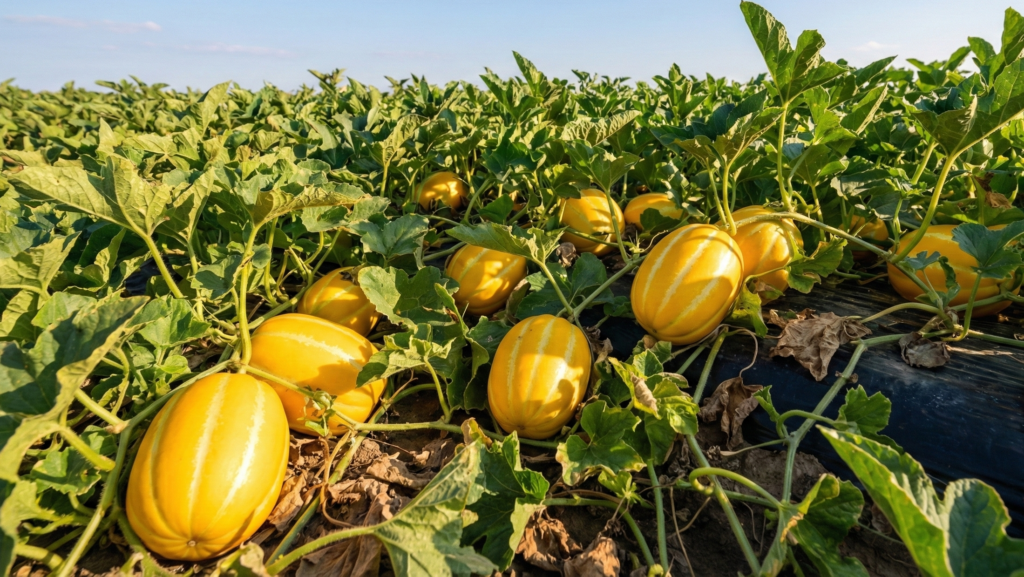
If you want to try something you truly cannot find easily elsewhere, this is it. The Chamoe (Oriental Melon) is the icon of the Korean summer. Its bright yellow skin with white stripes makes it highly instagrammable, but the taste is what keeps locals coming back.
Flavor and Texture
Imagine the crunch of a cucumber combined with the sweetness of a honeydew melon. It is crisp, cool, and moderately sweet. It is the sound of Korean summer—the crunch of biting into a cold Chamoe straight from the fridge.
The “Seed” Misunderstanding
A common mistake first-time visitors make is scooping out the seeds. Don’t do this!
- The white pith and the seeds inside are the sweetest part of the Chamoe.
- Locals peel the yellow skin but eat the white flesh and the seeds together.
- Note: If you have a very sensitive stomach, eating too many seeds might cause digestion issues, but for most, it is the best part.
4. The Island Treasure: Jeju Mandarin & Hallabong
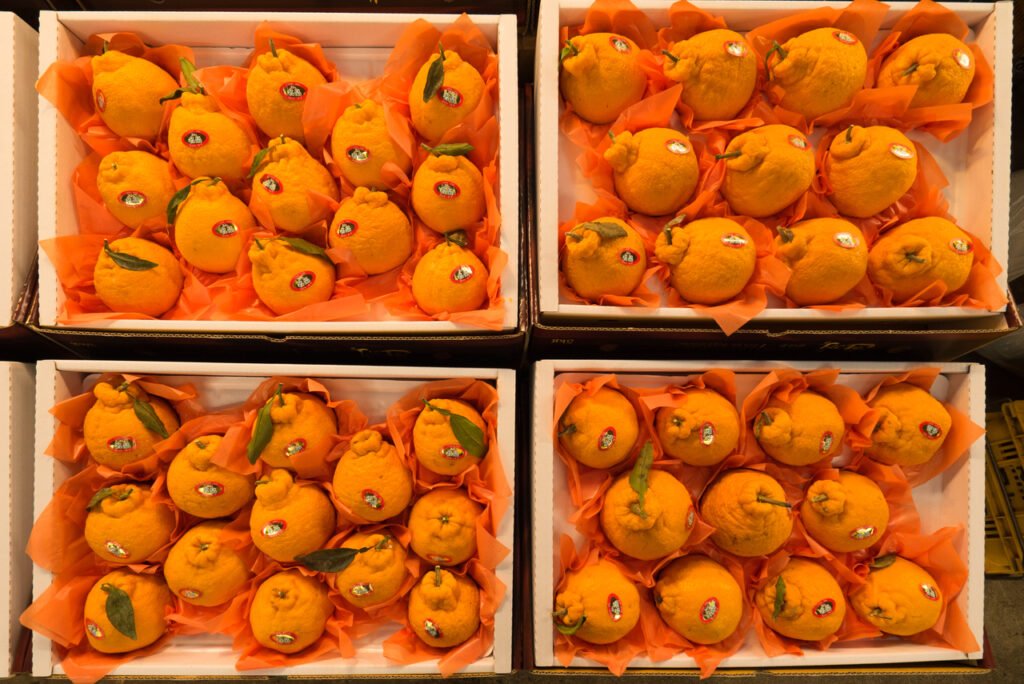
Jeju Island, known as the “Hawaii of Korea,” is citrus heaven. While the small tangerines (Gamgyul) are a winter staple found on every Korean living room table, the Hallabong is the premium star.
Easy to Peel, Hard to Resist
One reason travelers love Korean citrus is convenience. The skin is thin and separates easily from the flesh—no tools required. The Hallabong, named after the shape of Hallasan Mountain because of its protruding “bump” on top, offers a rich, deep sweetness and a unique crunchiness to the pulp.
5. The Luxury Bunch: Shine Muscat
A few years ago, a fruit revolution happened in Korea with the Shine Muscat. Originally a Japanese variety, Korea has adopted and perfected the cultivation of these “luxury grapes.”
The “Mango Grape”
Shine Muscat grapes are famous for their size, lack of seeds, and edible skin. But the real surprise is the flavor—they have a distinct floral, mango-like note. The texture is firm, almost like popping a jelly candy. While they are a common snack now, a high-quality box of Shine Muscat remains a very popular and respectful gift in Korean culture.
6. Three Faces of Autumn: Persimmons
In autumn (October–November), the Korean landscape turns orange with persimmons. What fascinates foreigners is that Koreans eat this single fruit in three completely different ways:
- Dan-gam (Sweet Persimmon): Eaten hard and crunchy like an apple.
- Hongsi (Soft Persimmon): A fully ripened fruit that feels like a water balloon. You scoop out the jelly-like pulp with a spoon. It is nature’s pudding.
- Gotgam (Dried Persimmon): Peeled and dried in the wind. It becomes chewy like a gummy bear with concentrated sweetness.
📌 Pro Tip: Look for “Gotgam-mari” (Walnut-wrapped Persimmon) at traditional tea houses. It pairs the sweet, chewy dried persimmon with savory cream cheese or walnuts. It is a sophisticated dessert that pairs perfectly with warm tea.
7. Local Insights: Seasons & Realistic Pricing
While Korean fruit is delicious, you might notice that prices can be higher than in other countries. Recently, due to erratic weather patterns affecting harvests, prices for premium items like pears and apples have risen (a phenomenon locals call “Fruitflation”).
However, the quality usually justifies the cost. To help you budget, here is a realistic price guide reflecting the current market (2024-2025).
Estimated Market Prices
| Fruit | Best Season | Realistic Price Range |
|---|---|---|
| Korean Pear (Premium) | Sept – Nov | ₩5,000 – ₩10,000 per 1 large pear |
| Strawberry | Dec – April | ₩12,000 – ₩25,000 / 500g pack |
| Shine Muscat | Aug – Oct | ₩15,000 – ₩30,000 / Bunch (Premium grade) |
| Chamoe | April – August | ₩10,000 – ₩15,000 / Bag of 4-6 |
| Jeju Hallabong | Dec – Feb | ₩25,000 – ₩35,000 / Box (3kg) |
Smart Buying Tips
- Avoid Department Stores for Snacks: Department stores sell “Gift Grade” fruits (top 1% appearance). If you just want to eat, they are overpriced.
- Visit Local Markets (Sijang): Places like Mangwon Market or Gwangjang Market offer much better value.
- Check “Ugly” Fruits: Some marts sell “motnani” (ugly) fruits. They have slight blemishes but taste exactly the same and cost 30% less.
Korean Culture portal KCulture.com
Join the mailing service and add to your favorites.

Founder of Kculture.com and MA in Political Science. He shares deep academic and local insights to provide an authentic perspective on Korean history and society.