Unlocking the Peace of Darye: A Guide to the Korean Tea Ceremony
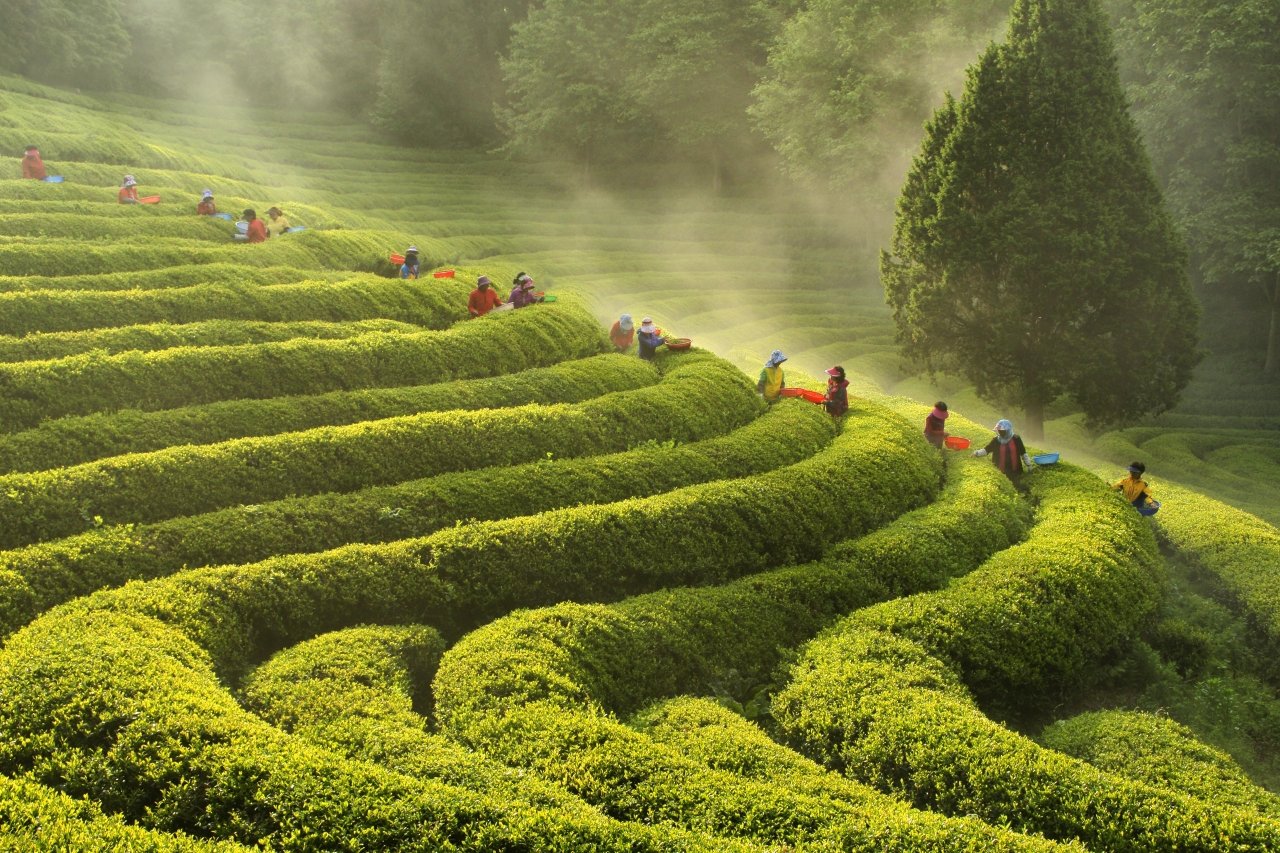
If you think you know tea, think again. While the world rushes on caffeine, Darye (Korean Tea Ceremony) offers a profound antidote: the art of slowing down. Literally translating to “Etiquette for Tea,” Darye is not just about drinking a beverage; it is a meditative practice rooted in the philosophy of Seonda-ilyeo (Zen and tea are one), designed to cultivate a state of Jungjeong—a mind that is balanced, unbiased, and calm.
Living in Korea, I often find myself caught in the palli-palli (hurry, hurry) culture. Yet, stepping into a traditional tea house instantly shifts the atmosphere. In this guide, I will take you through the history, the unique cooling rituals that distinguish Korean tea from its neighbors, and exactly where—and how—to book your own authentic experience in 2026.
- The Spirit of Darye: More Than Just a Drink
- A Sip of History: From Royals to Monks
- The Ritual: A Step-by-Step Guide
- Where to Experience Darye (Booking Info)
- Plan Your Trip: Korean Tea Festivals
- FAQ: Common Questions for First-Timers
The Spirit of Darye: More Than Just a Drink
Unlike the rigid formalities of the Japanese tea ceremony or the practical enjoyment of Chinese tea, Korean Darye emphasizes naturalism and harmony. It is less about perfecting a movement and more about the mindset of the host and guest.
The Philosophy of Jungjeong (Middle Path)
At the heart of Darye lies the concept of Jungjeong (Middle Rightness). Coined by the great tea master Cho-ui Seon-sa in the Joseon Dynasty, it teaches that tea—like life—should be neither too strong nor too weak, neither too hot nor too cold. It is about finding the perfect balance.
💡 Insider Insight: When you experience Darye, you aren’t judged on your posture. The goal is to enjoy the conversation and the tea in a relaxed, respectful manner. It’s “formal relaxation.”
A Sip of History: From Royals to Monks
Tea in Korea has a lineage that dates back nearly 2,000 years. Understanding this context adds a rich layer of appreciation to every cup you drink.
- The Legend of Queen Heo (Three Kingdoms Period): Historical texts like the Samguk Yusa suggest that tea was first brought to Korea in AD 48 by Princess Heo Hwang-ok from India when she married King Suro of Gaya. Later, Silla Kingdom warriors known as Hwarang used tea during their mountain training to clear their minds.
- The Golden Age (Goryeo Dynasty): Tea culture flourished during this era. It was a central part of state rituals like the Yeondeunghoe (Lotus Lantern Festival). It was enjoyed by everyone, from kings to commoners.
- The Renaissance (Joseon Dynasty): While tea culture waned initially due to anti-Buddhist policies, it was revived in the late Joseon period by scholars and monks. Cho-ui Seon-sa wrote the Dongdasong (Hymn of Eastern Tea), which remains the most authoritative text on Korean tea today.
The Ritual: A Step-by-Step Guide
The visual beauty of Darye lies in its tools and the unique “cooling” step, which is crucial for preserving the delicate flavor of Korean green tea (Nokcha).
The Tools of the Trade
| Korean Term | English Meaning | Function |
|---|---|---|
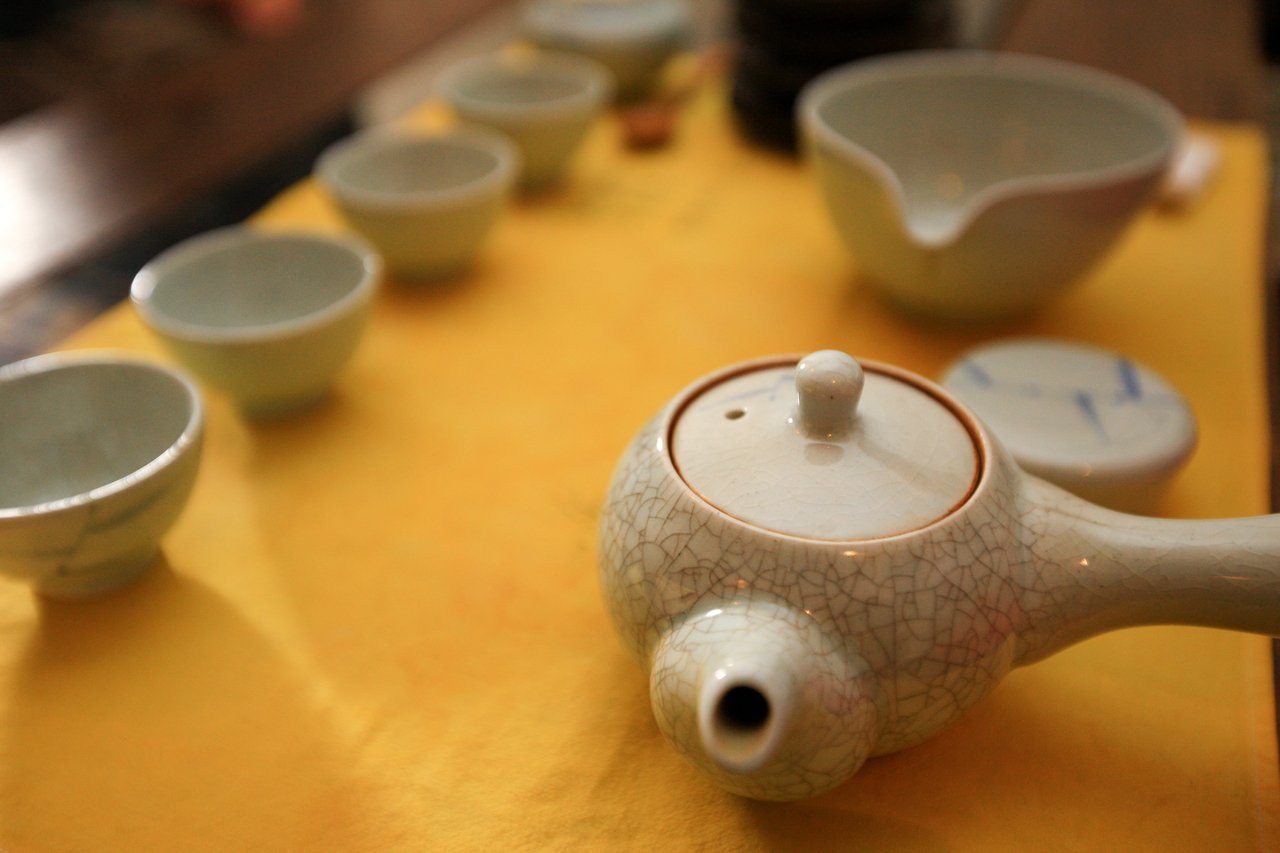
| Dagwan (다관) | Teapot | Usually made of ceramic, often with a side handle. |
| Sookwoo (숙우) | Cooling Bowl | *Distinctive Feature: Used to cool boiled water before brewing. |
| Chatjan (찻잔) | Tea Cup | Smaller than Western cups, designed to be held with two hands. |
The 5 Steps of Haengda (Brewing Process)
If you visit a tea house, you might be given a set to brew yourself. Here is how to do it like a pro:
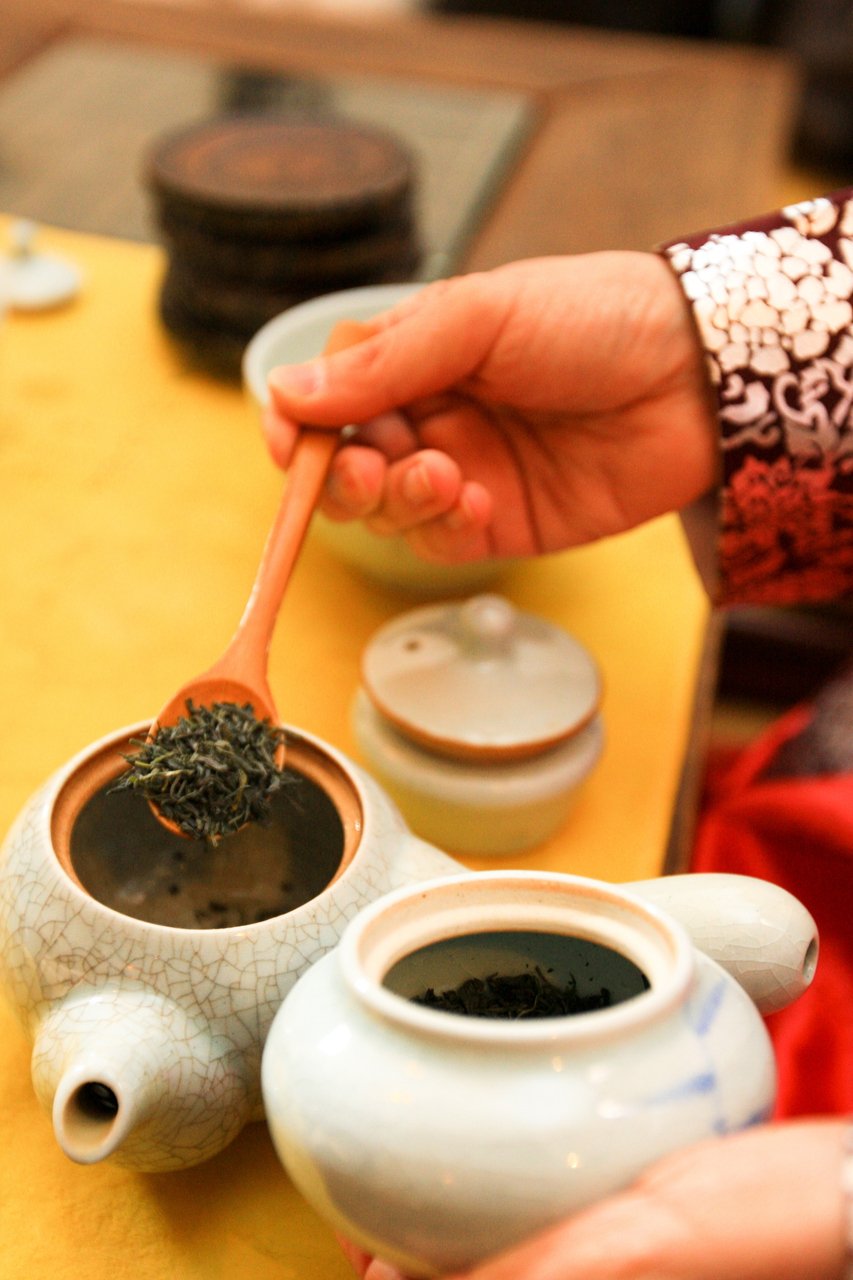
- Warming: Pour hot water into the teapot and cups to warm them up, then discard the water.
- Cooling (Crucial!): Pour boiling water (100°C) into the Sookwoo. Wait until it cools to about 70–80°C.
Why? Boiling water burns the delicate green tea leaves, making them bitter. - Brewing: Place tea leaves in the Dagwan (teapot) and pour the cooled water over them. Let it steep for 1–2 minutes.
- Pouring: Pour the tea into cups little by little, moving back and forth between cups to ensure every guest gets the same strength of tea. Shake out the last drop—poetically called the “Jade Dew.”
- Savoring: Hold the cup with two hands. Observe the color (sight), inhale the aroma (smell), and sip (taste).
Where to Experience Darye (Booking Info)
Getting into a popular tea house can be tricky without a reservation. Here are the 2026 local favorites with detailed booking instructions.
1. Korea House: Kohojae (Seoul)
This is the premium choice for a royal court-style experience. Kohojae (고호재) is located in a traditional Hanok in Chungmuro (충무로). You are served seasonal refreshments on an individual Soban (tray-table).
- Booking Required: Yes (Highly competitive).
- How to Book:
- Official Website: https://www.kh.or.kr/cms/content/view/1448
- App: Use the ‘Catch Table’ Global App (Search ‘Korea House’). Reservations usually open on a monthly basis.
- Local Tip: If online booking fails, they occasionally accept walk-ins for cancellations, but don’t count on it. Check their Instagram @koreahouse_official for opening announcements.
2. Jingwansa Temple (Seoul)
For those seeking spiritual depth, Jingwansa (진관사) offers a “Dadam” (Tea Talk) program with a monk, set against the backdrop of Bukhansan National Park.
- Booking Required: Yes.
- How to Book: Visit the official Templestay website at www.templestay.com and search for ‘Jingwansa’. You can choose between a day program or an overnight stay.
- Duration: The tea session usually lasts 1–2 hours.
3. Magpie & Tiger (Seoul – Sinsa/Seongsu)
For a modern, trendy take on tea, Magpie & Tiger (맥파이앤타이거) is where the young locals go. They bridge the gap between traditional tea farms (like those in Hadong) and city life.
- Booking Required: Recommended for the “Tea Room” private sessions.
- How to Book: Reservations are handled via Naver Booking (requires a Korean verified ID usually) or DM via Instagram.
- Instagram: @magpie.and.tiger (They are English-friendly via DM).
4. Cha Masineun Tteul (Seoul)
A classic spot in Bukchon Hanok Village (북촌한옥마을) with stunning mountain views.
- Booking Required: No. First come, first served.
- Strategy: It opens at 10:00 AM or 11:00 AM depending on the season. Go right at opening time to secure the window seat overlooking the garden.
- Address: 26 Bukchon-ro 5-gil, Jongno-gu, Seoul.
Plan Your Trip: Korean Tea Festivals
If you are planning your trip around Korean culture, timing your visit with these festivals is a game-changer. Note that dates shift slightly each year according to the harvest.
📅 Planning Note: For the most accurate, confirmed dates for 2026, please check the What’s On section of our website, which we update weekly with nationwide event schedules.
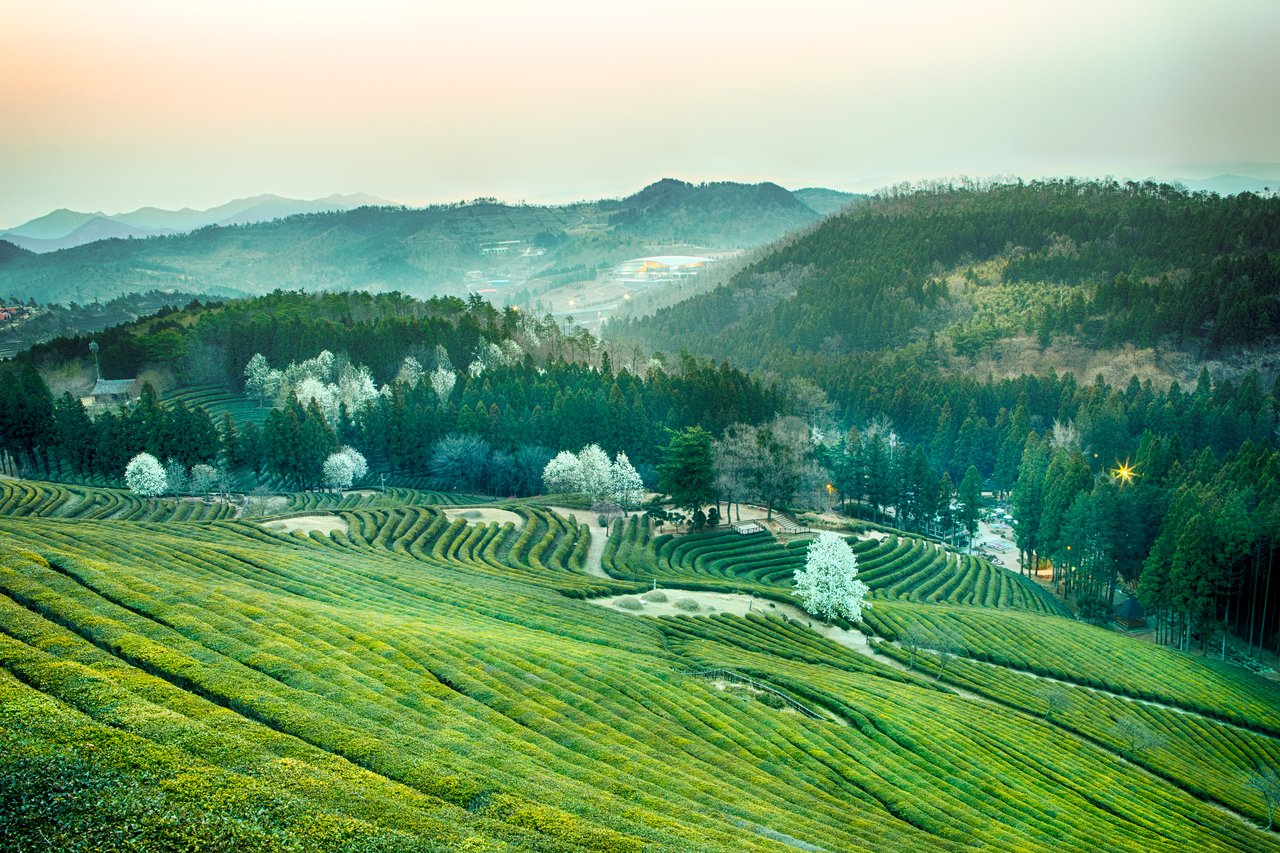
1. Boseong Green Tea Festival (보성다향대축제)
- Typical Schedule: Early May (e.g., around May 3rd – May 7th).
- Duration: 5 days.
- What to Expect: This is the largest tea festival in Korea. Activities include tea leaf picking, making your own tea, tea etiquette classes, and the spectacular “Tea Field Light Festival” at night.
- Location: Korean Tea Culture Park, Boseong, Jeollanam-do.
2. Hadong Wild Tea Cultural Festival (하동야생차문화축제)
- Typical Schedule: Mid-May to Early June.
- Duration: Often runs for 3–4 weeks (Main events on weekends).
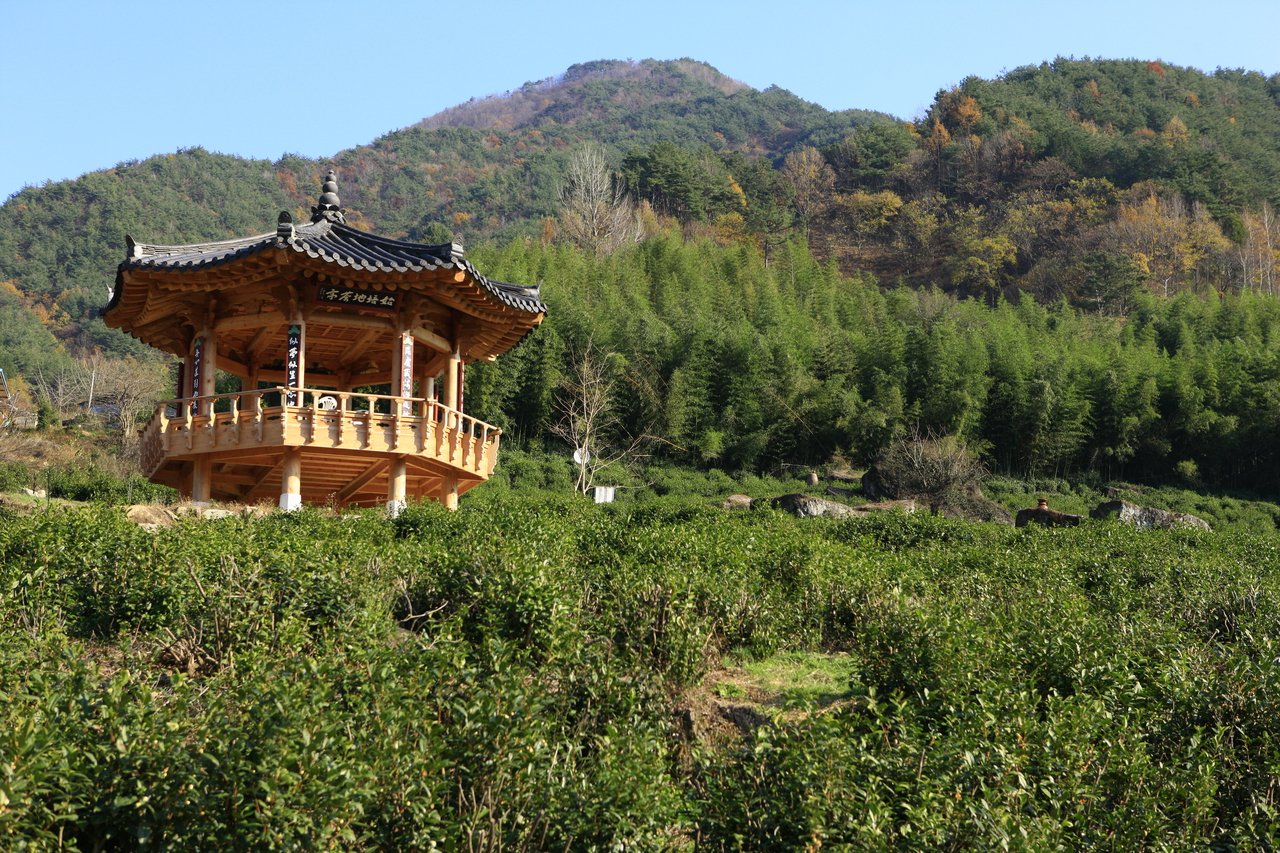
- What to Expect: Hadong is famous for “Wild Tea” (Ujeon) which grows naturally on the slopes of Mt. Jirisan. The festival is more traditional and focuses on the artisanal aspect of tea making (roasting demonstrations) and tasting premium wild teas that were once presented to Kings.
- Location: Hwagae-myeon, Hadong-gun, Gyeongsangnam-do.
FAQ: Common Questions for First-Timers
Q: Do I need to wear a Hanbok?
A: No, it is not required. However, many tea houses near palaces offer discounts if you do, and it enhances the atmosphere. Places like Korea House see many guests dressing up.
Q: Is the tea high in caffeine?
A: Korean green tea (Nokcha) contains caffeine but releases it more slowly than coffee. If you are sensitive, ask for “Hwangcha” (oxidized yellow tea) or herbal options like “Omija”.
Q: Can I take photos?
A: Yes, but ask first. The sound of a shutter can break the silence of the ceremony, so use “Live” mode or silent shutter if possible.
Ready to find your inner peace through tea?
Korean Culture portal KCulture.com

Founder of Kculture.com and MA in Political Science. He shares deep academic and local insights to provide an authentic perspective on Korean history and society.