Understanding Korea’s Two Pillars: Seollal and Chuseok
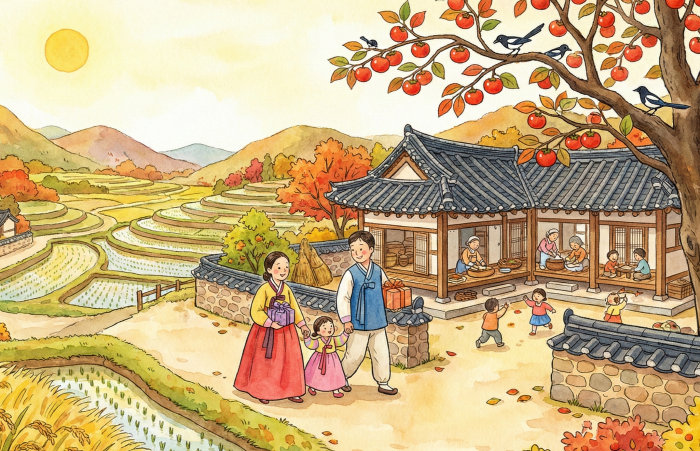
If you have ever visited Seoul in late January or September, you might have witnessed a surreal scene: the usually bustling metropolis turning into a quiet ghost town, while the highways leading out of the city transform into massive parking lots. This is the phenomenon of Korea’s two biggest traditional holidays: Seollal (Lunar New Year) and Chuseok (Korean Thanksgiving).
As a local living through these “Great Migrations” every year, I can tell you that these dates are more than just days off work. They are the heartbeat of Korean traditional culture, deeply rooted in our agrarian past and Confucian values. Whether you are curious about the culture or planning a trip, understanding these holidays is essential to understanding Korea.
- The Lunar Logic: Why the Dates Change
- Seollal: Eating Age and Bowing for Fortune
- Chuseok: The Harvest and Gratitude
- Charye, Gifting, and the “Tteok-gap” Bonus
- The Great Migration: Traffic and KTX Wars
- Modern Trends and Tips for Travelers
The Lunar Logic: Why the Dates Change
You might wonder, “Why do the dates for these holidays change every year on the solar calendar?” The answer lies in Korea’s history as an agricultural society. Historically, Korean farmers relied on the phases of the moon to determine the best times for planting and harvesting.
Even though modern Korea is a high-tech powerhouse, we still respect this lunisolar calendar for our most sacred traditions. It represents a connection to nature’s rhythm that technology hasn’t replaced.
- Seollal: Falling on the first day of the first lunar month (usually late Jan or early Feb), it marks the beginning of spring and the farming cycle.
- Chuseok: Falling on the 15th day of the 8th lunar month (usually Sep or Oct), it coincides with the full harvest moon.
Seollal: Eating Age and Bowing for Fortune
Seollal is arguably the most significant holiday in Korea. It is a celebration of family clans and spiritual renewal. There is a famous local saying: “You don’t get a year older on January 1st; you get older on Seollal.”
Sebae: The Big Bow
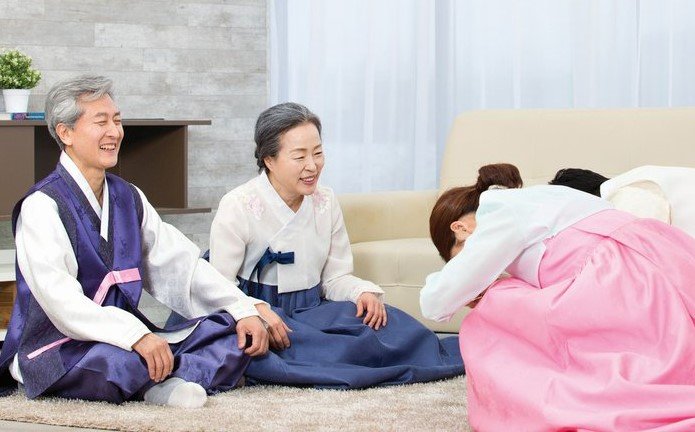
The most iconic custom of Seollal is Sebae (세배). This is a deep, formal bow performed by younger family members to their elders. We wish them longevity and health for the coming year.
For children (and students), this is the best day of the year because of Sebaedon (New Year’s Cash). After the bow, elders offer words of wisdom and hand over crisp envelopes of money. It’s a heartwarming exchange of respect and care.
Tteokguk: The Soup of Age
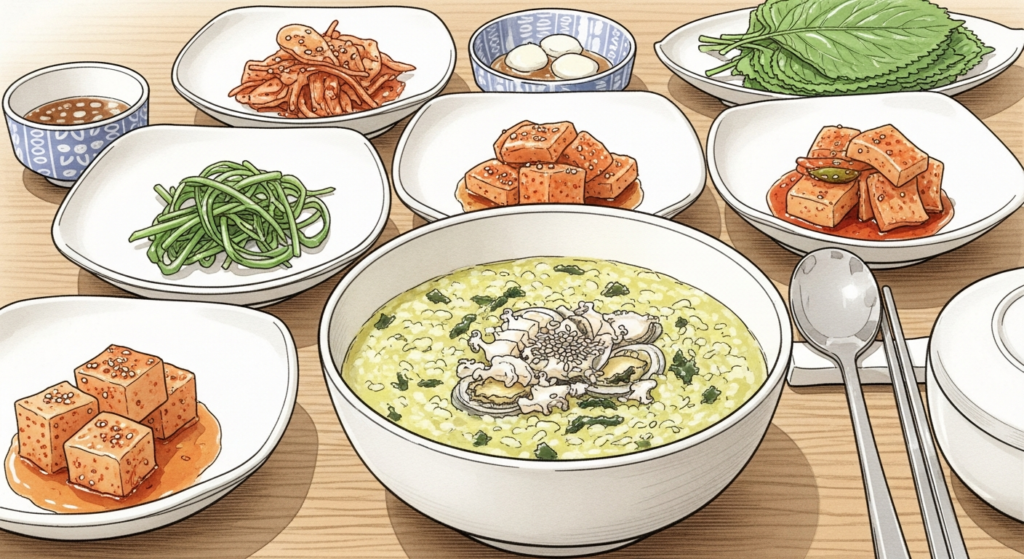
We start the morning by eating Tteokguk (rice cake soup). The white rice cakes symbolize purity and a fresh start. Culturally, finishing your bowl signifies that you have officially turned one year older.
Chuseok: The Harvest and Gratitude
If Seollal is about new beginnings, Chuseok is about gratitude and abundance. Often called “Korean Thanksgiving,” it celebrates the harvest.
Under the brightest full moon of the year, families gather to eat Songpyeon (half-moon-shaped rice cakes steamed on pine needles). The atmosphere is generally more relaxed than Seollal, focusing on feasting and enjoying the fruits of the year’s labor. In the past, villagers would engage in circle dances (Ganggangsullae) or wrestling matches (Ssireum), traditions that are now mostly seen at cultural festivals.
Charye, Gifting, and the “Tteok-gap” Bonus
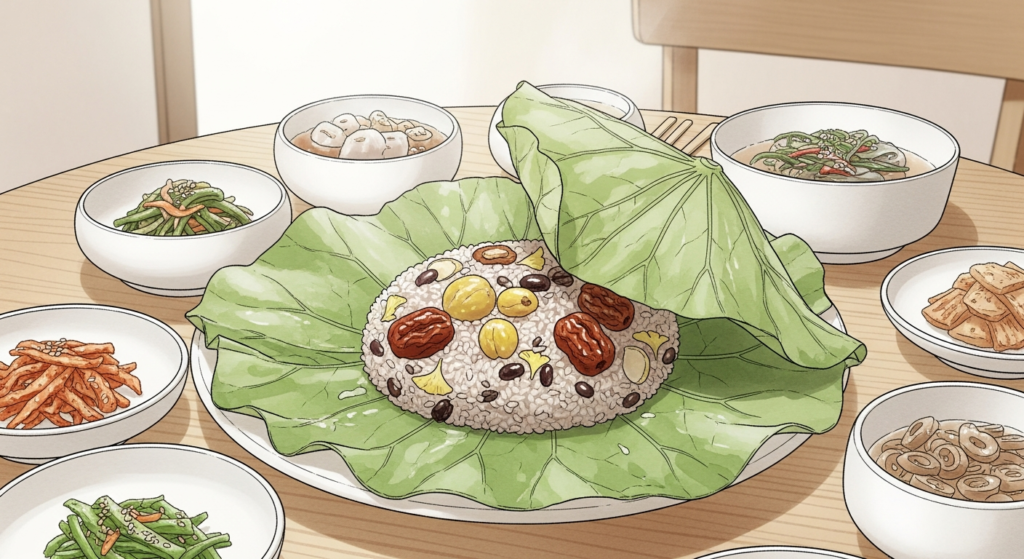
Both holidays share a core ritual called Charye (차례). This is an ancestral rite where food is laid out on a table in a specific order to honor our ancestors. It’s a solemn duty that reflects the deep-seated Confucian values in Korean society.
💡 Deep Dive: The strict hierarchy and procedures of Charye are complex. To understand the hidden rules of family hierarchy and these rituals, read our guide on Confucianism in Korea: The Hidden Code of KDramas and KLifestyle.
The Culture of Gifting and “Tteok-gap”
Generosity is mandatory during these times. We send gift sets to extended family, teachers, and anyone we are grateful to. Typical gifts include premium beef (Hanwoo), Spam sets (yes, Spam is a luxury gift here!), fruits, or health supplements.
For office workers, there is a special joy known as “Tteok-gap” (Rice Cake Money). Historically meant to help buy rice cakes for the rituals, today it refers to the holiday cash bonus companies give employees. It’s a perk every Korean salaryman eagerly awaits.
The Great Migration: Traffic and KTX Wars
Now, let’s talk about the reality of modern Korea. Since rapid industrialization, the majority of the population moved to the Seoul Capital Area for work. However, their “hometowns” (and their parents) remain in the provinces.
This creates an event we call the “National Migration.”
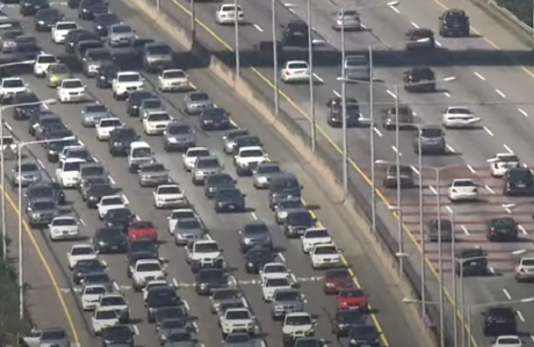
- The Ticket War: Train tickets (KTX/SRT) for the holidays open a month in advance. Millions of people login simultaneously at 10:00 AM. Tickets sell out in literally seconds. It is a digital battlefield.
- The Highway Hell: Those who fail to get train tickets must drive. A drive from Seoul to Busan, normally 4 hours, can take over 8 to 10 hours. The highways become a slow-moving river of red taillights.
Modern Trends and Tips for Travelers
Culture is evolving. While many still endure the traffic to visit parents, a growing number of Koreans—especially the younger generation—are opting out. “Holiday stress” (from cooking and nagging relatives) is real. Consequently, many families now use the long weekend to fly overseas or visit local resorts, skipping the traditional rituals entirely.
⚠️ Important Advice for Foreign Travelers
If you are planning to visit Korea, you must be strategic about these dates.
- Avoid Inter-city Travel: Do not try to move between cities (e.g., Seoul to Busan) during the holiday dates. Tickets are impossible to get, and buses are stuck in traffic.
- Shops May Close: While major tourist areas (Myeongdong, Hongdae) remain open, many authentic local restaurants and small shops close for 2-3 days to visit their families.
- Palaces are Free: On the bright side, Seoul’s royal palaces usually offer free entry and host traditional performances during the holidays. It can be a great time to stay in Seoul if you don’t mind the quiet streets.
Seollal and Chuseok are the times when the Korean soul is most visible—honoring the past, enduring the present traffic, and hoping for a prosperous future. It is a beautiful, chaotic, and essential part of the Korean experience.
Korean Culture portal KCulture.com
Join the mailing service and add to your favorites.

Founder of Kculture.com and MA in Political Science. He shares deep academic and local insights to provide an authentic perspective on Korean history and society.