As we approach the end of the year, the atmosphere in Korea begins to shift. While the Gregorian calendar marks the start of 2026 on January 1st, for many of us living in Korea, the true transition is felt through the lens of the lunar cycle and the Korean Zodiac signs meaning. You’ll hear people talking about the “Year of the Horse” long before the first sunrise of the new year. For Koreans, your “Ddi” (Zodiac animal) is not just a piece of folklore; it is a vital social tool used to navigate relationships, age, and even business. If you’ve ever wondered why your Korean colleague asks for your birth year instead of your age, or how 12 animals came to represent our destiny, you are about to uncover the deep cultural layers of the Korean Zodiac.
- What is the Korean Zodiac? The 12 Earthly Branches
- Speculative History: Where Did the 12 Animals Come From?
- Beyond the Animal: Connection to Saju and New Year Fortunes
- Ddi as a Social Compass: Age Estimation and Etiquette
- Looking Toward 2026: The Year of the Fire Horse
- Experiencing the Culture: Find Your Fortune Today
What is the Korean Zodiac? The 12 Earthly Branches
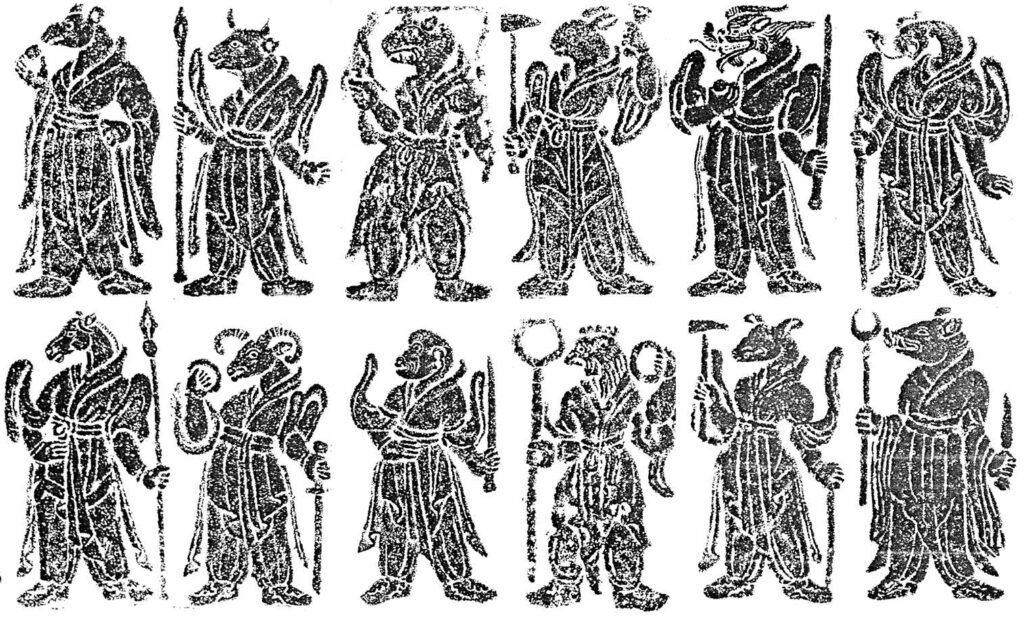
In Korea, the zodiac system is known as Sib-iji (십이지), or the 12 Earthly Branches. Each of these branches is represented by a specific animal that cycles every 12 years. Unlike Western astrology, which focuses on the month of your birth, the Korean “Ddi” (띠) is primarily determined by the year you were born. However, these animals are more than just symbols; they represent specific times of day and compass directions, forming a complex grid of time and space.
For those of us living in Korea, we see these animals everywhere—from ancient palace roof decorations to modern-day emojis. Each animal is believed to carry a specific “energy” that influences the character of the year and the people born within it.
| Animal | Korean Name | Time of Day | Key Trait |
|---|---|---|---|
| Rat | Jwi-tti (쥐띠) | 23:00 – 01:00 | Wisdom & Charm |
| Ox | So-tti (소띠) | 01:00 – 03:00 | Diligence & Patience |
| Tiger | Horangi-tti (호랑이띠) | 03:00 – 05:00 | Bravery & Passion |
| Rabbit | Tokki-tti (토끼띠) | 05:00 – 07:00 | Sensitivity & Virtue |
| Dragon | Yong-tti (용띠) | 07:00 – 09:00 | Power & Luck |
| Snake | Baem-tti (뱀띠) | 09:00 – 11:00 | Intelligence & Grace |
| Horse | Mal-tti (말띠) | 11:00 – 13:00 | Energy & Freedom |
| Sheep | Yang-tti (양띠) | 13:00 – 15:00 | Gentleness & Harmony |
| Monkey | Wonsungi-tti (원숭이띠) | 15:00 – 17:00 | Wit & Creativity |
| Rooster | Dak-tti (닭띠) | 17:00 – 19:00 | Confidence & Precision |
| Dog | Gae-tti (개띠) | 19:00 – 21:00 | Loyalty & Honesty |
| Pig | Dwaeji-tti (돼지띠) | 21:00 – 23:00 | Wealth & Abundance |
Speculative History: Where Did the 12 Animals Come From?
When discussing the roots of the 12 animals, it is important to remember that much of this history is steeped in legend and oral tradition. It is widely believed that the system originated in ancient China during the Shang Dynasty, but it took centuries to evolve into the animal-centric culture we know today.
It is believed that early astronomers used the 12-year orbit of Jupiter as a celestial clock to divide the sky into 12 sections. Initially, these sections were designated by abstract Chinese characters that described the life cycle of plants—from the seed swelling in the earth to the final harvest. These were purely functional markers for agriculture and state rituals.
It is said that during the Han Dynasty, these abstract symbols were paired with 12 familiar animals to make the calendar more accessible to the common people. While there are famous legends about a “Great Race” hosted by the Jade Emperor to determine the order of the animals, these are likely folk tales created later to explain the sequence. Scholars suggest that the choice of animals was influenced by those most commonly found in the daily lives of ancient agrarian societies, as well as mythical creatures like the Dragon that held spiritual significance.
Beyond the Animal: Connection to Saju and New Year Fortunes
While the 12 animals are a fun way to categorize years, they serve a much deeper purpose in the world of Korean divination. Your “Ddi” is the foundation of your Saju, or your four pillars of destiny. In this system, the year of your birth represents your “roots”—your ancestry, your social background, and the general flow of your early life.
If you are interested in how your birth year interacts with the month, day, and hour of your birth, you can find more in-depth information in our comprehensive guide to Saju. In the context of Saju, the “Year Pillar” (which contains your zodiac animal) acts as the baseline energy for your entire life’s journey.
💡 Local Insight: Every year, Koreans look to Tojeongbigyeol, a specific secret book of divination, to see how their zodiac sign will fare in the coming months. It is a traditional New Year ritual that many still enjoy today. You can read about the 2026 Tojeongbigyeol forecast here.
Ddi as a Social Compass: Age Estimation and Etiquette
In the West, asking someone’s age can be seen as impolite. In Korea, it is almost mandatory. This is because Korean social hierarchy is built on age, and the language you use (honorifics) depends on who is older. This is where the Korean Zodiac signs meaning moves from the mystical to the practical.
Koreans frequently use “Ddi” to estimate each other’s age without being too direct. For example, if I meet someone who tells me they are a “Rat” (Jwi-tti) and I am clearly older, I can instantly deduce if they are exactly 12, 24, or 36 years younger than me. This shared zodiac sign is called Ddi-donggap (띠동갑). If you meet someone with the same “Ddi,” there is an instant sense of kinship, even if there is a 12-year or 24-year age gap.
- Age Grouping: People often form social groups based on their zodiac sign. Being “born in the same year” (Dong-gap) is one of the strongest social bonds in Korea, often treated as a “friendship for life.”
- Navigating Hierarchy: If you realize someone is your *Ddi-donggap* but they are a full cycle ahead of you, you immediately know to use the highest level of respect and honorifics, as they are precisely 12 years your senior.
- Cultural Icebreaker: Asking “What is your Ddi?” is a much more natural and polite way to establish social standing than bluntly asking “How old are you?”
Looking Toward 2026: The Year of the Fire Horse
As 2026 approaches, we are entering the year of Byeong-oh (병오년), which is the Year of the Fire Horse. In the 60-year cycle of the Korean Zodiac, each animal is paired with one of the five elements. The “Fire Horse” is known for being incredibly energetic, passionate, and fast-moving. Historically, there were many superstitions regarding the intensity of women born in this year, but in modern Korea, these traits are increasingly viewed as symbols of leadership and independent spirit.
Living in Korea during a “Horse Year” is an experience of high energy. You will see brands, marketing, and even city festivals embracing the spirit of the horse—symbolizing progress, travel, and a “running start” into the future. It is a year meant for bold moves and breaking free from stagnation.
Experiencing the Culture: Find Your Fortune Today
Understanding the theory behind the Korean Zodiac is the first step, but experiencing it for yourself is where the real fun begins. Whether you are curious about how your “Ddi” affects your career, your love life, or your general luck in the coming Year of the Horse, we invite you to try our localized tools.
If you want to experience a personalized New Year fortune or a deeper dive into your four pillars, you can try our free Saju and Tojeongbigyeol service. It’s a great way to see how these ancient principles apply to your modern life.
As we get ready to welcome 2026, take a moment to figure out your own zodiac sign. Are you a steady Ox, a clever Monkey, or perhaps a brave Tiger? Knowing your “Ddi” is like holding a key to understanding the subtle social rhythms of Korea. It reminds us that we are all interconnected in a 12-year dance of time, history, and shared culture.
💡 To find your zodiac sign : Simply divide your birth year by 12 and check the remainder, as each number from 0 to 11 corresponds to a specific animal in the order shown in the table. For instance, a remainder of 1 represents the Rat, 11 the Dog, and 0 the Pig. Please refer to the table above for the remaining numbers for each band.
Korean Culture portal KCulture.com
Join the mailing service and add to your favorites.

Founder of Kculture.com and MA in Political Science. He shares deep academic and local insights to provide an authentic perspective on Korean history and society.