If you find yourself wandering the neon-lit streets of Seoul at 3:00 AM, you’ll notice something startling: the city isn’t just awake; it’s thriving. You might see a college student boiling ramen at a riverside convenience store, a delivery rider weaving through traffic with surgical precision, or a brightly lit café filled with people working on laptops. This is the heart of South Korea’s 24-hour lifestyle and Pali-Pali culture, a unique social phenomenon where “speed” is the ultimate virtue and “waiting” is a relic of the past. As a local living in this whirlwind, I can tell you that this isn’t just about being in a rush—it’s a sophisticated ecosystem designed for ultimate convenience.

- The Philosophy of Pali-Pali: More Than Just Speed
- The Convenience Store Empire: Living in the 24/7 Hub
- The Delivery Revolution: From Fried Chicken to Midnight Groceries
- The Invisible Shield: Why Safety is the Foundation of Speed
- How Pali-Pali Shapes Our Lives: The Good, the Fast, and the Future
The Philosophy of Pali-Pali: More Than Just Speed
The term “Pali-Pali” (빨리빨리) literally translates to “hurry, hurry.” For outsiders, it might seem like Koreans are perpetually stressed or running late. However, from my perspective as a local, Pali-Pali is less about anxiety and more about efficiency and respect for time. We value systems that work seamlessly, and we have very little patience for bureaucratic lag or slow service. (Interestingly, this even extends to the public sector; government civil servants in Korea are known for processing administrative tasks and civil complaints with incredible speed, often completing in minutes what might take weeks elsewhere.)
This mindset traces back to the rapid economic development after the Korean War, often called the “Miracle on the Han River.” In just a few decades, Korea transformed from an agrarian society to a global tech powerhouse. This required everyone to move fast. Today, that DNA persists in our daily habits. We press the “close door” button in elevators before they even start to move, and we expect our internet speeds to be the fastest in the world. It’s a cultural drive to maximize every minute of the day.
📌 Local Note: You’ll notice Pali-Pali in the smallest things—like how restaurant servers bring your bill the moment you finish your last bite, or how the subway doors open and close with military precision. It’s not rudeness; it’s the city’s heartbeat.
The Convenience Store Empire: Living in the 24/7 Hub
In Korea, the convenience store (or “pyeonuijeom”) is not just a place to buy a pack of gum. It is a lifeline. With over 50,000 stores nationwide, you are rarely more than a three-minute walk away from a GS25, CU, or 7-Eleven. These stores are the primary engines of the South Korea’s 24-hour lifestyle.
What makes them special? It’s the sheer range of services. You can pay your utility bills, send domestic and international parcels, charge your transportation card, and even withdraw cash. But the real “local pick” is the food culture. Have you heard of “Hangang Ramen”? At convenience stores near the Han River, you can buy a foil bowl of instant noodles and cook it on an induction heater right there. Eating hot ramen while looking at the city skyline at 2 AM is a quintessential Korean experience. To truly master the art of store-dining, make sure to check out our expert guide on Korean Convenience Store Food Hacks for the best flavor combinations.
| Feature | Details |
|---|---|
| Availability | 99% operate 24 hours a day, 365 days a year. |
| Food Quality | Fresh “Dosirak” (lunch boxes), gourmet desserts, and high-quality coffee. |
| Services | Parcel delivery (Taekbae), ATM, bill payment, phone charging. |
| Dining Area | Most have indoor or outdoor seating for immediate consumption. |
This 24/7 availability changes how we live. We don’t need to “stock up” on groceries like people in many Western countries do. If I run out of milk or need a snack at midnight, I just walk downstairs in my pajamas. It creates a sense of freedom—your day doesn’t have to end just because the sun went down.
The Delivery Revolution: From Fried Chicken to Midnight Groceries
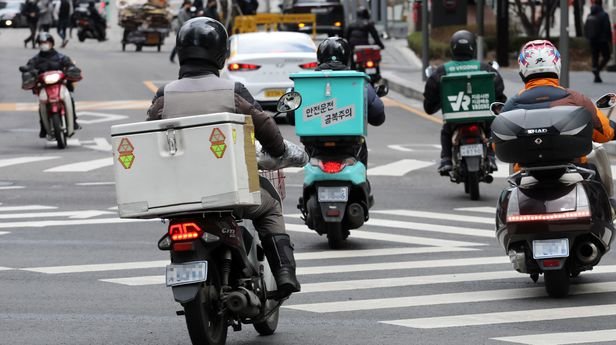
If the convenience store is the heart of our lifestyle, the delivery system is the circulatory system. Korea has arguably the most advanced delivery infrastructure in the world. Apps like Baedal Minjok (Baemin) and several other high-speed platforms have turned the entire country into a giant vending machine. Whether it’s traditional favorites or trendy desserts, if a shop exists, it probably delivers.
In Seoul, you can order almost anything—fried chicken, sashimi, hot coffee, or even a single battery—and have it at your door in under 30 minutes. We even have “Dawn Delivery” (Saetbyeol Baesong). For instance, if I order fresh groceries via Market Kurly by 11:00 PM, they will be sitting in front of my door by 7:00 AM the next morning. This system is a game-changer for busy professionals and parents who want fresh ingredients without ever stepping foot in a supermarket.
- The “Anywhere” Factor: You can order food to a public park, the riverside, or even a hiking trail entrance. You just describe your location, and the rider finds you.
- Zero Human Contact: Since the pandemic, “leave at the door” has become the standard, making the process even faster and more private.
- High-Tech Tracking: You can see exactly where your rider is on a GPS map in real-time.
The Invisible Shield: Why Safety is the Foundation of Speed
You might wonder: how can a 24-hour culture exist without constant chaos or crime? The answer lies in Korea’s incredible level of public safety. The “Pali-Pali” lifestyle only works because we have an invisible shield of security. Honestly, I often leave my laptop on a café table to go to the restroom without a second thought. This level of trust is what allows the city to stay open all night.
The combination of ubiquitous CCTV, well-lit streets, and a culture that respects public property creates an environment where a woman can walk home alone at 2 AM feeling perfectly safe. This safety is the literal foundation of our convenience. Without it, 24-hour convenience stores wouldn’t be profitable, and delivery riders wouldn’t be able to operate safely through the night.
If you’re planning to visit and are worried about the logistics of staying out late, you should read our guide: Is South Korea Safe for Tourists? A Local’s Honest Guide. It explains the social and technological factors—like the “CCTV net”—that make our 24-hour habits possible.
How Pali-Pali Shapes Our Lives: The Good, the Fast, and the Future
Living in this “always-on” society is exhilarating, but it also dictates our social rhythms. The line between work and life often blurs because the city never stops providing. We work late, eat late, and socialize late. This has led to the rise of “unmanned” (mu-in) businesses. Nowadays, we have unmanned cafes, ice cream shops, and even pet supply stores where you walk in, scan your items, and pay—all without a single employee present.
For visitors, this culture offers an unparalleled level of freedom. You aren’t bound by “opening hours.” You can explore a palace in the afternoon, shop in Myeongdong until 10 PM, hit a “Noraebang” (karaoke) at midnight, and grab a gourmet meal at 3 AM. It’s a playground for those who want to experience everything at once.
However, as a local, I also see the shift toward a “slower” Pali-Pali. We are beginning to value “healing” and “slow life” precisely because our surroundings are so fast. But even when we relax, we want our “slow” tea to be served quickly! It’s a beautiful contradiction that makes modern Korea one of the most dynamic places on Earth.
Korean Culture portal KCulture.com
Join the mailing service and add to your favorites.

Founder of Kculture.com and MA in Political Science. He shares deep academic and local insights to provide an authentic perspective on Korean history and society.