Introduction & Synopsis
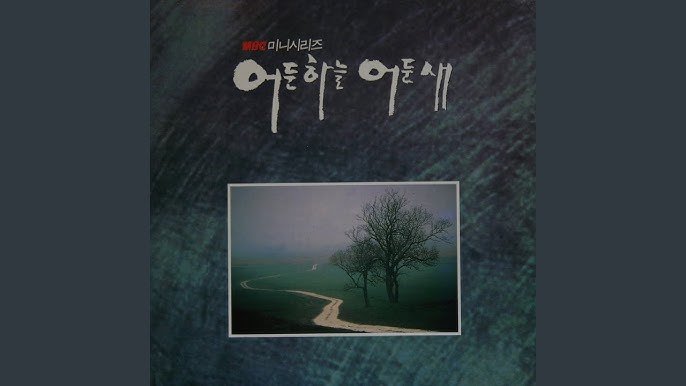
Dark Sky Dark Bird (어둔 하늘 어둔 새) is a heart-wrenching family melodrama that delves into the deep scars left by immigration and familial separation. The story centers on Choi Joong-gi and Lee Jae-seo, a couple whose marriage dissolves under the immense weight of hardship as immigrants. The true tragedy, however, is the loss of contact with their young son. Fifteen years later, Choi Joong-gi, now haunted by a past filled with regret, embarks on a desperate and emotionally fraught quest to find the child he was forced to leave behind. It’s a narrative not of grand adventure, but of a father’s painful excavation of memory, loss, and the faint, flickering hope of reunion.
Aired in 1990, this MBC production, based on Lee Deok-ja’s celebrated novel, stands as a poignant artifact of its time, capturing a critical aspect of the modern Korean experience often overshadowed by tales of economic success.
The Deconstruction of a Dream: Cultural Context
To understand the power of Dark Sky Dark Bird, one must first understand the social context of late 20th-century Korea. For decades, immigration—particularly to the United States—was presented as the ultimate path to prosperity, the so-called “American Dream.” However, this drama bravely pulls back the curtain on that idealized narrative. It showcases the brutal reality faced by many: language barriers, loss of professional status, grueling labor, and an overwhelming sense of alienation that could fracture even the strongest families.
The drama is steeped in the uniquely Korean sentiment of Han (한). More than just sadness or grief, Han is a profound, collective feeling of unresolved sorrow, injustice, and regret. The characters are not merely sad; they are living with a deep, internalized wound that has shaped their entire existence for fifteen years. The father’s search is not just a plot device; it is an attempt to resolve his Han. For a global audience, this drama serves as a masterclass in understanding how this core cultural emotion fuels Korean storytelling, creating characters whose pain feels both epic and deeply personal.
A Narrative of Quiet Desperation
(No Spoilers)
Unlike modern dramas that might frame a “search for a lost son” with thrilling twists and turns, Dark Sky Dark Bird opts for a contemplative and realistic approach. The storytelling is a slow burn, focusing on the internal world of its characters. The narrative is less about the physical search and more about the psychological toll it takes. Flashbacks are used not for simple exposition but to convey the weight of memory and the suffocating nature of “what ifs.”
The core themes are regret, the passage of time, and the question of whether a broken bond can ever truly be mended. The drama forces its characters—and the audience—to confront uncomfortable questions: After so many years, what does a reunion even mean? Can forgiveness be earned, or is the damage permanent? This focus on emotional authenticity over plot mechanics makes the story timeless and universally resonant, exploring the fractures that can occur in any family under extreme pressure.
The Pulse of the Time
Upon its broadcast in 1990, Dark Sky Dark Bird resonated deeply with the Korean public. At the time, nearly every family in South Korea knew someone—a relative, a friend, a neighbor—who had emigrated in search of a better life. The stories of struggle and success were common, but the quiet tragedies of cultural displacement and family breakdown were often left unspoken. This drama gave voice to that silent anxiety. It was considered a serious, high-quality production, valued for its literary source material and its unflinching social commentary. It served as a powerful reminder that the price of the nation’s rapid modernization and global expansion was often paid on a deeply personal, human level.
Cast Spotlight
The drama’s impact rests on the shoulders of its veteran cast, who deliver masterful, nuanced performances.
- Park Young-gyu as Choi Joong-gi: Known to many contemporary fans for his iconic comedic role in the sitcom Soonpoong Clinic, Park Young-gyu’s performance here is a revelation. He portrays the father with a heavy, world-weary desperation, his face a canvas of guilt and longing. It is a powerful dramatic turn that showcases his incredible range as an actor.
- Kim Mi-sook as Lee Jae-seo: A revered actress known for her ability to convey profound, internalized emotion, Kim Mi-sook is the anchor of the drama’s pathos. She embodies the mother’s Han, portraying a woman who has carried her sorrow with a quiet, devastating grace for over a decade.
- Supporting Cast: The ensemble, including seasoned actors like Sunwoo Eun-sook and Kim Bo-yeon, adds layers of depth and realism to the world, ensuring every interaction feels weighted with history and unspoken feeling.
Global Viewing Guide
Fans of classic K-dramas can seek out this title on official and licensed platforms. Availability may vary by region.
- MBC Drama Classic YouTube Channel: This is often the primary official source for vintage MBC productions. Search for the drama using its Korean title, “어둔 하늘 어둔 새,” as it may be archived there, sometimes with community-provided subtitles.
- Kocowa / Viki: These streaming services specialize in Korean content and occasionally acquire licenses for classic dramas from the 80s and 90s. It’s worth checking their libraries periodically.
Final Verdict
For viewers seeking a K-drama experience beyond modern rom-coms and thrillers, Dark Sky Dark Bird is an essential watch. It is a raw, powerful, and deeply moving piece of television history that explores the universal pain of family separation through a distinctly Korean cultural lens. A true classic that proves great storytelling is timeless.
Tags
classic K-drama, 1990s drama, MBC, family melodrama, Park Young-gyu, Kim Mi-sook, Korean diaspora, Korean culture, Han, retro K-drama

The KCulture Editorial Team is dedicated to providing deep insights and accurate information about the vibrant world of Korean culture.