
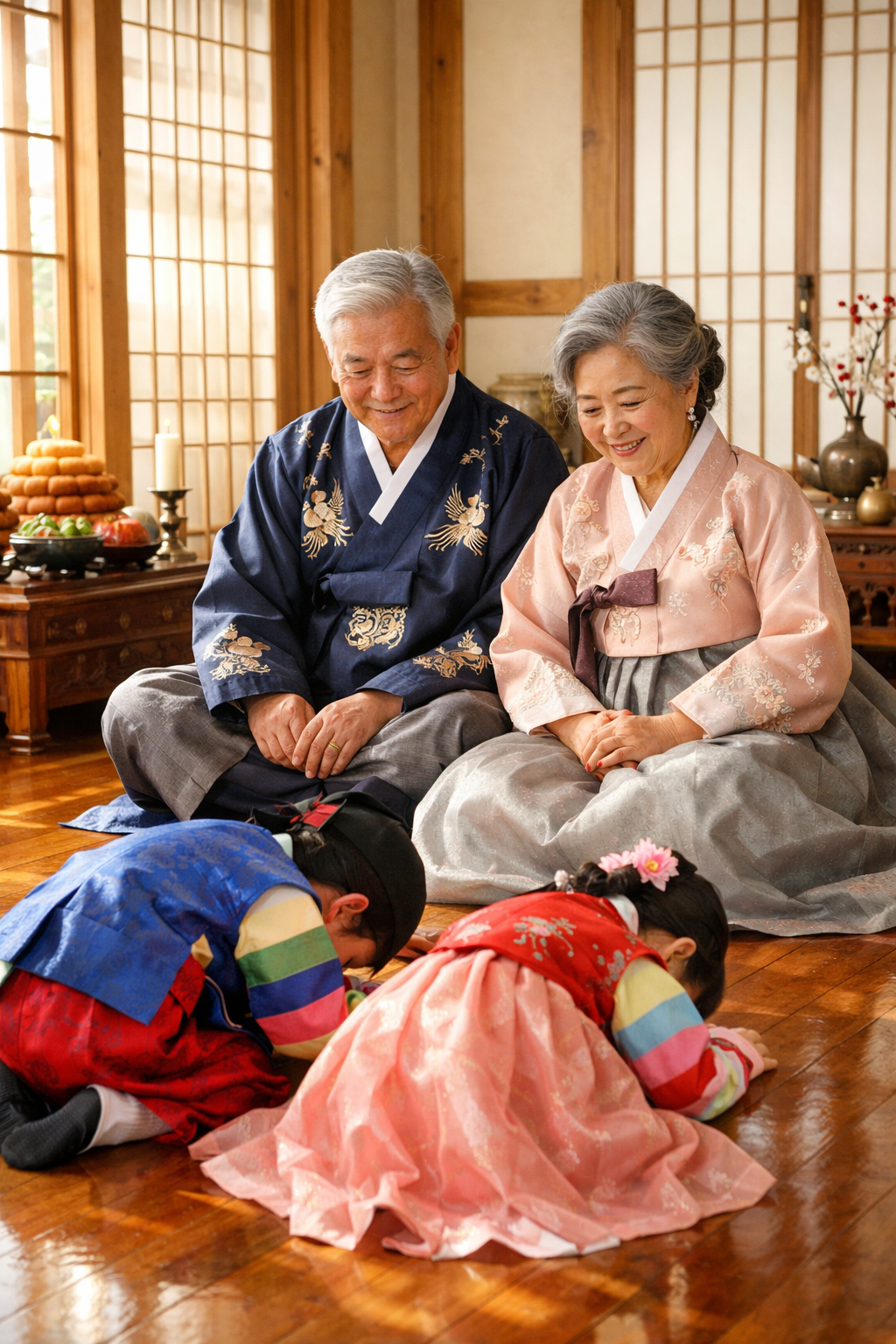
Hello again from Seoul! Can you believe it? In just two weeks—on February 17th—we’ll be celebrating Seollal (Lunar New Year 2026)! If you missed my last post about why Korea has two New Years, check it out here to get up to speed on the “Double New Year” magic.
Today, I’m opening up my recipe book. As someone who’s spent years mastering the art of Korean braising and noodle-tossing (yes, I have those certifications to prove it!), I can tell you that nothing says “I love you” in Korean like a table filled with Galbi-jjim and Japchae.
These aren’t just dishes; they are symbols of luxury, longevity, and celebration. Let’s dive into how you can bring the royal flavors of Korea into your own kitchen! 🥘✨
1. Galbi-jjim (Braised Beef Short Ribs): The Royal Showstopper
If Tteokguk is the soul of Seollal, Galbi-jjim is the heart. Traditionally, this was a Gungjung-yori (Royal Court Cuisine). Up until the mid-20th century, beef was incredibly precious in Korea, so this dish was reserved for royalty or the wealthiest families during the biggest holidays.
What Makes it a ‘Jjim’?
Many people mistake this for a stew or Boeuf Bourguignon. While they share similarities—slow-cooking beef until it melts—the secret of Galbi-jjim lies in the lid.
- The Steam Secret: “Jjim” literally means to steam or braise with a lid closed. By trapping the moisture, the beef becomes tender in its own juices. If you cook it with the lid open, it becomes a “Jorim” (braised reduction).
- The Look: A perfect Galbi-jjim should have a deep, mahogany glaze, with meat so tender it falls off the bone with just a nudge of a chopstick.
Galbi-jjim vs. Boeuf Bourguignon
While the French use red wine and searing (the Maillard reaction) to build flavor, we Koreans focus on extracting the blood first for a clean taste, then marinating the meat in a soy-based sauce enriched with Asian pear or kiwi, which contains natural enzymes that tenderize the meat beautifully.
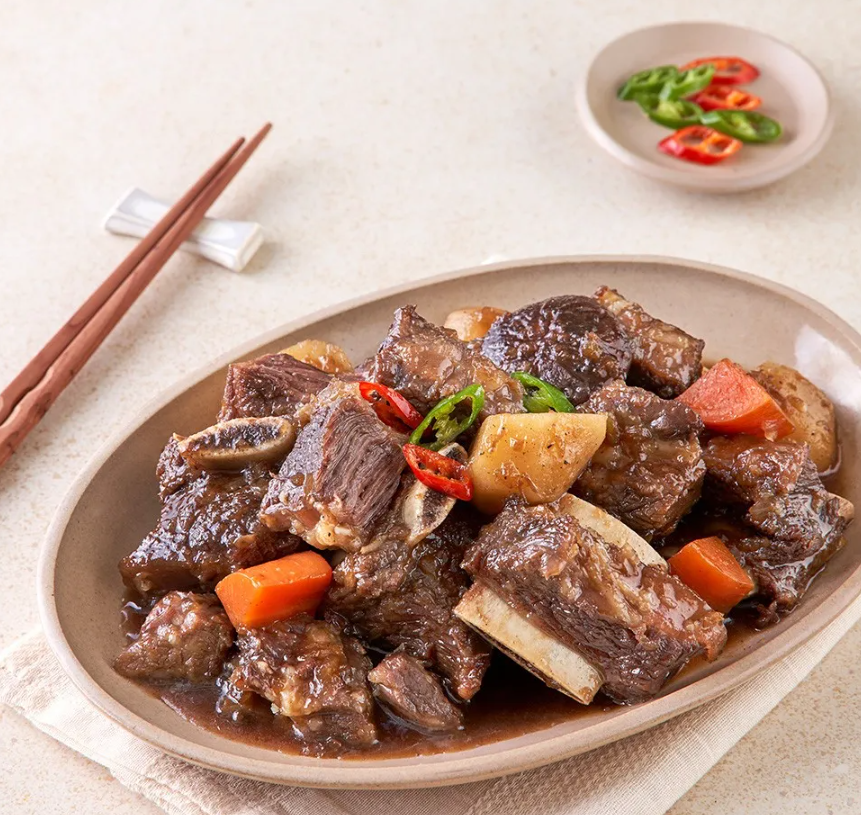
✨ Recipe: Fall-Off-The-Bone Beef Galbi-jjim (Serves 2-3)
Ingredients:
- 800-900g Beef short ribs
- 2 thick slices of Korean Radish (Moo)
- 1/2 Carrot, 1 Green onion
- Optional: Dried dates (Jujubes) or chestnuts for extra “royalty” vibes!
The Master Sauce: * 1/2 Pear & 1/2 Onion (blended), 2 tbsp Minced garlic, 10 tbsp Soy sauce, 2 tbsp Oligosaccharide (or honey), 1 tbsp Oyster sauce, 5 tbsp Cooking wine (Mirin), 4 tbsp Cheongju (Clear rice wine), 2 tbsp Sugar, 0.3 tbsp Ginger, 0.3 tbsp Pepper, 0.5 tbsp Sesame oil.
Instructions:
- The Purge: Soak ribs in cold water for 3–4 hours, changing the water frequently to remove blood. (Pro-tip: Adding a splash of cola or sparkling water speeds this up!)
- The Parboil: Boil the ribs for 3 minutes in plain water. This removes impurities and excess fat. Rinse in cold water.
- The Marinate: Blend your pear and onion, mix with the sauce ingredients, and pour over the ribs. Let them sleep in the fridge for 24 hours. Trust me, the wait is worth the flavor!
- The Prep: Cut your radish and carrots into large chunks, but here’s the chef’s secret: round off the sharp edges of the vegetables. This prevents them from breaking and making the sauce cloudy.
- The Braise: Put the ribs and 1 cup of water in a pot. Close the lid and simmer until the meat is tender. (If using a pressure cooker, skip the water! The meat’s own juice is enough.)
- The Finish: Skim off any excess fat with a spoon. Add the vegetables and simmer until the sauce is glossy and thick. Garnish with green onions.
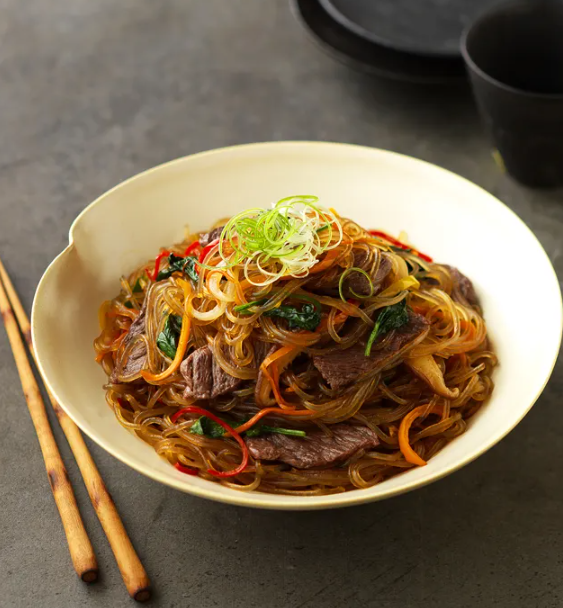
2. Japchae (Glass Noodle Stir-fry): A Rainbow on a Plate
Japchae translates to “mixed vegetables.” Long ago, it didn’t even have noodles! Today, however, it’s all about the Dangmyeon (sweet potato starch noodles). Their translucent, bouncy texture is addictive.
The Symbolism
Japchae is a staple for birthdays and Seollal because the long noodles symbolize long life. It’s a “harmonious” dish where every ingredient is cooked separately to preserve its individual color and flavor before being tossed together in a sweet-savory soy dressing.
⚠️ Warning: Japchae is best eaten fresh! If you refrigerate it, the noodles get shy and clump together (like a noodle-cake). If that happens, don’t microwave it—pan-fry it with a little oil to bring the “bounce” back!
✨ Recipe: The Easy “One-Pan” Japchae
Ingredients:
- 250g Glass noodles (Dangmyeon)
- 150g Beef (strips / Can be substituted with pork), 1 Onion, 1/2 Carrot, 2 Shiitake mushrooms, a handful of Wood ear mushrooms, 70g Spinach.
Instructions:
- The Soak: Soak noodles in lukewarm water for 2–3 hours until they are flexible.
- The Prep: Shred all your veggies into matchsticks. Marinate the beef in a bit of soy sauce, sugar, and garlic.
- The Sizzle: In a large wok, sauté carrots, then onions, then mushrooms with a pinch of salt. Add spinach at the very end—it wilts in seconds! Remove them and put them in a large bowl.
- The Protein: Wipe the pan and fry the beef until fully cooked. Add it to the bowl.
- The Noodle Magic: In that same pan, add 5 tbsp soy sauce, 1.5 tbsp sugar, and 1 tbsp oil. Throw in the soaked noodles and stir-fry until they absorb the sauce and turn a beautiful translucent brown.
- The Grand Mix: Combine the noodles with the waiting veggies and beef. Add a generous drizzle of sesame oil and toasted sesame seeds. Toss with your hands (careful, it’s hot!) for that authentic “Mom’s touch.”
There you have it! The two dishes that define the Korean celebration. I can almost taste the sweet, salty glaze of the Galbi and the nutty, sesame aroma of the Japchae just writing this.
Would you like to try making it too?

A certified Korean chef and baker. Min shares authentic tastes of Korea, from hidden local gems to traditional recipes and everyday lifestyle.