Is your next trip guided by a sudden, uncontrollable craving for Korean BBQ? Honestly, I think we’ve all been there. You’re binge-watching a K-Drama, and suddenly, that sizzling sound of samgyeopsal (pork belly) or the vibrant red of spicy rice cakes on screen takes over your entire thought process. The next thing you know, you’re looking up flights to Seoul! But here’s the real problem: Once you land, where do you even start with the must-try Korean food for foreigners? The culinary scene here is vast and sometimes overwhelming. Don’t worry, though. As a local living in Korea, I’ve curated this guide to turn your delicious fantasy into reality.
- The Foundations: Understanding K-Food Culture
- Street Food Essentials: The Rapid-Fire List
- The Heavy Hitters: Classic Meals You Can’t Miss
- The Deep Dive: Unique Delicacies & Local Favorites
- The Food Budget Estimator (2025 Update)
- Real-World Itinerary: The 3-Day Seoul Food Blitz
- Frequently Asked Questions (FAQ)
The Foundations: Understanding K-Food Culture 🤔
Before we hit the markets, it’s helpful to understand the philosophy behind Korean cuisine, or Hansik. Unlike quick Western meals, Hansik is built around balance: a main dish (bap, rice) and a variety of small, fermented, and fresh side dishes called banchan. The core flavor is often gochujang (Korean chili paste), but don’t let the red color fool you—many dishes are actually a perfect mix of sweet, savory, and spicy.
It’s really cool because the food culture is highly regional yet accessible in big cities. For example, while Busan is renowned for seafood, and Jeonju for Bibimbap, you can find incredible authentic versions right here in Seoul if you know where to look.
💡 Local Insight: The communal nature of Korean dining is key. Meals, especially BBQ, are about sharing. You’ll often find everyone grilling meat at the table and wrapping it in lettuce (ssam) with garlic and ssamjang.
Street Food Essentials: The Rapid-Fire List 🍢
Seoul is the heart of the street food scene. You absolutely have to visit a market like Gwangjang Market (famous from Netflix) or the bustle of Myeongdong Street. Here are the accessible starters.
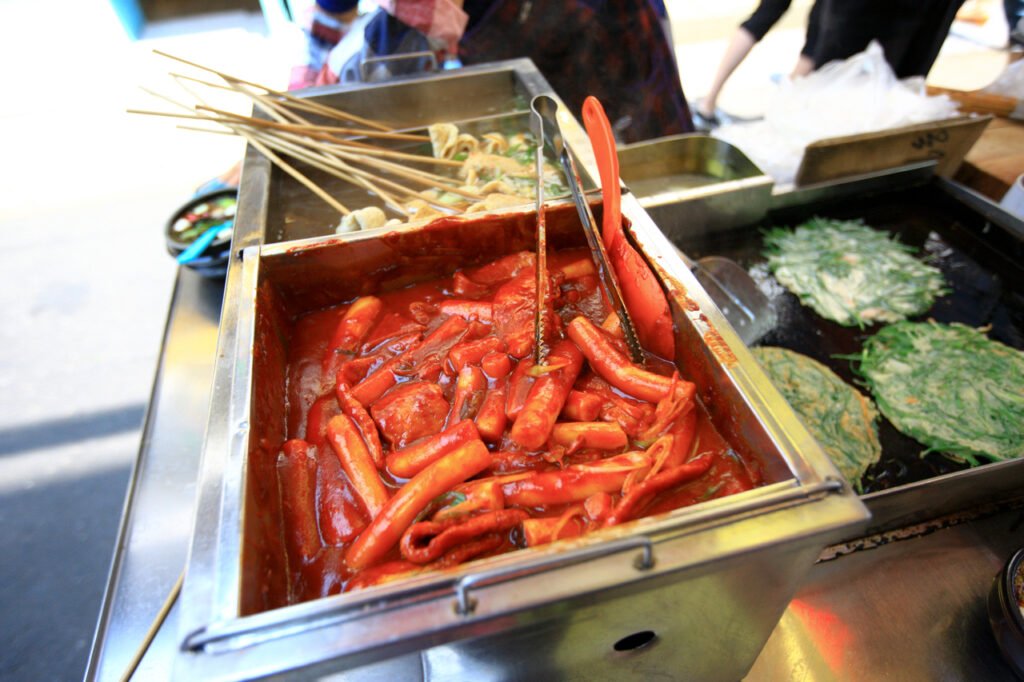
- 1. Tteokbokki (Spicy Rice Cakes): Chewy rice cakes in a sweet, savory, and spicy sauce.
📍 Best Spot: Tongin Market or any street tent (Pojangmacha). - 2. Odeng (Fish Cake Skewers): Thick fish cakes on a skewer, boiled in a light, salty broth.
💡 Pro Tip: The broth in the cup is free and unlimited—drink it to warm up! - 3. Hotteok (Sweet Pancake): A pan-fried pancake filled with molten cinnamon, brown sugar, and nuts.
📍 Best Spot: Namdaemun Market (look for the longest line). - 4. Gimbap (Seaweed Rice Rolls): The ultimate travel snack. Try the “Mayak Gimbap” (Drug Gimbap) at Gwangjang Market—it’s addictive.
- 5. Dakgangjeong (Sweet & Crispy Chicken): Bite-sized fried chicken glazed in a sticky, sweet sauce. Perfect for walking and eating.
- 6. Bungeoppang (Fish-Shaped Bread): A winter classic filled with sweet red bean paste or custard cream.
The Heavy Hitters: Classic Meals You Can’t Miss 🍖
These are the dishes that define Korean cuisine globally. If you are here for a week, you need to check these off your list.
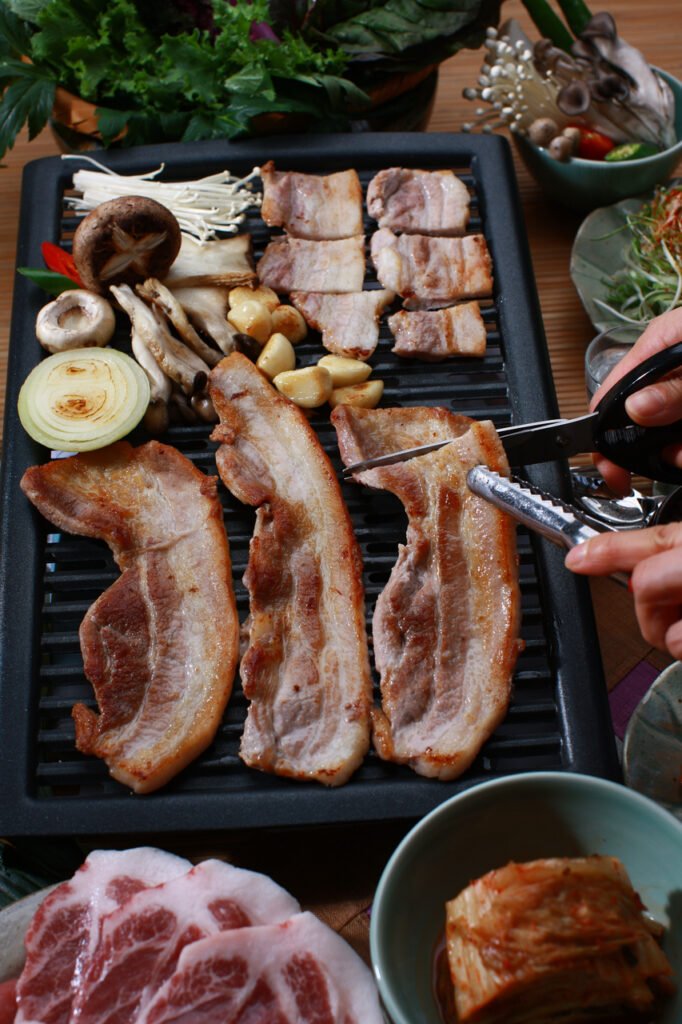
7. Samgyeopsal (Grilled Pork Belly)
The quintessential Korean BBQ experience. You grill the fatty pork strips at your table. It’s noisy, smoky, and absolutely delicious.
📍 Where to go: The Mapo-gu district in Seoul is famous for BBQ alleys. Try Mapo Jinjja Wonjo Choidaepo for an old-school vibe.
8. Korean Fried Chicken (Chimaek)
KFC in Korea doesn’t mean Kentucky Fried Chicken. Korean fried chicken is lighter, crispier, and often double-fried. “Chimaek” refers to the pairing of Chicken + Maekju (Beer).
📍 Where to go: Franchise giants like BHC or Kyochon are reliable, but local pubs in Hongdae offer great vibes.
9. Kimchi Jjigae (Kimchi Stew)
A boiling stone pot of spicy stew made with aged kimchi, tofu, and pork. It is the soul food of Korea.
📍 Where to go: Eunju-jeong near Bangsan Market is legendary (and hidden!).
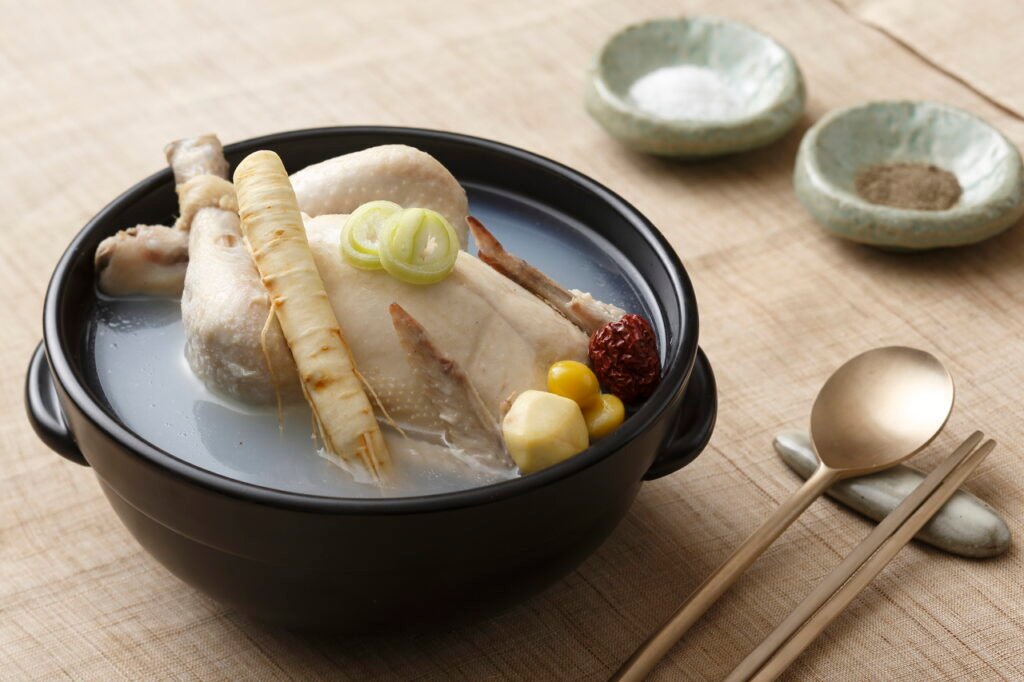
10. Samgyetang (Ginseng Chicken Soup)
A whole young chicken stuffed with sticky rice, ginseng, garlic, and jujube. It’s technically a summer health food, but tourists love it year-round for its rich, earthy flavor.
📍 Where to go: Tosokchon Samgyetang near Gyeongbokgung Palace.
11. Jjajangmyeon (Black Bean Noodles)
A Korean-Chinese hybrid dish featuring noodles in a thick, savory black bean sauce. It’s cheap, filling, and messy in the best way possible.
12. Bibimbap (Mixed Rice)
A bowl of warm white rice topped with namul (sautéed and seasoned vegetables) and chili pepper paste. While Jeonju is the hometown, you can find great versions everywhere.
📍 Where to go: Gogung in Myeongdong serves a very accessible, high-quality Jeonju-style bibimbap.
The Deep Dive: Unique Delicacies & Local Favorites 🦀
Ready to level up? These are dishes that are hard to find outside of Korea or taste significantly different here. They are accessible in Seoul but offer a “real” local experience.
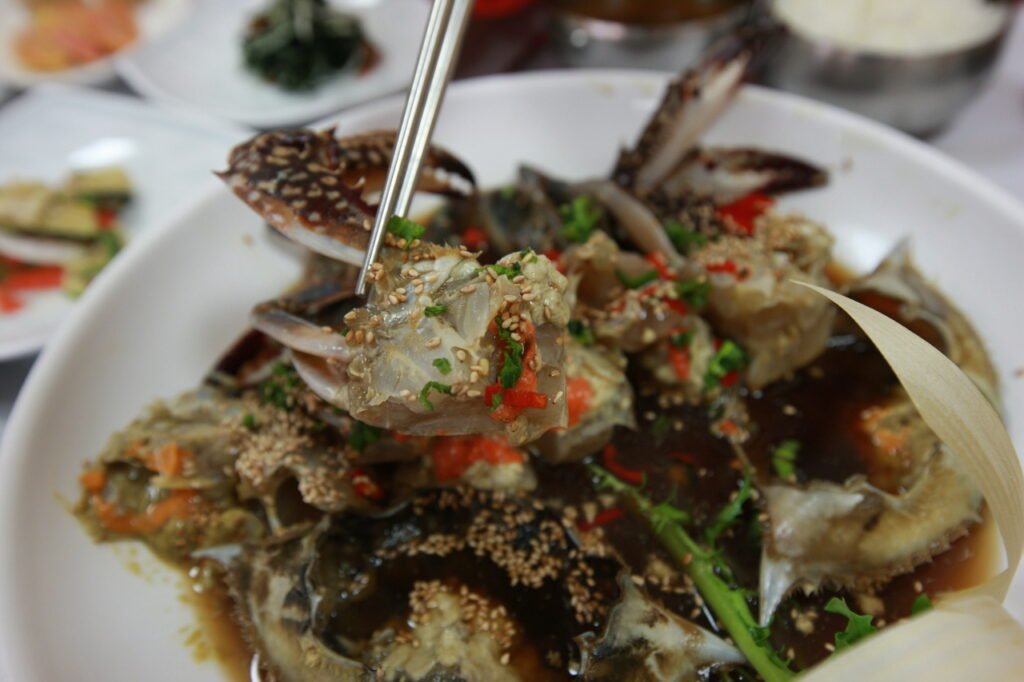
13. Ganjang Gejang (Soy Marinated Raw Crab)
This is for the adventurous foodie. Raw crabs are fermented in soy sauce. The texture is jelly-like and the flavor is an intense umami bomb. Locals call it the “Rice Thief” because you eat so much rice with the salty sauce.
📍 Where to go: The Sinsa-dong Gejang Alley in Gangnam.
14. Kalguksu (Knife-Cut Noodles)
Unlike pasta, these noodles are cut by hand, giving them a delightful, uneven texture. Served in a rich chicken or clam broth.
📍 Where to go: Myeongdong Kyoja. It’s a Michelin Bib Gourmand spot and an absolute institution.
15. Hanjeongsik (Korean Full Course Meal)
If you want to feel like royalty, try this. It’s not one dish, but a table setting with 20+ side dishes, grilled fish, stews, and meats.
📍 Where to go: Insadong area has many traditional Hanjeongsik restaurants located in old Hanok buildings.
16. Budae Jjigae (Army Stew)
A fusion history lesson in a pot. Created after the Korean War using surplus US Army rations, it mixes Spam, sausages, and baked beans with traditional kimchi and gochujang. It sounds strange, but it tastes like spicy comfort.
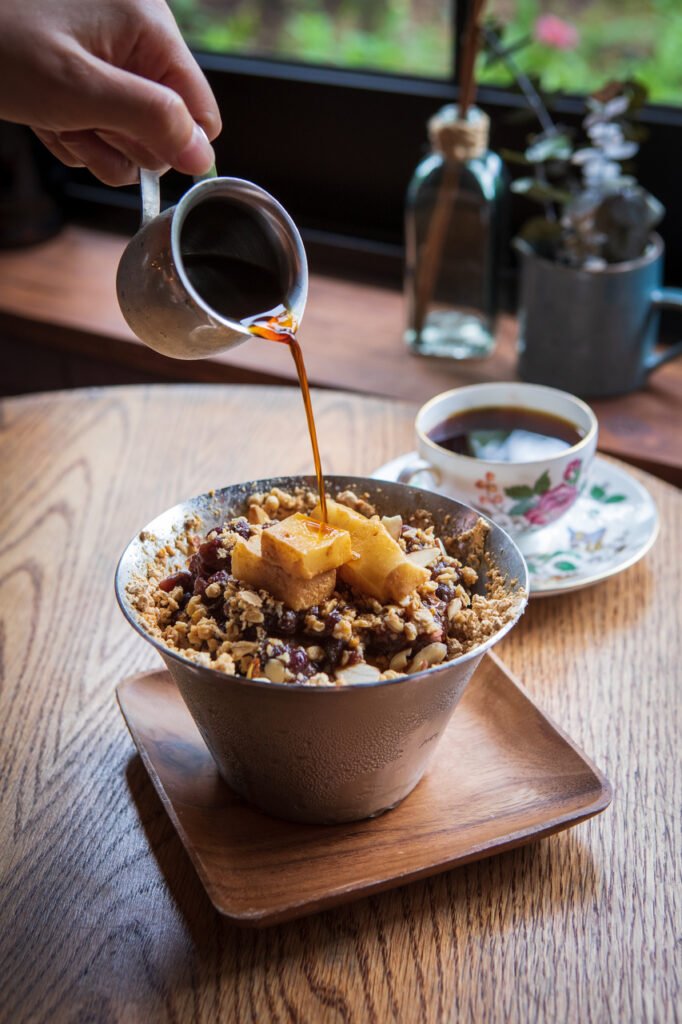
17. Patbingsu (Shaved Ice Dessert)
Fine shaved ice topped with sweet red beans, tteok (rice cakes), and condensed milk. Modern versions include mango, strawberry, or chocolate.
📍 Where to go: Sulbing is a famous dessert cafe chain found all over Korea.
18. Makgeolli (Rice Wine)
Don’t just drink Soju. Makgeolli is a milky, sparkling rice wine that pairs perfectly with Jeon (Korean pancakes). It’s sweet, tangy, and lower in alcohol.
The Food Budget Estimator (Updated for 2025) 🧮
Honestly, we need to talk about inflation. While Korea is still more affordable than New York or London, prices in Seoul have risen noticeably in the last year or two. The days of the $5 full meal are mostly gone unless you are at a university cafeteria.
To help you plan realistically—and avoid “sticker shock”—I’ve adjusted these estimates to reflect the current pricing in major tourist hubs like Myeongdong, Hongdae, and Gangnam.
| Meal Type | Realistic Cost (KRW) | Est. USD |
|---|---|---|
| Street Food Item (e.g., Tteokbokki, Skewers) | ₩4,000 – ₩7,000 | $3.00 – $5.50 |
| Casual Meal (Stew, Noodles, Gukbap) | ₩11,000 – ₩16,000 | $8.00 – $12.00 |
| Korean BBQ Dinner (Pork + Drink / Per Person) | ₩30,000 – ₩50,000 | $22.00 – $37.00 |
| Trendy Cafe (Coffee + Cake) | ₩10,000 – ₩15,000 | $7.50 – $11.00 |
⚠️ Local Reality Check: If you plan to eat Korean BBQ with alcohol (Soju/Beer), budget closer to ₩40,000+ per person. Meat prices and alcohol prices have both increased recently.
Real-World Itinerary: The 3-Day Seoul Food Blitz 📚
Let’s walk through a real-life scenario. Suppose you have three days dedicated to eating in Seoul. This plan prioritizes markets and authentic local eats.
- Day 1: Market Madness. Start at Gwangjang Market for Bindaetteok (Mung bean pancake) and Mayak Gimbap. For dinner, head to Ikseon-dong for Chimaek (Fried Chicken & Beer) in a renovated Hanok village.
- Day 2: Noodle & Spice. Lunch at Myeongdong Kyoja for their famous Kalguksu. In the evening, head to Euljiro Nogari Alley for a local vibe with dried fish and beer, or book a BBQ spot in Mapo-gu.
- Day 3: The Challenge. Lunch in Sinsa-dong for Ganjang Gejang (Raw Crab). It’s a splurge but worth it. End your trip with a soothing bowl of Samgyetang near Gyeongbokgung Palace.
Frequently Asked Questions (FAQ) ❓
Q: Is it easy to find vegetarian or vegan food in Korea?
A: It can be challenging as soups often use anchovy broth. However, “Temple Food” restaurants are strictly vegan and delicious. Always ask: “Gogi isseoyo?” (Is there meat?) and request “No meat, please.”
Q: What is the realistic price of Korean BBQ per person now?
A: For a decent pork belly (Samgyeopsal) dinner, expect to pay around ₩18,000 to ₩20,000 per 150g serving. Since most people eat 1.5 to 2 servings plus side dishes (rice/stew), a budget of ₩35,000 to ₩50,000 (~$26 to $37 USD) per person is realistic for a full, satisfying dinner.
Q: Is tipping customary?
A: No. Tipping is not part of the culture. The price you see is the price you pay. Leaving money on the table might even result in the waiter running after you to return your “lost” change!
Q: How do I order for one person at a BBQ place?
A: Traditional KBBQ often requires a minimum order of 2 servings (2 people). As a solo traveler, you can either pay for 2 portions (and eat it all!) or look for restaurants that explicitly offer “1-person sets” (hon-bap), which are becoming more common.
Q: How much is the KTX to Busan for a food trip?
A: The KTX (high-speed train) from Seoul to Busan costs approximately ₩59,800 (one way). While slower trains are cheaper (₩30,000 range), the KTX saves you hours of travel time, giving you more time to eat!
Korean Culture portal KCulture.com
Join the mailing service and add to your favorites.

Founder of Kculture.com and MA in Political Science. He shares deep academic and local insights to provide an authentic perspective on Korean history and society.
🇰🇷 Essential Seoul Travel Kit
- ✈️ Flights: Find Cheap Flights to Seoul
- 🏨 Stay: Top Rated Hotels in Seoul
- 🎟️ Tours: Best Activities & K-Pop Tours