Seoul’s Iconic Namsan: A Kdrama Fan’s Cultural & Culinary Guide
Relive the romance of ‘Moving,’ feel the action of ‘Kpop Demon Hunters,’ and discover the legendary Namsan Donkatsu. This is Seoul’s most iconic mountain, in every season.
If you were captivated by the high-flying action and, let’s be honest, the incredibly touching romance of the Disney+ Kdrama ‘Moving,’ then Namsan (Namsan Mountain) in Seoul probably holds a special place in your heart. It’s more than just a pretty view. It’s the setting for some of the most pivotal, heart-fluttering moments for agents Lee Mi-hyun (Han Hyo-joo) and Kim Doo-sik (Jo In-sung).
And, of course, it’s the home of the legendary Namsan Donkatsu (Pork Cutlet). This isn’t just food; it’s a recurring symbol of their love and the “normal” life they long for.
But Namsan’s Kdrama resume doesn’t stop there. More recently, fans of the action-packed ‘Kpop Demon Hunters’ saw the mountain in a completely different light—less romantic, more supernatural battlefield.
So, let’s trace their steps. This is a guide to exploring Namsan, not just as a tourist, but as a fan. It’s a place where you can literally walk in the footsteps of your favorite characters, blending drama fiction with the mountain’s rich history and stunning seasonal beauty.
The ‘Moving’ Connection: More Than Just a Meal
In ‘Moving,’ Namsan is where Mi-hyun and Doo-sik’s secret agency romance blossoms. Their code-named “missions” often end up as dates on the mountain, and their meal of choice? The king-sized Namsan Donkatsu.
This specific meal becomes their “thing.” It represents a promise of a simple future. When Mi-hyun later opens her own donkatsu restaurant, it’s a direct callback to these cherished memories. The Namsan Cable Car and N Seoul Tower also feature as romantic, panoramic backdrops to their clandestine meetings.
A Taste of Nostalgia: The Namsan Donkatsu Experience
First things first: what is Namsan Donkatsu? Forget the thick, fluffy Japanese tonkatsu. The Namsan style, which became popular in the 1970s and 80s, is a ‘wang-donkatsu’ (king pork cutlet).
- It’s paper-thin, pounded out to be as wide as the plate.
- It’s drenched in a sweet, savory, brown gravy-like sauce.
- It’s always served with a side of sweet corn, shredded cabbage salad, and a small bowl of cream soup.
📌 Local Tip: Finding the Donkatsu Street
Here’s a crucial local tip: The main Namsan Donkatsu ‘street’ (Sopa-ro) is located just a 3-minute walk from the base of the Namsan Cable Car station. When facing the mountain from the ticket booth, walk to your left, heading towards the Chinese Consulate. You’ll quickly hit the ‘Donkatsu intersection’ (Namsan Donkatsu Sageori : 8-179, Yejang-dong, Jung-gu, Seoul).
It’s the perfect spot for a hearty meal before you take the cable car up, or a rewarding dinner after you’ve explored the mountain. Many restaurants claim to be the “original,” but to be fair, they all offer a very similar, comforting, and nostalgic experience.
Your Kdrama Filming Location Tour
Namsan is beautiful year-round, and its iconic status makes it a favorite for directors. Here’s a recommended course that hits the highlights from your favorite shows.
1. Start at the Bottom: Namsan Cable Car
The easiest and most scenic way up. This is the very cable car that provides the sweeping city views seen in ‘Moving’. Remember the nervous, unspoken tension of Mi-hyun and Doo-sik’s ‘secret’ meetings with the city sprawling below? This is it. It’s a quick, 3-minute ride that saves your legs and offers fantastic photo ops.
💡 Pro-Tip
To get to the cable car station, you can take the “Namsan Orumi” (a free inclined elevator) from the street level near Myeongdong Station (Exit 3).
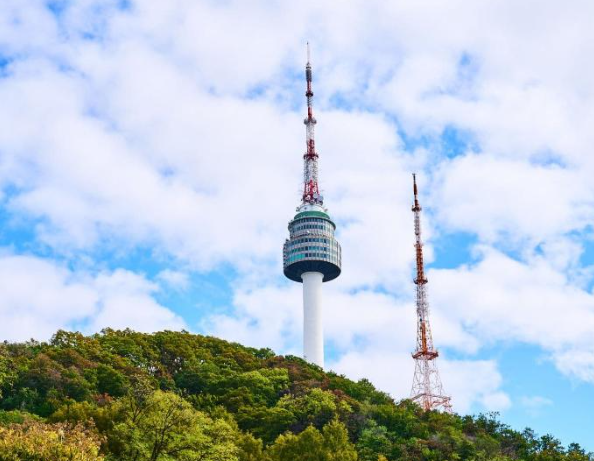
2. The Iconic Peak: N Seoul Tower & Locks of Love
At the top, you’ll be greeted by the N Seoul Tower. Surrounding its base is the famous “Locks of Love” terrace. Can’t you just hear Cheon Song-yi and Do Min-joon from ‘My Love from the Star’ making their promise here? Or the iconic ‘Boys Over Flowers’ scene? This is that terrace, a must-do for couples and Kdrama fans alike.
3. A Stage for Action: ‘Kpop Demon Hunters’
But, as fans of ‘Kpop Demon Hunters’ know, Namsan isn’t just for dates. The wide-open plazas and winding paths make for epic supernatural showdowns! It’s easy to imagine the camera sweeping wide for a climactic battle, with the glittering lights of Seoul as the perfect dramatic backdrop for fighting demons. It’s a fun contrast to ‘Moving’s quiet nostalgia.
4. The Historic Heart: Palgakjeong & Beacon Mound
This is where the real history of Namsan lies. Walk over to the Palgakjeong (Octagonal Pavilion) for a traditional resting spot. Right next to it is the Mongmyeoksan Bongsudae (Beacon Mound), which adds a fascinating layer to the ‘Moving’ storyline.
A Mountain of History: The Real “Intelligence Agency”
Before it was Namsan (“South Mountain”), it was Mongmyeoksan. During the Joseon Dynasty, it was a critical military defense point.
The Bongsudae (Beacon Mound) was the center of a nationwide emergency communication system, using smoke signals by day and fire by night to send messages from the border to the king. It was, in essence, the 14th-century version of an intelligence agency’s headquarters. This makes the (fictional) National Intelligence Service (NIS) headquarters being on Namsan in ‘Moving’ a brilliant and historically resonant choice.
Namsan’s Beauty Through the Seasons
Honestly, when you visit Namsan can completely change your experience. The mountain’s atmosphere transforms with the calendar.
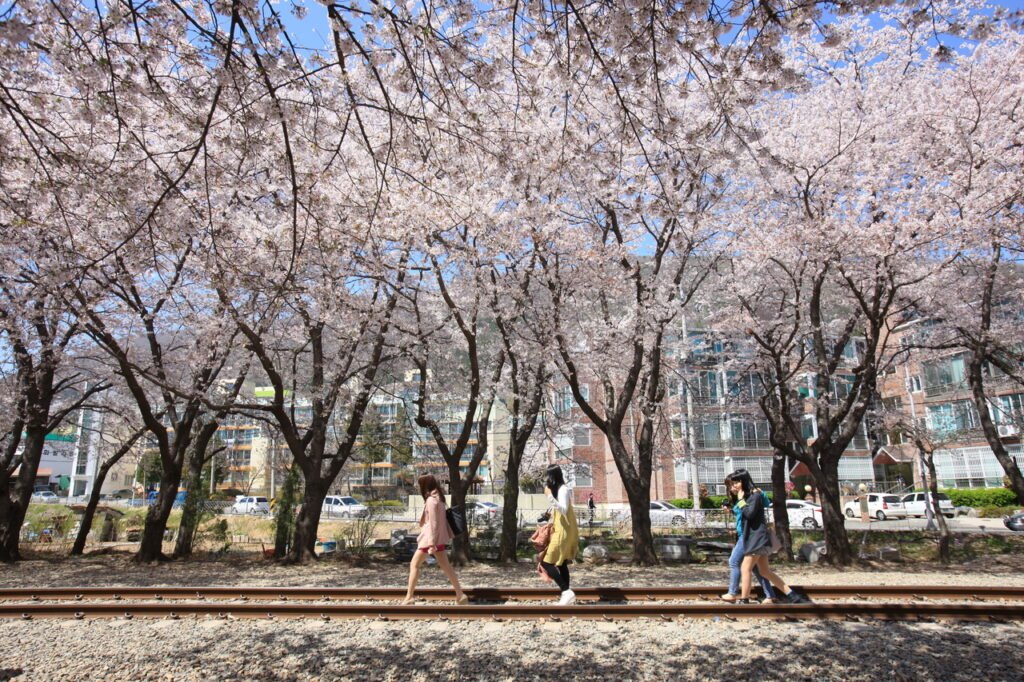
[Image collage showing Namsan in Spring cherry blossoms and Autumn foliage]
Spring: A Tunnel of Cherry Blossoms
This is arguably Namsan’s most famous look. In early April, the entire Namsan Circular Road (the path that winds around the mountain) becomes a breathtaking tunnel of pink and white cherry blossoms. It’s incredibly romantic and often feels a bit more serene than the massive crowds in Yeouido.
Autumn: A Canvas of Fiery Foliage
When fall arrives (usually late October to mid-November), the mountain is set ablaze with color. The ginkgo and maple trees turn brilliant shades of yellow, orange, and deep red. The air is crisp, the views of the city are often crystal clear, and the crunch of leaves underfoot makes the walk even more atmospheric.
Summer and Winter: Green Escapes & Snowy Vistas
Don’t discount the other seasons. In summer, it’s a lush, green oasis, offering a cool, shaded escape from the city’s heat. And in winter, a rare snowfall turns the entire mountain into a quiet, magical wonderland, with the snow-covered branches and the Palgakjeong pavilion looking like a traditional painting.
Final Tips for Your Namsan Pilgrimage
- Best Time of Day: Go about 90 minutes before sunset. You can see the views in daylight, watch the sunset, and then see the incredible city lights sparkle to life.
- Donkatsu Timing: Remember, the Donkatsu street is at the base of the mountain (a 3-min walk to the right of the cable car station). Eat before or after your trip to the top!
- Alternative Route: Don’t want to pay for the cable car? The Namsan Sunhwan Shuttle Bus (Nos. 01, 02, 04) is a cheap and easy option that loops around the mountain and drops you near the top.
- The Kdrama Course: Have your ‘Moving’-inspired meal first. Then, take the cable car up, explore the tower and beacon mound (imagining your favorite drama scenes), and finally walk down the mountain path as the city lights come on.
Namsan is a place where history, pop culture, and romance all collide. Visiting it after watching your favorite Kdramas transforms it from a simple tourist spot into an emotional journey.
Korean Culture portal KCulture.com
Join the mailing service and add to your favorite

Founder of Kculture.com and MA in Political Science. He shares deep academic and local insights to provide an authentic perspective on Korean history and society.
🇰🇷 Essential Seoul Travel Kit
- ✈️ Flights: Find Cheap Flights to Seoul
- 🏨 Stay: Top Rated Hotels in Seoul
- 🎟️ Tours: Best Activities & K-Pop Tours