
Hello there! I’m Min, your local guide to the vibrant heart of Korean culture. I live in the bustling streets of Seoul, where the aroma of grilled meat and fresh greens is practically the city’s background music.
As someone who holds official Korean culinary and confectionery certifications, I spend a lot of time thinking about the chemistry of ingredients. But today, I want to talk about something much more intimate and soulful than a recipe. I want to talk about Ssam (쌈).
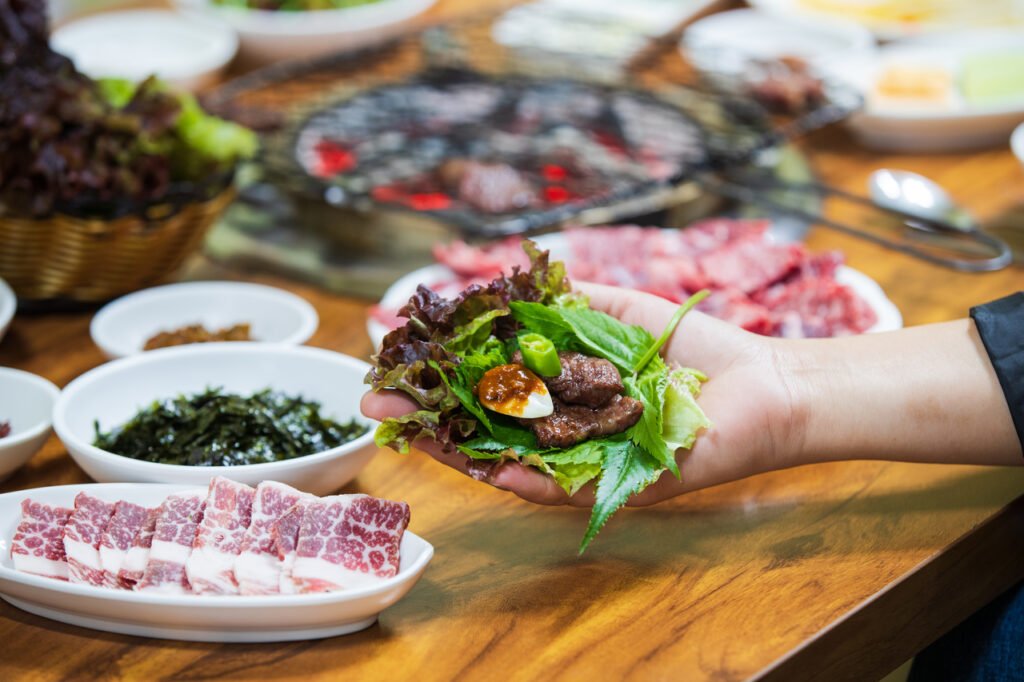
If you’ve ever been to a Korean BBQ restaurant, you’ve likely seen people meticulously layering leaves, meat, and sauces into a neat little bundle before popping the whole thing into their mouths. That, my friends, is an ancient ritual of wellness and flavor that we Koreans simply cannot live without.
1. What is Ssam? More Than Just a “Wrap”
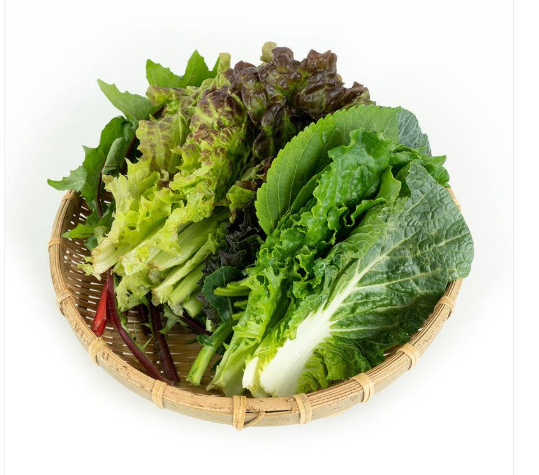
In Korean, Ssam literally means “wrapped.” While many cultures have wraps—think of the hearty Burrito, the spicy Taco, or the delicate Vietnamese Spring Roll—Korean Ssam is unique because it celebrates raw, vibrant greenery.
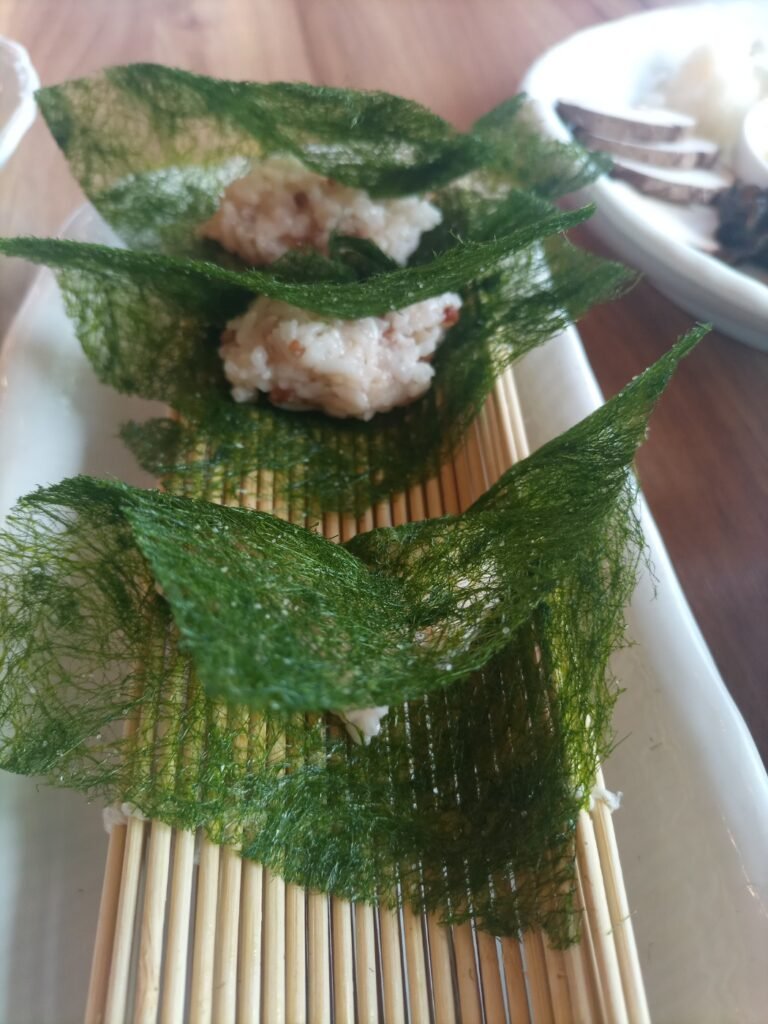
Instead of a flour tortilla or rice paper, we use the living energy of nature: lettuce, perilla leaves, cabbage, and even seaweed. We take a leaf, add a spoonful of rice, a piece of perfectly grilled protein (like Samgyeopsal), and a dollop of Ssamjang (our secret savory sauce).
It’s not just a meal; it’s a personalized gift you make for yourself (or for someone you love) right at the dinner table.
2. A Bite of History: From Royal Palaces to Your Table
You might think Ssam is a modern trend, but it has deep roots!
- The Goryeo Dynasty (918–1392): Historical records from the Yuan Dynasty in China mention that people from Goryeo (Korea) loved wrapping their rice in lettuce. Even back then, it was considered a sophisticated way to eat.
- The Joseon Dynasty (1392–1910): Ssam became a staple for everyone. King Gojong, the last emperor of the Korean Empire, was famously fond of lettuce wraps filled with steamed fish, stir-fried shrimp, and a touch of fragrant sesame oil.
It’s quite funny—in the late Joseon period, some noblemen actually looked down on Ssam because you have to open your mouth quite wide to eat it! But the flavor was so irresistible that it eventually won everyone over, from the lowliest farmer to the highest king.
3. The “Flavor Palette”: Exploring Ssam Greens
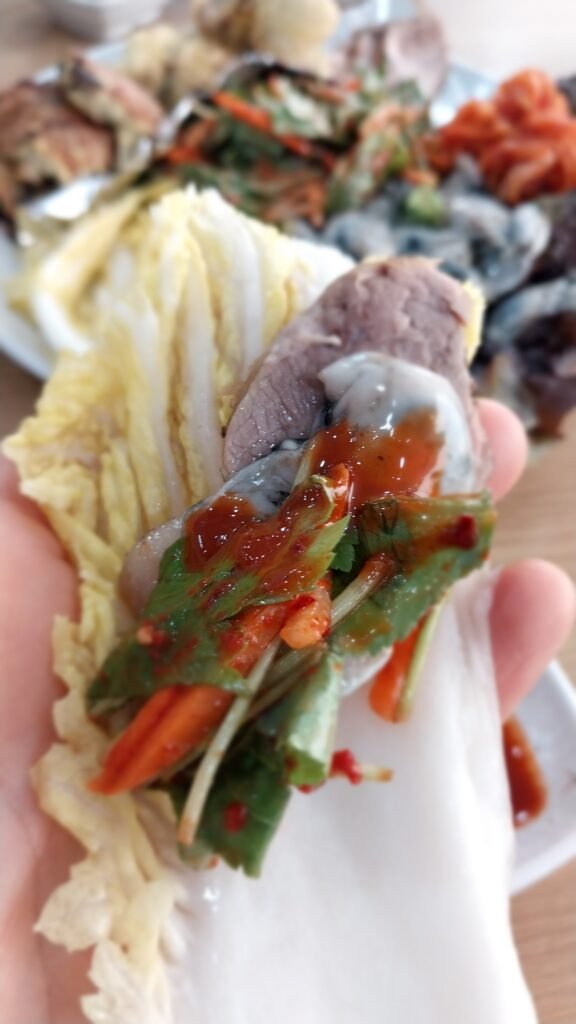
As a culinary enthusiast, I view the Ssam table as an artist’s palette. Each leaf brings a different “note” to the symphony. Here is a guide to some of my favorites:
| Leaf Type | Flavor Profile | Health Benefit (Min’s Tip!) |
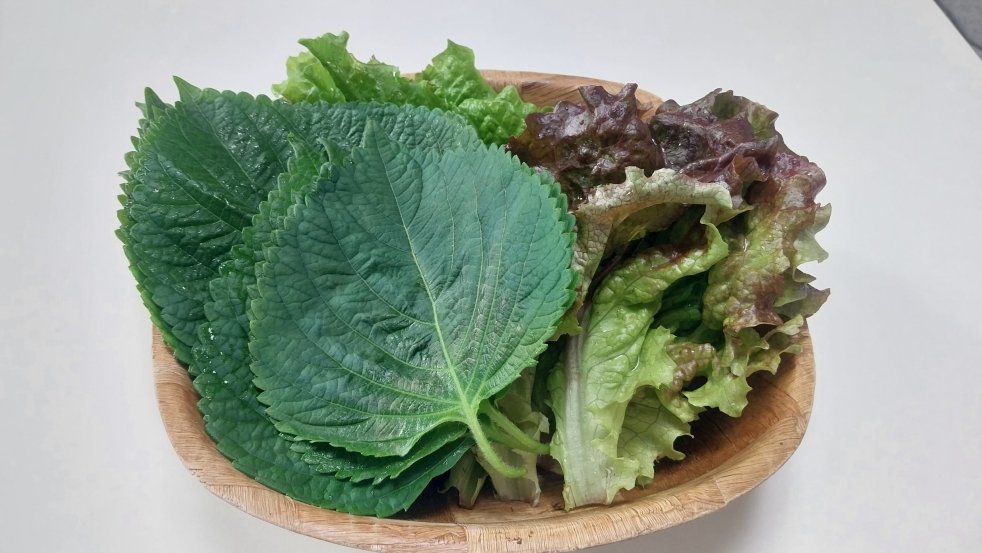
| Lettuce (Sangchu) | Mild and crunchy | Rich in iron; helps with sleep and stress relief. |
| Perilla Leaf (Kkaennip) | Minty, peppery, and bold | High in Vitamin C and Calcium; great for anti-aging. |
| Bok Choy | Sweet and juicy | Promotes healthy skin and bone development. |
| Chicory | Pleasantly bitter | Contains intybin, which aids digestion after a heavy meal. |
| Red Mustard Leaf | Zesty and pungent | High in Vitamin A; clears the eyes and calms the mind. |
| Kelp (Dasima) | Salty and “ocean-y” | Excellent for dieting and lowering cholesterol. |
Pro Tip: If you want the best texture, place the smooth side of the leaf facing out and the rough side facing in. When it hits your tongue, the first thing you feel is the silky smoothness of the leaf!
4. The Heart of the Wrap: Ssamjang
You can’t talk about Ssam without Ssamjang. It’s a magical blend of fermented soybean paste (Doenjang) and red chili paste (Gochujang), seasoned with garlic, sesame oil, and sometimes a touch of honey or sugar.
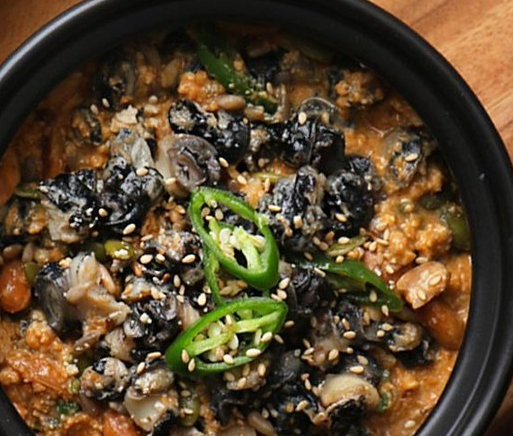
In Korea, we are getting more creative with our sauces! We now have Ureong-Ssamjang (with chewy river snails) or Gang-Doenjang (a thick, stew-like paste with tofu). These variations add a punch of umami while keeping the sodium levels balanced.
5. Why Ssam is Taking Over the World (The Data Speaks!)
The global “Wellness” trend is perfectly aligned with the philosophy of Ssam. According to recent food industry reports, the demand for “Functional Foods” and “Plant-Forward Dining” has surged by over 20% globally since 2023.
Ssam fits this perfectly because:
- Nutritional Balance: You get fiber, vitamins, and minerals alongside your protein.
- Customization: Whether you are vegan (tofu ssam!), keto (meat and leaves!), or a seafood lover, Ssam accommodates everyone.
- The “Slow Food” Experience: Ssam encourages you to slow down, assemble your food, and share a conversation.
In 2026, we expect to see “Ssam Bars” popping up in New York, London, and Paris, treating Korean wraps like a healthy, customizable alternative to fast food.
6. Min’s “Clean-the-Fridge” Cabbage Ssam Recipe
Got some leftover rice and a cabbage in the fridge? Let’s make a quick, cute snack!
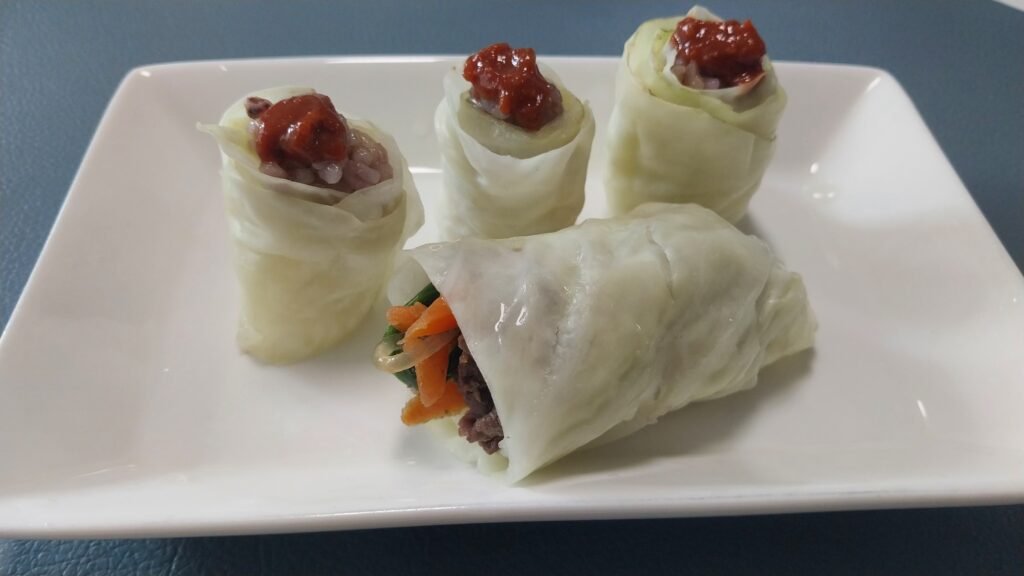
- Prep the Cabbage: Wash the leaves and steam them for 5 minutes until soft. (Shortcut: Microwave for 3 minutes!)
- The Filling: Take a small scoop of warm rice. Add a tiny bit of canned tuna, leftover stir-fried pork, or even just some seasoned scrambled eggs.
- The Wrap: Place the filling in the center of the cabbage leaf, fold the sides, and roll it up like a tiny burrito.
- The Dip: Mix a little bit of miso (or Doenjang) with honey and sesame oil.
Et voilà! A healthy, bite-sized meal that looks like a little green gift.
Final Thoughts
Ssam is more than just eating; it is an act of wrapping up good luck. In traditional Korean culture, we believed that by wrapping food tightly in a leaf, we were securing “Bok” (blessing/fortune) for the person eating it.
Next time you enjoy a Korean meal, I hope you feel that sense of love and luck in every bite.

A certified Korean chef and baker. Min shares authentic tastes of Korea, from hidden local gems to traditional recipes and everyday lifestyle.