
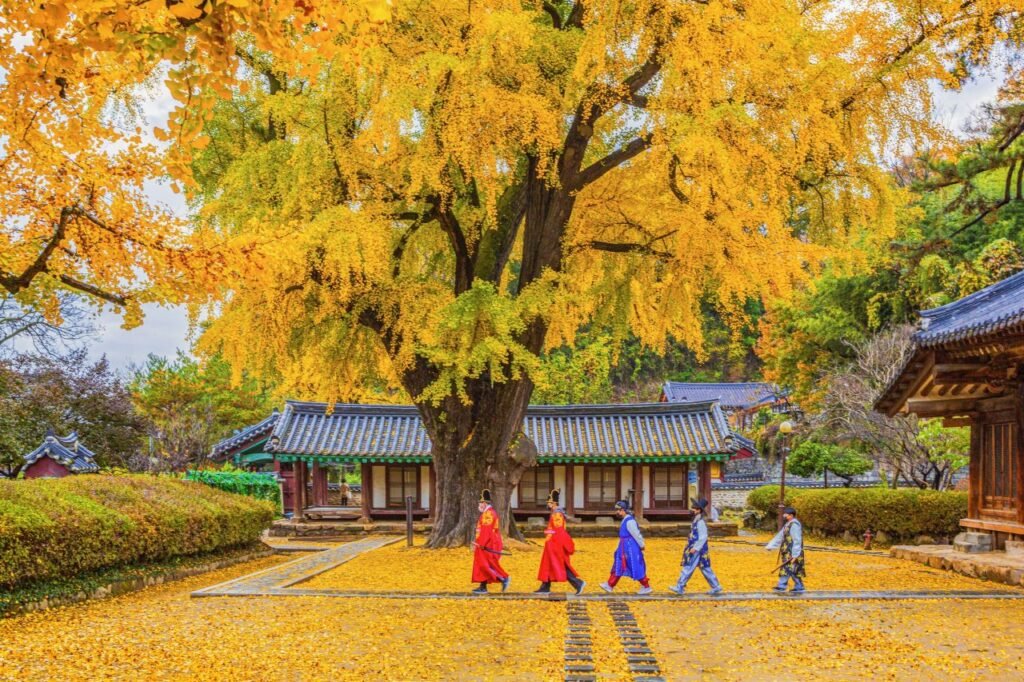
Are you curious about the roots of Korea’s academic passion? Sungkyunkwan was the supreme national university of the Joseon Dynasty, while Hyanggyo served as state-run regional schools that brought Confucian education to every corner of the peninsula. Established to cultivate elite civil servants and instill social ethics, these institutions remain the spiritual backbone of Korea’s deep-rooted educational fervor and social hierarchy. In this guide, I will take you through the historical journey of these academies, their rigorous admission requirements, the rule-based schedule for grand rituals, and a detailed comparison to help you navigate Korea’s scholarly heritage.
- Sungkyunkwan: The “Root of the State” and Elite Admission
- The Grand Ritual: Attending Seokjeon Daeje (Rule & Schedule)
- Hyanggyo: Regional State Schools and Entrance Qualifications
- The Symbolic Architecture of Confucian Learning
- Sungkyunkwan, Hyanggyo, and Seowon: Understanding the Differences
- Deepening the Insight: Ginkgo Trees and Private Academies
Sungkyunkwan: The “Root of the State” and Elite Admission
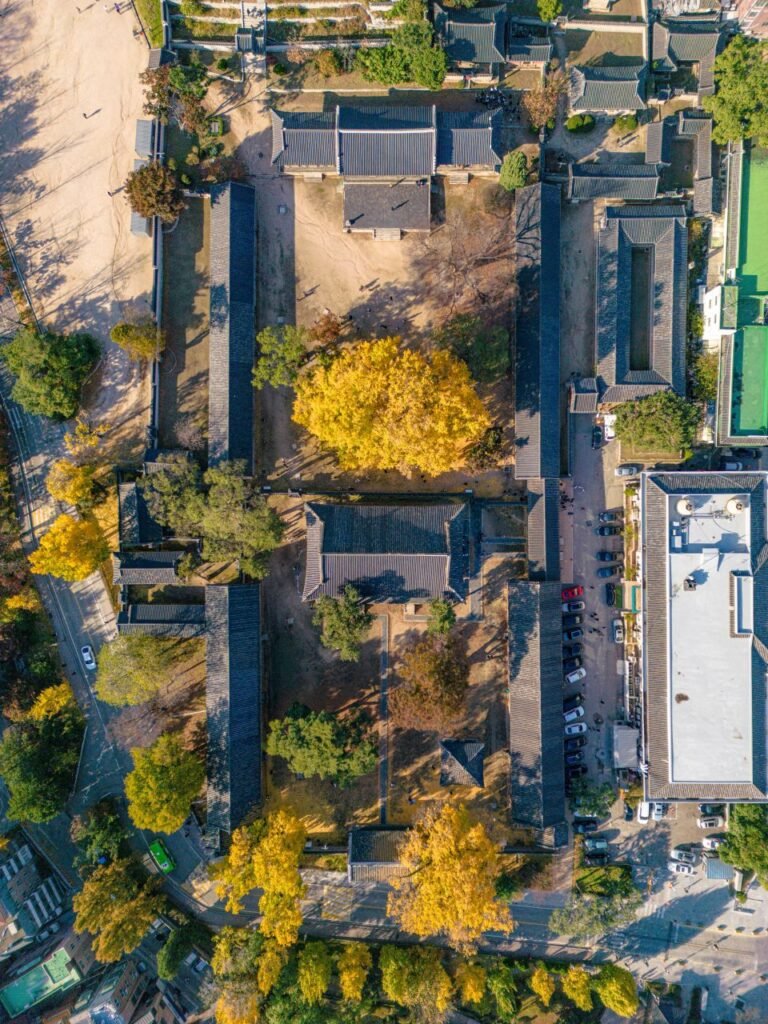
Sungkyunkwan’s history is the history of Korea’s intellectual evolution. While the Joseon Dynasty (1392–1910) made it famous, its foundations were laid in the Goryeo Dynasty as the Gukjagam in 992. By 1308, it took the name Sungkyunkwan, meaning “the place where human talent is harmoniously polished.” According to the Annals of the Joseon Dynasty (Sejong Sillok), King Sejong the Great personally visited the academy and described it as the “Root of the State” (Guk-bon), emphasizing that the prosperity of the kingdom depended entirely on the moral and academic caliber of its students. It was more than a school; it was a sovereign sanctuary where students enjoyed extraterritoriality—even the King’s guards could not enter the campus without permission. Admission was incredibly exclusive, reserved for those who had already proven their brilliance through the Sogwa (Lower Civil Service Examination). Students had to earn the title of Saengwon (Classics Scholar) or Chinsa (Literary Scholar) just to apply. Once admitted, these 200 elite residents received full state scholarships, including meals and lodging, to focus solely on perfecting their governance skills and studying the Confucian Classics.
The Grand Ritual: Attending Seokjeon Daeje (Rule & Schedule)
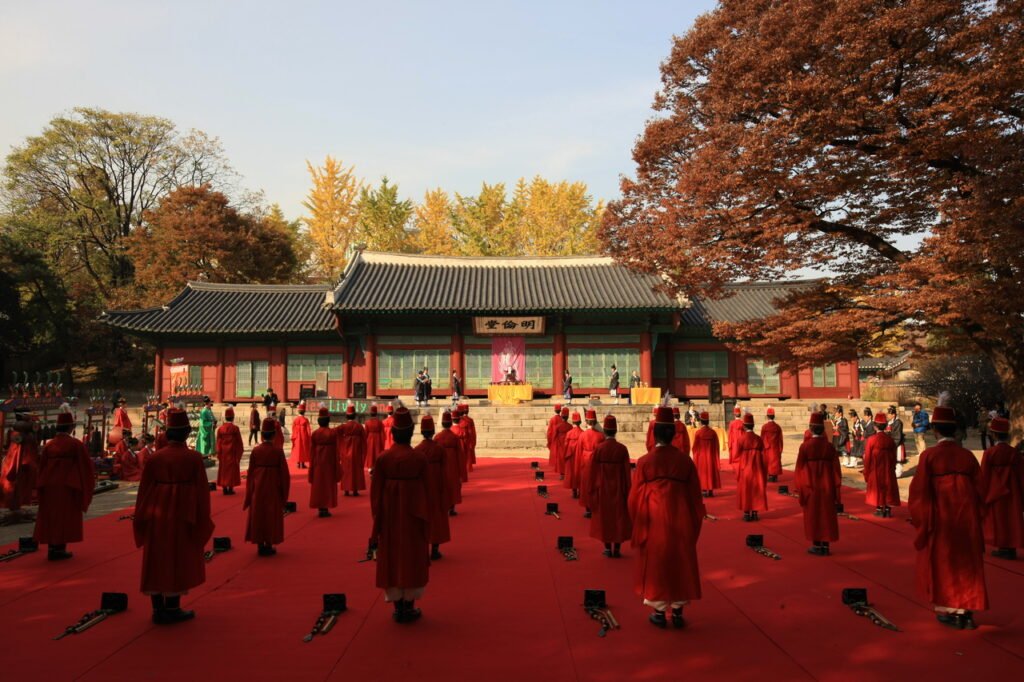
The Seokjeon Daeje (or Munmyo Daeje) is a majestic ritual honoring Confucius and ancient sages, designated as National Intangible Cultural Heritage No. 85. The ceremony is a sensory masterpiece featuring Aak (ritual music) and the Pal-ilmu (Line Dance of Eight), performed by 64 dancers. It is led by “Heongwan” (officiants), with the Cho-heongwan (First Wine Offerer) role typically held by high-ranking government ministers or social luminaries.
💡 How Dates are Determined:
The ceremony is traditionally held twice a year in the 2nd and 8th months of the lunar calendar. The specific date is set on the first “Sangjeong-il” (上丁日)—the first day of the month containing the “Jeong” (丁) heavenly stem. In the modern era, while many regional Confucian schools still follow this lunar schedule, Sungkyunkwan has transitioned to fixed solar dates for the main ceremonies to honor specific anniversaries. Generally, this aligns with May 11 (Confucius’ death anniversary) for the Spring ritual and September 28 (his birthday) for the Autumn ritual. However, because exact dates may shift slightly depending on the year or administrative circumstances, it is highly recommended to check the official announcement on the Seokjeon Daeje Preservation Society website (sukjeon.or.kr) or the Sungkyunkwan site (skk.or.kr) about a month in advance.
General public attendance is free and welcome. For 2026, the Spring ritual is expected around May 11 and the Autumn ritual around September 28. Visitors should wear modest, respectful clothing and arrive at least an hour before the 10:00 AM start, as entry into the Daeseongjeon courtyard is often restricted once the solemn rites begin to maintain the sacred atmosphere.
General public attendance is free, but to observe the ritual from within the Daeseongjeon courtyard, you must confirm if a prior reservation is required. Grand state ceremonies like these often feature supplementary events, such as the Royal Procession (Eoga Haengnyeol) that may take place earlier in the day. While many rituals begin at 10:00 AM, some major events like the Jongmyo Daeje (typically held on the first Sunday of May) may start around 2:00 PM. Therefore, it is essential to cross-check the exact time and venue via the Korea Heritage Service before your visit. Visitors should always wear modest, respectful clothing and arrive at least an hour before the scheduled start, as entry is strictly restricted once the solemn rites commence to maintain the sacred atmosphere.
Hyanggyo: Regional State Schools and Entrance Qualifications
While Sungkyunkwan served the capital, Hyanggyo were the state-run regional schools established in every district (gun or hyeon) to ensure that the light of Confucian education reached the provinces. These schools functioned as both local community centers and ritual sites. Admission to a Hyanggyo was a significant privilege, primarily reserved for the sons of local Yangban (aristocrats) and government officials. To be admitted as a Gyosaeng (student), one generally had to be at least 16 years old and undergo a local evaluation or recommendation. While the law technically allowed “freeborn commoners” (Yangmin) to attend, the high cost of study and the social hierarchy meant that the student body remained largely aristocratic, with fixed quotas—ranging from 30 to 90 students—based on the town’s population size.
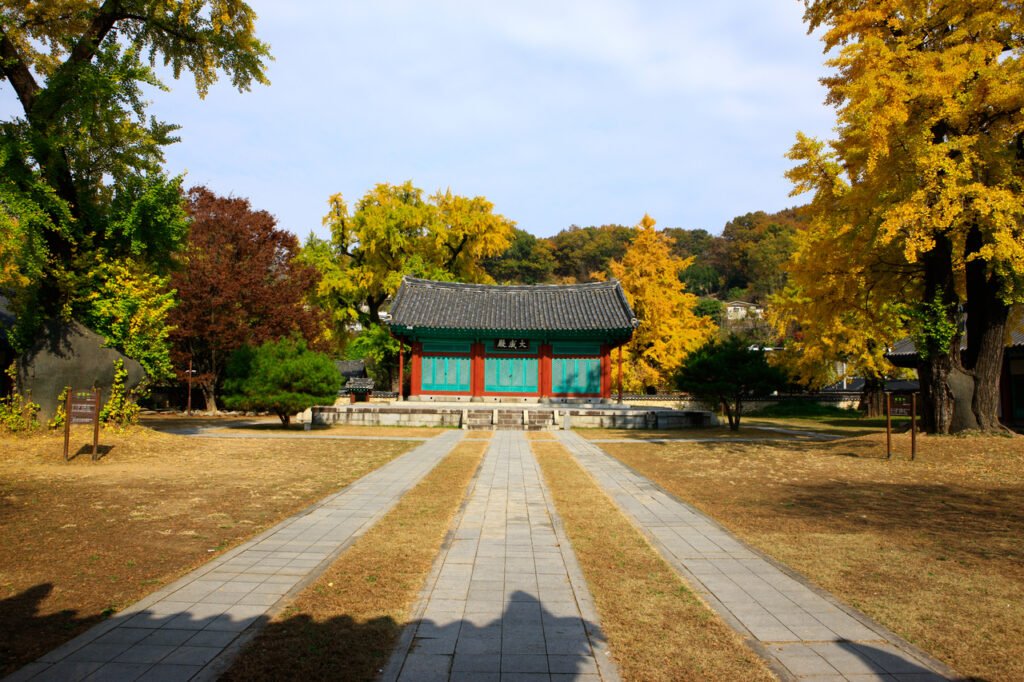
The Symbolic Architecture of Confucian Learning
The layout of these schools is a physical manifestation of Confucian philosophy. Most follow the Jeon-hak-hu-myo pattern, where the lecture hall is placed in the front and the shrine in the back. This structure symbolizes that students must first cultivate their minds through learning before they are worthy of honoring the great sages of the past.
Key Structures in a Traditional Academy
- Daeseongjeon: The “Hall of Great Achievement,” where the spirit tablets of Confucius are enshrined.
- Myeongnyundang: The “Hall of Illuminating Ethics,” where the actual teaching and debate occurred.
- Dongjae and Seojae: The East and West dormitories. Higher-ranking students or those with seniority typically occupied the East wing.
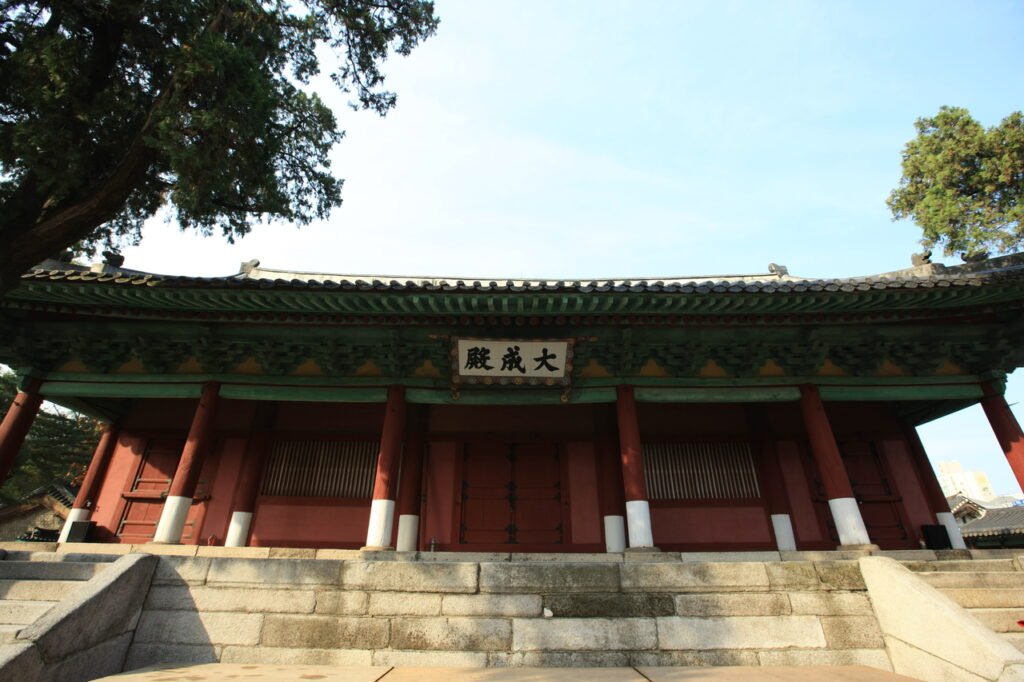
Sungkyunkwan, Hyanggyo, and Seowon: Understanding the Differences
Travelers often confuse Hyanggyo with Seowon because they share similar traditional aesthetics. However, while Sungkyunkwan and Hyanggyo were official government-funded institutions, Seowon were private research academies founded by local scholars to honor their own mentors and exert local political influence. If you want to dive deeper into the private side of this educational fever, check out our guide on Seowon: The Heart of Korea’s Historical Education Fever.
Comparison of Joseon Dynasty Educational Institutions
| Feature | Sungkyunkwan | Hyanggyo | Seowon |
|---|---|---|---|
| Category | National (Central) | National (Regional) | Private (Regional) |
| Admission | State Exam (Sogwa) | Local Yangban Youth | Private Recommendation |
| Function | Elite Bureaucrat Training | State Local Education | Private Study/Local Influence |
| Location | Seoul (Capital) | Major Regional Cities | Rural/Scenic Areas |
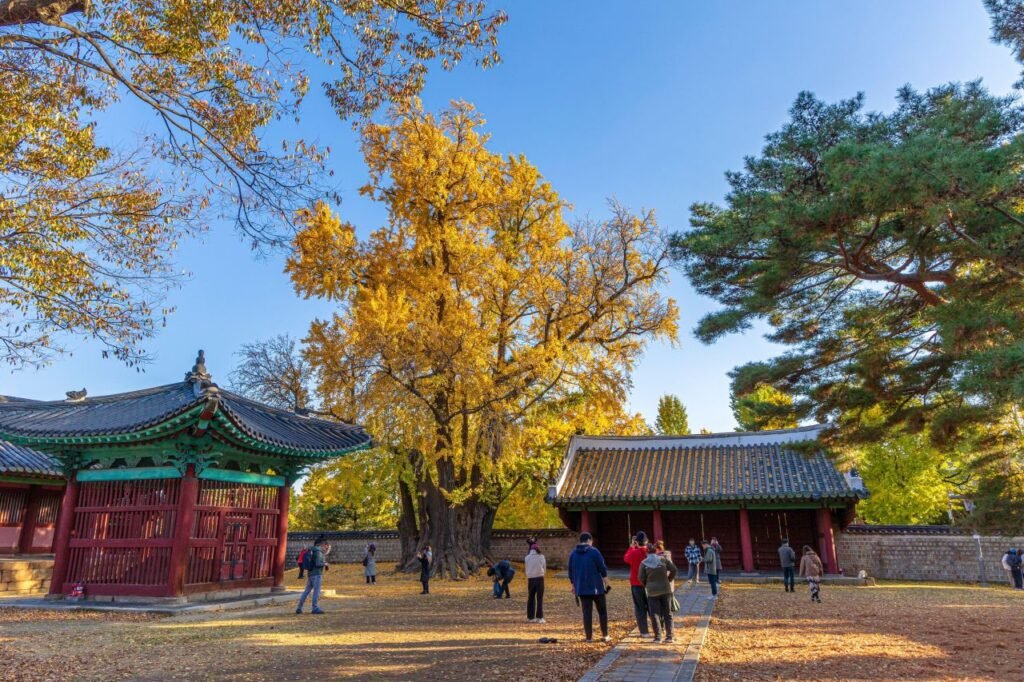
Deepening the Insight: Ginkgo Trees and Private Academies
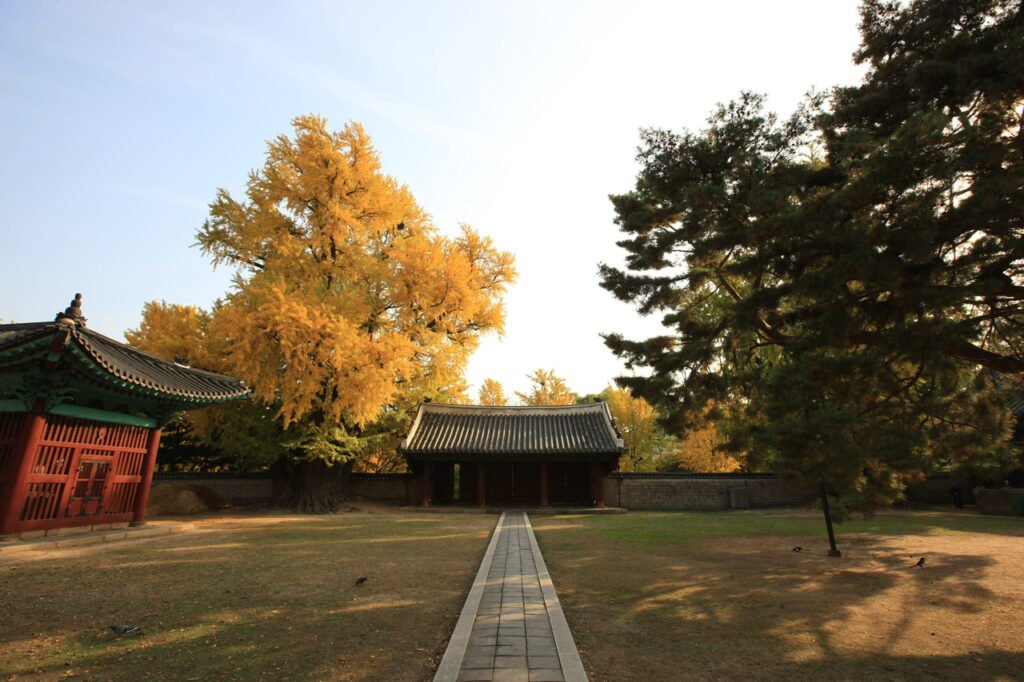
When you visit these sites, you will inevitably notice the massive, ancient Ginkgo trees. These trees are not just for shade; they are symbolic guardians. Because Confucius taught his disciples under a tree, and because the Ginkgo tree is long-lived and pest-resistant, it represents the “clean” and enduring spirit of a scholar. To learn more about the deep history of these trees, read about Korea’s Golden Secret: The Ginkgo Tree’s History and Spirit.
To understand why these educational values still dictate modern life and even the storylines of popular K-dramas, I highly recommend exploring our article on Confucianism: The Hidden Code of Klifestyle.
FAQ
Is Sungkyunkwan University the same as the historical academy?
The modern Sungkyunkwan University (SKKU) is the direct successor. While it is now a comprehensive university, it still manages the historical “Munmyo” (Confucian Shrine) grounds and maintains traditional ceremonies.
Where can I check the exact Seokjeon dates?
The most reliable source is the Seokjeon Daeje Preservation Society at sukjeon.or.kr or by calling 02-763-0991. Dates are usually finalized and posted a few weeks before the May and September events.
Can commoners visit Hyanggyo today?
Absolutely. While admission was restricted in the past, today Hyanggyo are open historical sites. Many even offer cultural programs like traditional tea ceremonies or Hanbok experiences for the public.
Korean Culture portal KCulture.com

Founder of Kculture.com and MA in Political Science. He shares deep academic and local insights to provide an authentic perspective on Korean history and society.