Korean banknote art features exquisite Joseon Dynasty masterpieces, ranging from symbolic royal screens to intricate true-view landscapes, transforming everyday currency into a pocket-sized gallery of Korean heritage. As someone living in Korea, I find it fascinating how easily we hand over a bill at a convenience store without realizing we are passing along centuries of profound history and artistic mastery. Whether you are a traveler observing the local currency or a culture enthusiast eager to understand the depths of Korean history, this guide will decode the fascinating stories and historical significance of the artworks hidden right inside your wallet.
- The 50,000 Won Note: The Essence of Mid-Joseon Art
- The 10,000 Won Note: Royal Authority and Joseon’s Science
- The 5,000 Won Note: A Harmonious Tribute to Mother and Son
- The 1,000 Won Note: The Great Scholar and True-View Landscape
The 50,000 Won Note: The Essence of Mid-Joseon Art
The 50,000 won note is South Korea’s highest denomination and serves as a magnificent canvas for the essence of mid-Joseon Dynasty art. It is entirely dedicated to showcasing the sophisticated botanical and nature-focused artworks of the era.
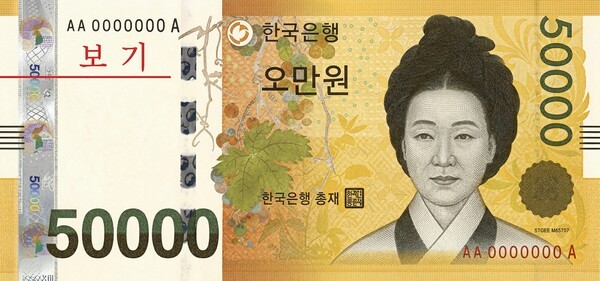
The Front: Shin Saimdang’s Delicacy
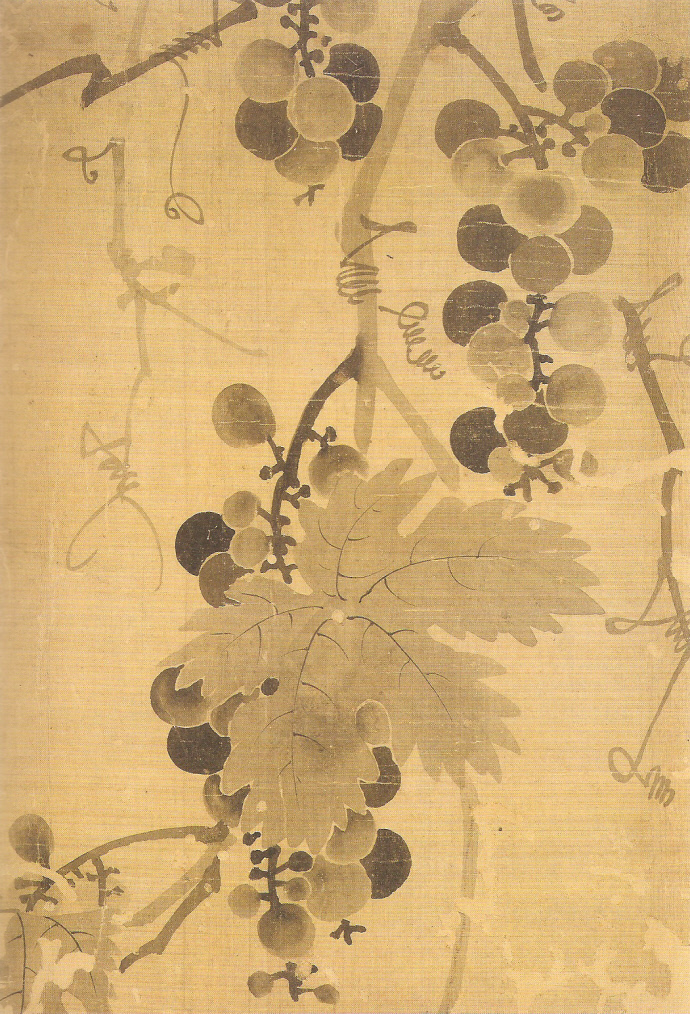
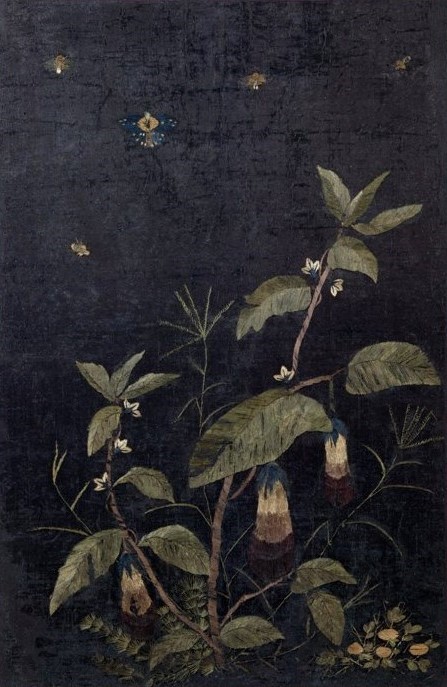
The front of the bill features the portrait of Shin Saimdang, a revered mid-Joseon artist, poet, and scholar. Subtle yet striking behind her portrait are two of her famous works delicately layered together: Mukpododo (a painting of grapes in monochrome ink) and a piece from her Chochungdo series (depicting eggplants and insects). Shin Saimdang was celebrated for her extraordinary observational skills. Through her grass and insect paintings, she elevated the female perspective and delicate appreciation of nature into a highly respected art form.
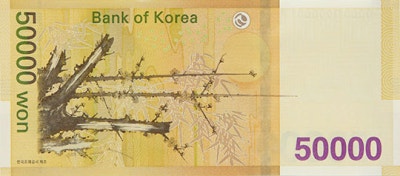
The Back: Masters of Plum and Bamboo
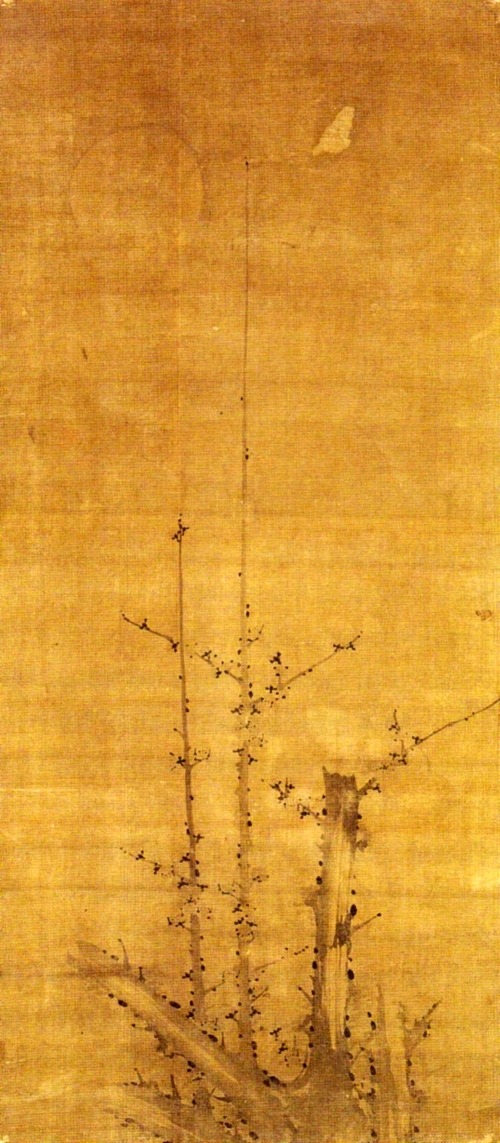
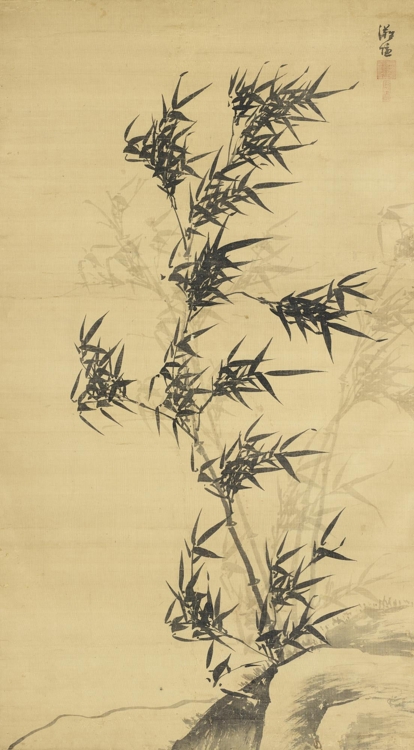
Flipping the note vertically reveals a beautiful vertical composition marrying the works of two male masters of the era. You will see Eo Mong-ryong’s Wolmaedo (Plum Tree under the Moon) seamlessly blended with Yi Jeong’s Pungjukdo (Bamboo in the Wind).
- Eo Mong-ryong: Considered the absolute best painter of plum blossoms in the Joseon era, his Wolmaedo showcases a brilliant contrast between thick, sharply angled old branches and straight, vigorous new shoots reaching for the moonlight.
- Yi Jeong: A great-great-grandson of King Sejong, Yi Jeong was the undisputed master of ink bamboo painting. Even after his arm was severely injured by a sword during the Imjin War, he overcame the physical trauma to reach the pinnacle of his craft. His Pungjukdo captures the fierce elasticity and unyielding vitality of bamboo withstanding gale-force winds.
The 10,000 Won Note: Royal Authority and Joseon’s Science
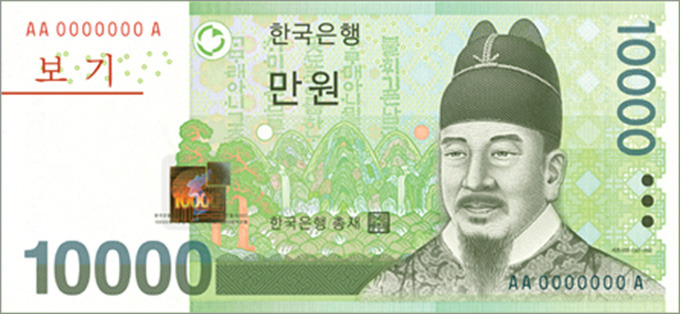
While other notes highlight individual artistic genius, the 10,000 won note, featuring King Sejong the Great, focuses entirely on the supreme authority of the royal court and the cutting-edge scientific achievements of the state.
The Front: Irworobongdo (The Sun, Moon, and Five Peaks)
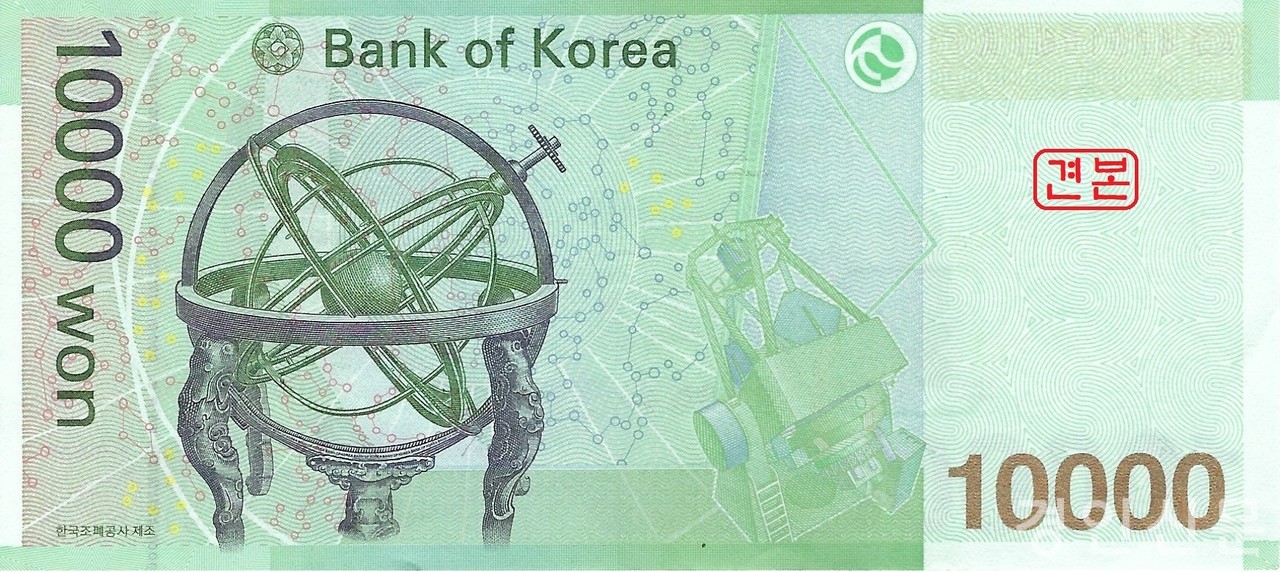
Behind the portrait of King Sejong sits the Irworobongdo, one of the most culturally significant paintings in Korean history. Unlike the other artworks on our currency, this painting has no specific known author. It was created by the anonymous, highly skilled official painters of the Dohwaseo (Royal Bureau of Painting) following strict ceremonial protocols.
The painting features a red sun, a white moon, five craggy mountain peaks, cascading waterfalls, and red pines. Historically, it was not just a decoration; it was the ultimate symbol of the universe over which the king ruled. The painting was placed exclusively behind the king’s throne, known as the Eojwa. Fascinatingly, the painting was considered conceptually incomplete until the living king sat in front of it—the monarch himself was the final piece of the artwork.
📌 Local Note: If you want to see an authentic Irworobongdo in person, head to the major royal palaces in Seoul. The most breathtaking examples are still positioned behind the thrones inside the main halls of Gyeongbokgung Palace (경복궁) and Changdeokgung Palace (창덕궁).
The Back: Cheonsang Yeolcha Bunyajido (The Celestial Chart)
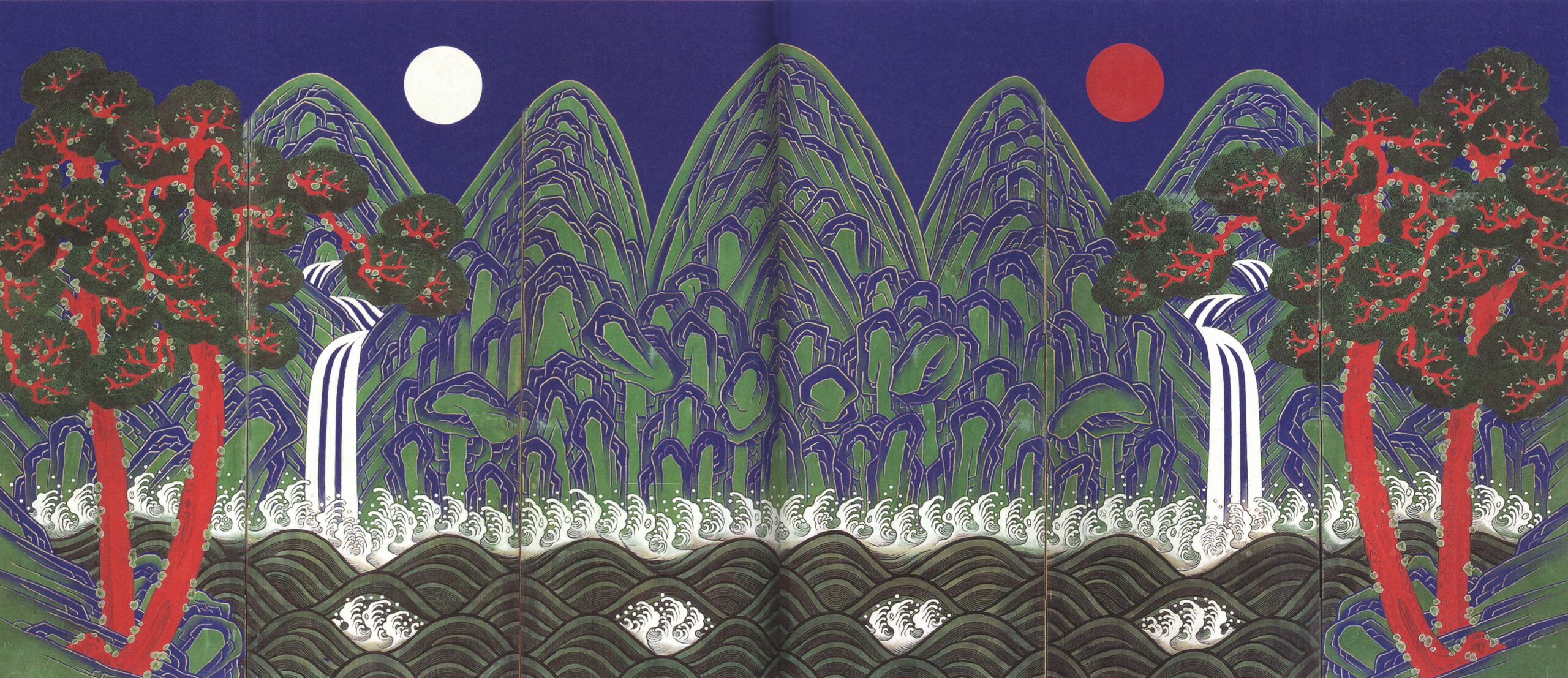
The background of the 10,000 won note’s reverse side is covered in a complex network of dots and lines. This is the Cheonsang Yeolcha Bunyajido, a magnificent astronomical chart created during the reign of King Taejo, the founder of the Joseon Dynasty. Recognizing the mandate of heaven as the source of his royal legitimacy, Taejo ordered this star map to be meticulously carved into a massive stone block.
Designated as National Treasure No. 228, this celestial map holds immense historical and scientific value. It proves that the early Joseon dynasty possessed highly advanced astronomical knowledge, independently charting the skies to manage agriculture, timekeeping, and state rituals. It is a stunning visual representation of how the heavens legitimized the earthly dynasty.
The 5,000 Won Note: A Harmonious Tribute to Mother and Son
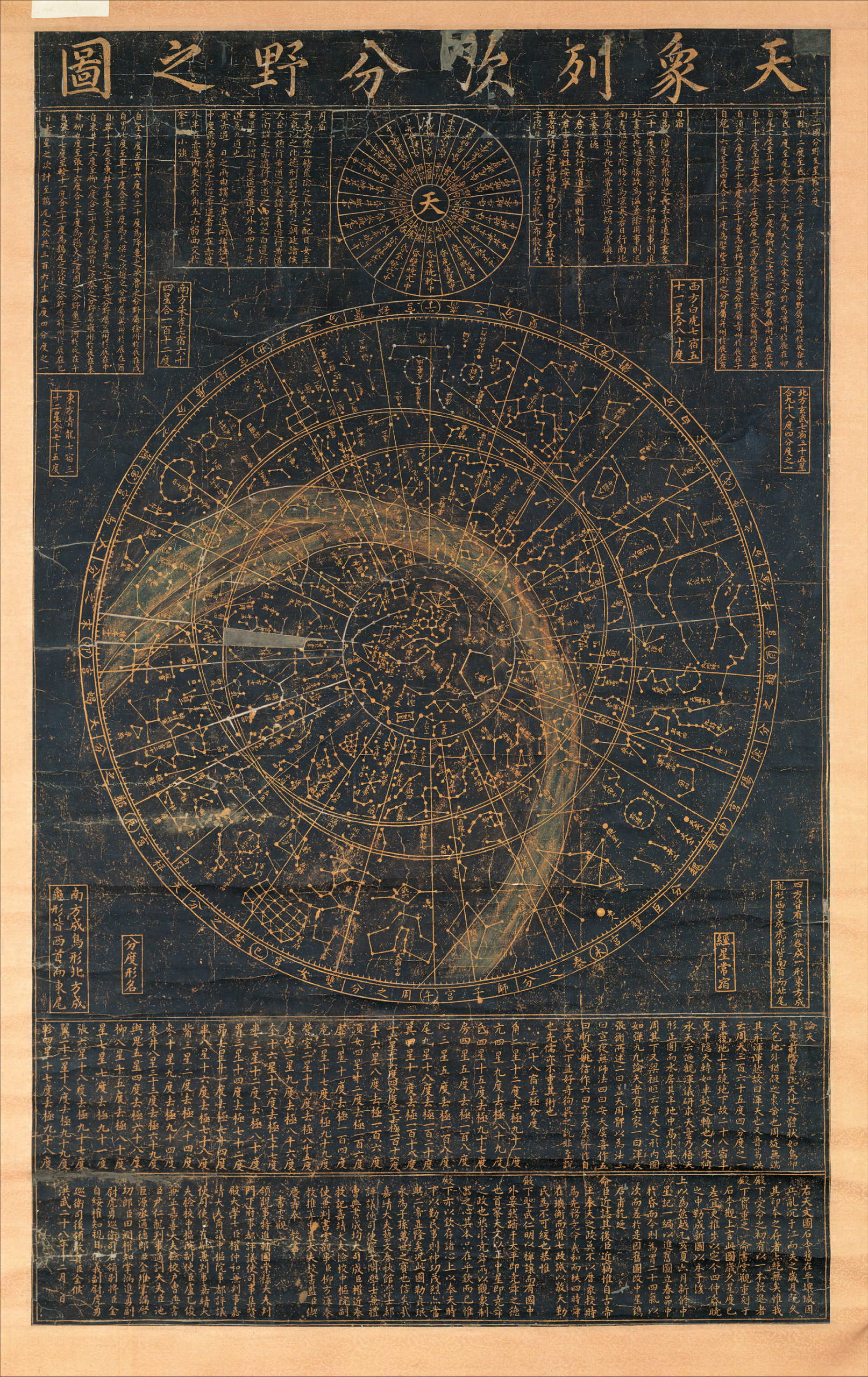
The 5,000 won note holds a very special place in global currency design because it creates a familial link with the 50,000 won note. The front features the great philosopher Yulgok Yi I, while the back features the artwork of his mother, Shin Saimdang. Having a mother and son featured on a nation’s currency is a remarkably rare and beautiful tribute.
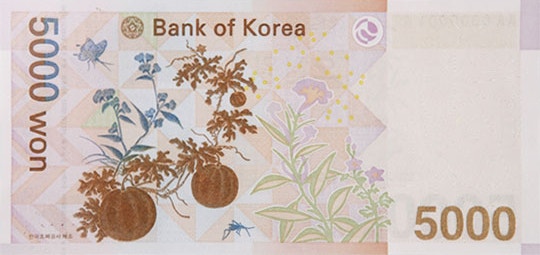
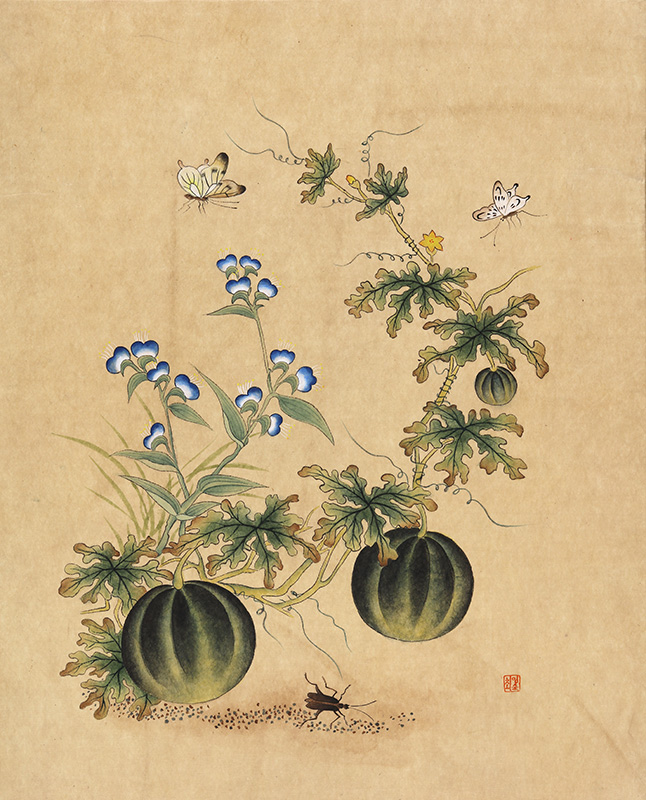
The reverse side proudly displays another masterpiece from Shin Saimdang’s Chochungdo screen painting series. This specific scene captures a watermelon being nibbled on by field mice, accompanied by vibrant cockscomb flowers, a frog, and butterflies. Her deeply affectionate and warm gaze toward the smallest, most easily overlooked creatures of nature is what makes this artwork so enduringly beloved. It perfectly represents the harmonious, nature-friendly philosophy that she undoubtedly passed down to her brilliant son.
The 1,000 Won Note: The Great Scholar and True-View Landscape
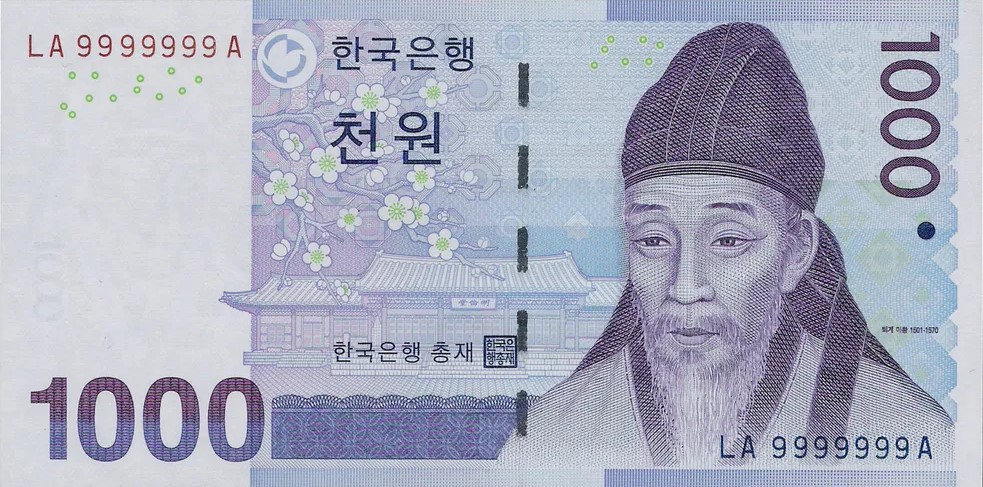
The humblest of the bills, the 1,000 won note, actually carries one of the most revolutionary art styles of the late Joseon period, paired with the legacy of its greatest Neo-Confucian scholar, Toegye Yi Hwang.
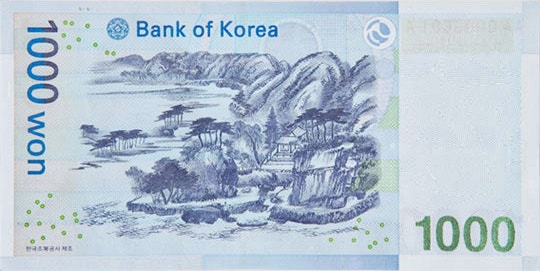
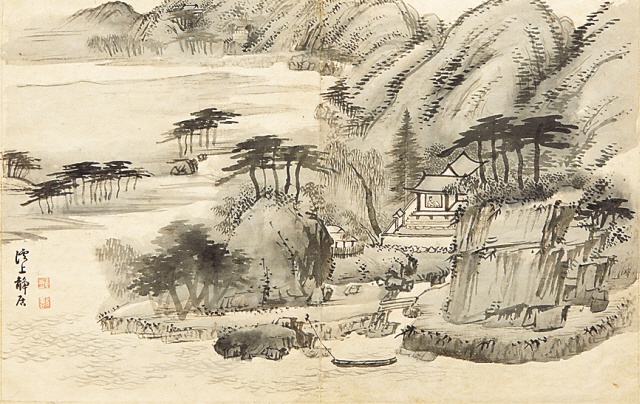
On the back of the note lies a condensed version of Gyesangjeonggeodo, painted by the legendary artist Jeong Seon, also known by his pen name, Gyeomjae. The painting depicts the tranquil landscape around Dosan Seodang (the precursor to the famous Dosan Seowon (도산서원)), where Yi Hwang retired to study and teach his disciples. If you look closely at the tiny house in the painting, you can see a small figure reading a book—this represents Yi Hwang himself.
Jeong Seon’s historical value cannot be overstated. Before him, Korean painters mostly painted imaginary, idealized landscapes based on Chinese styles. Jeong Seon broke this tradition by traveling and painting the actual, real-life mountains and rivers of Korea, establishing a uniquely Korean art style known as Jingyeong Sansuhwa (True-View Landscape Painting). Even shrunk down to the size of a small bill, Jeong Seon’s energetic brushstrokes and innovative composition shine through vividly.
| Denomination | Key Figure | Featured Artworks | Artist |
|---|---|---|---|
| 50,000 Won | Shin Saimdang | Mukpododo, Chochungdo, Wolmaedo, Pungjukdo | Shin Saimdang, Eo Mong-ryong, Yi Jeong |
| 10,000 Won | King Sejong | Irworobongdo, Cheonsang Yeolcha Bunyajido | Anonymous (Dohwaseo), Royal Astronomers |
| 5,000 Won | Yulgok Yi I | Chochungdo (Watermelon & Cockscomb) | Shin Saimdang |
| 1,000 Won | Toegye Yi Hwang | Gyesangjeonggeodo | Jeong Seon (Gyeomjae) |
💡 Pro Tip: The next time you are paying for street food or a cup of coffee, take a brief moment to look closely at the bills in your hand. You are literally carrying a miniature museum of Korea’s finest classical art, science, and philosophy in your pocket!
📌Related Articles :
▪The Guide to Traditional Korean Painting History
▪Minhwa: The Guide to Korea’s “Pop Art” Tradition
▪Discover Pungsokhwa : Masterpieces of Korean Genre Painting (Kim Hong-do & Shin Yun-bok)
▪Jeong Seon & Chusa: Joseon Literati Painting Masterpieces
Korean Culture portal KCulture.com

Founder of Kculture.com and MA in Political Science. He shares deep academic and local insights to provide an authentic perspective on Korean history and society.