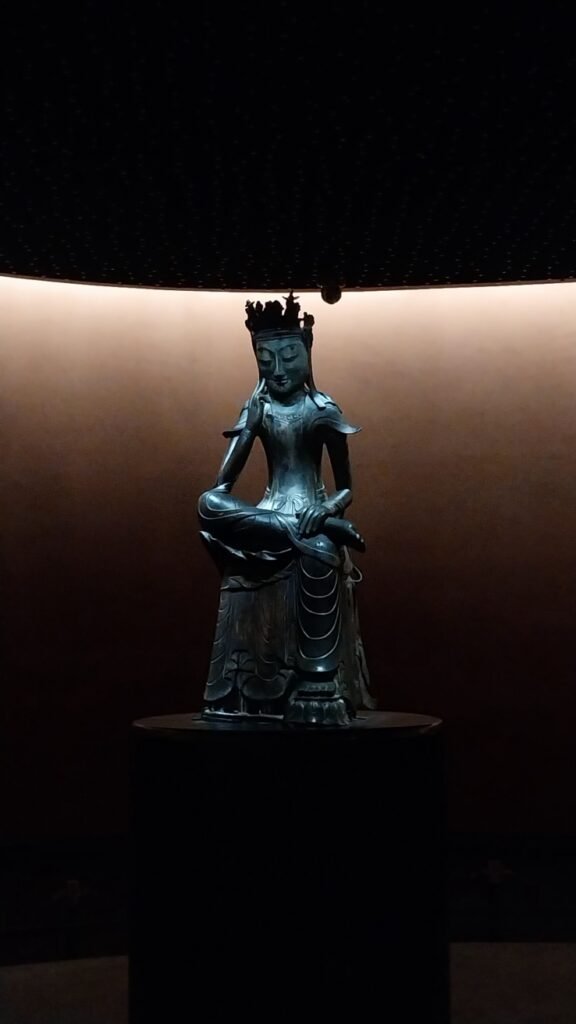
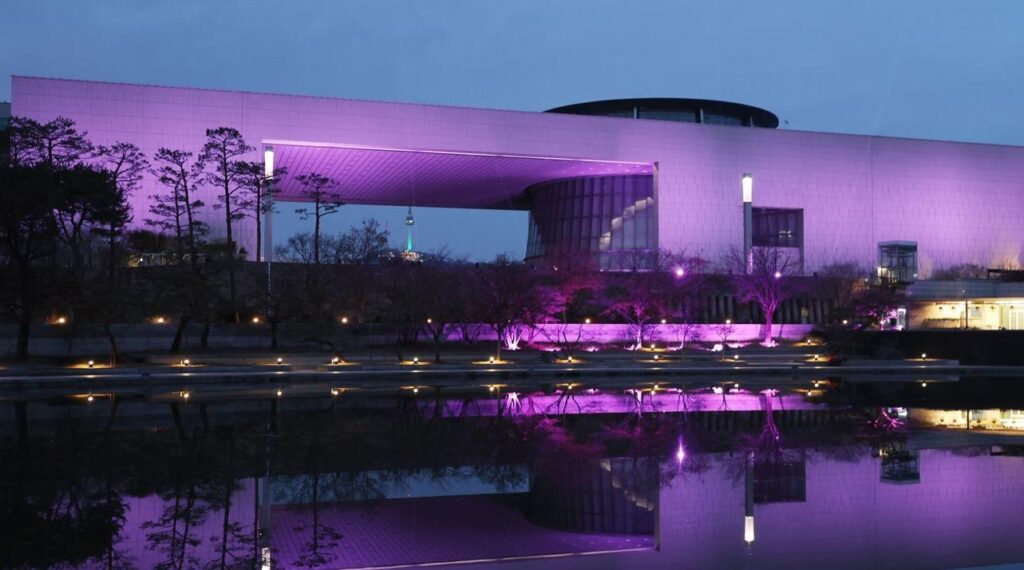
If you are planning a trip to Korea, you will inevitably find yourself standing before the glass cases of the National Museum of Korea or the Daegu Kansong Art Museum, staring at centuries-old pottery. To the untrained eye, they might just look like dusty relics, but understanding the Korean ceramics history is like unlocking a secret code to the Korean soul, revealing a journey from the ethereal jade-green of Goryeo to the minimalist white of Joseon. This comprehensive guide will transform your museum visit by explaining the technological genius, the tragic “Pottery War,” and the specific masterpieces—from the iconic Moon Jar to vibrant Blue-and-White porcelain—that define each era.
- The Kingfisher’s Color: The Peak of Goryeo Celadon
- The Sanggam Technique: A World-First Innovation
- Buncheong-sagi: The Beauty of Freedom and Representative Works
- Joseon White Porcelain: The Confucian Aesthetic of Purity
- The Moon Jar: Embracing Imperfect Perfection
- Masterpieces of Joseon: Blue-and-White and Iron-brown Porcelain
- The Control of Blue-and-White Porcelain in Joseon
- The Pottery War: How Korean Artisans Founded Japanese Ceramics
- Where to See the Masterpieces: A Local Insider’s Museum Guide
The Kingfisher’s Color: The Peak of Goryeo Celadon
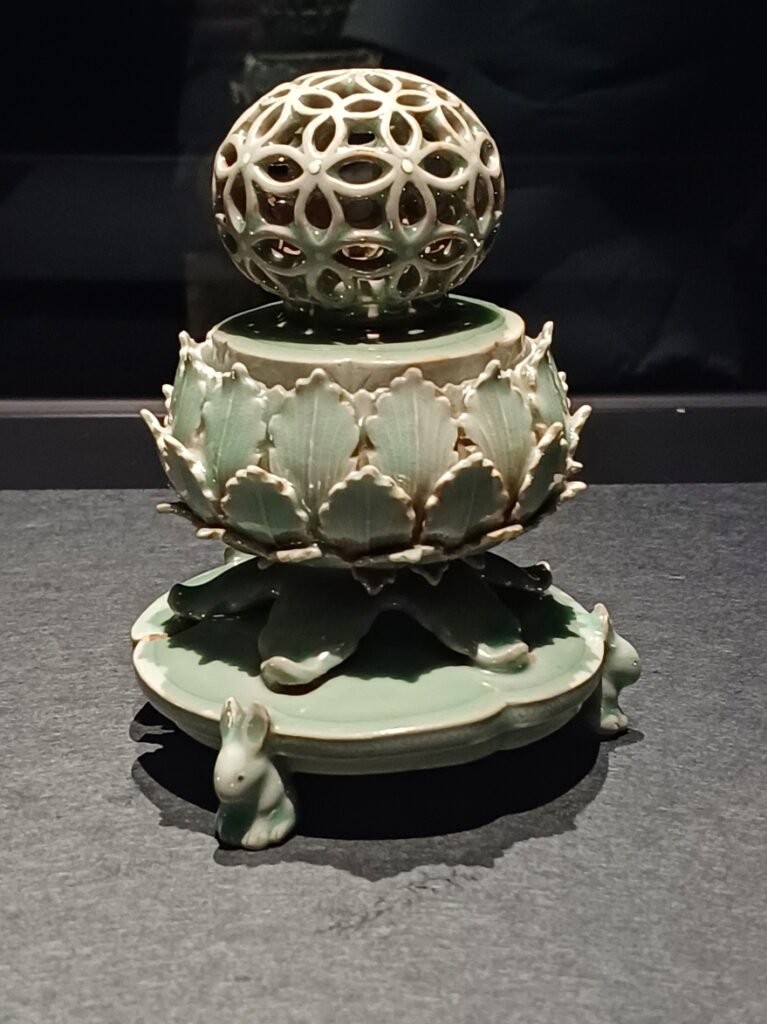
Living in Korea, I’ve often heard people describe Goryeo Celadon (고려청자) as a “gift from the gods.” During the Goryeo Dynasty (918–1392), specifically in the 11th and 12th centuries, Korean potters reached a level of sophistication that even the master potters of China’s Song Dynasty openly envied. While they initially learned the craft from China, the Goryeo artisans eventually surpassed their teachers by creating a unique glaze color known as Bisaek (비색), or “kingfisher color.”
This isn’t just a simple green. It is a translucent, misty, blue-green jade color that feels deep enough to swim in. While European ceramics of the same era were still relatively primitive, Goryeo was producing delicate, thin-walled masterpieces with a clarity that remains a technological marvel. It represented the height of aristocratic luxury and Buddhist spiritualism, aiming for a “heavenly” aesthetic.
The Sanggam Technique: A World-First Innovation
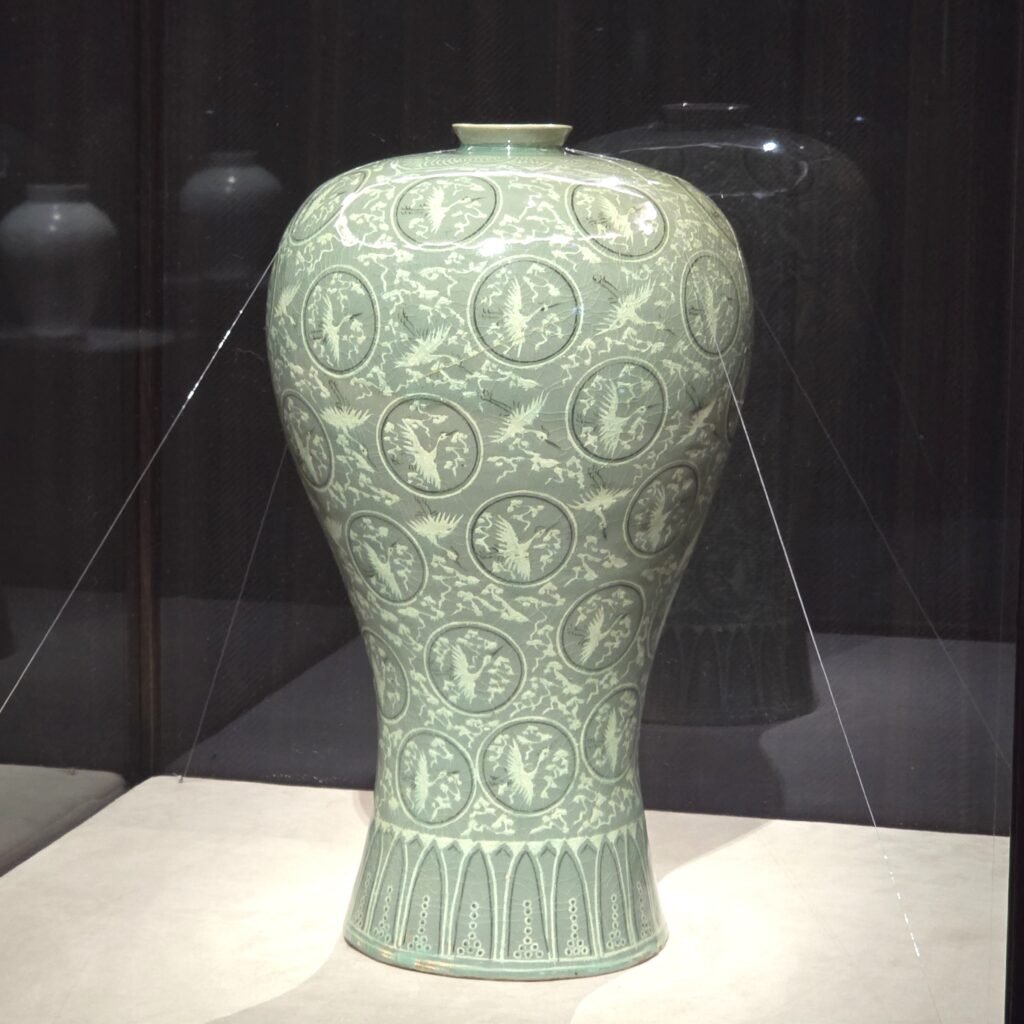
If the color was the soul of Goryeo Celadon, the Sanggam (상감) technique was its greatest technological triumph. This was the world’s first use of the inlay technique in ceramics. Instead of simply painting on top of the glaze, potters would carve intricate designs—cranes, clouds, or chrysanthemums—into the semi-dried clay body, filling them with white or black slip before glazing.
📌 Local Note: This created a depth and precision that was revolutionary. The most famous example is the Celadon Prunus Vase with Inlaid Clouds and Cranes (National Treasure No. 68). When you see it in person at the Daegu Kansong Art Museum, the cranes look as if they are actually flying through a misty green sky. It was saved from being smuggled out of the country by Kansong Jeon Hyeong-pil, who paid the price of 20 traditional houses to keep it in Korea.
Buncheong-sagi: The Beauty of Freedom and Representative Works
After the Mongol invasions, the refined celadon evolved into the rugged and “punk rock” Buncheong-sagi (분청사기). Produced mainly in the 15th and 16th centuries, Buncheong is characterized by its grayish-clay body covered with a white slip. It was the pottery of the people—free-spirited, experimental, and unpretentious.
If you want to recognize Buncheong in a museum, look for these two legendary masterpieces:
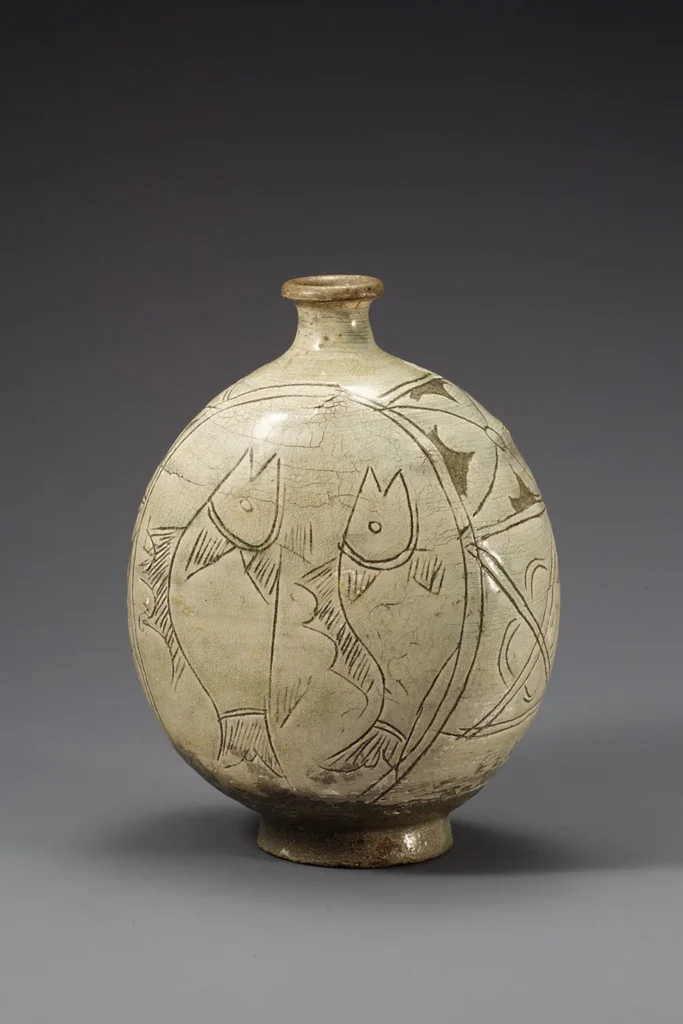
- Buncheong Flat Bottle with Incised Fish Design (National Treasure No. 178): This piece is famous for its modern, almost abstract-looking fish. The lines are bold and humorous, reflecting a sense of freedom you rarely see in court art.
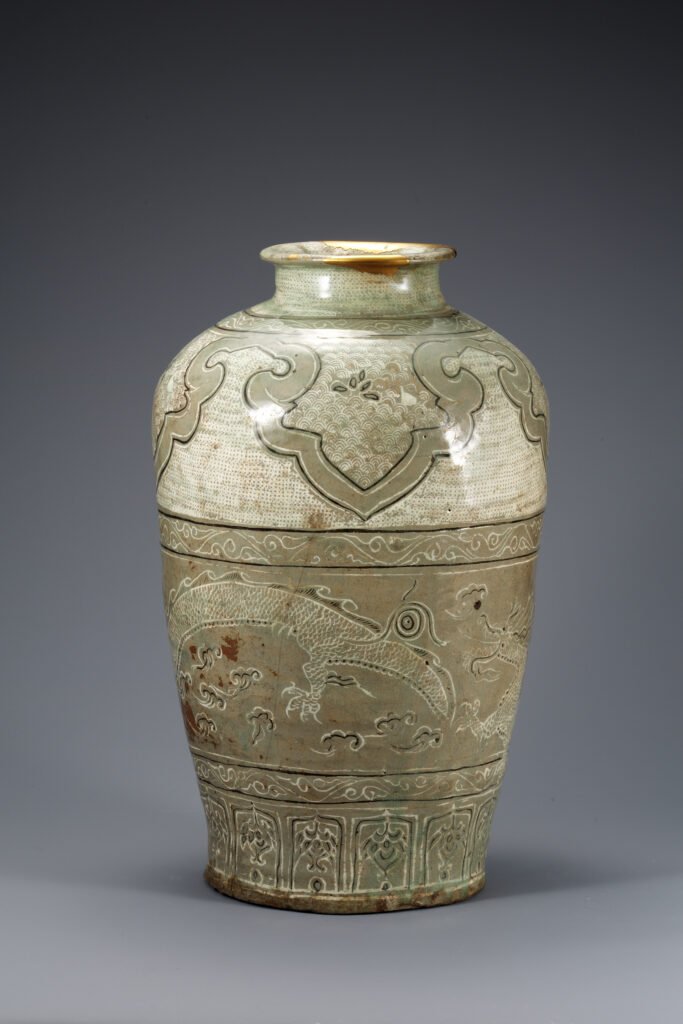
- Buncheong Jar with Inlaid Peony and Willow Design (National Treasure No. 259): This jar shows the transition from Goryeo’s inlay technique to the more expansive, decorative style of early Joseon.
Joseon White Porcelain: The Confucian Aesthetic of Purity
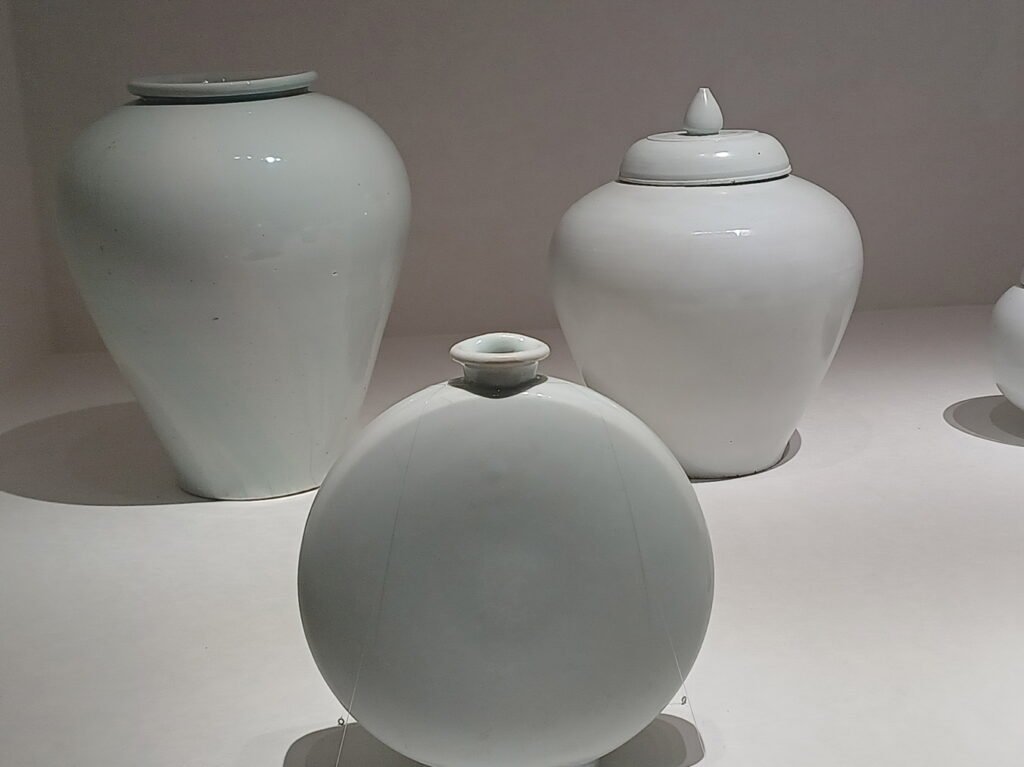
As the Joseon Dynasty (1392–1910) established Confucianism as the state ideology, the preference shifted toward White Porcelain (백자, Baekja). To the scholars of Joseon, white symbolized purity, frugality, and integrity. The Pure White Porcelain (Sunbaekja) is the ultimate expression of this minimalism.
A representative work you must see is the Large White Porcelain Jar (National Treasure No. 309). It stands as a testament to the Joseon belief that “emptiness” is a form of beauty. It focuses entirely on the subtle texture of the white glaze and its elegant silhouette, devoid of any distracting patterns.
The Moon Jar: Embracing Imperfect Perfection
💡 Pro Tip: The Philosophy of the Moon Jar (Dalhangari)
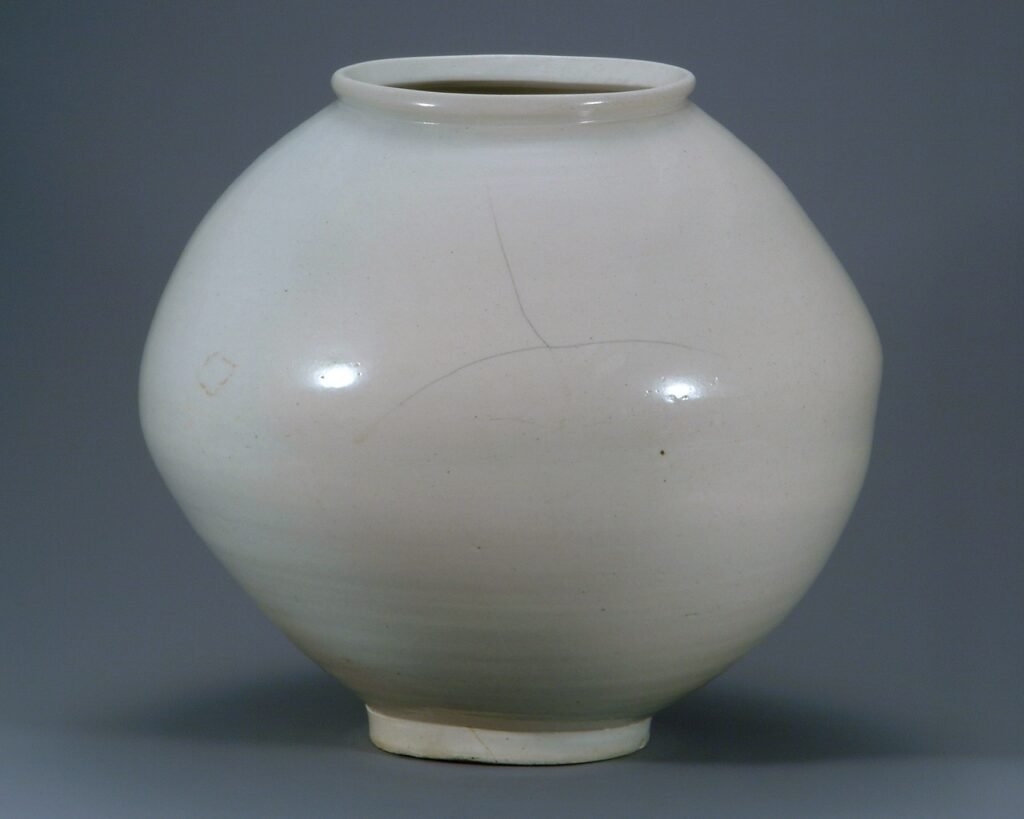
The most iconic piece of Korean ceramics is the 18th-century Moon Jar (National Treasure No. 310). Because of its massive size, it had to be made in two halves and joined in the middle. During firing, the jar would sag slightly, creating a natural, asymmetrical shape that resembles the full moon. It represents the Korean aesthetic of “non-artificiality”—the idea that true beauty comes from nature and human imperfection rather than mechanical precision.
Masterpieces of Joseon: Blue-and-White and Iron-brown Porcelain
Beyond pure white, Joseon potters created stunning works using cobalt and iron pigments. These pieces are often the highlights of any museum visit due to their intricate illustrations.
1. Blue-and-White Porcelain (Cheonghwa Baekja)
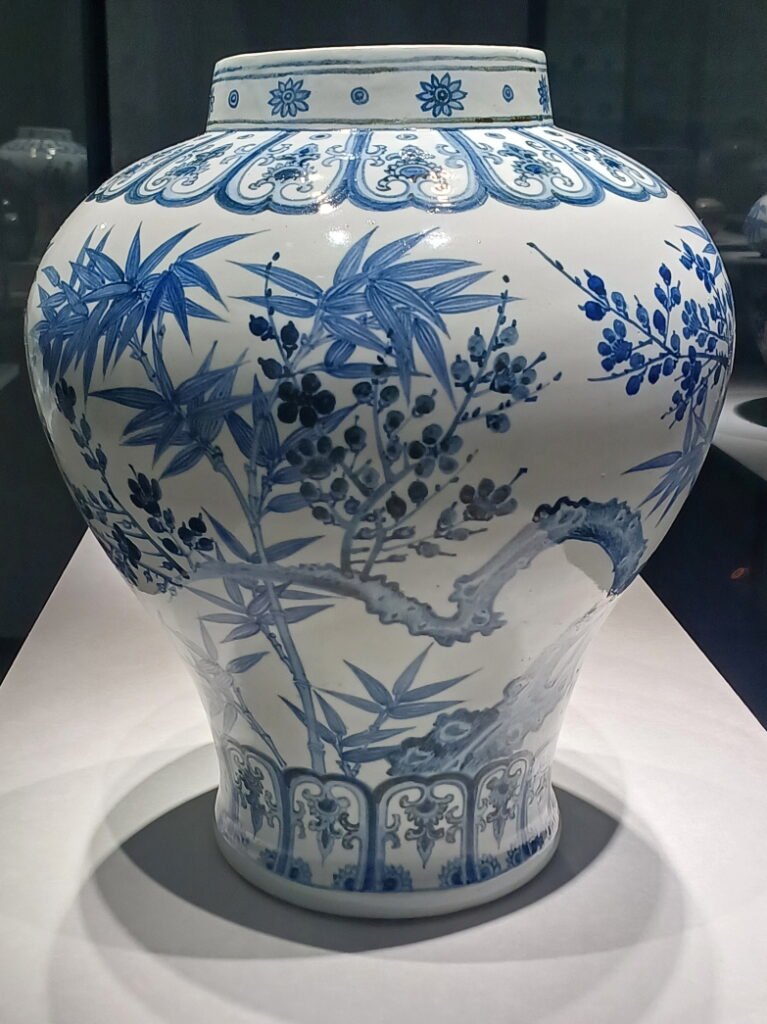
These use cobalt blue pigment. A definitive masterpiece is the White Porcelain Jar with Inlaid Plum and Bamboo Design in Underglaze Blue (National Treasure No. 219). The painting on this jar is so refined it looks like a scholar’s ink painting captured forever in ceramic.
2. Iron-brown Porcelain (Cheolhwa Baekja)
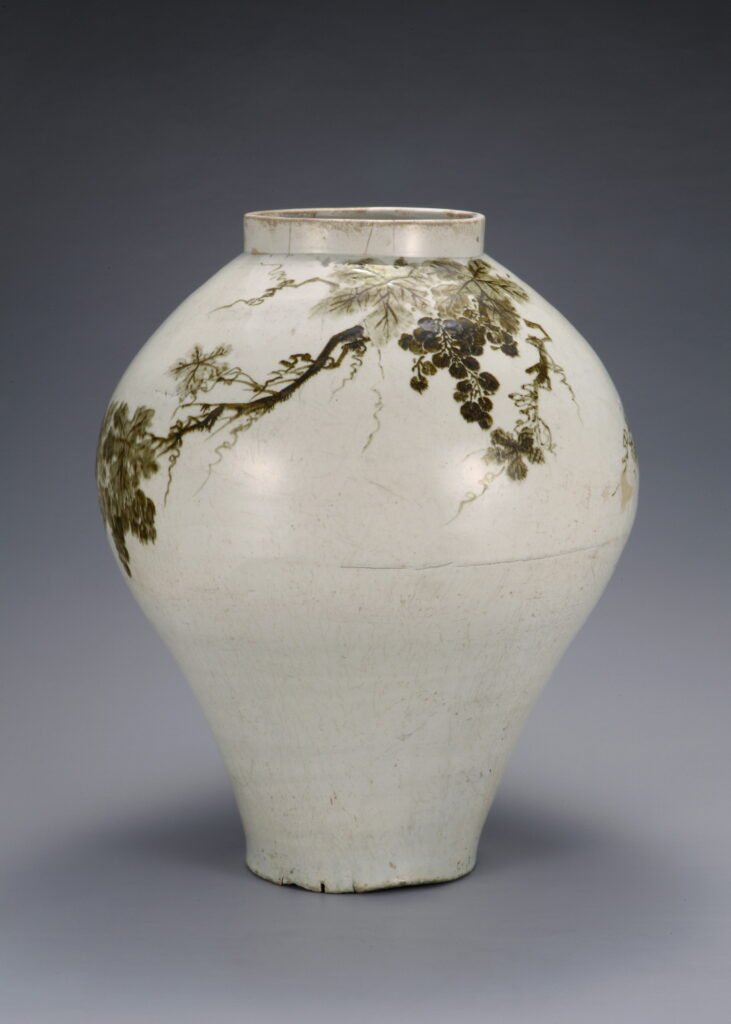
When cobalt was too expensive, potters used iron pigments that turned deep brown. The White Porcelain Jar with Grape Design in Underglaze Iron-brown (National Treasure No. 107) is a masterpiece of space and rhythm, where the grapevines gracefully drape over the shoulders of the jar.
The Control of Blue-and-White Porcelain in Joseon
You might wonder why Blue-and-White porcelain wasn’t as widespread. In early Joseon, the cobalt blue pigment had to be imported from Persia, making it more expensive than gold. The royal court strictly controlled its production to prevent “luxury and extravagance” among the populace. This restriction actually fostered a unique Korean style of “spare” decoration, where the white space was just as important as the painted design.
The Pottery War: How Korean Artisans Founded Japanese Ceramics
One of the most tragic yet influential chapters in Korean history is the Imjin War (1592–1598), often called the “Pottery War.” Japanese invaders systematically kidnapped thousands of skilled Korean potters and took them back to Japan. Artisans like Yi Sam-pyeong are credited with discovering porcelain clay in Japan and founding the world-famous Arita and Satsuma ware traditions. While a devastating loss for Korea, it forever changed global ceramic history.
Where to See the Masterpieces: A Local Insider’s Museum Guide
To truly appreciate the evolution of these forms, you need to see them in person. Here is where I recommend you go:
| Museum Name | Location | Key Masterpieces to See |
|---|---|---|
| National Museum of Korea | Seoul | The Moon Jar (NT No. 310) & Pure White Porcelain Jars. |
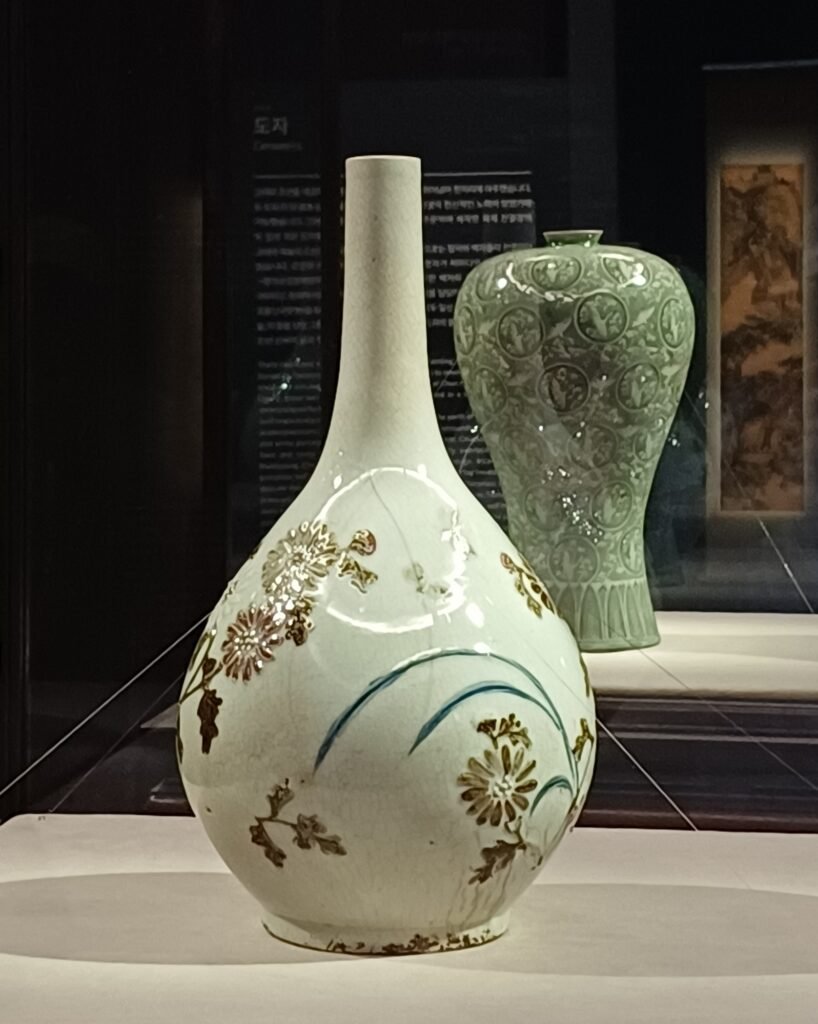
| Daegu Kansong Art Museum | Daegu | Celadon Prunus Vase with Inlaid Cranes (NT No. 68). White Porcelain Bottle with Designs of Flowers and Insects in Underglaze Blue, Iron Brown, and Copper Red (NT No. 294). |
| Horim Museum | Seoul | Incredible collection of Buncheong-sagi & Iron-brown porcelain. |
| Leeum Museum of Art | Seoul | Blue-and-White Porcelain Jar with Plum and Bamboo (NT No. 219). |
Honestly, standing in front of a 500-year-old jar at the National Museum is a meditative experience. You start to see how the white isn’t just “white”—it’s the color of snow and the clouds over the Han River. Before you visit, remember the journey these pieces have taken: through golden ages and the fires of war, surviving to tell us the story of the “real” Korea.
Korean Culture portal KCulture.com
Join the mailing service and add to your favorites.

Founder of Kculture.com and MA in Political Science. He shares deep academic and local insights to provide an authentic perspective on Korean history and society.