
The May 18 Gwangju Democratic Uprising is the most significant turning point in South Korea’s modern history, representing the ultimate sacrifice made by ordinary citizens to end decades of military dictatorship. If you are seeking a deep understanding of this event, it was a ten-day civil resistance (May 18–27, 1980) against the illegal military coup of Chun Doo-hwan, which began with brutal paratrooper violence and ended in a tragic massacre, yet ultimately triggered the nationwide democratization movement of 1987. In this exhaustive guide, I provide a detailed historical timeline from the 12.12 Coup to the 5.18 massacre, a comprehensive list of movies and dramas that archive this trauma, and a local insider’s pilgrimage guide to Gwangju’s hallowed grounds.
- The Descent into Darkness: The 12.12 Coup and the Road to Gwangju
- The Ten Days of May: A Detailed Timeline of the Uprising
- Smuggling the Truth: How the World Learned About Gwangju
- The Cinematic Legacy: Essential Movies and Dramas on 5.18
- Gwangju Pilgrimage: Sacred Sites and the Annual Commemoration
- The Gwangju Spirit: Historical Significance and Guarding Against Distortion
The Descent into Darkness: The 12.12 Coup and the Road to Gwangju
To understand Gwangju, we must first look at the vacuum of power left by the assassination of President Park Chung-hee on October 26, 1979. For 18 years, Park had ruled with an iron fist, and his sudden death sparked a brief period of hope known as the “Spring of Seoul.” However, behind the scenes, a secret military faction called Hanahoe (The Group of One), led by Major General Chun Doo-hwan and Roh Tae-woo, was plotting to seize control.
On December 12, 1979, Chun orchestrated the 12.12 Military Insurrection, arresting the Army Chief of Staff and effectively taking over the military. By the spring of 1980, as students and workers nationwide called for the lifting of martial law and a clear timeline for democratic elections, the junta responded with force. On May 17, 1980, the military expanded martial law to the entire country, arresting prominent political leaders like Kim Dae-jung and closing the National Assembly. Gwangju, the political stronghold of Kim Dae-jung, became the focal point of the military’s crackdown.
💡 Local Note: The tension between the military junta’s hunger for power and the citizens’ hunger for freedom is a recurring theme in Korean history. To see how these events laid the groundwork for future resistance, read our deep dive on South Korea’s Journey to Democracy: From Gwangju 1980 to the 2024 Martial Law Attempt.
The Ten Days of May: A Detailed Timeline of the Uprising
The Gwangju Uprising was not a planned rebellion; it was a spontaneous explosion of outrage against inhuman cruelty. On the morning of May 18, students at Chonnam National University began protesting the closure of their school. The military sent in elite paratroopers (Special Forces) who used shocking levels of violence—beating not only students but also elderly passersby and pregnant women with clubs and bayonets.
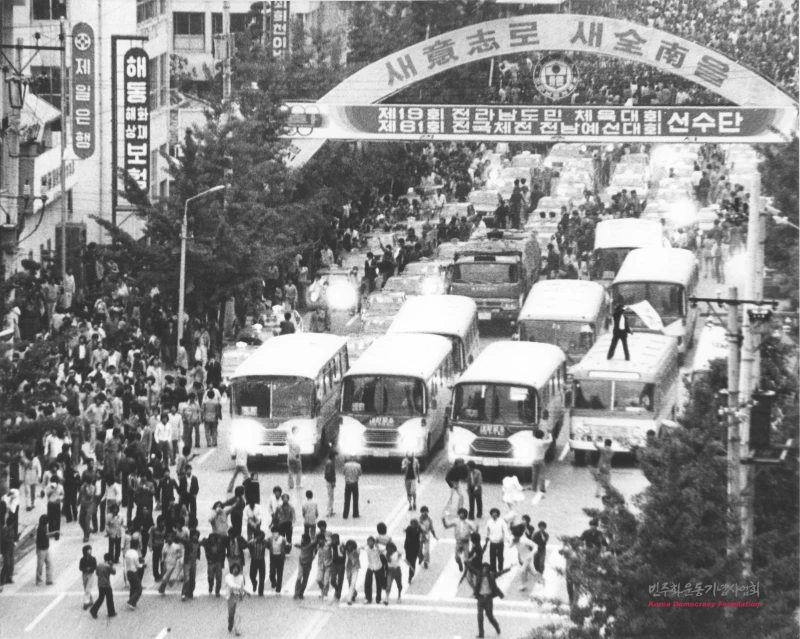
By May 20, the entire city had joined the students. Hundreds of taxi and bus drivers led a massive vehicle parade down Geumnam-ro, using their cars as shields against the soldiers. On May 21, the military opened fire on the crowd in front of the Provincial Office, killing dozens. In response, citizens broke into local armories to defend themselves, forming the Citizen Army (Simingun). For five days, from May 22 to May 26, the military retreated to the city’s outskirts. During this time, Gwangju was a self-governing “Absolute Community.” There was no looting, people shared “Ju-meok-bap” (rice balls), and long lines formed at hospitals to donate blood for the wounded.
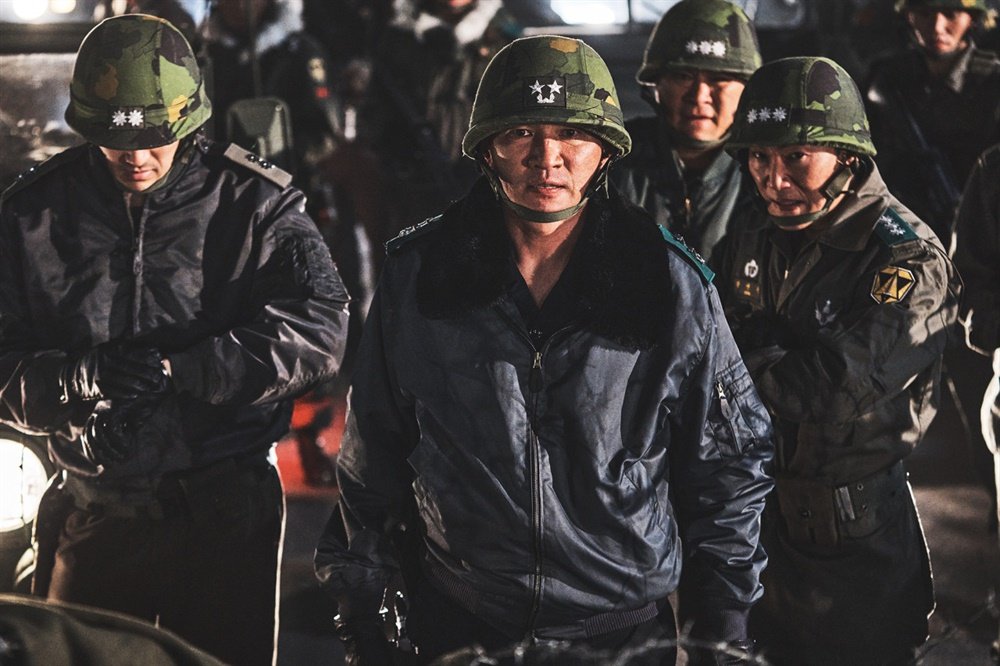
The tragedy reached its peak in the early hours of May 27. The military launched “Operation Sangmu-chungjeong,” rolling tanks into the city center. The last defenders at the Provincial Office, mostly young students and ordinary workers who knew they would die, refused to surrender. They were killed in a final, brutal sweep. The official death toll remains in the hundreds, but many believe the true number, including the missing, is much higher.
Smuggling the Truth: How the World Learned About Gwangju
The Chun Doo-hwan regime tightly controlled the domestic press, labeling the Gwangju citizens as “communist rioters” or “North Korean agents.” However, the truth could not be buried. German journalist Jürgen Hinzpeter, working for ARD, managed to enter the blockaded city by pretending to be a missionary. His footage of the paratroopers’ brutality and the citizens’ resilience was smuggled out in a film canister hidden inside a tin of cookies.
When these images were broadcast in West Germany and later across the globe, the international community was horrified. Foreign missionaries like Martha Huntley and Arnold Peterson also played critical roles in documenting the massacre and providing medical aid. These international witnesses provided the “conscience” that eventually forced the U.S. and other Western powers to reassess their support for the South Korean military junta, although the perceived inaction of the U.S. at the time sparked a wave of anti-American sentiment among Korean activists for years to come.
The Cinematic Legacy: Essential Movies and Dramas on 5.18
For decades, mentioning Gwangju could land you in jail. Today, filmmakers use the medium to ensure the tragedy is never forgotten. The following table lists the most critical works that depict the 12.12 Coup and the 5.18 Uprising, helping you visualize the historical atmosphere.
Chronological and Must-Watch Media List
| Title | Release | Historical Context | Key Focus | Streaming / Where to Watch |
|---|---|---|---|---|
| 12.12: The Day | 2023 | 12.12 Military Coup | The internal military battle between the Hanahoe faction and loyalists. | Netflix, Apple TV, Viki |
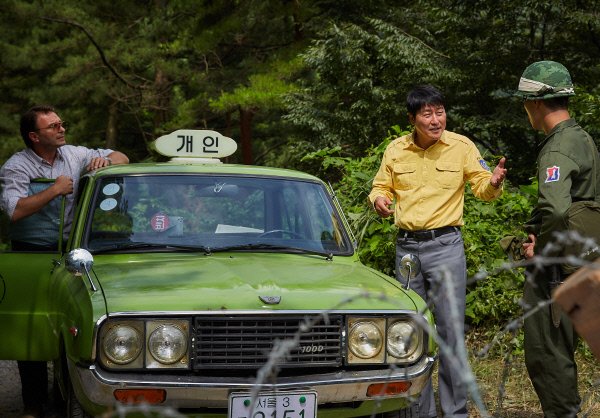
| A Taxi Driver | 2017 | 5.18 Uprising | The true story of Jürgen Hinzpeter and a Seoul taxi driver. | Amazon Prime, Viki, Hulu |
| Sandglass | 1995 | 5.18 & Modern History | The first K-Drama to air actual footage of the Gwangju massacre. | SBS On-Demand, Kocowa |
| Youth of May | 2021 | 5.18 Uprising | A heartbreaking romance focusing on the youth caught in the crossfire. | Netflix, Viki, Kocowa |
| May 18 (Hwaryeohan Hyuga) | 2007 | 5.18 Uprising | A direct, emotional depiction of the paratrooper violence and civilian defense. | Disney+, Viki |
| The Attorney | 2013 | Post-5.18 Trials | Based on President Roh Moo-hyun’s early career defending student activists. | Netflix, Amazon Prime |
| 26 Years | 2012 | The Legacy of 5.18 | A fictionalized plot to assassinate “that man” responsible for the massacre. | Viki, AsianCrush |
Gwangju Pilgrimage: Sacred Sites and the Annual Commemoration
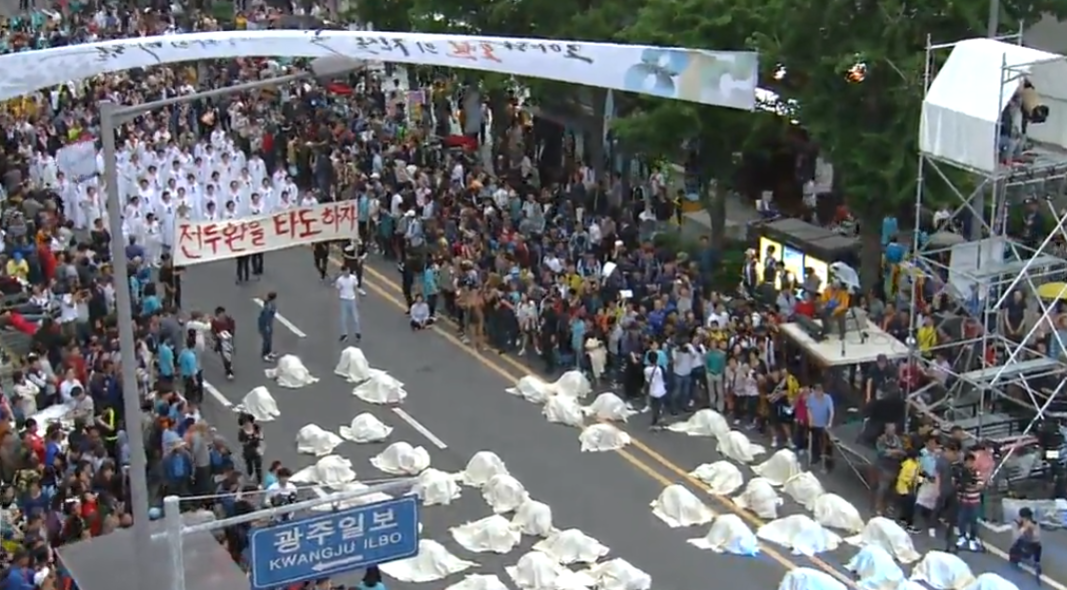
Every May, Gwangju transforms into a city of remembrance. The May 18th Democratic Uprising Commemoration (May 15–18) is a national event. I highly recommend participating in the “Redfist” (Jumeok-bap) sharing events and the eve-of-the-anniversary march on Geumnam-ro, where thousands sing the anthem “March for the Beloved” (Im-eul wihan haengjingok).
Key Sacred Sites for Your Itinerary
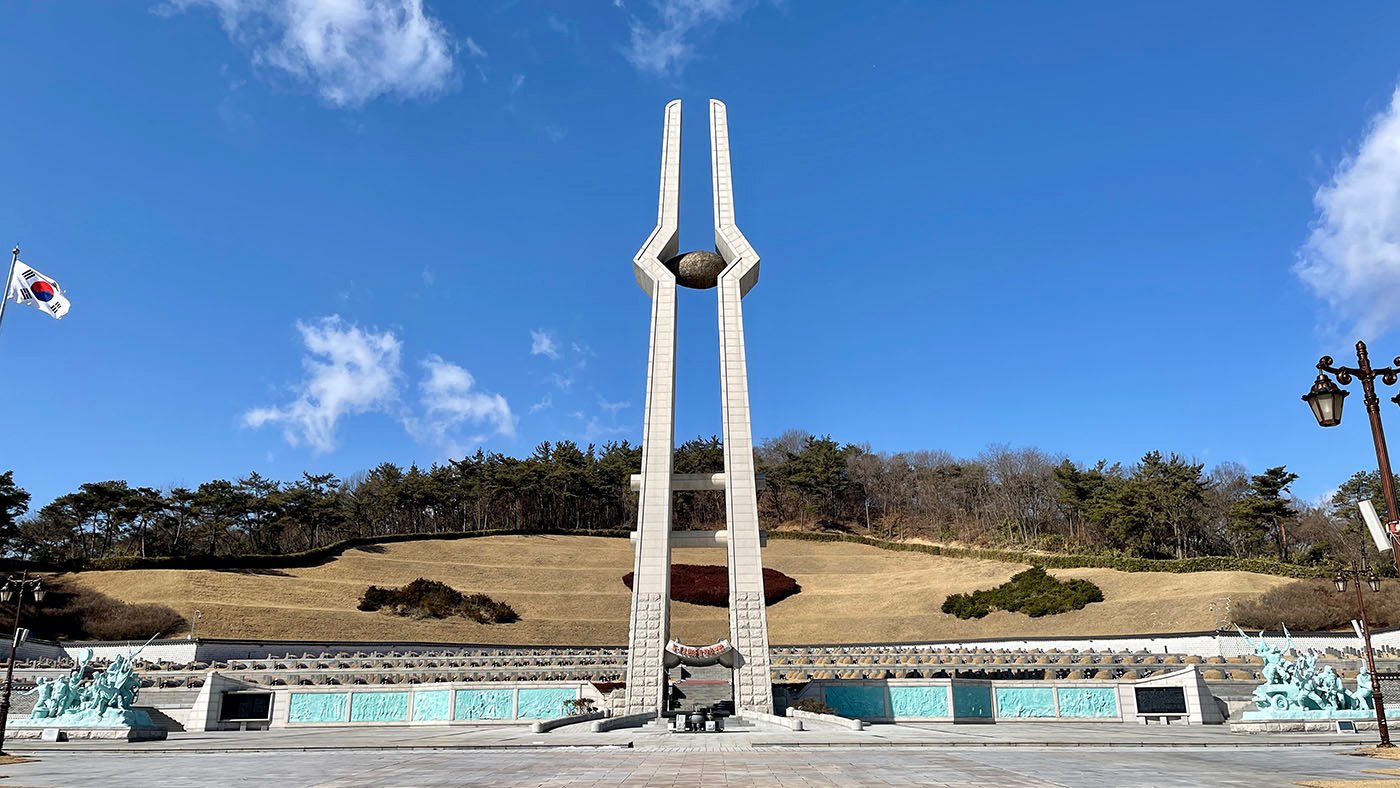
- The May 18th National Cemetery (New & Old): The new cemetery houses the massive memorial tower, while the “Old Cemetery” (Mangwol-dong) is where victims were originally buried in trash trucks by the military. Walking over the tombstone of a junta official laid in the path is a local tradition of symbolic justice.
- The 5.18 Archives: Located in the former Catholic Center, this UNESCO-listed site holds the diaries of students, citizen newspapers, and the medical records of the treated victims.
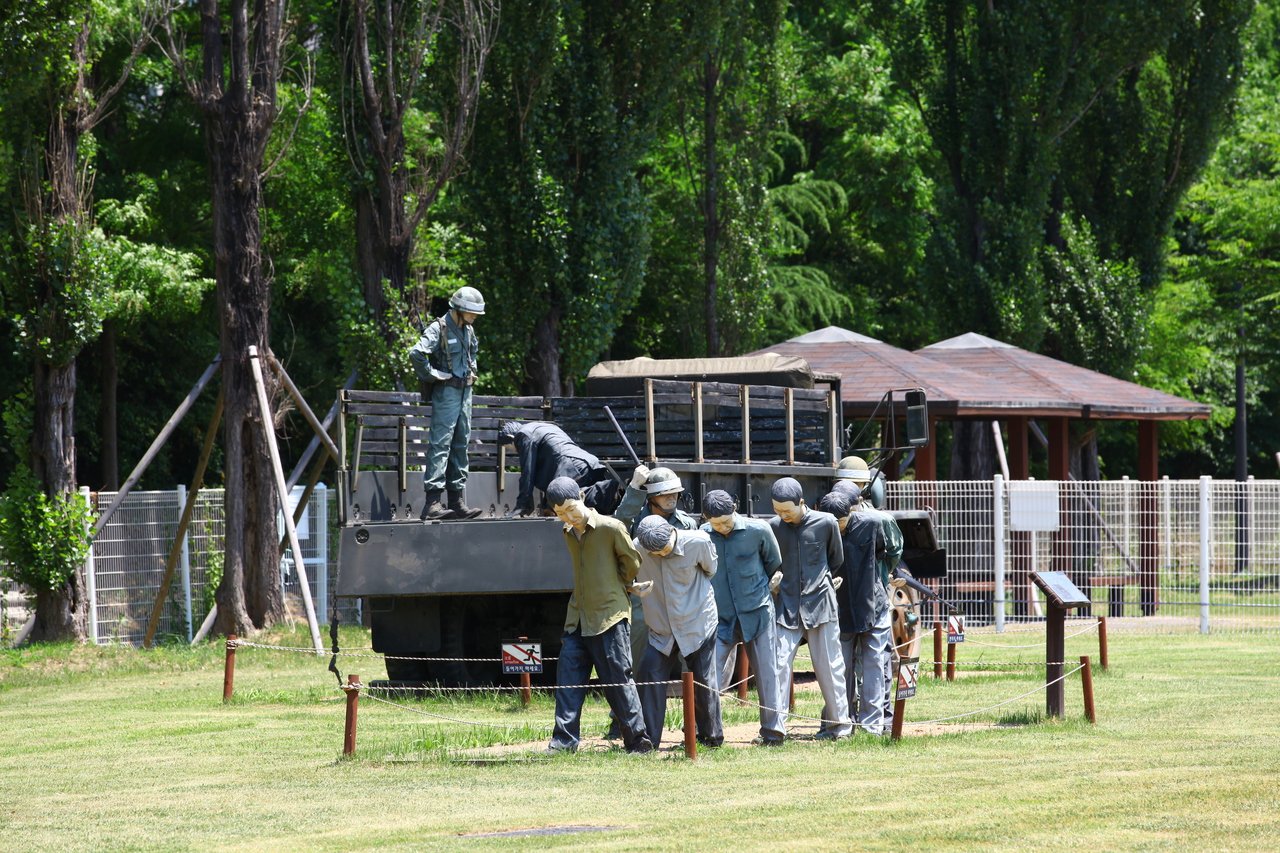
- 5.18 Liberty Park (Jayu Gongwon): This is the site of the former military base where citizens were detained and tortured. You can see recreations of the courtrooms and prison cells.
- Chonnam National University Gate: The starting point of the uprising. A monument marks the spot where the first clash with paratroopers occurred.
The Gwangju Spirit: Historical Significance and Guarding Against Distortion
The historical consensus in South Korea, backed by the 5.18 Memorial Foundation and the National Archives, is that the Gwangju Uprising was a legitimate, pro-democracy movement. However, as a visitor and a student of history, you must be cautious of historical distortion (Fake News). In recent years, some ultra-right groups have attempted to spread debunked claims that North Korean special forces were involved. These claims have been thoroughly investigated and proven false by the South Korean government, the U.S. CIA, and numerous judicial inquiries.
The “Gwangju Spirit” is defined by Community, Democracy, and Human Rights. It is the reason why South Koreans were able to conduct the peaceful Candlelight Revolution of 2016 and why they immediately stood up against the unconstitutional martial law attempt in late 2024. Gwangju taught the nation that the price of freedom is eternal vigilance. When you visit, do not treat these sites as mere “tourist spots.” They are the graves of heroes who bought Korea’s modern prosperity with their lives.
Korean Culture portal KCulture.com

Founder of Kculture.com and MA in Political Science. He shares deep academic and local insights to provide an authentic perspective on Korean history and society.