
If the 1960s were about the “professionalization” of music on US Army bases, the 1970s were about the “soul of the youth.” This was an era defined by three simple symbols: Blue Jeans, Acoustic Guitars, and Draft Beer. However, behind the romantic image of students singing in parks lay a period of intense political tension and strict government censorship. Today, we explore how Korean music became a voice of resistance and how one man, Cho Yong-pil, rose to become the “Eternal King.”
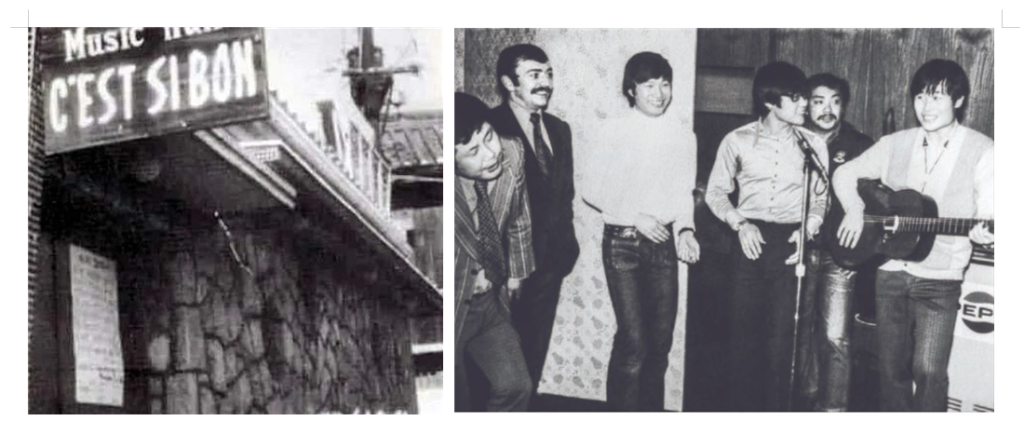
1. The “C’est Si Bon” Culture: The Birth of Korean Folk
In the early 1970s, a music tea house in Mugyo-dong, Seoul, called C’est Si Bon (French for “It’s so good”), became the epicenter of a new movement.
- Social Context: The youth of the 70s were the first generation to grow up after the war. They were influenced by the American “hippie” movement and Bob Dylan-style folk music. They wanted music that was honest, simple, and reflected their own lives, rather than the “manufactured” stage shows of the previous era.
- The Sound: Unplugged acoustic guitars and beautiful, poetic lyrics. The focus shifted from the “performer” to the “singer-songwriter.”
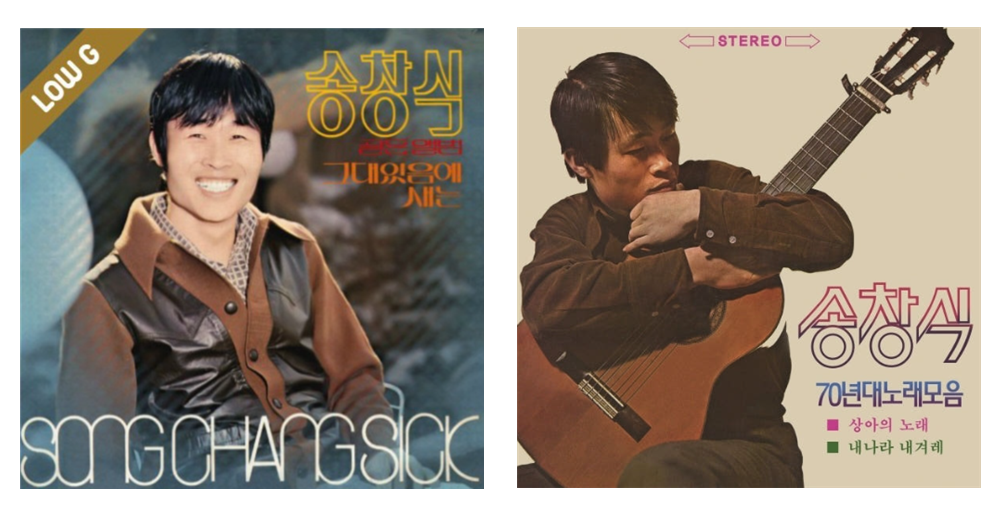
- Key Artists: * Song Chang-sik: Known for his incredible vocal range and bohemian spirit.
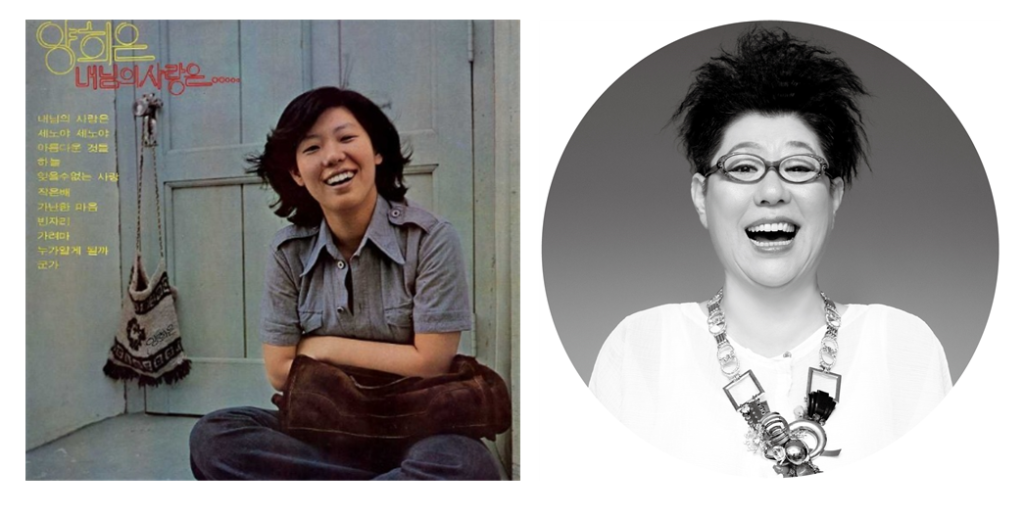
- Yang Hee-eun: Her crystalline, pure voice became the symbol of youthful innocence. Her song “Morning Dew” (Achim Isul) was eventually banned but became the unofficial anthem of the pro-democracy movement.
2. The Dark Cloud: The 1975 Marijuana Scandal & Censorship
The mid-70s saw a massive crackdown by the authoritarian regime.
- The Crackdown: In 1975, many top artists, including the legendary Shin Joong-hyeon, were arrested during a widespread “Marijuana Scandal.” This was largely a political move to suppress the influence of “rebellious” Western-influenced youth culture.
- Banned Songs: Hundreds of songs were banned for “harming public morale.” Even simple songs were prohibited; for example, one song was banned because it sounded “too sad,” and another because the lyrics were “subversive” (even if they were just about a sunset).
- The Result: The vibrant rock and folk scenes were temporarily silenced, leaving a vacuum that would soon be filled by a more diverse, “national” sound.
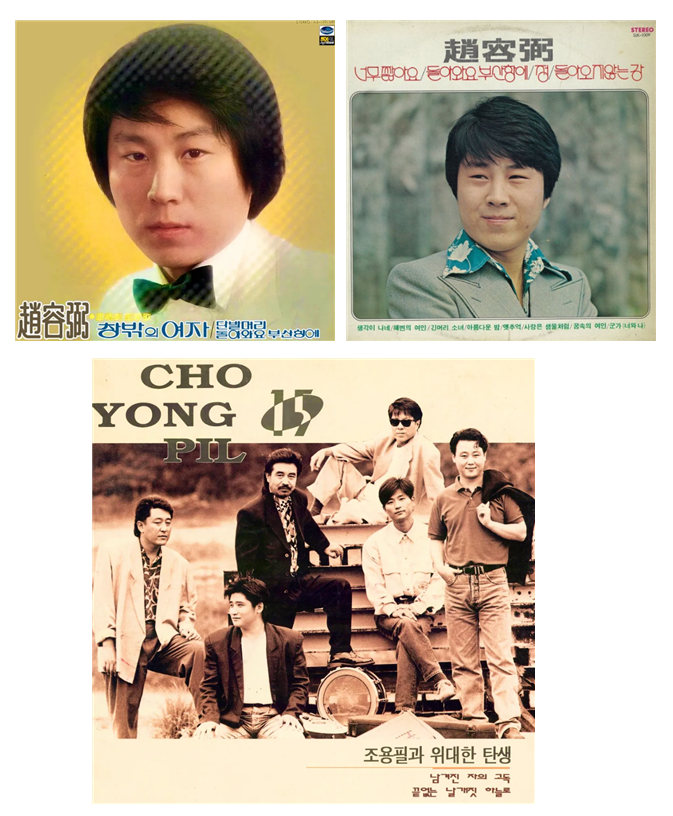
3. The Rise of the “King”: Cho Yong-pil (The Great Birth)
As the 70s transitioned into the 80s, one artist emerged who would unite every generation: Cho Yong-pil. If K-Pop has a “Michael Jackson” or a “Prince,” it is him.
- The 1980 Breakthrough: After a period of self-reflection, he released “Woman Outside the Window” and “Short Hair.” The latter featured a revolutionary synthesizer sound that signaled the end of the folk era and the beginning of the “Color TV” era.
- The “King” Status: He was the first singer in Korea to reach “Million Seller” status. He could sing Trot, Rock, Ballads, and even New Wave. His band, “The Great Birth” (위대한 탄생), set the standard for live performance excellence that modern K-Pop idols still strive for.
- Fandom Culture: Cho Yong-pil was the first artist to experience “Oppa Soseong” (The Oppa Syndrome), where thousands of female fans would scream and faint at his concerts—the literal blueprint for modern idol fandoms.
4. Campus Song Festivals: The Discovery of New Talent
With the professional scene under heavy censorship, the industry looked to universities.
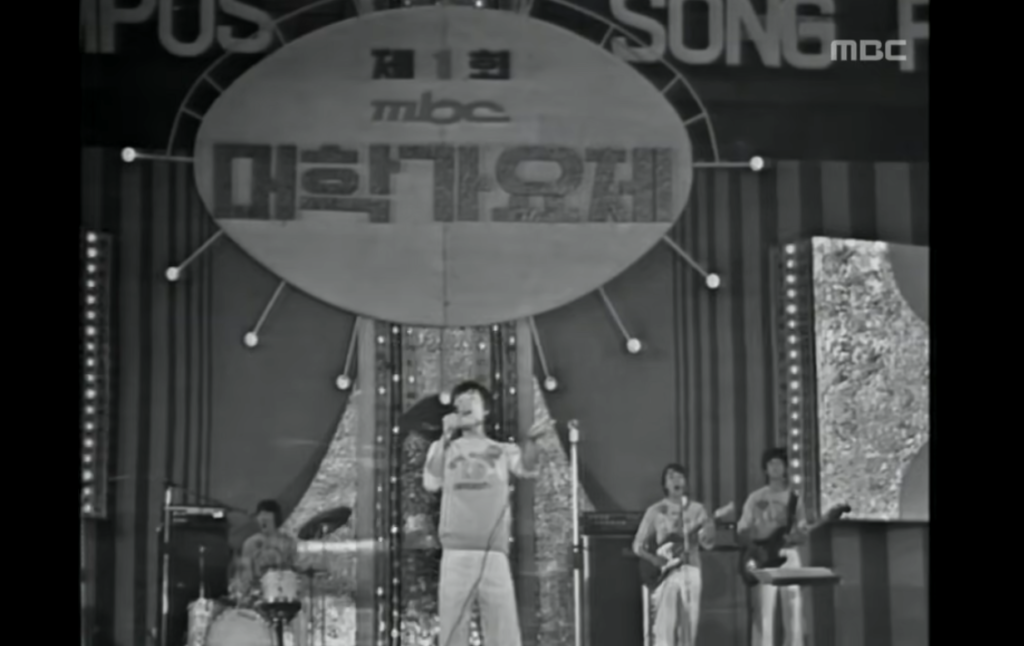
- The MBC Campus Song Festival (Daehak Gayoje): Starting in 1977, this televised competition became the primary “scouting ground” for talent. It brought a fresh, experimental energy to the airwaves.
- The Sound: It introduced “Campus Rock” and sophisticated arrangements that weren’t being produced by mainstream labels.
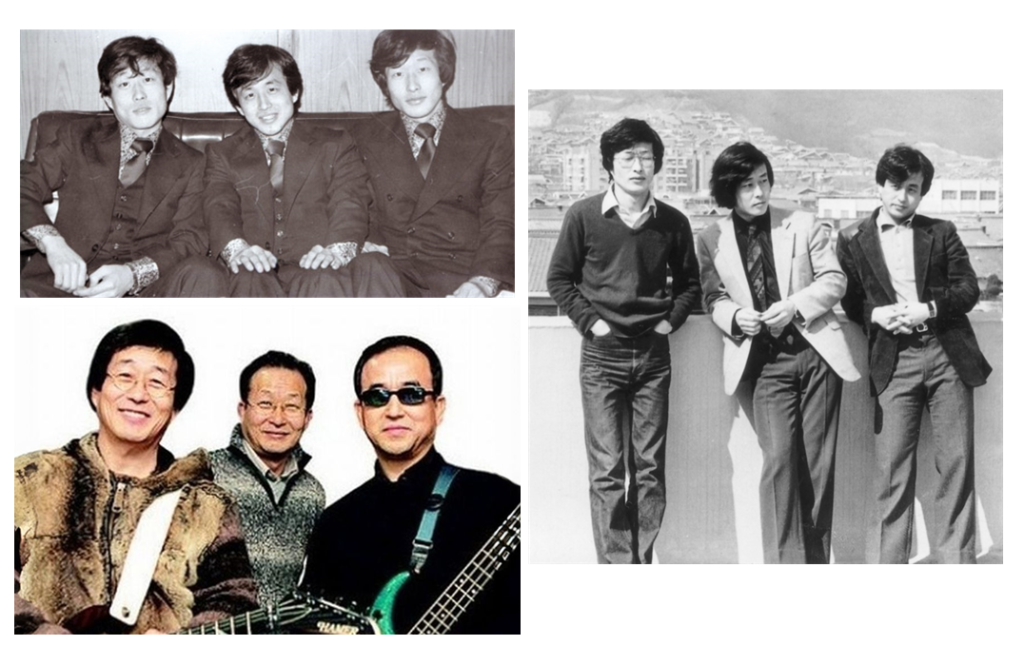
- Key Artists: Sanulrim (The Trio), led by Kim Chang-wan, who brought an avant-garde, “Lo-fi” rock sound to Korea that is still highly respected by indie artists today.
5. Technology: From Radio to Color TV & Cassette Tapes
- Color TV (1980): The introduction of color broadcasting in 1980 changed everything. Singers now had to think about “Visual Concepts.” Flashy costumes and choreography became essential.
- Cassette Tapes: The mass production of cassette tapes made music affordable and portable. This led to the rise of “Gilboard” (Street-Billboard)—illegal but popular stalls on the streets of Seoul that played the latest hits, essentially acting as the “algorithms” of the 80s.

Summary of the 1970s – Early 80s
| Feature | Details |
| Main Vibe | Youthful Rebellion / “Jeans & Acoustic Guitars” |
| Key Genre | Folk, Campus Rock, Ballad, Psychedelic Rock |
| Major Event | 1975 Marijuana Scandal & Strict Censorship |
| The Icon | Cho Yong-pil (The King), Yang Hee-eun (Voice of Folk) |
Kyoung’s Local Insight: > If you visit a “LP Bar” in Seoul’s Hongdae or Yeonnam-dong districts today, you will still hear the songs of the 70s. This era’s music is the “Comfort Food” of Korea. Even Gen Z loves the “City Pop” vibes of the early 80s, proving that good melody transcends time and politics.
The late 80s and early 90s were just around the corner, bringing with them a surge of ballads and the 1988 Seoul Olympics—the final stage before the “Idol Era” would begin.
💡 Go to related article
- The Grand Odyssey of K-Pop: A Century of Rhythm, Resilience, and Revolution
- Chapter 1: The Colonial Roots & The Soul of Trot – Where K-Pop’s Heartbeat Began
- Chapter 2: The US 8th Army Era & The Kim Sisters – The Neon Lights of a New Frontier
- Chapter 4: The Golden Age of Ballads & the 1988 Seoul Olympics – A Nation Finds Its Voice (1980s – 1990s)
- Chapter 5: The Seo Taiji Revolution & the 1st Generation Idols – The Big Bang of Modern K-Pop (1990s – Early 2000s)
- Chapter 6: The Hook Song Era & Hallyu 2.0 – When K-Pop Became a Digital Virus (Mid-2000s – Early 2010s)
- Chapter 7: The Global Domination – 3rd Generation & the Social Media Revolution (2012 – 2017)
- Chapter 8: The Digital Natives – 4th Generation & The Performance Revolution (2018 – 2022)
- Chapter 9: The 5th Generation – The Era of Naturalism & Hyper-Globalization (2023 – Present)
- Chapter 10: The Future of K-Pop – Beyond the Stage and Into the Multiverse (2030 & Beyond)

A lifestyle writer covering K-beauty, fashion, and art. Kyoung shares honest insights on K-pop and smart shopping, capturing the vibrant trends of modern Korea.